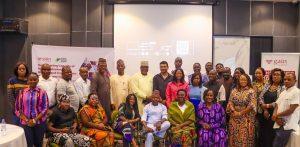
The Global Alliance for Improved Nutrition (GAIN) and Nigeria Health Watch have commenced a two-day intensive media training workshop aimed at enhancing the capacity of journalists across Nigeria to effectively report on nutrition, food systems, and related policy issues.
The workshop, themed “Strengthening Capacity of Media Professionals for Nutrition and Food Systems Reporting and Advocacy,” brought together media practitioners from print, broadcast, and online platforms to deepen their understanding of how evidence-based reporting can influence public awareness and policy direction.
In an opening statement, Senior Associate, Communications, GAIN Nigeria, Victor Ekeleme, said the initiative reflects GAIN’s commitment to ensuring Nigerians not only have access to food, but also access to nutritious food that supports healthy lives.
“At GAIN, our work focuses on improving the quality of diets for everyone, everywhere — ensuring that people not only have food, but have nutritious food that supports healthy lives,” Ekeleme said.

He noted that over the course of the training, participants would explore topics such as data-driven storytelling, countering misinformation, and leveraging AI tools for effective journalism, adding that “good nutrition, like good storytelling, should always leave us better than we started.”
“We know the media plays a powerful role in shaping how people think, talk, and act about food and nutrition. That’s why this training is so important — it’s not just another workshop; it’s about empowering storytellers to help drive a healthier food system for Nigeria.”
Safe, Diverse Diets
In an interview, nutrition expert, Founder and Chief Executive Officer of the Food Agricultural Nutrition Network (FANN), Dr Olapeju Phorbee, urged Nigerians to prioritise safe, healthy, and diverse diets, stressing that food should be regarded as the first form of medicine for a healthy population.
Read Also: Gombe Government Launches Emergency Medical Services Scheme
While emphasising that Nigeria’s food diversity is enough to sustain healthy living if properly harnessed, she stated:
“Nigerians should diversify their food. We have more than enough to make us live healthy lives, if only they knew. Food is medicine. If they don’t take food as medicine, medicine will be their food. Safe, healthy, diverse, nutritious food should be a priority in this country.”

She called on journalists to intensify nutrition education and awareness campaigns, noting that the media remains a trusted voice in shaping public knowledge and national attitudes toward food and health.
“Recognising the fact that the public believes the media, the media should talk more about nutrition and health in the food system, gather more knowledge around nutrition education and delivery. Development partners, government, and consumers should all be reached with more deliberate communication,” Dr Phorbee stated.
Food Safety, Accountability in Palliatives
Dr Phorbee also called for stronger oversight and accountability in the distribution of government and donor food palliatives, warning against the circulation of expired or unsafe food to vulnerable Nigerians. She described such acts as a violation of public trust and a silent threat to national health security.
“You see, these people, like I said, are hungry. Whatever comes to them is what they take. So, we should be on our guard against what they are being given. It’s better to go hungry than to eat unsafe food. I would rather talk to the people who are giving them — they should stop that. Because the people don’t have a choice,” Dr Phorbee said.
She urged federal and state authorities to ensure that all food assistance and social intervention programmes meet the National Food Safety and Quality Standards, stressing that unsafe food distribution undermines humanitarian efforts and could worsen malnutrition and disease outbreaks among low-income households.
“If palliatives must be shared, they must be safe and nutritious,” she added. “We cannot continue to use hunger as justification for endangering lives.”
Dr Phorbee also appealed to the media and civil society to play a watchdog role by monitoring the quality of food relief materials being distributed across communities. According to her, advocacy on food safety should be as strong as the campaign for food availability.
Her call reinforces the federal government’s ongoing efforts under the National Food Systems Transformation Pathway and the National Food Safety Management Committee to strengthen quality assurance, consumer protection, and ethical standards in food handling and distribution.
Training Impact
Some participants who spoke to Voice of Nigeria described the training as timely and transformative, commending GAIN for its foresight in equipping journalists with tools to improve public understanding of nutrition and food systems.
Tina Abeku of The Guardian Newspapers noted that the training would “not just expose and increase my knowledge — it will help me understand the topic better and explain it to my target audience from a professional point of view, breaking it down for easy understanding so that the needed impact can be achieved.”
For Justina Auta of the News Agency of Nigeria (NAN), the sessions would empower journalists to hold policymakers accountable.
“It will broaden my knowledge on nutrition and food systems, enabling me to effectively report and ensure that programmes aimed at improving Nigeria’s food systems are implemented,” she said.
Adejoke Odeka, a participant from Lagos, said the training will refine her reportage skills “to develop captivating, meticulously researched narratives that engage and most importantly inform diverse audiences on topics including nutrition, health, and wellness.”
Salihu Ali of Voice of Nigeria said the workshop would “build our capacity in reporting factually on the subject matter.”
Similarly, Ugwunna Chinatu of Wazobia FM, Abuja, described the training as “a game-changer.”
“The training will help me report more effectively on nutrition, food systems, and public health. I now have practical storytelling tools, data interpretation skills, and advocacy angles that can make my reports more impactful,” he said.
Also speaking, Muhammad Lawan, General Manager of Nigeria Television Authority, Katsina, said the workshop was “apt and timely,” emphasising that it would help journalists enlighten the public on their nutritional needs.
“It will help reporters guide the public on basic food classifications, especially macro and micronutrients,” he said.
Government, GAIN, Nigeria Health Watch Align on Combating Misinformation and Promoting Food Safety
The two-day workshop, facilitated by experts in nutrition communication and data storytelling, with over 35 participating journalists from Nigeria, underscores ongoing efforts to build a strong media network that champions evidence-based nutrition reporting and promotes healthier food systems across Nigeria.