The Chinese Embassy in Nigeria and the Federal Ministry of Youth Development have pledged to establish sustainable mechanisms for continued youth engagement, cultural exchange, skills development and economic cooperation through education and innovation.
This will enhance youth-centered cooperation between China and Nigeria.
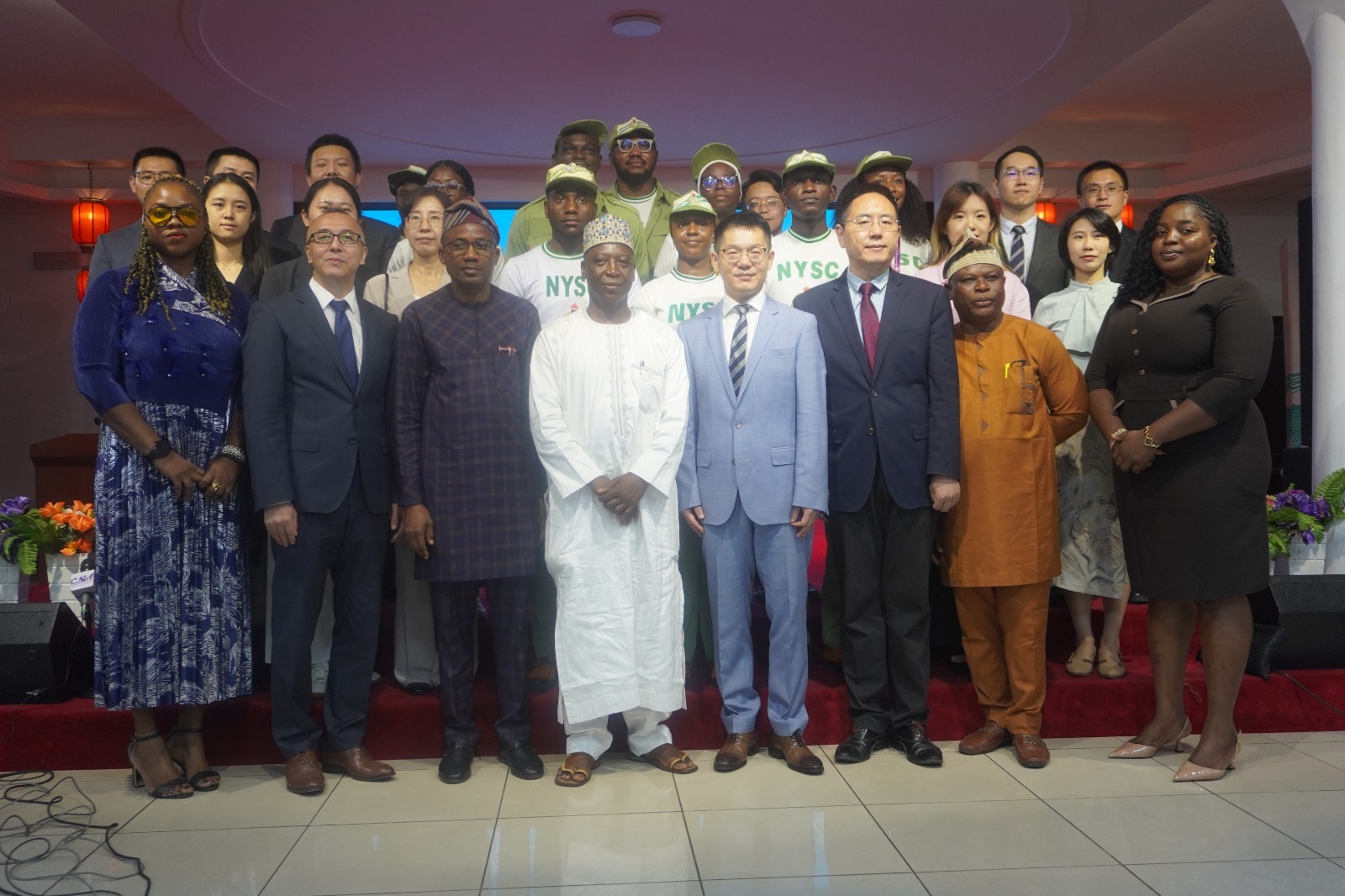
This was made known during the China-Nigeria Youth Exchange Seminar on “China-Africa Community with a Shared Future” held in Abuja, Nigeria’s capital.
Speaking at the event, the Minister, of the Chinese Embassy in Nigeria, Zhou Hongyou, described young people as the driving force behind the future of China-Africa relations, while calling for greater dialogue, mutual understanding, and cooperation between the two countries.
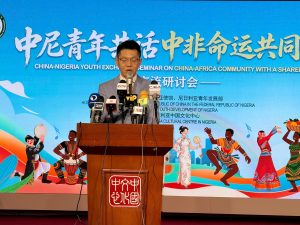
“This year marks 55 years of China-Nigeria diplomatic ties. China is working with all brothers and sisters across Africa, including Nigeria, to build greater political trust, expand practical cooperation, deepen mutual learning, bring our people closer, and keep this friendship alive for generations to come.”
Economic Cooperation
He noted that China remains committed to Africa’s development, citing recent measures aimed at boosting economic cooperation between China and African countries.
“Starting from May 1 this year, China introduced zero tariffs on all imports from 53 African countries with diplomatic relations with China,” he said.
“We have also upgraded the Green Channel so more African products can enter the Chinese market and benefit from China’s vast opportunities.”
According to him, the initiative demonstrates China’s commitment to the principles of sincerity, real results, amity, and good faith in its engagement with Africa.

Embrace Openness
Zhou urged young people from both countries to embrace openness and become active contributors to a shared future.
“I truly hope young people from both countries will stay open and inclusive, build genuine friendships through exchanges, grow together by learning from each other, and do their part for the China-Africa community with a shared future,” he stated.
Addressing concerns raised by participants regarding the impact of diplomatic relations on ordinary citizens, the Director of the China Cultural Center in Nigeria, Yang Jianxing, said China-Nigeria cooperation has consistently delivered tangible benefits through infrastructure projects, job opportunities, and technology transfer.
Yang stated that major Chinese companies operating in Nigeria, including CCECC and CGC, are creating internship and employment opportunities specifically for outstanding Nigerian youths and National Youth Service Corps (NYSC) members.
He further announced plans for a series of cultural exchange programmes in 2026, including a China-Nigeria Fashion Show, Food Festival, and Film Festival aimed at strengthening people-to-people connections.
“We want young Nigerians to see the opportunities that exist through cultural and economic cooperation. These initiatives will help deepen mutual understanding and create new opportunities for collaboration.”
Yang also unveiled a Virtual Reality (VR) exhibition at the China Cultural Center in Abuja, showcasing China’s Tang Dynasty civilization and demonstrating how technology can be used to preserve cultural heritage.
Innovation and Enterprise
Young People’s Creativity
On his part, the Director of Education and Youth Development, Nigeria’s Ministry of Youth Development, Despan Kwardem, emphasised that the future of Nigeria-China relations would increasingly be driven by young people’s creativity, innovation and enterprise.
“The future of Nigeria-China relationships will be shaped not only by governments and institutions, but increasingly by the energy, creativity, innovation and enterprise of our young people,” said.
Investment Partnerships
He noted that discussions during the seminar highlighted opportunities in entrepreneurship, industrial skills development, innovation, technology transfer, investment partnerships, artificial intelligence, and digital skills development.
“There was a shared recognition that young people are not merely beneficiaries of economic cooperation; they are key drivers of economic growth and prosperity,” he said.
Kwardem challenged participants to view the concept of a “shared future” beyond traditional diplomacy.
“The question is not simply what young people can gain from China or what China can gain from Nigeria. It is about building a future together. Government is only a facilitator; young people are the active drivers of that future,” he said.
He further reaffirmed the ministry’s commitment to creating platforms that connect Nigerian youths to global opportunities and strengthen their capacity to thrive in an increasingly interconnected world.
“The bridges we build today between our young people will become the highways of cooperation, innovation and prosperity that connect our nations tomorrow,” he stated.
Participants at the Seminar expressed optimism that stronger youth collaboration would deepen bilateral relations and contribute to long-term prosperity for both countries.