


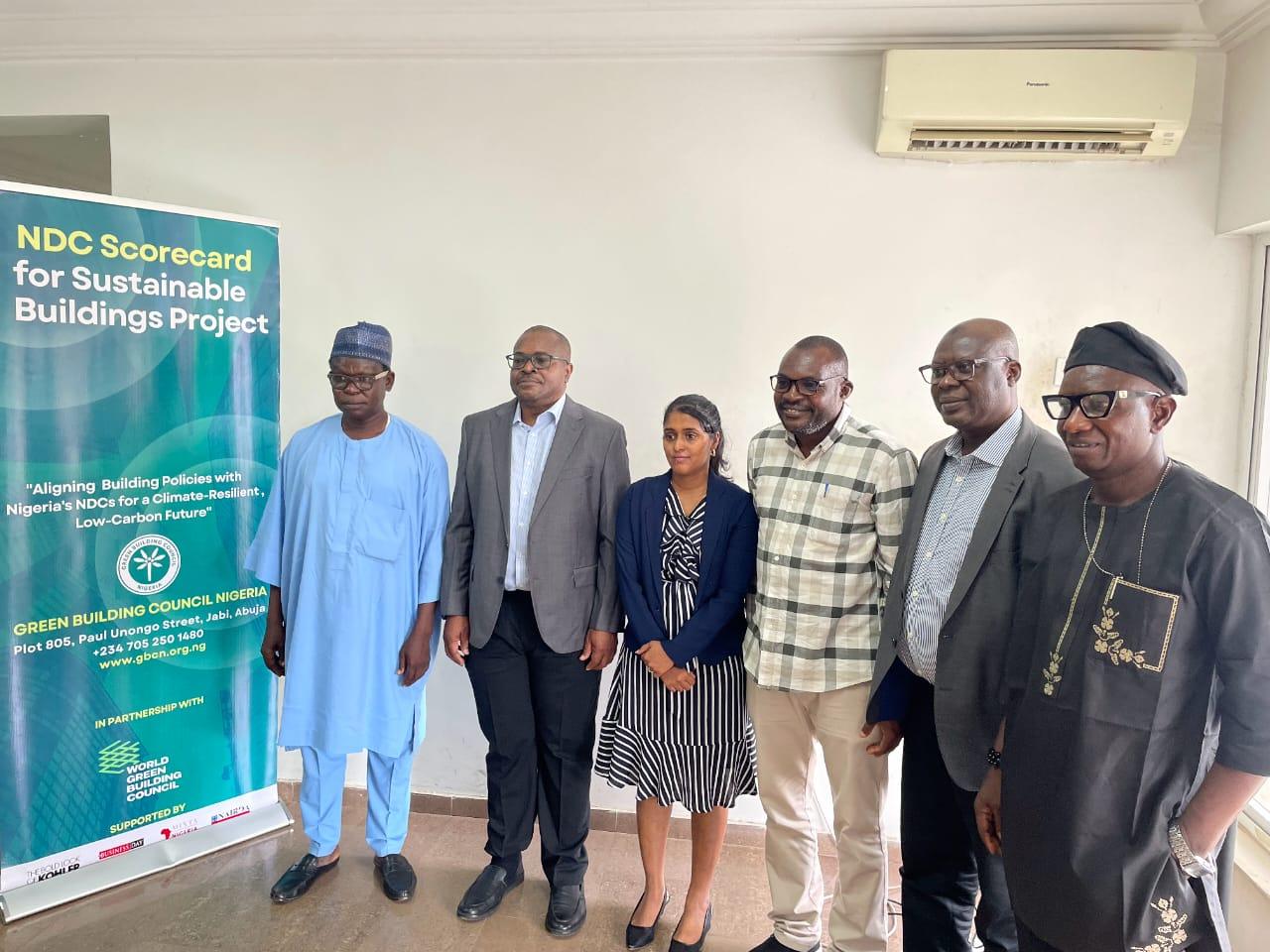
The President of the Green Building Council Nigeria (GBCN), Danjuma Waniko, has underscored the Council’s commitment to promoting sustainability, resilience and climate-friendly practices across Nigeria’s built environment.
Speaking at a media roundtable in Abuja, Waniko said the regional rollout of the National Determined Contributions (NDC) Scorecard for Sustainable Buildings Project aims to raise public awareness of the importance of sustainable construction and its implications for Nigeria’s future.
He explained that the initiative involves collective action among government institutions, industry stakeholders, civil society, the media and local communities to advance low-carbon and climate-resilient urban development.
“This project moves Nigeria from ambition to practical action ,making our buildings part of the climate solution,” Waniko said.
He noted that GBCN’s efforts are anchored on three key pillars: achieving net-zero carbon emissions, promoting resource circularity and enhancing urban resilience. These priorities, he added, align with Nigeria’s Climate Change Act, which targets net-zero emissions by 2060.
In his opening remarks, Builder Onabekun Adekunle, a Council Member of GBCN, explained that the purpose of the session was to provide an overview of the ongoing NDC Scorecard Project, which serves as a national framework for integrating sustainable and climate-resilient practices into Nigeria’s building sector.
“The NDC represents a country’s commitment to climate action under the Paris Agreement. It provides a data-driven foundation for green building initiatives that align with global sustainability goals,” Adekunle stated.
Mrs Sangeetha Ramaraj, Technical Lead at GBCN, explained that the NDC Scorecard Project was developed through a bottom-up approach to ensure it reflects Nigeria’s unique realities. She said the first phase identified policy and implementation gaps across 14 states, while the current phase focuses on translating those findings into an actionable plan in partnership with regional governments.
“The scorecard project was designed to be valuable, practical and relevant to Nigerian solutions. We analysed existing policies, identified gaps and developed a workable action plan to help Nigeria achieve its NDC targets under the Paris Agreement,”She said.
Usman Abdurrahman,GBCN’s Education and Knowledge Development Group, emphasised that collaboration is key to success.
“To make our cities climate-resilient, professionals in architecture, building and engineering must work hand in hand with policymakers. “Without strong policies and enforcement, progress will be difficult,”Usman stated.
He added that regional workshops held in Lagos and Abuja have already begun to yield results, with upcoming sessions in Port Harcourt and other zones aimed at deepening subnational engagement.
Also speaking, Architect Michael Baka described the initiative as a significant step towards combating climate change through innovation in design, construction and material use. He commended the Green Building Council for its proactive efforts and urged professionals in the construction sector to align with global best practices.
The efforts by the Green Building Council Nigeria are not only commendable but set a new standard for Africa. We must design buildings that truly serve human needs while reducing environmental impact,”Baka said.
The Green Building Council Nigeria serves as the national platform driving sustainability in the built environment. Through advocacy, capacity building, research and partnerships, the Council connects Nigeria’s local initiatives to global climate action,promoting a greener, safer and more resilient future for all.
