


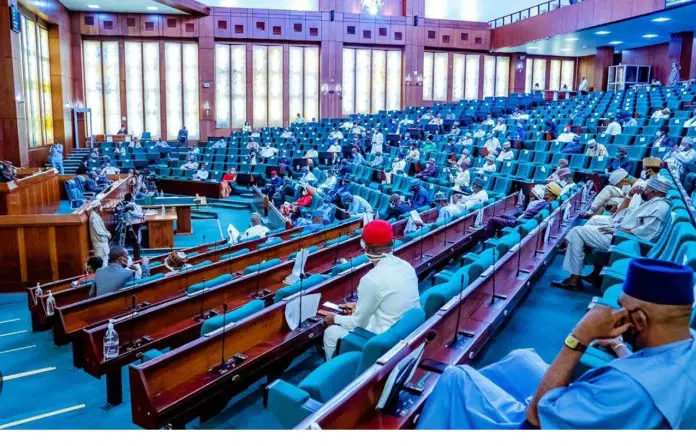
The House of Representatives has promised fair, realistic, and adequate budgetary allocations to specialty health institutions across Nigeria.
The chairman of the House of Representatives Committee on Specialty Healthcare, Mr. Alex Egbona gave the assurance at the 2026 budget defence session of the committee with institutions under its purview in Abuja.
He said that the Committee on Specialty Healthcare is constitutionally and legislatively mandated to provide oversight over all specialised hospitals and health institutions in Nigeria. These include Orthopaedic Hospitals, Psychiatric Hospitals, Obstetric Fistula Centres, Eye and Ear Hospitals, Oral and Dental Health Institutions, Complementary and Alternative Medicine, Blood Transfusion Services and Laboratory Science Technology.
“These institutions occupy a critical position in Nigeria’s healthcare system. They provide specialised and referral services, manage complex medical conditions, and serve some of the most vulnerable segments of our population. Without their effective functioning, the healthcare system cannot deliver optimal outcomes.
“However, it is evident that many of these specialised hospitals and institutions continue to operate under severe funding constraints. Annual budgetary provisions are often low and, in many cases, inadequate to address infrastructure deficits, manpower needs, equipment gaps, and expanding service demands. This reality directly affects service delivery and patient outcomes”. Mr Egboma said.
He noted that the purpose of the budget defence is therefore twofold: first, for institutions to defend their 2026 budget proposals; and second, to account for the implementation of the 2025 Appropriations Act, highlighting achievements, challenges, and gaps.
“The Committee is particularly interested in understanding how released funds (or lack of releases) have been utilized or affected performance; and how additional resources or adequate funding can translate into improved healthcare delivery in Nigeria“.he said.
He also assured the institutions that the Committee is committed as usual to ensuring that specialised healthcare institutions receive fair, realistic, and adequate budgetary allocations.
“We will continue to engage the relevant authorities and the Committee on Appropriations to advocate for improved funding, guided by transparency, accountability, and national health priorities” he said.
The Chairman urged all institutions to make concise, factual, and evidence-based presentations to enable the Committee to carry out its responsibilities effectively.
Mental Health Act
In his presentation, the Provost and Medical Director of the Federal Neuropsychiatric Hospital, Aro, Abeokuta, Professor Afis Agboola, pointed out that Nigeria’s failure to implement the Mental Health Act is scaring away foreign donors from partnering with the country’s health sector.
He revealed that the hospital has spent close to N1 billion from its internally generated revenue to care for abandoned mental health patients, describing the development as unsustainable.
According to him, although the Mental Health Act was passed by the National Assembly and signed into law by former President Muhammadu Buhari, it has remained largely unimplemented for more than two years after its enactment.
“The issue of patient abandonment is a major challenge. Unfortunately, despite having a Mental Health Act that clearly spells out the responsibilities of the federal, state, and local governments, there has been no execution of the law to date,” he said.
Professor Agboola explained that repeated engagements with the Federal Ministry of Health on the matter have yielded little progress, with funding constraints often cited as the main reason for the delay.
He stressed that the absence of a properly established Department of Mental Health within the Ministry has limited Nigeria’s ability to access international funding, as most foreign donor agencies insist on engaging with clearly defined statutory institutions.
“There are international partners, including agencies in the United States, that are ready to support Nigeria’s mental health sector. However, they keep asking whether we have a functional mental health agency or department. Without such a structure, they cannot relate to us or release funds,” he noted.
He added that several other donor organisations are also willing to assist in alleviating the suffering of mental health patients in Nigeria, but the lack of a designated agency or department continues to frustrate such partnerships.
The medical director, therefore, appealed to the House Committee to prevail on the Federal Ministry of Health to fully implement the Mental Health Act, particularly the provision for the creation of a Department of Mental Health.
“This is not optional; it is the law. Failure to implement it is to the detriment of mental health patients across the country,” he said