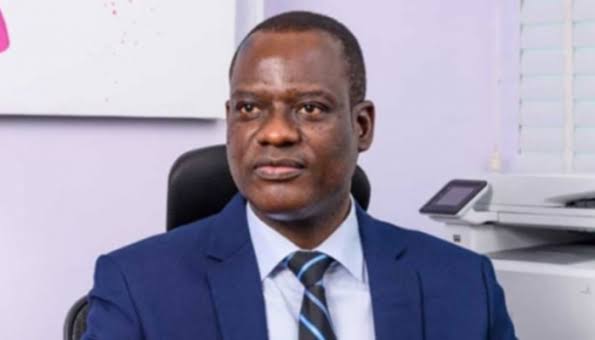
The Minister of State for Finance, Taiwo Oyedele, has warned that illicit financial flows (IFFs) are draining Africa’s resources and undermining development across the continent.
He said every amount lost to such flows deprives citizens of access to essential services.
“Every naira, every shilling, every rand, every dollar lost to illicit financial flows is a school not built, a hospital not equipped, and a job not created,” he said.
Oyedele spoke at the closing ceremony of the 5th African Union Special Technical Committee and Sub-Committee on Tax and Illicit Financial Flows Conference held in Abuja. He described IFFs as one of the biggest threats to Africa’s fiscal independence.
According to him, the challenge extends beyond taxation and cuts across governance and economic development.
“What we have seen clearly is that it is not just a tax issue; it is a governance and development issue,” he said.
He called on African governments and institutions to take stronger action by improving transparency and strengthening enforcement systems.
“We must strengthen transparency systems, including beneficial ownership registers. We must enhance cross-border cooperation, use data more effectively, and ensure enforcement is credible and consistent,” Oyedele said.
On taxation, the minister stressed the need for African countries to ensure that value created within their economies is properly taxed, particularly as digital activities expand.
“Africa must not be a passive participant in the global digital economy. We must assert our taxing rights. We must build capacity for digital tax administration and engage strategically in global negotiations,” he said.
He added that ongoing discussions at global platforms, including the United Nations, present an opportunity for African countries to push for fairer tax systems.
However, he warned that lack of coordination is weakening the continent’s position.
“Coordination is no longer optional. Fragmentation is costing Africa. Whether in tax policy, incentives, treaty negotiation or enforcement, we must move toward greater coordination and harmony,” he said.
Oyedele also highlighted the opportunities presented by the African Continental Free Trade Area, noting that countries must align their tax systems with trade objectives.
“The African Continental Free Trade Area presents a unique opportunity to align our fiscal systems with our trade ambitions, because integration without coordination will not deliver results,” he said.
He urged countries to strengthen domestic systems by investing in tax administration, digitising processes and building capacity while deepening cross-border collaboration.
“Reform is not optional. It is the seed for progress. If you don’t plant it, it will be hard for progress to come,” he said.
The minister also stressed the importance of unity among African countries in addressing shared challenges.
“We are stronger together, but we are only as strong as our weakest link,” he said.
Quoting an African proverb, he added: “If you wish to go fast, go alone. But if you wish to go far, go together.”
He emphasised that Africa must pursue speed and sustainability in its development efforts.
“Africa needs to go far and fast. Africa’s future will not be defined by its challenges but by how decisively it responds to them,” he said.
Oyedele concluded that strong tax systems are critical to building stable and resilient economies.
“Fiscal strength is not just about revenue; it is about sovereignty, stability and sustainable development. If we close the leakages, mobilise resources optimally and spend wisely, we will build and secure the Africa we deserve,” he said.