

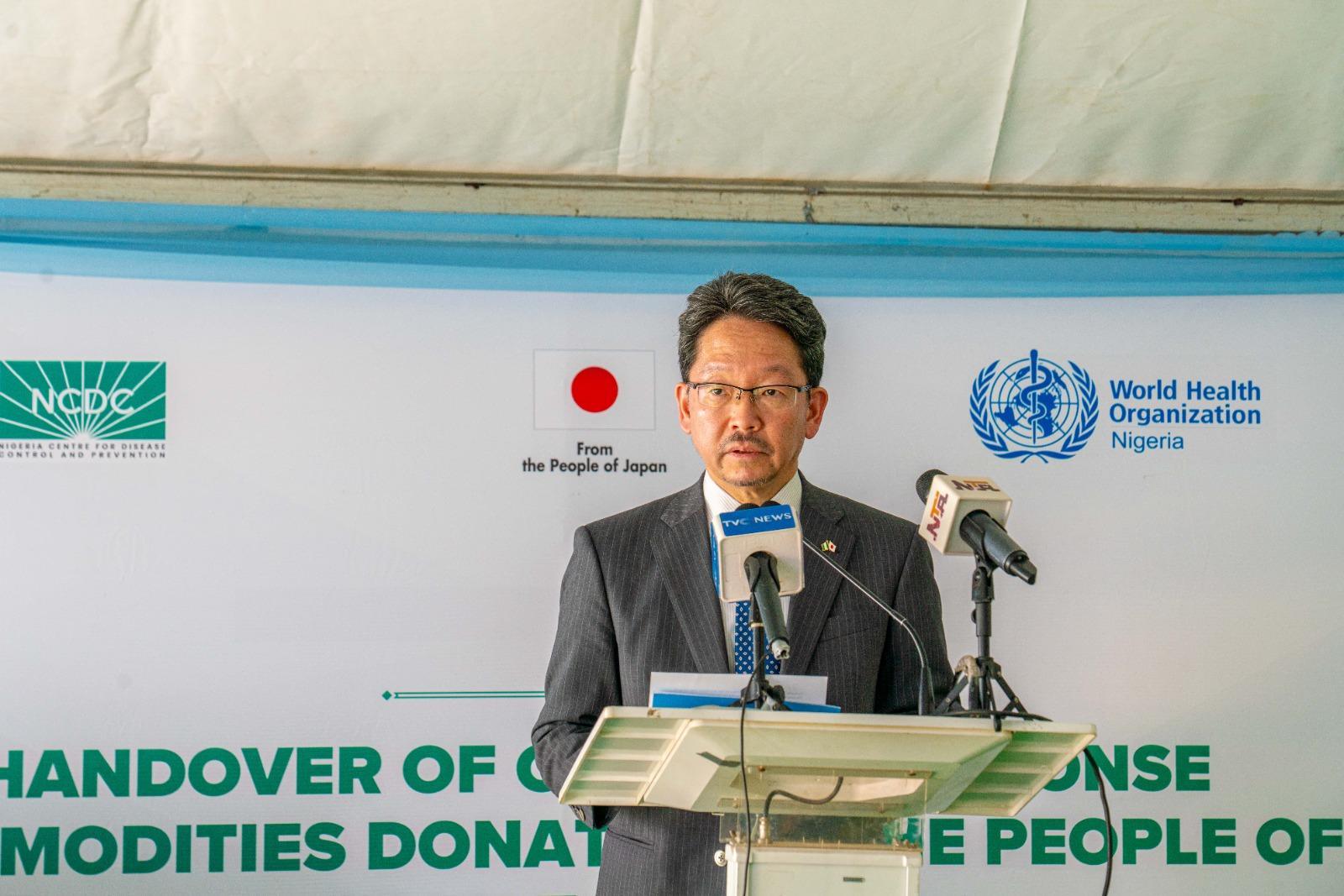
The Nigerian government has recorded another major milestone in its national health security efforts with the official handover of cholera response kits donated by the government of Japan and delivered through the World Health Organisation (WHO).
The lifesaving supplies, funded through a US$500,000 Japan Grant, are part of an ongoing partnership aimed at supporting Nigeria’s capacity to prevent, detect, and respond swiftly to cholera outbreaks across the country.
During the handover ceremony in Abuja, the Nigerian Government, through the Nigeria Centre for Disease Control and Prevention (NCDC), expressed profound appreciation to the people and Government of Japan for their unwavering support.
The donation, described as timely, comes as Nigeria intensifies nationwide preparedness amid recurring outbreaks in several high-risk regions.
According to the Director-General of the NCDC, Dr Jide Idris, the cholera kits are already being deployed to vulnerable communities experiencing active transmission.
“These supplies will support frontline health workers in early intervention, reducing complications, and saving lives in locations most affected by the disease.”
“Since the Japan Grant was received on 1 March 2025, the assistance has significantly transformed Nigeria’s cholera response capacity.”
“A total of US$104,951 worth of critical cholera commodities, including medicines, medical devices, and logistics materials, was procured and strategically prepositioned across states.”
“This measure ensures continuous availability of essential supplies during peak transmission, helping hospitals maintain uninterrupted treatment services.”
“Beyond supplies, one of the most impactful components of the support has been human resource strengthening. WHO, working closely with the Nigerian Government, facilitated a comprehensive National Training of Trainers (ToT) programme which prepared 176 health experts drawn from the six geopolitical zones to lead cholera preparedness and response efforts.
The training covered six essential pillars:
Coordination, surveillance, laboratory diagnostics, infection prevention and control (IPC), case management, and risk communication.
These trained experts have cascaded knowledge to thousands of frontline responders in 134 Priority Areas for Multisectoral Interventions (PAMIs), ensuring improved community-level detection and early reporting of suspected cases.
In addition, surveillance systems have been strengthened through community-based surveillance training implemented across local government areas in seven high-risk states.
This initiative promotes quicker reporting of suspected infections, allowing for prompt mobilisation of rapid response teams and better decision-making at both national and sub-national levels.
Despite Nigeria recording 22,196 suspected cholera cases and 505 deaths as of 2 November 2025, the Nigerian government has continued to demonstrate resilience, coordination, and commitment in its public health response.
Dr Idris said the new partnership support will further strengthen efforts to reduce mortality rates and achieve the national goal of improved outbreak readiness.
The Director General of NCDC said the intervention “came at a critical time”, reinforcing Nigeria’s capacity to diagnose cases early and respond effectively.
He emphasised that the support aligns with national strategies aimed at strengthening epidemic preparedness and safeguarding public health.
Japan’s Ambassador to Nigeria, Mr Suzuki Hideo, reaffirmed Japan’s commitment to supporting strong health systems, noting that the partnership reflects Japan’s desire to contribute to global health security and Nigeria’s progress toward Universal Health Coverage.