


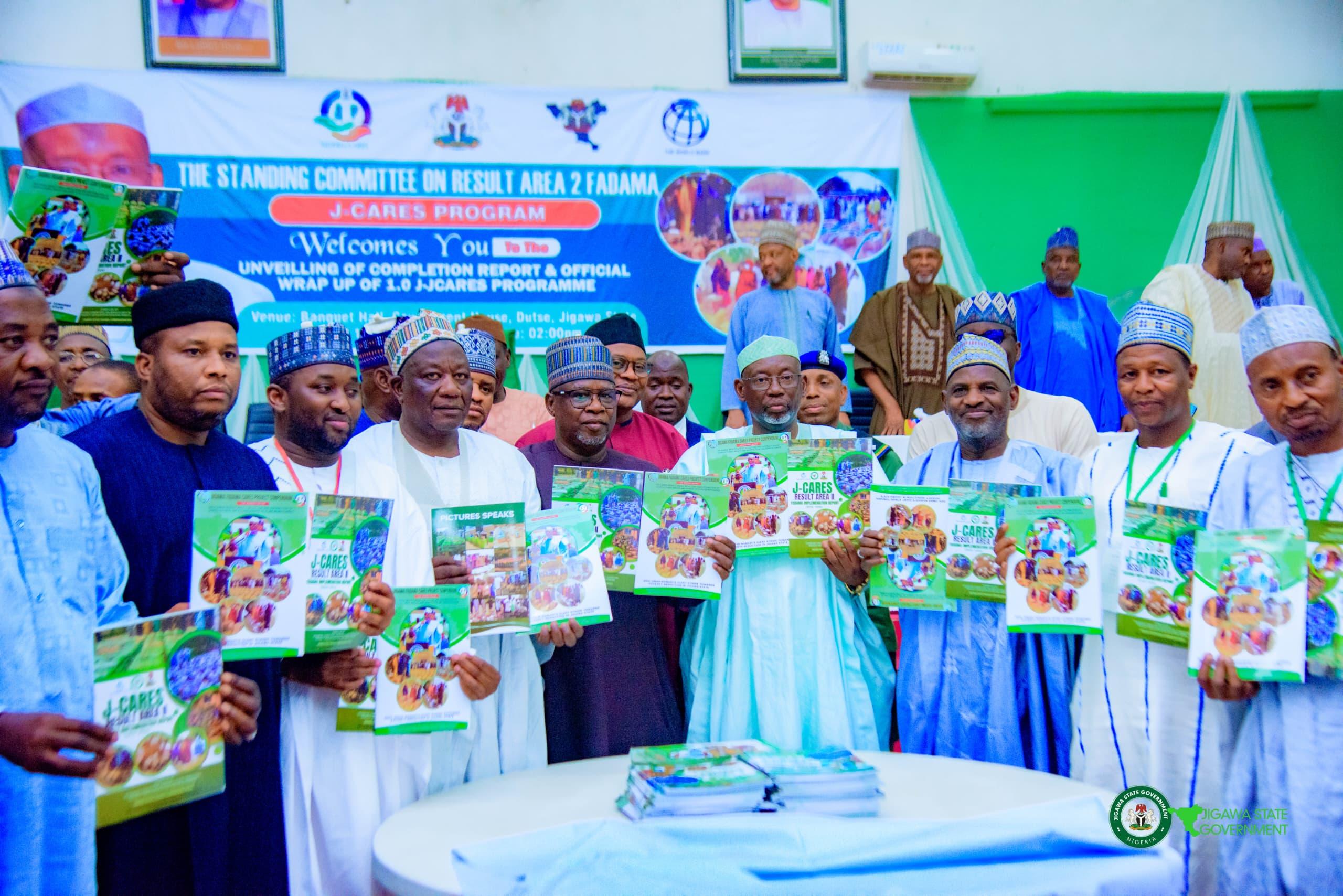
The Governor of Jigawa State, Umar Namadi, has launched the third phase of the Civil Servants’ Agricultural Support Programme and unveiled the FADAMA J-CARES 1.0 Compendium and Completion Report to strengthen livelihoods and economic resilience.
The initiatives involve billions of naira in investments aimed at boosting agriculture, economic recovery and community development across the state.
Governor Namadi said the programme enables civil servants to engage in farming by providing subsidised farm inputs and soft loans with flexible repayment terms.

He noted that since its launch in July 2024, the programme has supported 8,432 civil servants with over ₦3.03 billion in the first phase and 5,750 workers with nearly ₦1.26 billion in the second phase.
READ ALSO: Jigawa State Partners With India to Improve Dairy Sector
Governor Namadi added that the third phase will support about 3,000 civil servants with funding valued at over ₦1.6 billion.
This brings the total investment in the programme to more than ₦5.9 billion and the number of beneficiaries to over 17,000 across the state.
He noted that the initiative is helping to expand agricultural activities, bring more farmland under cultivation and create additional sources of income for civil servants.
The governor also highlighted measures introduced to improve transparency and efficiency, including digital registration of beneficiaries, GPS verification of farm locations and electronic tracking of farm inputs through JASCO stores.
He said the focus on dry-season rice farming is intentional, stressing that increased local rice production is key to strengthening Nigeria’s food security and reducing dependence on imports.
FADAMA JIGAWA CARES:
Meanwhile, at a separate event in Dutse, the governor unveiled the FADAMA J-CARES 1.0 Compendium and Completion Report, marking the official conclusion of the programme implemented by the Jigawa State Government with support from the World Bank.
The Jigawa COVID-19 Action Recovery and Economic Stimulus (J-CARES) Programme was designed to mitigate the economic effects of the COVID-19 pandemic and other shocks by supporting vulnerable households, farmers and small businesses.
Governor Namadi explained that the programme focused on three key areas: social safety nets, food security and livelihoods, and support for micro, small and medium-scale enterprises.
He disclosed that more than 47,800 beneficiaries in over 1,200 remote communities across the state benefited from the programme, covering all 287 political wards in the 27 local government areas.
The intervention involved an investment of over ₦4.6 billion and provided beneficiaries with agricultural inputs such as rice, maize, millet and sorghum seeds, as well as productive assets including processing machines, water pumps and livestock.