

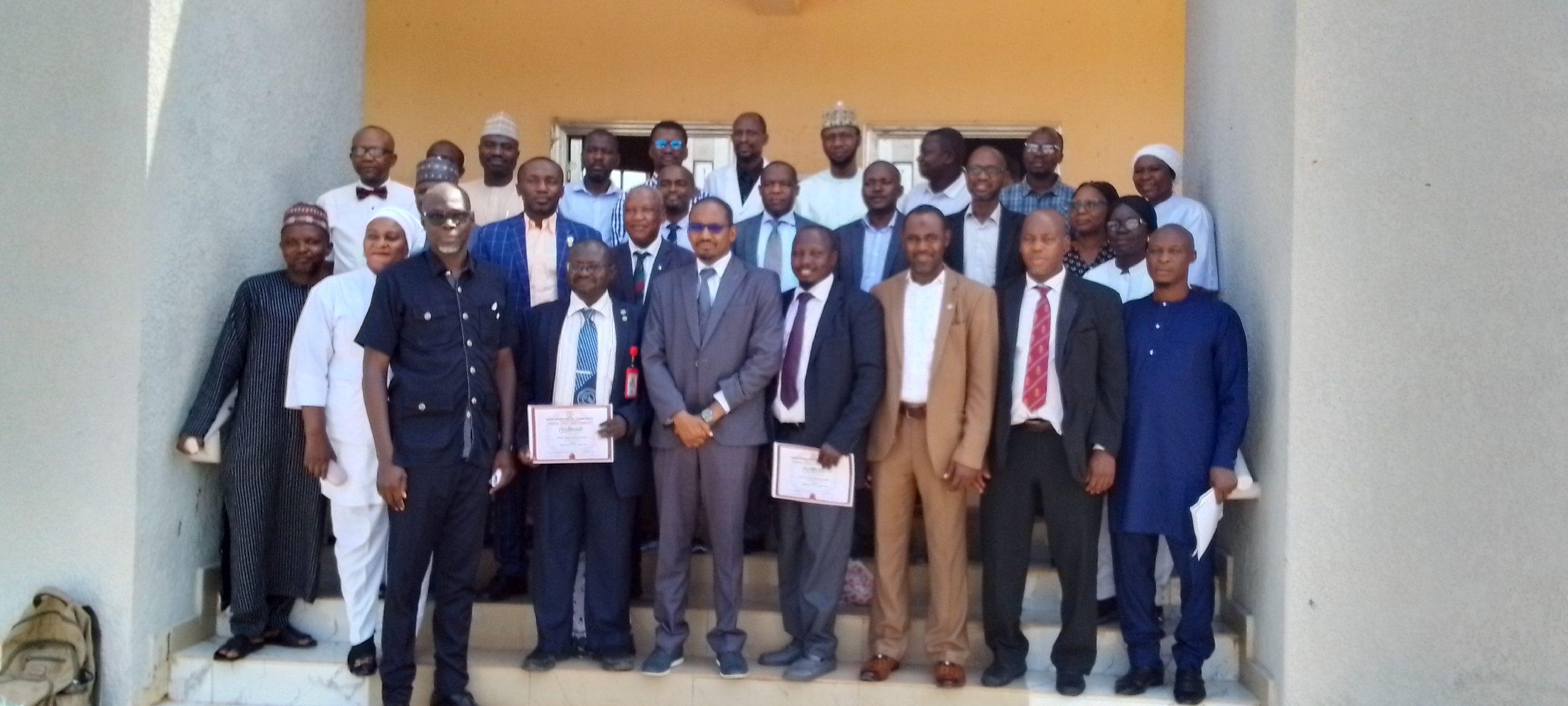
The Chief Medical Director of Usmanu Danfodiyo University Teaching Hospital (UDUTH) in Sokoto, Northwest Nigeria, Professor Anas Sabir says proper education and awareness are key to increasing acceptance of autopsy in communities.
Professor Sabir made this known during the hospital’s Clinical Forum Committee quarterly presentations on the topic “Autopsy: Underused Clinical Audit Tool” delivered by Professor Umar Mohammed and Dr. Yusuf Dantuni in Sokoto State.
Professor Sabir noted that autopsy remains a sensitive subject for many communities, particularly in northern Nigeria, but stressed that with consistent and clear sensitisation, people would begin to understand and embrace the practice.
He said: “The hospital will continue to engage key stakeholders such as security agencies, religious leaders, and community heads to promote grassroots awareness.”
“Autopsy is very straightforward, yet misconceptions persist. With proper counselling. But not every case requires an autopsy—the hospital can offer this service for the benefit of the community.”
Professor Sabir commended the presenters for their detailed submissions and praised the committee for organising the lecture at a critical time.
Read Also: NGO, Society to Host Outreach Promoting Safe Medicine Use
He also urged other departments within the hospital to replicate such awareness programmes on health-related issues relevant to their communities.
In his lecture, Consultant Histopathologist and Professor of Morbid Anatomy, Umar Mohammed highlighted the medical significance of autopsy.
He explained that “autopsy, as a post-mortem examination, provides detailed medical insight into the cause of death and related information, which can guide further necessary actions.”
“Unfortunately, many still refuse to understand. Religion does not forbid autopsy, particularly in Islam. In fact, it remains one of the simplest ways to resolve suspicions and accurately determine the cause of death,” he said.
Professor Mohammed urged the public to first grasp the concept of autopsy before misinterpreting its purpose.
He expressed appreciation to the hospital management for providing a platform to raise awareness on such an important issue.
Highlights of the quarterly forum included presentations of certificates to the discussants, as well as an interactive question-and-answer session.