

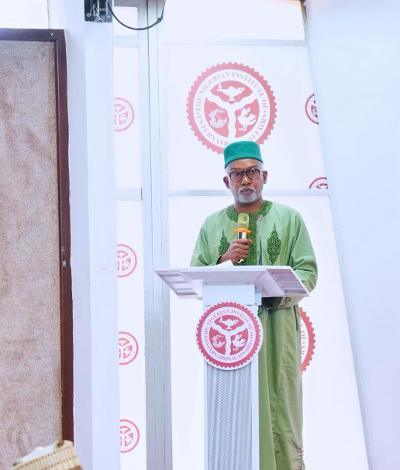
Nigeria’s Minister of Foreign Affairs, Ambassador Yusuf Tuggar, has called for a comprehensive overhaul of the nation’s foreign policy to keep pace with emerging global realities.
He stressed that Nigeria must leverage its size, resilience, and moral standing to remain a respected voice on the world stage.
Delivering a guest lecture titled “Navigating Realities: Aligning Nigeria’s Foreign Policy Practice with Emerging Global Dynamics” at the Nigerian Institute of International Affairs (NIIA) in Lagos, Tuggar praised the institute’s six decades of thought leadership, noting its central role in shaping Nigeria’s external relations since independence.
He reflected on Nigeria’s history of global engagement, citing its leading role in the liberation of Southern Africa, the anti-apartheid movement in South Africa, and peacekeeping missions in Liberia, Sierra Leone, Sudan, and The Gambia, as well as its pivotal role in establishing ECOWAS in 1975.
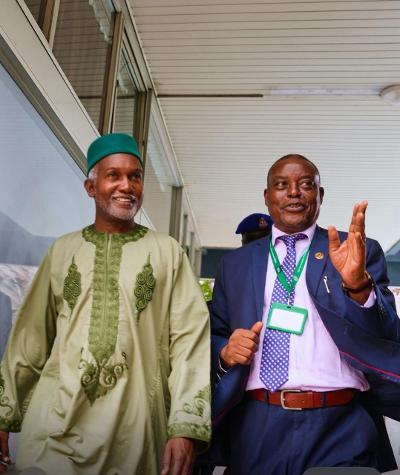
Tuggar observed that the world is entering a new multipolar era defined by climate change, artificial intelligence, terrorism, migration, and inequality.
Drawing parallels with the Cold War, he recalled Nigeria’s independent foreign policy traditions such as non-alignment, the Concert of Medium Powers, and the Concentric Circles strategy.
On the economic front, he warned against repeating the mistakes of raw material dependence and externally imposed policies, referencing the historical Lagos Plan of Action versus the Washington Consensus debate.
According to the minister, “President Bola Ahmed Tinubu’s Renewed Hope Agenda is anchored on the principle of “Strategic Autonomy,” built around the 4Ds of foreign policy—Democracy, Development, Demography, and Diaspora.”
“This approach is rooted in pragmatism, not duplicity, and reflects Nigeria’s size, resilience, and moral standing,”Tuggar said.
He reaffirmed Africa’s centrality to Nigeria’s diplomacy, pointing to opportunities in the African Continental Free Trade Area (AfCFTA) and collaborative security platforms such as the Multinational Joint Task Force, ECOWAS, and the African Union.
The Minister also highlighted Nigeria’s leadership in strengthening democratic governance, announcing the Regional Partnership for Democracy (RPD), a new initiative developed with the UNDP to help West African nations consolidate democratic institutions, promote inclusive governance, and foster dialogue even amid political disagreements.
Concluding his address, Tuggar pledged that Nigeria will remain an influential, self-reliant global actor.
“Nigeria’s diplomacy will continue to build partnerships rooted in justice, equity, and the advancement of Africa,” he said.
PIAK