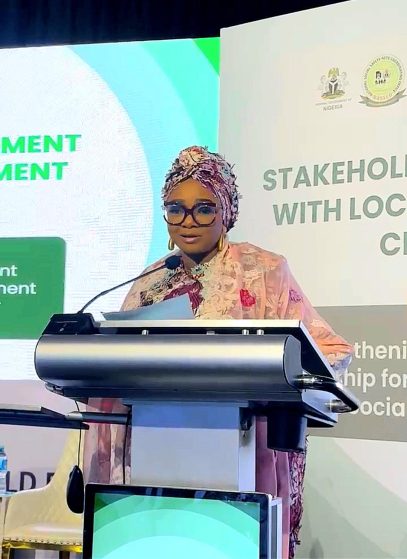
The Minister of Women Affairs and Social Development, Imaan Sulaiman-Ibrahim, has called for stronger collaboration between the Federal Government and local government councils to deepen social protection and promote inclusive development across Nigeria.
Speaking at a stakeholder engagement in Abuja organised by the National Social Safety-Nets Coordinating Office with support from the World Bank, themed “Strengthening Local Government Leadership for Inclusive Development and Social Protection Delivery,” she described local governments as “critical drivers of people-centred governance and sustainable community development” under President Bola Ahmed Tinubu’s Renewed Hope Agenda.
She said the initiative reflects the government’s commitment to ensuring that “vulnerable Nigerians are not excluded from social intervention and empowerment programmes.”
READ ALSO: NSITF Boss Commends NLC for Championing Workers Social Protection
The Minister noted that local government councils remain the closest tier of government to the people and play a strategic role in identifying vulnerable households, mobilising communities, and supporting women-focused initiatives.
“Your offices remain the first point of contact for millions of Nigerians seeking hope, protection, empowerment, and access to critical social services.”
Sulaiman-Ibrahim highlighted the Renewed Hope Social Impact Intervention 774 (RHSII-774) as one of the Federal Government’s flagship programmes aimed at strengthening grassroots empowerment and expanding opportunities for women and vulnerable groups across the 774 local government areas.
According to her, the initiative demonstrates President Tinubu’s commitment to ensuring that “the dividends of democracy reach every ward, every household, and every community across Nigeria.”
She also stressed the importance of credible community-based data collection under the National Social Safety Nets Project–Scale Up (NASSP-SU), noting that the effectiveness of the National Social Register depends largely on the integrity of data generated at the grassroots level.
The Minister urged local government chairmen to intensify sensitisation and enrolment for the National Identification Number (NIN), particularly among women, persons living with disabilities, rural dwellers, and marginalised groups.
“Integrating NIN into the social protection framework will help bridge long-standing exclusion gaps affecting women, persons with disabilities, rural dwellers, and marginalised populations,” the minister said.
Sulaiman-Ibrahim also called on council chairmen to support the National Women Mega Empowerment and Rally initiative launched by the First Lady, Senator Oluremi Tinubu, under the theme: “The Power of 10 Million: One Voice, One Movement, One Choice.”
She described the initiative as a grassroots mobilisation platform designed to promote inclusive development, women’s empowerment, social protection, and national cohesion.
The Minister emphasised that strengthening local leadership would ultimately strengthen families, communities, and the nation.
She urged stakeholders to translate policy goals into measurable actions that restore dignity, expand opportunities, and renew hope for vulnerable Nigerians.