


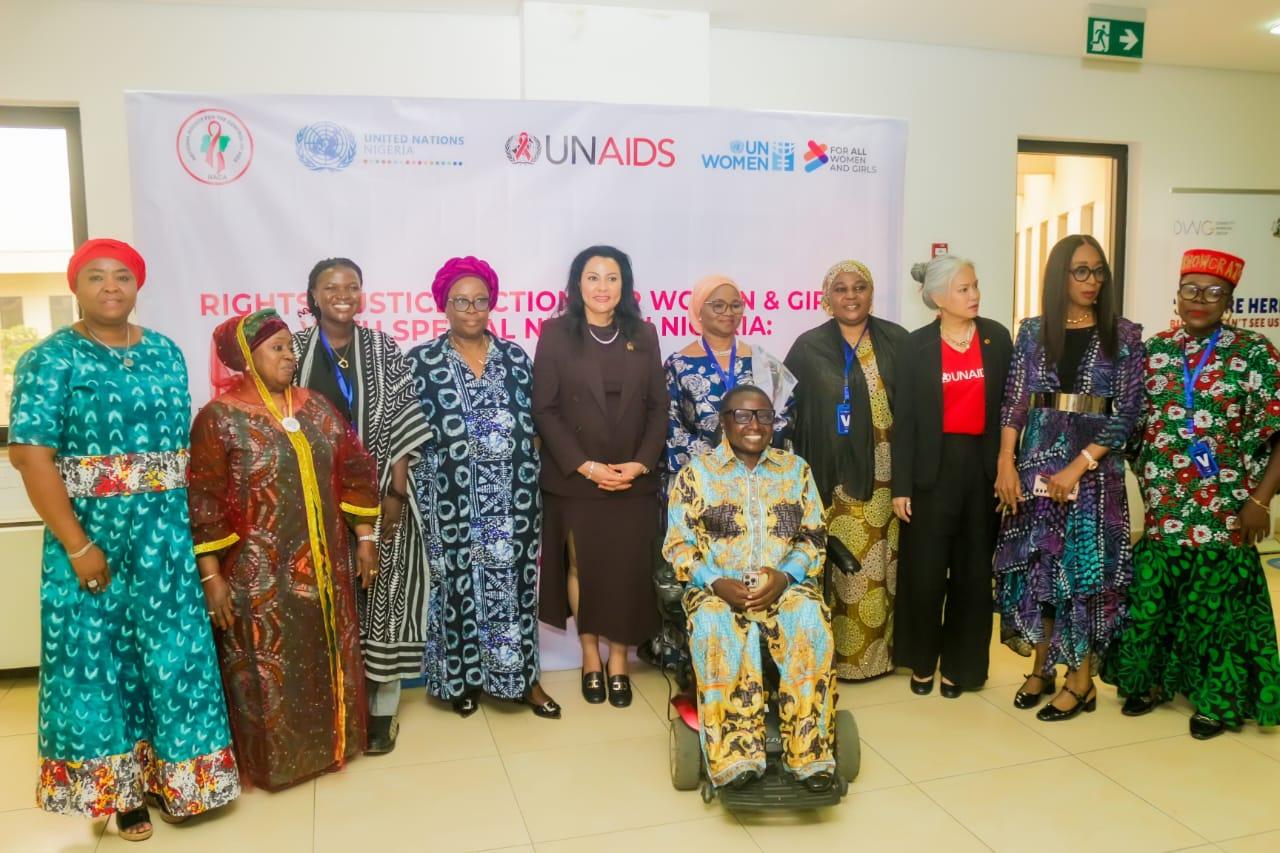
The Nigerian Government, Development Partners and Critical Stakeholders have outlined concrete plans to embed inclusion within national economic planning, social protection systems and humanitarian response for women and girls with special needs in the country
The commitments were made at a high-level symposium for Special Needs Groups organised by UN Women Nigeria to mark International Women’s Day 2026, with a focus on translating policy commitments into measurable action for those living at the margins.
Delivering a keynote address on “Equity Without Exception; Translating Nigeria’s Commitments to Women and Girls With Special Needs Into Concrete Results,” the Minister of State for Budget and Economic Planning, Doris Uzoka-Anite, anchored inclusion within Nigeria’s broader economic reform agenda, outlining a shift toward results-based governance tied to the forthcoming National Development Plan 2026–2030.
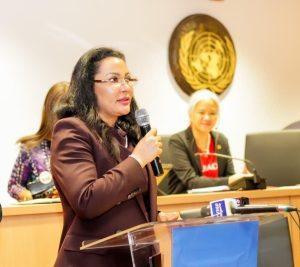
She emphasised that inclusion must be viewed as an economic imperative. “Inclusive investments generate the highest returns. They are not a drain on the budget; they are the most efficient use of public resources.”
Reaffirming the government’s commitment to transparency and impact-driven spending under President Bola Tinubu, she stated, “Every naira spent on inclusive health, education, and social protection returns many times over in economic productivity, reduced poverty, stronger families, and stable communities.”
Highlighting the policy direction, the Minister added, “Vulnerability is not the property of a person. It is the result of a system that fails to protect, fails to include, fails to invest.”
In her opening remarks, the UN Women Representative to Nigeria and ECOWAS, Beatrice Eyong, underscored the structural drivers of inequality affecting vulnerable groups. “These disparities are driven by poverty, gender inequality, human rights violations, and AIDS-related stigma. They are not personal failings. They are systemic failures,” she said.
She identified women living with HIV, women with disabilities, elderly women, young girls and internally displaced persons as priority groups, stressing the complexity of overlapping vulnerabilities. “None of these women exists in a single category. They exist at crossroads. At these crossroads, hardship does not add up. It multiplies.”
Also speaking, the UNAIDS Country Representative, Boonto Krittayawa, warned that global progress remains slow. “We are far from reaching our goal of gender equality by 2030. In fact, by the UN’s assessment and review of progress, it could still take 300 years to achieve gender equality.”
She noted that prevailing national realities “underscore a grim reality. We must act now to accelerate change.”
Likewise, the Minister of Women Affairs and Social Development, Imaan Sulaiman-Ibrahim, represented by Jummai Idonijie, called for sustained collaboration, warning that many “move through our systems unseen, like a phantom at the margins of progress… rights are often denied, action is delayed, and justice remains out of reach.”
Citing the Renewed Hope Social Impact Intervention (RHSII-774) as a vehicle to “scale inclusive, community-driven programmes” targeting 50 million women, she emphasised tackling exclusion at its roots; “shifts focus to where exclusion often begins, the home and community.”
Similarly, the Minister of Humanitarian Affairs and Poverty Reduction, Bernard Doro, represented by Ruth Ki, said the Ministry’s “One Humanitarian, One Poverty Reduction, One Poverty Response System,” is “designed to strengthen coordination, eliminate duplication, and ensure that support reaches the most vulnerable Nigerians effectivelt” by expanding “access to social protection, economic empowerment, and protection mechanisms,” with the goal that “no woman or girl is left behind.
“As a nation, we cannot claim progress if those who are most vulnerable remain unseen and underserved,” she stated.
Stakeholders, however, highlighted persistent implementation gaps, noting that despite existing frameworks, many vulnerable women remain excluded from healthcare, education, justice and economic opportunities.
The Acting Deputy Country Representative of UN Women, Patience Ekeoba, captured the concern, stating, “Power excludes,” adding, “The solution is in this room.”
Stakeholders maintained that the success of these commitments will depend on enforceable reforms, inclusive service delivery and budget allocations that reach the last mile, positioning inclusion as central to Nigeria’s sustainable development trajectory.