

By Aanya Igomu
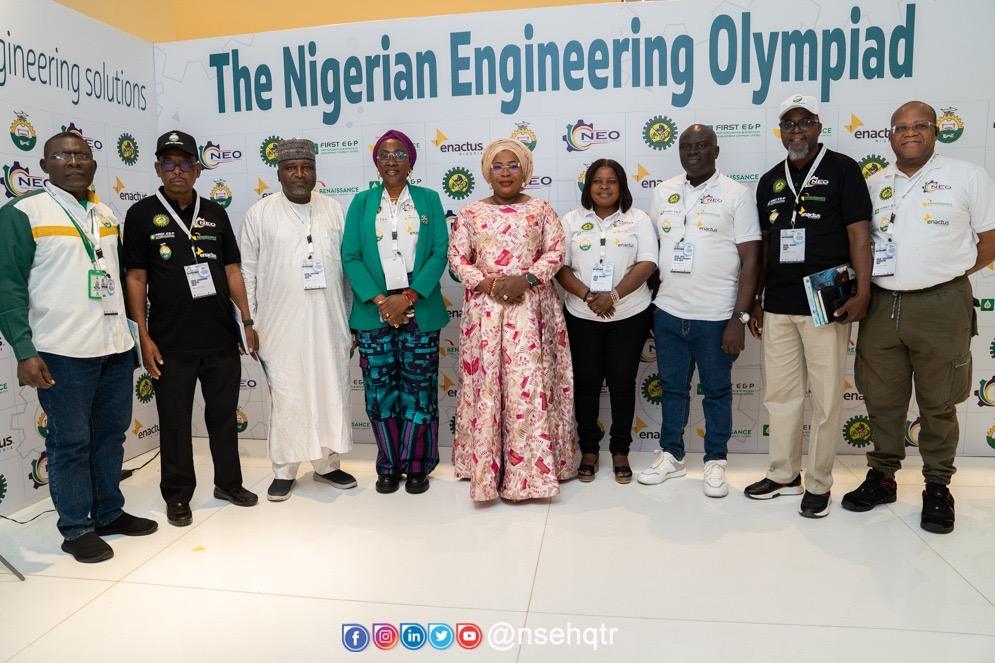
The Nigerian Engineering Olympiad, an innovative entrepreneurship programme designed to identify, nurture, and celebrate engineering excellence among Nigerian tertiary students, has been launched in Abuja, Nigeria’s capital.
The Nigerian Society of Engineers, in collaboration with the Nigerian Content Development and Monitoring Board and other development partners in the energy sector, spearheaded and launched this programme.
The President of the Nigerian Society of Engineers, Mrs Margaret Oguntala, in her keynote address, stated that the engineering profession is the bedrock of national development, hence the need to intentionally reinvent the profession in Nigeria.
She explained that the Nigerian Engineering Olympiad programme, a competition that would span about seven months, aims to transform students’ engineering ideas into real-life solutions.
“Over the years, our Engineering students have proposed intelligent inventions as final-year projects, yet there has been little deliberate effort to translate those concepts into viable products and services.
“Too often, brilliant ideas end up gathering dust on library shelves instead of powering small and medium-scale enterprises, a narrative the Nigerian Engineering Olympiad is designed to change by providing a structured pathway to carry academic innovations beyond the university, nurturing them into real-life solutions that can drive economic growth and social development,” Oguntala explained.
She said the programme provides the platform for innovative ideas that could contribute to national development by providing financing viability, prototype development and testing, interactive refinement, product validation, and intellectual property protection.
She highlighted the different stages of the competition: “With support at each of these stages, the NEO can serve as a launchpad for translating academic knowledge into viable homegrown Engineering products and solutions. Spanning 10 months, the Olympiad will progress through regional contests, mentorship phases, prototype development boot camps, and a national grand finale by April 2026.
“By then, we expect participating teams to have refined their projects to world-class standards. The best ideas will earn not only recognition but also seed funding and technical guidance to turn them into real ventures. This is not just another competition, it is a national innovation incubator,” the NSE President said.
The Executive Secretary of the Nigerian Content Development and Monitoring Board, Mr. Felix Ogbe, said the government aims to bridge the prevailing gap between classroom concepts and hands-on technical skills.
Mr. Ogbe, who was represented by a Board Director, Mr. Abayomi Bamidele, explained that the wide gap between academic and real-life skills has led to 70% of engineering graduates lacking hands-on technical ability aligned with industry standards.
“The gap has significant implications. It contributes to a shortage of competent local engineers, heightens reliance on expatriates, and fuels the brain drain as talented Nigerian engineers seek opportunities abroad,” he said.
He said the Olympiad, along with other initiatives by several organisations, is among the concrete steps being taken to reverse the trend.
Other funding partners of the Nigerian Engineering Olympiad include Renaissance Africa Energy Company (RAEC), First Exploration & Petroleum Development Company (FIRST E&P), and Enactus Projects .