


The Agricultural Research Council of Nigeria (ARCN) has restated its commitment to enhancing research governance and management, outlining a series of strategic initiatives aimed at strengthening the nation’s agricultural research system.
The pledge was made by the Executive Secretary of ARCN, Dr. Abubakar Adamu Dabban, during his opening address at the maiden National Stakeholders’ Forum on Agricultural Research Capabilities in Abuja.
The forum, themed “Research Capabilities in Nigeria: The Journey So Far,” was jointly convened by ARCN and the International Institute for Tropical Agriculture (IITA) to assess progress, address challenges, and chart a future course for agricultural innovation in the country.
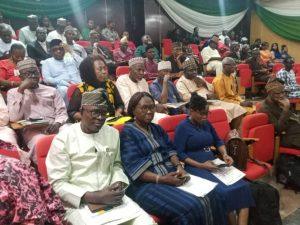
In his remarks, Dr Dabban emphasised that while Nigeria’s National Agricultural Research System (NARS) has made significant strides in developing human resources, technological innovations, and infrastructure, there is a critical need for modernisation and improved governance.
“As we take stock today, learn from past challenges, and envision the future, I am confident that the measures we adopt will generate value, strengthen our capabilities, and align with best practices in agricultural research management,” Dr. Dabban stated.
To spearhead this new phase, the Executive Secretary unveiled four key priorities already underway:
“The development of a second-generation strategic and operational plan for ARCN, a comprehensive review of the Conditions and Schemes of Service for ARCN, National Agricultural Research Institutes (NARIs), and Federal Colleges of Agriculture (FCAs), Revisiting the report on the implementation of the ARCN (Amended) Act 2021 to ensure its full execution and An immediate review and update of the 2009 Guidelines for Management of NARIs and FCAs.”
Acknowledging the complex challenges facing the sector, Dr. Dabban highlighted the urgency of these reforms.
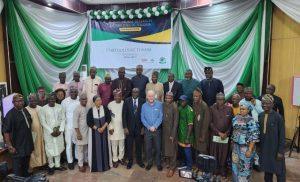
“Nigeria’s agriculture stands at a crossroads: challenged by climate change and population growth, yet energised by the promise of science, innovation, and technology to drive food security and transform livelihoods,” he remarked.
“To seize this moment, we must strengthen research governance, invest in human and institutional capacity, and foster collaboration that extends nationally, regionally, and globally.”
The ARCN head commended the contributions of partners, including the Federal Ministry of Agriculture and Food Security, the CGIAR family, ECOWAS, FARA, and the private sector, for their enduring support.
He also proposed that the stakeholders’ forum become an annual event to ensure continuous dialogue and accountability.
This forum is both reflective and catalytic. Through its sessions and discussions, we seek to generate insights that will shape a forward-looking agenda for agricultural research in Nigeria, one that is responsive, inclusive, and transformative.” Dr. Dabban explained.
He concluded with a call for unified action, declaring the forum open.
“We have come a long way, but the road ahead calls for even greater vision and collaboration. Let us rise to that challenge.”
Also speaking, the Chairman of the Stakeholders’ Forum, Professor Lateef Sanni, says agricultural research is the key to Nigeria’s food security, noting that modern farming cannot succeed without science and innovation.
Professor Sanni further called for more collaboration, technology adoption, and investment to build a stronger food system.
The Country Representative of the International Institute of Tropical Agriculture, Professor Michael Adediran, while reviewing the role of global partnerships, noted that CGIAR and IITA have supported Nigeria through crop and livestock research and promised continued collaboration with national research institutes and colleges.