Nigeria has again reaffirmed its commitment to end gender-based violence and advance social justice.
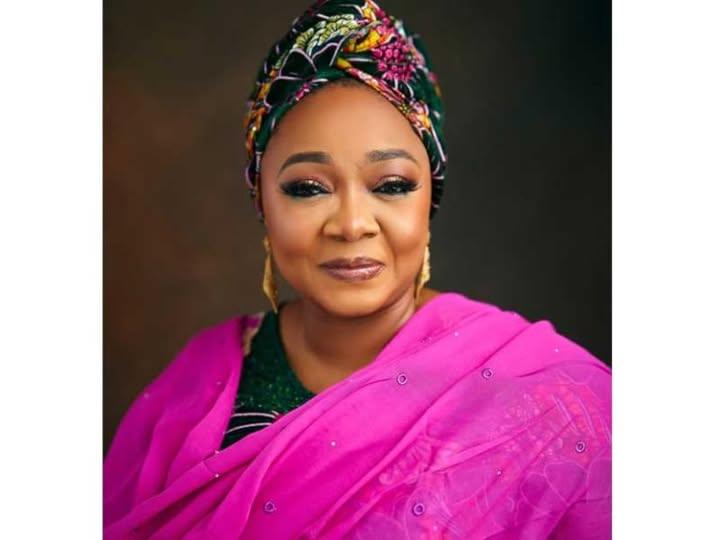
Speaking at the high-level women’s conference organized by the Nigerian Women Trust Fund (NWTF) in Abuja, themed “Voices for Change: Advancing Social Justice and Ending Violence Against Women in Nigeria,” the Minister of Women Affairs and Social Development, Hajia Imaan Sulaiman-Ibrahim, stated that the gathering underscores the nation’s enduring commitment to making justice and equality tangible realities for Nigerian women.

She said the convening reflects the nation’s ongoing determination to make justice and equality tangible realities for Nigerian women.
“Every woman who steps forward to lead carries within her the promise of a more inclusive and equitable Nigeria. We must redefine women’s participation not as token representation but as a matter of social justice, democratic integrity, and national progress.” She said.

Represented by Jummai Idonije, the Minister recalled that the Nigerian Women Trust Fund was established in 2011 through her ministry to close the funding gap hindering women’s political participation, adding that it has since evolved into a key catalyst for inclusion and leadership.
“It is heart-warming to see this legacy flourish—building capacity, strengthening networks, and positioning women as equal stakeholders in governance,” she noted.
Sulaiman-Ibrahim reaffirmed that under President Bola Tinubu’s Renewed Hope Agenda, women’s empowerment and inclusion remain at the heart of social impact interventions.
“As we champion the Reserved Seats initiative, we must project one front. Together, we will ensure that no woman is left behind,” she added.

Legacy, Leadership in Action
Delivering the keynote address, Brenda Anugwom, Chief Executive Officer of the Nigerian Women Trust Fund, said ending violence against women was both a moral imperative and a democratic necessity.
“By preventing violence against women and girls, we are not just protecting women; we are strengthening the very foundation of our democracy….If Nigeria can prevent violence against women and girls, our political landscape will be transformed into one of genuine inclusion, shared leadership, and strengthened democracy.” She said
Anugwom urged stakeholders to consolidate enforcement of the Violence Against Persons Prohibition Act (VAPP), which has now been domesticated in 35 states, while prioritising institutional funding and survivor-centred services.
In a goodwill message, Beatrice Eyong, UN Women Representative to Nigeria and ECOWAS, celebrated the Ford Foundation’s 65-year legacy in promoting justice and human dignity through transformative partnerships.
“This gathering is not only a convening for dialogue but also a celebration of legacy,” she said. “Through bold investments in women’s leadership, community resilience, and structural reforms, the Ford Foundation has contributed immensely to the progress we see today.”
Represented by Programme Office Ibrahim Nurudeen, she highlighted community-level successes supported by Ford Foundation and UN Women, including the abandonment of harmful widowhood and genital mutilation practices in Akamkpa (Cross River State), Ika (Akwa Ibom State), and Kajola (Oyo State).
“These are not just stories of change at the community level; they are powerful reminders that when investments are directed at promoting social justice and community organising, harmful practices can be ended and lives can be transformed,” Eyong stated.
Driving National Action
Eyong cautioned that despite notable progress, “too many survivors still struggle to access justice and services,” urging women leaders to bridge the gap between policy and implementation.
“When influential women lead, they open doors for other women. They use their influence not only for themselves but to reshape systems, shift cultures, and push for justice where resistance is strongest,” she said.
She also called for stronger accountability in addressing technology-facilitated violence, such as cyberstalking and online harassment, which continue to silence women’s voices in digital spaces.
“Let us move from commitment to action, from dialogue to delivery, and from promises to protection. The time for justice, equity, and equality for Nigeria’s women and girls is not tomorrow—it is today,” she concluded.
Collective Commitment, Next Steps
The convening currently ongoing with participants from across government, civil society, and the private sector draws commitment to strengthen collaboration and sustain advocacy for gender equality.
“Preventing violence against women is not just a women’s issue—it is a nation’s destiny,” Anugwom said.
Delegates also pledged to advance the campaign for Reserved Seats for Women in legislative assemblies and to institutionalise gender-sensitive budgeting under the Renewed Hope Agenda.
The event reaffirms that equality and justice are not distant aspirations but achievable goals through sustained partnership, leadership, and accountability.
The Minister Sulaiman-Ibrahim, UN Women, NWTF, and Ford Foundation all made commitments to Chart Path for Justice and Inclusion, which protects women and girls from gender based violence.