


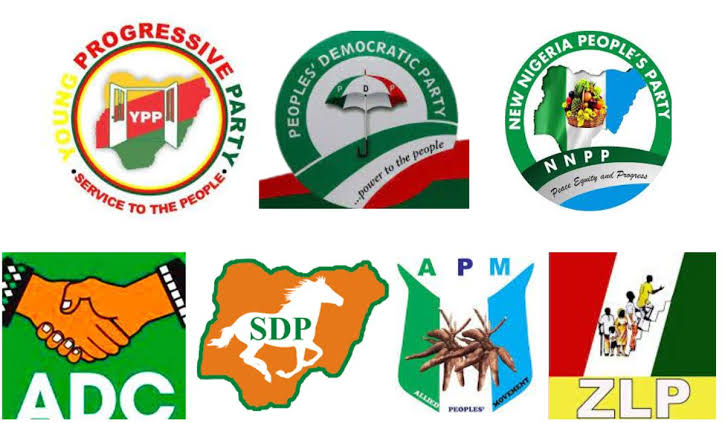
Leaders of Nigeria’s major opposition political parties have called for a review of the recently amended Electoral Act 2026, expressing concerns about provisions they believe could affect electoral transparency and democratic processes.
The opposition leaders said they convened to articulate their collective position on the amended law, which was passed by the National Assembly and assented to by President Bola Ahmed Tinubu.
According to them, certain provisions of the Act raise questions about the integrity and credibility of future elections, particularly the 2027 general elections.
They noted that during public hearings and stakeholder engagements, Nigerians from different backgrounds expressed reservations about aspects of the amendment.
The opposition leaders said these concerns should be revisited to ensure the law reflects the will of the people and strengthens democratic institutions.
They emphasised that credible elections remain essential to participatory democracy and warned that any provisions perceived to weaken transparency could undermine public confidence in the electoral process.
Concerns Over Discretion in Result Transmission
The opposition parties raised particular concerns about the provision in Section 60(3) of the Act, which allows presiding officers discretionary authority in the transmission of election results in certain circumstances, including network challenges.
They argued that this provision could potentially weaken the progress made in adopting electronic transmission of results from polling units, which was introduced to improve transparency and accountability.
Citing previous statements by officials of the Independent National Electoral Commission (INEC), including former Chairman Prof. Mahmood Yakubu and former Commissioner Festus Okoye, the opposition noted that technological infrastructure and the BVAS system had achieved a high success rate in previous elections.
They also referenced data from the Nigerian Communications Commission indicating extensive telecommunications coverage across the country, suggesting that network availability may not be a significant barrier to electronic transmission of results.
The opposition parties maintained that strengthening electronic transmission mechanisms would enhance public trust in election outcomes.
Concerns Over Political Party Primaries
The opposition also expressed reservations about amendments to Section 84 of the Act, which limit political parties to direct primaries and consensus as methods for selecting candidates.
They argued that political parties should retain the autonomy to determine their internal nomination processes, including the option of indirect primaries, which they described as an established and legitimate democratic practice.
According to the opposition leaders, allowing flexibility in candidate selection methods would help political parties manage their internal affairs more effectively and maintain organizational stability.
They said they would explore constitutional and legal avenues to address what they described as an encroachment on party autonomy.
Electoral Participation and Public Confidence
The opposition parties also expressed concern over declining voter turnout in recent elections, including the Federal Capital Territory (FCT) local government elections.
They noted that low voter turnout could indicate growing public skepticism about the electoral process and stressed the importance of restoring public confidence through transparent and credible elections.
They said rebuilding trust would require consistent adherence to democratic principles and policies that reflect the interests and welfare of citizens.
Political Violence and Democratic Stability
The opposition leaders condemned recent incidents of political violence, including attacks involving members of opposition parties in Edo State and other parts of the country.
They stressed that democracy depends on peaceful political competition and called on all stakeholders to reject violence, intimidation, and any actions that could undermine political stability.
They urged security agencies to investigate such incidents and ensure accountability.
Call for Institutional Integrity
The opposition parties also highlighted the importance of maintaining the independence and neutrality of democratic institutions, including the judiciary and electoral bodies.
They stressed that strong and impartial institutions are essential to resolving electoral disputes and preserving democratic order.
They called for continued reforms to strengthen institutional credibility and ensure public confidence.
Call for Review of the Electoral Act
In conclusion, the opposition leaders called on the National Assembly to reconsider aspects of the Electoral Act 2026 and engage stakeholders to ensure the law reflects democratic principles and public expectations.
They reaffirmed their commitment to democratic values and urged Nigerians to remain engaged in the democratic process.
They also called on civil society organisations, democratic institutions, and citizens to support efforts aimed at strengthening Nigeria’s democracy.
“We remain committed to protecting democratic principles and ensuring that the electoral process reflects the will of the people,” the opposition leaders said.
Present at the press conference were leaders of various opposition Political parties including Alhaji Atiku Abubakar, Senator David Mark, elder statesman Buba Galadima, Rauf Aregbesola, Rotimi Amechi, Senator Ireti Kingibe, Zainab Boni Haruna, Mr. Peter Obi, Liyel Imoke and many other party leaders and members.