

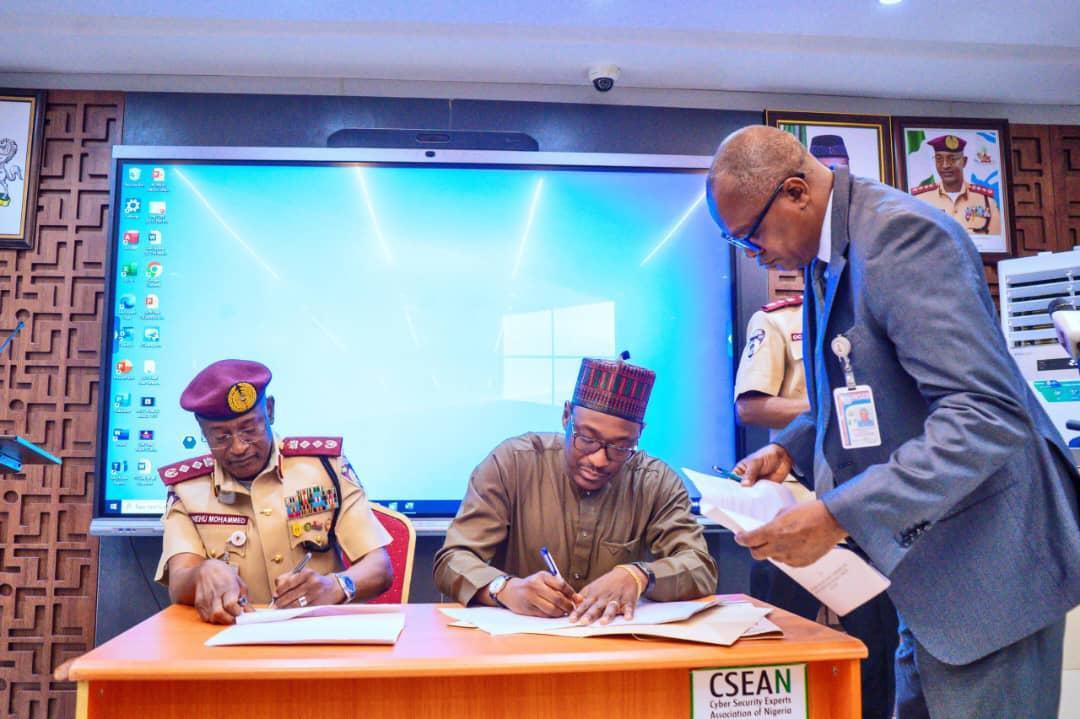
The Nigerian Safety Investigation Bureau (NSIB) has entered a strategic partnership with the Federal Road Safety Corps (FRSC) to strengthen transportation safety through a new Memorandum of Understanding (MoU).
The partnership, which cuts across road, aviation, maritime, and rail transport, is designed to promote comprehensive investigations and improve accident prevention nationwide.
The development was announced in a statement issued by Mrs Bimbo Olawumi Oladeji, Director of Public Affairs and Family Assistance at the NSIB.
“This collaborative action is poised to elevate safety standards, addressing critical areas such as enforcement and real-time response to accidents, which are crucial for safeguarding Nigerian lives. Also, the partnership will enable both agencies to create a more holistic approach to transportation safety,” the statement reads.
“Through shared expertise and resources, the two agencies plan to ensure comprehensive investigations into safety-related incidents, a key step toward preventing future accidents.”
Director General of NSIB, Captain Alex Badeh Jnr, commended the FRSC for its ongoing enforcement efforts and improved road safety responses. He said the partnership would enhance NSIB’s ability to offer safety recommendations that support FRSC’s mandate.
Corps Marshal of FRSC, Shehu Mohammed, also welcomed the agreement.
“The signing of this MOU with NSIB is all about making our roads safer,” he said.
“This safety is not limited to aviation space, but also the road and the railway. NSIB is in charge of safety investigations of the entire transport sector. We are going to put more effort so that both agencies can collaborate to make Nigerian roads safe for the motoring public.”
With the MOU now formalised, both agencies will work together to implement safety measures, focusing particularly on reducing road traffic accidents—a growing national concern.
The initiative also aims to standardise investigation protocols, improve data sharing, and promote greater accountability in the transport sector.
NSIB, Nigeria’s official transport investigation agency, says the collaboration marks a major step toward a safer, more responsive transport infrastructure. The Bureau’s Director-General stressed that safety recommendations must be actionable and globally aligned.
The agencies plan to track progress through joint workshops, feedback mechanisms, and shared data platforms to continuously adapt to emerging safety challenges.
PIAK