


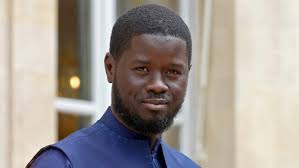
On the second anniversary of his inauguration, Senegalese President Bassirou Diomaye Diakhar Faye reviewed the progress of ongoing projects and reaffirmed his determination to deepen the country’s economic, institutional and social transformation during a Cabinet meeting held on Wednesday in Dakar.
Two years after taking the oath of office in April 2024, President Faye praised the initial milestones achieved by his government and instructed his ministers to accelerate the implementation of the national transformation agenda.
Senegalese President Bassirou Diomaye Faye reflected on the unique circumstances of his election, in which he secured a first‑round victory on 24 March 2024 against the candidate of the former ruling coalition, Amadou B.
While still in detention, he had been designated as the candidate by Ousmane Sonko, who had been barred from the presidential race following a conviction in a case involving a former minister.
Released just days before the poll, he was sworn in in April 2024. He renewed his gratitude to the Senegalese people for the trust placed in the project of a “sovereign, just and prosperous Senegal.”
President Faye also commended the Prime Minister, ministers and secretaries of state for their efforts to accelerate the country’s recovery and improve the well-being of the population “despite the unprecedented economic, financial and social situation inherited from the previous regime.”
Structuring Milestones
Among the notable advances in this phase of correction and restructuring, the leader highlighted the presentation of the public finance audit, the publication of the “Senegal 2050” vision, the completion of the master plan, the National Development Strategy (NDS), the technological new deal, and sector-wide general assemblies.
He considered these guiding documents to have “laid the groundwork for a genuine transformation of the country in all its dimensions and components.”
The five-year action plan for 2025-2029, presented in October 2024, represents the first operational phase of this agenda.
With estimated financing of 18,493.83 billion CFA francs (approximately US$30.8 billion), this strategic framework replaces the Emerging Senegal Plan (PSE) of former President Macky Sall.
According to the authorities, 62.3 percent of resources will be mobilised by the public sector, 14.1 percent by the private sector and 23.6 percent through public-private partnerships.
The PRES: Immediate Operational Foundation
Complementing this effort, the Economic and Social Recovery Plan (PRES), unveiled in August 2025 in Dakar by Prime Minister Ousmane Sonko in the presence of the head of state, serves as the immediate operational backbone of the strategy.
Structured in three phases – recovery, impetus and acceleration up to 2050 – it aims to address urgent economic needs while laying the foundations for strengthened sovereignty.
The Prime Minister justified the plan by pointing to a worrying economic legacy, citing a real budget deficit of 14 percent of GDP and public debt at 119 percent of GDP, based on audits conducted by state oversight bodies and independent firms.
Financed almost 90 percent from domestic resources, the PRES provides for the mobilisation of 5,667 billion CFA francs over the 2025-2028 period, drawn mainly from additional tax revenues, asset recycling and innovative non-debt financing.
Key levers include digital taxation, renegotiation of strategic contracts, rationalisation of public spending, mobilisation of national savings, and land valuation.
The plan also includes structural reforms such as the reorganisation of public agencies, centralised procurement, regulation of the banking sector, and development of Islamic financial instruments.
On the social front, the authorities intend to strengthen support for households through targeted measures in education, health and housing while boosting employment – especially for young people and women – and supporting the national private sector.
The economic recovery is expected to hinge on several strategic sectors, including agriculture, livestock, fisheries, renewable energy, industry, digital technology, and tourism.
The government aims to achieve 7 percent growth by 2029 while bringing the budget deficit down to 3 percent of GDP by 2027.
Technological New Deal as an Acceleration Lever
In parallel, the authorities launched the Technological New Deal at the end of March 2026, presented as a key driver for accelerating the digital transformation of both the administration and the economy.
The initiative relies on the Digital Governance Committee (GouvNum), tasked with coordinating digital projects, and the National Digital Council (CNN), a consultative body bringing together sector experts.
Flagship initiatives include the establishment of a single citizen portal; the digitalisation of administrative services; and the development of sovereign digital infrastructure, including data centers and enhanced broadband.
The initiative places particular emphasis on digital inclusion, aiming to connect rural areas and support innovation through dedicated mechanisms for start-ups and young people.
Institutional Reforms and Economic Directives
On the institutional front, the head of state reiterated his commitment to accelerating the modernisation of the justice system, promoting transparency in public governance, and ensuring systematic accountability, drawing on laws relating to the anti-corruption body OFNAC, asset declarations, whistleblower protection, and access to information.
Economically, he instructed the government to speed up implementation of the PRES, roll out new agricultural and industrial policies, develop a social and solidarity economy, and regulate market prices while strengthening social dialogue, ensuring stability in critical sectors, improving the quality of public services, and progressively establishing territorial hubs as part of an intensive decentralisation of public projects and investments.
AP