


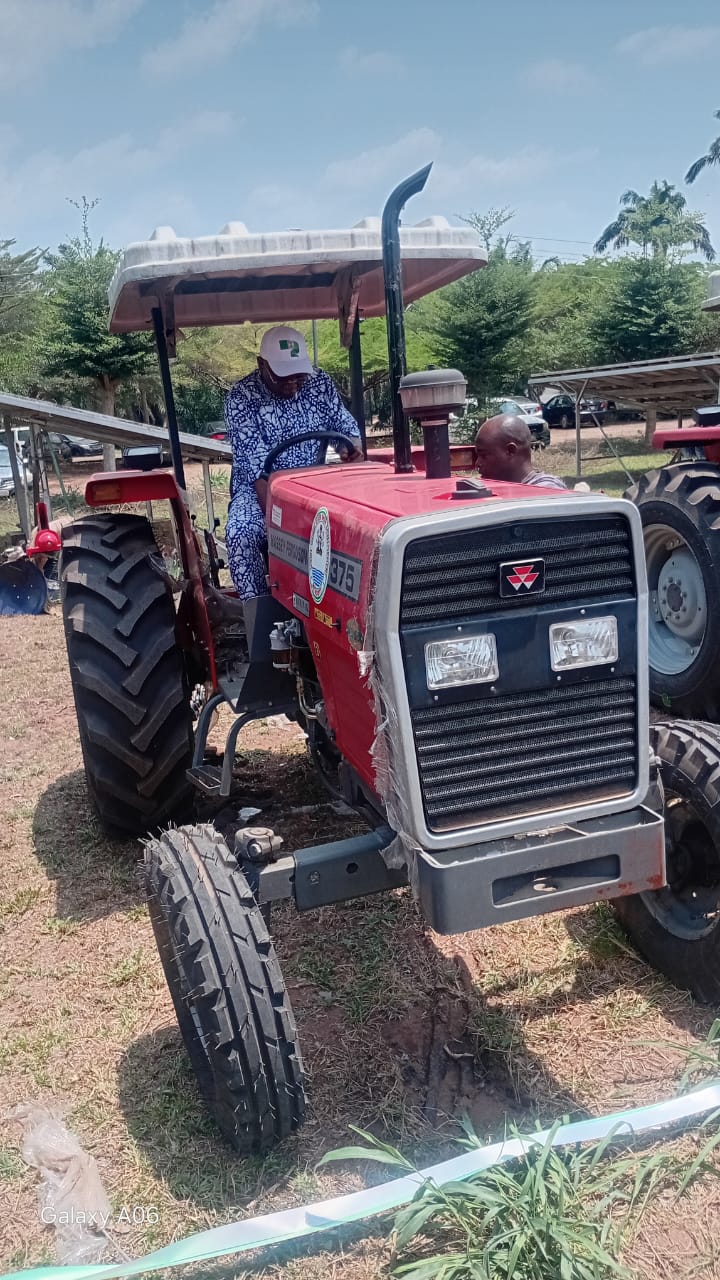
The Nigerian Government has begun distributing tractors and other farm implements to farmers in the South-West as part of efforts to curb rising food prices and boost domestic food production.
The equipment was handed over to farmers across eleven farm settlements under the supervision of the Ogun Osun River Basin Development Authority for the 2025–2026 dry-season farming programme.
Officials say the intervention is designed to expand irrigated agriculture and strengthen food security across the country.
Speaking at the handover ceremony, the Managing Director of the authority, Deji Ashiru, said the initiative aligns with the food security agenda of President Bola Ahmed Tinubu’s administration.
Ashiru said the federal government, through the Federal Ministry of Water Resources and Sanitation, had directed River Basin authorities to expand irrigation, intensify dry-season farming and provide farmers with mechanised support to increase productivity.
He noted that rising food prices have put significant pressure on households across Nigeria, saying the deployment of tractors intends to help farmers cultivate larger areas of land more efficiently with increased crop yields.
The Managing Director said technical personnel from the River Basin Authority will accompany the tractor teams to provide agronomic guidance, including land preparation, improved seed use, fertiliser application and pest management.
The benefiting farm settlements are located across several communities in Oyo and Osun states, including Sepeteri, Iseyin, Ofiki, Ogbomoso, and Iwo, as well as the Middle Ogun Irrigation Project.
Ashiru described irrigation-support dry-season farming as “a critical strategy for reducing seasonal food shortages and stabilising prices throughout the year”.
He added that “as climate change and population growth have placed increased pressure on food systems, expanding year-round agricultural production has become essential for Nigeria’s long-term food security”.