


The UN Gender Snapshot 2025 report highlights notable progress made toward gender equality while also underscoring key areas where renewed efforts can accelerate the achievement of the SDG goal by 2030.
The United Nations has cautioned that much more needs to be done, even as Nigeria scales up women’s empowerment through the Renewed Hope Agenda of President Bola Tinubu.

Global Gender Report: Gains and Setbacks
The newly released Gender Snapshot 2025 report by UN Women and the United Nations Department of Economic and Social Affairs (UN DESA) has warned that the world is at a crossroads, with hard-won gains in gender equality under threat but unprecedented opportunities within reach if urgent investments are made.
The report highlights that girls are now more likely to complete school than ever before, maternal mortality has declined by nearly 40 per cent between 2000 and 2023, and countries with strong protections recorded 2.5 times lower rates of intimate partner violence.
Women’s participation in climate negotiations has doubled, while ninety-nine discriminatory laws have been repealed or reformed globally in the last five years.
“Where gender equality has been prioritised, it has propelled societies and economies forward,” Sima Bahous, UN Women Executive Director, said.
Closing the gender digital divide could boost global GDP by USD 1.5 trillion and lift 30 million women from poverty.
She added: “Targeted investments in gender equality have the power to transform societies and economies. Just closing the gender digital divide alone could benefit 343.5 million women and girls worldwide, lift 30 million out of poverty by 2050, and generate an estimated USD 1.5 trillion boost to global GDP by 2030.”
Despite these gains, the report warns of stark setbacks. If current trends continue, 351 million women and girls will still live in extreme poverty by 2030, with 676 million already within reach of deadly conflict zones, the highest figure since the 1990s.
United Nations Under-Secretary-General for Economic and Social Affairs, Li Junhua, also cautioned: “Only five years remain to achieve the 2030 Agenda for Sustainable Development. The costs of failure are immense, but so are the gains from gender equality. Accelerated interventions in care, education, the green economy, labour markets and social protection could reduce the number of women and girls in extreme poverty by 110 million by 2050, unlocking an estimated USD 342 trillion in cumulative economic returns.”
Nigeria’s Renewed Hope Agenda: Scaling Women’s Empowerment
In Nigeria, where women make up 49.3 per cent of the population but face stark inequalities in education, health, and economic participation, the findings of the Gender Snapshot 2025 resonate deeply.
Currently, Nigeria’s federal and state-level interventions show how targeted investments are lifting women out of poverty, boosting education, and strengthening families nationwide.
Under President Bola Tinubu’s Renewed Hope Agenda, women’s empowerment has become central to poverty reduction and inclusive growth, with federal and state governments rolling out targeted interventions to close these gaps.
The Renewed Hope Initiative (RHI) of the First Lady, Senator Oluremi Tinubu, is rolling out nationwide programmes targeted at women, youth, and families. RHI has so far supported more than 1,500 women farmers across 36 states and the FCT with agricultural grants and training to boost food security.
The Ministry of Women Affairs and Social Development is scaling up reforms through various programmes, projects and initiatives, including the Nigeria for Women Scale-Up Project, which is designed to reach over five million women across the thirty-six states and the FCT.
In addition, the MOWA-SARA Accelerated Skills Acquisition Programme, in partnership with WEMA Bank, is training five hundred thousand women in entrepreneurship, vocational and financial inclusion skills.
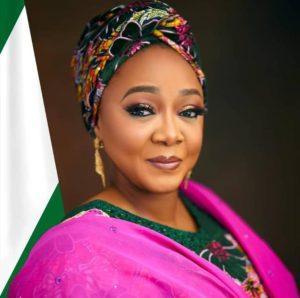
Minister of Women Affairs and Social Development, Hajiya Imaan Sulaiman-Ibrahim, speaking at a national policy forum, stressed:
“Women and girls make up over 49 per cent of Nigeria’s population, yet only 17 per cent of women aged 15–49 have completed secondary education; maternal mortality remains at a staggering 512 deaths per 100,000 live births; and nearly 50 per cent of children under five face some form of malnutrition. These realities are why our Ministry is intentional about driving policies and programmes that give women equal access to education, health, and economic empowerment.”
State-Level Interventions: Delivering Change at the Grassroots
The National Women’s Economic Empowerment Policy is being mainstreamed into state development plans, aligning with the Renewed Hope Agenda to empower women and strengthen families.
In the North-Central zone, through the RHI Economic Empowerment Programme, five hundred women in each state have received start-up kits, including freezers, generators, gas cookers, and industrial grinding machines.
In Ogun State, in 2024, five hundred women across twenty local government areas received financial assistance, equipment, and start-up kits to boost livelihoods. This was part of a broader Renewed Hope Initiative that has already touched over one hundred thousand women and families nationwide.
In Ondo State, five hundred women were empowered with grants of fifty thousand naira each and business support tools, aligning with federal efforts to reduce poverty and promote female entrepreneurship.
For Delta State, hundreds of women have received solar systems, food and non-food items, and small enterprise tools to expand livelihoods and strengthen household resilience.
In Akwa Ibom State, Governor Umo Eno’s Entrepreneurship Accelerator Programme has trained over 1,200 women and youths since 2023, with more than six hundred million naira in grants disbursed. The state also runs the Arise Women in Agriculture Scheme, which has provided equipment and farm inputs to over 2,000 female farmers.
In Lagos State, through its Women in Agriculture Programme, the government has supported over 15,000 women farmers with training, seedlings, and access to credit. In addition, the Lagos State Employment Trust Fund has supported 3,500 women-owned businesses with loans and mentorship.
In Kaduna State, more than 7,600 women have been trained in tailoring, ICT, and agro-processing under the Women Empowerment and Skills Acquisition Scheme, with start-up packs provided to promote self-reliance.
Maternal health gains have also been recorded in Lagos and Kaduna States, where the Project Aisha Initiative reduced maternal mortality by 58% across 32 health facilities, reaching more than 110,000 women. This aligns with the Gender Snapshot 2025 evidence that targeted interventions save lives.
Why It Matters: Nigeria in the Context of Beijing+30
The Gender Snapshot 2025 clearly states that gender equality is both a moral imperative and an economic necessity. Nigeria’s Renewed Hope interventions, from federal reforms to grassroots initiatives, show that targeted investments can lift women out of poverty, strengthen families, and boost national development.
As UN Women’s Sima Bahous emphasised, “I encourage all leaders to make commitments and investments… and to choose a world where women’s rights are delivered at scale, and the returns are shared by all.”
The Gender Snapshot 2025 underscores both the risks of inaction and the opportunities of investment, and for Nigeria, the Renewed Hope Agenda provides a concrete response by scaling up women’s empowerment through economic, health, and digital interventions.
The Road Ahead
The road ahead requires scaling political will and sustaining investments to ensure that Nigerian women, from rural farmers to tech innovators, thrive in dignity, equality, and prosperity.
As UN Women’s Sima Bahous reminded world leaders: “The Beijing+30 Action Agenda provides a clear path forward… I encourage all leaders to make commitments and investments and to choose a world where women’s rights are delivered at scale and the returns are shared by all.”

As leaders converge at the 80th United Nations General Assembly and mark 30 years since the Beijing Declaration and Platform for Action, Nigeria’s experience demonstrates how domestic policies can align with global priorities.
Under the Renewed Hope Agenda, expanding women’s access to skills, capital, and digital opportunities through initiatives like Women Agro Value Expansion Nigeria, the country is not only responding to the UN’s urgent call but also laying the groundwork for inclusive growth.
For Nigeria, sustaining political will, ensuring grassroots reach, and scaling investments will be critical to translating these commitments into lasting gains for millions of women and girls, ensuring they are not left behind in the march to 2030.