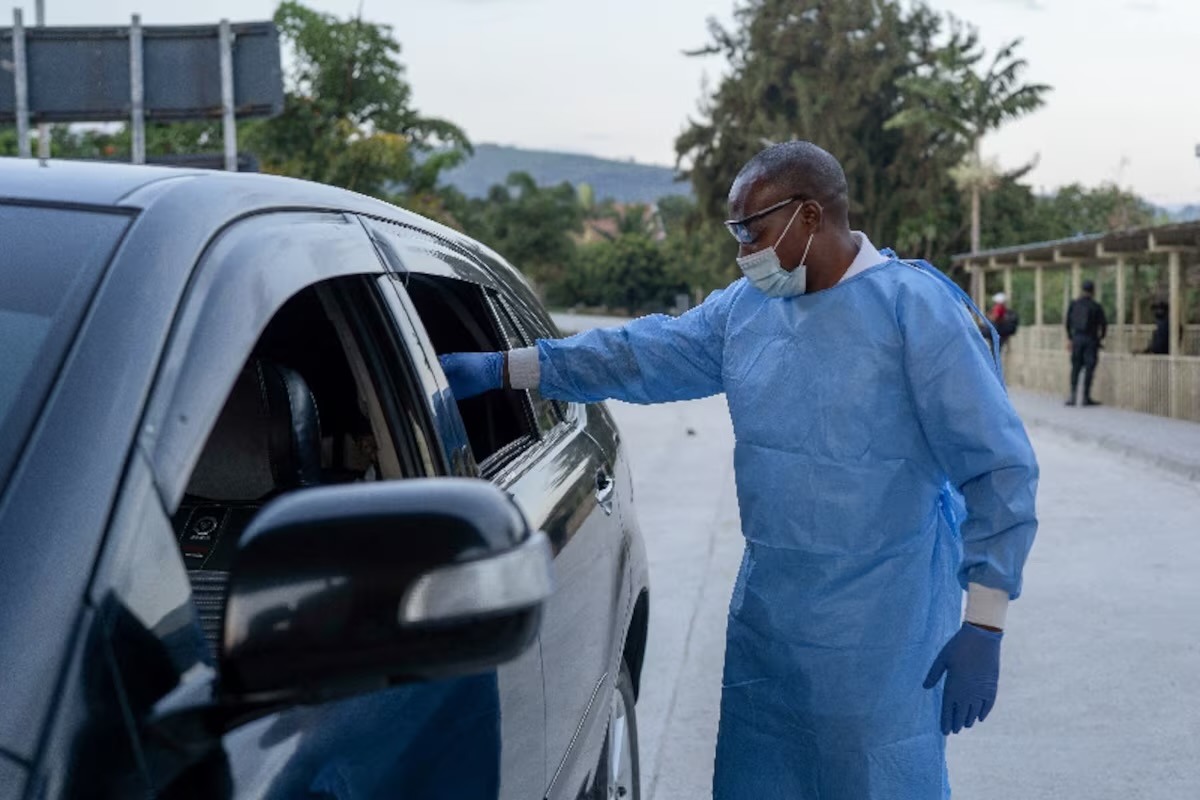
A panel of experts convened by the World Health Organisation (WHO) is meeting on Tuesday to examine possible vaccine options to help contain the ongoing Ebola outbreak in the eastern Democratic Republic of Congo.
The virtual meeting comes amid more than 130 suspected deaths and over 500 cases linked to the Bundibugyo strain of Ebola, according to the WHO, which, alongside the Africa Centres for Disease Control and Prevention (Africa CDC), has classified the situation as a public health emergency.
Vaccine Options
Although no vaccine has been specifically approved for the Bundibugyo strain, a vaccine known as Ervebo, produced by Merck, is currently used against the Ebola Zaire strain and has shown some level of protection against Bundibugyo in animal studies.
The possibility of testing this vaccine and other potential options will form part of discussions by the WHO Technical Advisory Group, alongside scientists and global health partners.
ALSO READ: Nigeria Joins $6.4m Global Lassa Fever Vaccine Research
However, any final decision on deployment will be made by the governments of the Democratic Republic of Congo and neighbouring Uganda, where two confirmed cases have also been recorded.
Potential treatment options are also expected to be reviewed.
“When you have an outbreak with a strain that does not have countermeasures, we are going to advise on the best approach to take,” said Dr Mosoka Fallah, acting director of the science department at Africa CDC.
“We will look at what evidence we have and make a decision.”
Gavi, the Vaccine Alliance, maintains a stockpile of Ebola vaccines. Its Chief Executive Officer, Sania Nishtar, said 2,000 doses are already in Congo, should experts recommend their use in a clinical trial.
Some health experts have cautioned that the outbreak may prove difficult to contain.
“Our concern about this outbreak is pretty high,” said Richard Hatchett, head of the Coalition for Epidemic Preparedness Innovations, which supports the development of new vaccines and is currently assessing potential candidates.
He noted that a previous Ebola outbreak in the same region between 2018 and 2019, caused by the Zaire strain, took nearly two years to control due to security challenges, despite the availability of an approved vaccine.
“The security situation is very serious, and so testing things in clinical trials will be challenging, but will be necessary as well,” he said.