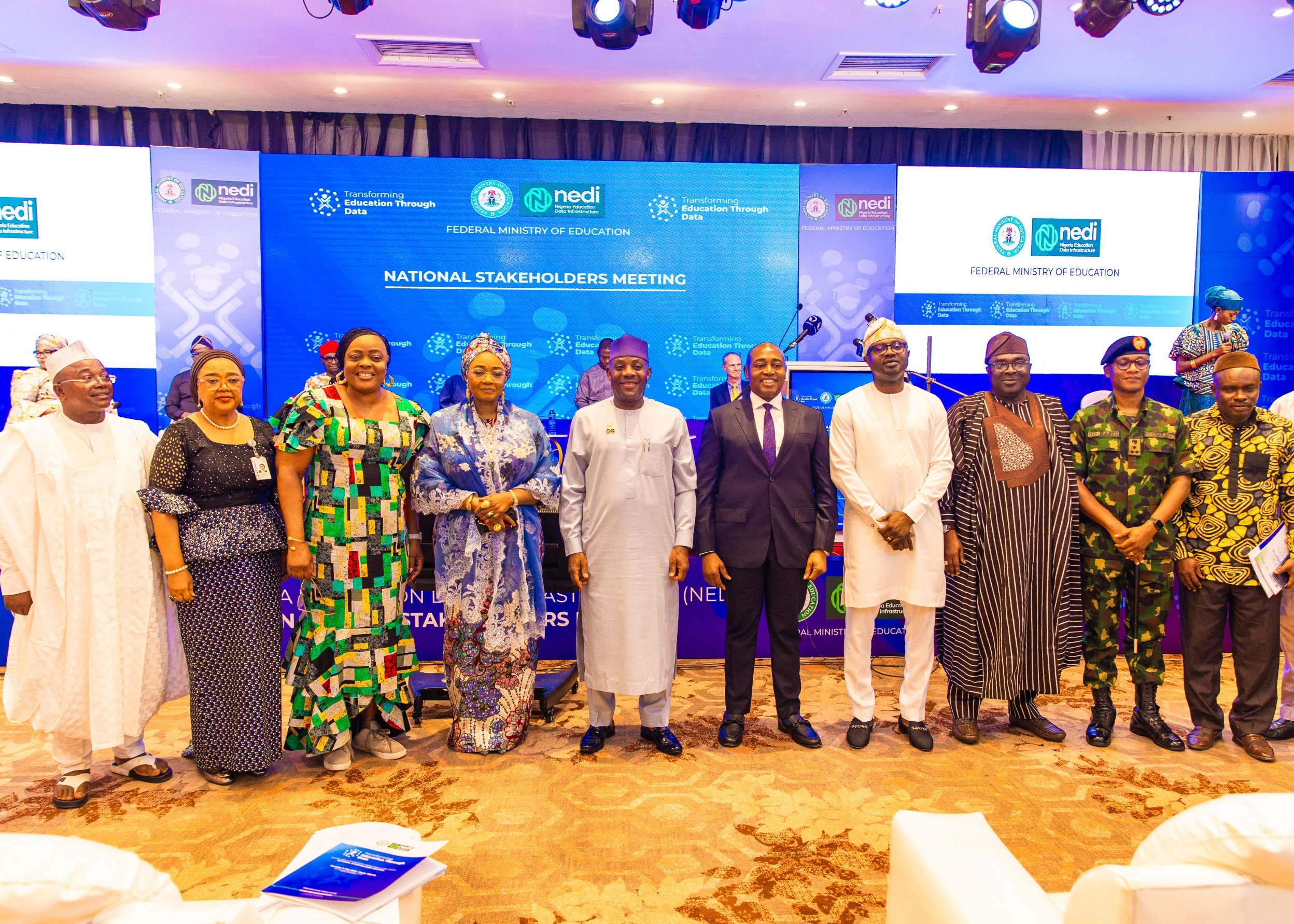
The Minister of Women Affairs and Social Development, Hajiya Imaan Sulaiman-Ibrahim, has underscored the importance of human capital development, inclusive education, and data-driven governance in advancing national transformation.
Speaking at the Stakeholders’ Workshop on the Nigeria Education Data Infrastructure (NEDI) in Abuja, the Minister said the greatness of the nation lies in “the value they place on human capital, the strength of their institutions, and the quality of opportunities available to their people.
“Every child whose future is protected through sound policy, every girl empowered through education, and every family strengthened through access and inclusion becomes a living pillar upon which sustainable national development is built,” she said.
READ ALSO: Women Affairs Minister Urges Renewed Commitment to Youth Development
Sulaiman-Ibrahim described the timing of the workshop as “both symbolic and strategic,” noting that it coincides with the International Day of Families and the forthcoming National Children’s Day celebration.
She said the moment serves as a reminder that “strong educational systems, stable family structures, and protected childhoods are deeply interconnected foundations for national transformation.”
The Minister commended the Federal Ministry of Education and the Minister of Education, Dr Tunji Alausa, for convening the workshop, describing the initiative as “a visionary step towards repositioning Nigeria’s education sector through integrated, credible, technology-driven, and evidence-based data governance systems.”
Highlighting the importance of educational data, she noted that “beyond statistics and numerical records, educational data represents human realities, developmental priorities, and the aspirations of millions of Nigerian families seeking opportunity, dignity, inclusion, and a better future for their children.”
The Minister stressed that education remains “one of the most strategic investments any government can make,” emphasising that it is “a powerful social protection instrument and a pathway for breaking intergenerational cycles of poverty, exclusion, and vulnerability.”
While expressing concern over educational inequality and the rising number of out-of-school children in Nigeria, she stated that “recent estimates” place the figure at “over 10 million children,”.
She said the Nigeria Education Data Infrastructure initiative aligns with the Renewed Hope Agenda of President Bola Ahmed Tinubu and would strengthen “evidence-based policy formulation, transparency, institutional coordination, and effective service delivery.
According to her, the initiative would ensure that “no child is left unseen, underserved, or excluded from opportunity.”
She further noted that the Federal Government’s declaration of 2026 as the Year of Family and Social Development reinforces national commitment towards “strengthening family systems, advancing human capital development, protecting vulnerable groups, promoting social cohesion, and building resilient communities.”
The Minister described the workshop as “a strategic national conversation about the future of Nigeria’s children, families, and human capital development architecture.”