
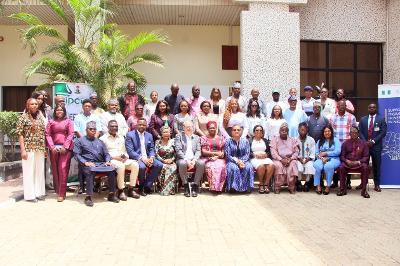
The Nigerians in Diaspora Commission (NiDCOM), in collaboration with the International Organisation for Migration (IOM) under a European Union-funded programme, has convened a meeting of the Standing Committee on Diaspora Matters (SCDM) to review and strengthen the implementation of Nigeria’s National Diaspora Policy 2021.
The strategic session, held in Abuja, brought together key stakeholders from government, international organisations, and civil society to assess progress, identify gaps, and develop actionable strategies for a more structured, inclusive, and results-driven diaspora engagement framework.
Speaking at the event, the Chairman/Chief Executive Officer of NiDCOM, Abike Dabiri-Erewa, emphasised the urgency of translating diaspora potential into measurable outcomes.
She described Nigerians abroad as vital development partners whose contributions extend beyond remittances to include investments, innovation, and global influence.
“The diaspora is not just a community abroad, but a development partner, a force for progress and development,” Erewa said, urging stakeholders to move from rhetoric to deliberate and strategic action.
READ ALSO: President Tinubu Presents Revised Migration Policy
Erewa acknowledged funding limitations as a key challenge but stressed the need for sustained institutional support, reiterating that NiDCOM has established itself as a central coordinating body for diaspora engagement in Nigeria.
She also called for stronger legislative backing for diaspora-focused initiatives, including diaspora voting rights, the creation of a Diaspora Investment Trust Fund, and improved funding mechanisms.
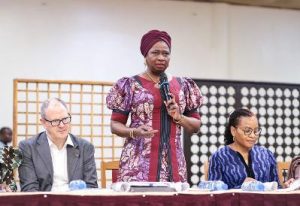
Highlighting international best practices, she noted that even small but coordinated diaspora efforts can significantly impact national economies.
Erewa also pointed to ongoing initiatives such as the Diaspora Data Portal, National Diaspora Day celebrations on July 25, and the forthcoming Nigeria Diaspora Economic Conference in Canada as steps toward strengthening structured engagement.
Representing the IOM Nigeria Chief of Mission, Sharon Dimanche, Ukamaka Anyanechi underscored the importance of coordinated diaspora engagement.
Dimanche, described the Nigerian diaspora as one of the country’s most significant yet underutilised development assets, with contributions spanning healthcare, ICT, academia, entrepreneurship, and the creative sector.
She noted that through the EU-funded Support to Migration Governance Programme, IOM is partnering with NiDCOM and other stakeholders to enhance institutional frameworks, improve coordination, and support the ongoing policy review.
“Harnessing these contributions in a structured and institutionally coordinated manner is essential for sustainable development outcomes.”
She also highlighted the role of data systems, diaspora mapping, and global platforms such as i-Diaspora in strengthening engagement.
The Programme Officer, Ron Hendrix, representing the EU Delegation to Nigeria and ECOWAS, described the Nigerian diaspora as a powerful force for global connectivity and national development.
“The Nigerian diaspora is a global force of progress, a bridge between Nigeria and other countries, a catalyst for innovation, and a cornerstone of socio-economic transformation,” Hendrix said.
He stressed that beyond remittances, diaspora contributions in skills transfer, investment, and advocacy play a critical role in enhancing Nigeria’s global standing.
On behalf of the Senate Committee on Diaspora and Non-Governmental Organisations, Chairman Aniekan Bassey, represented by the Clerk, Abubakar Adam, reaffirmed the National Assembly’s commitment to diaspora engagement.
He described Nigerians abroad as one of the country’s greatest national assets and called for strengthened institutional coordination and protection for citizens overseas, particularly those facing challenges in countries such as South Africa.
Similarly, the Chairman of the House Committee on Diaspora, Tochukwu Okere, represented by Dr Ademola Adewale Taofeek, stressed the importance of measurable outcomes in migration governance.
Okere noted that while diaspora remittances surpass foreign direct investment, Nigeria must also harness the intellectual capital and global networks of its citizens abroad.
Also speaking, the Director of Migrants Affairs at the National Commission for Refugees, Migrants and Internally Displaced Persons, Catherine Imaji Udida, called for more inclusive policies that reflect the diverse realities of Nigerians abroad.
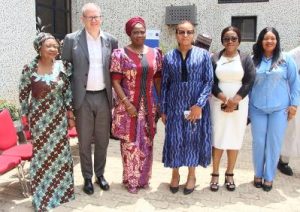
She advocated for updated migration definitions to accommodate different categories of diaspora populations, including those in short-term or irregular situations, while maintaining a commitment to safe and orderly migration.
The meeting also featured presentations from State Diaspora Focal Point Officers, including Annie N. Onu (Abia State), Dr Jermaine Sanwo-Olu (Lagos State), and Dr Margaret U. Indeed (Cross River State), who highlighted subnational efforts to institutionalise diaspora engagement.
Civil society organisations and non-governmental groups also contributed to discussions, reinforcing the importance of multi-stakeholder collaboration in shaping effective diaspora policies.

