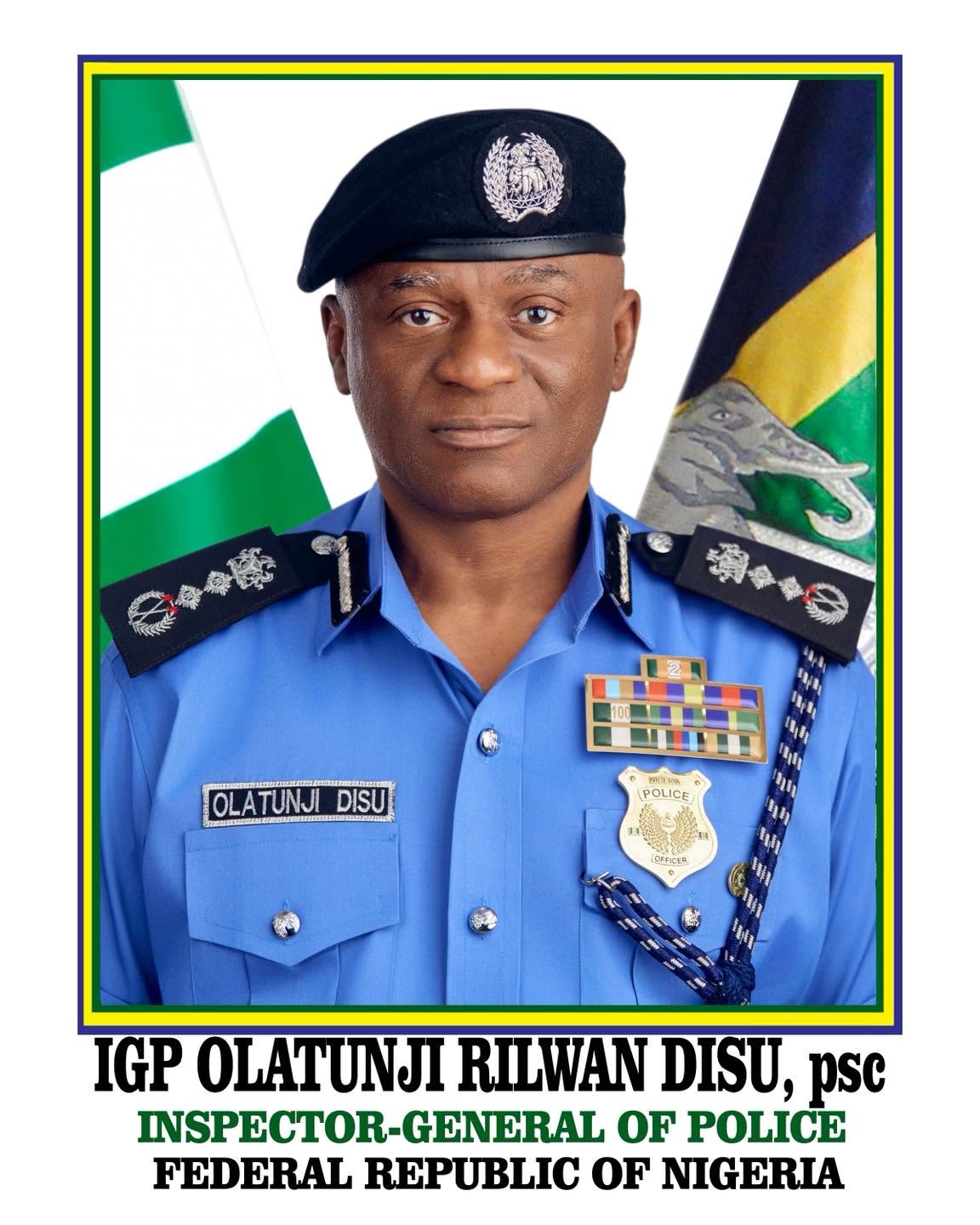
The Inspector-General of Police, IGP Olatunji Disu, has called for greater collaboration among police commands, the media, and local communities to strengthen efforts aimed at combating crimes and enhancing security across Nigeria.
Speaking to senior police officers in Abuja, Nigeria’s capital, the IGP directed Commissioners of Police (CPs) nationwide to adopt coordinated security strategies, particularly among neighbouring states, to prevent criminals from exploiting jurisdictional boundaries.
According to him, criminals often commit offences in one state and flee to another, taking advantage of gaps in inter-state security coordination.
“Criminals do not respect state boundaries. Too often, offenders exploit jurisdictional gaps by committing crimes in one state and escaping to another. This practice must be disrupted through deliberate collaboration and joint operational planning,” he said.
To address the challenge, the IGP ordered all CPs in contiguous states to establish coordinated patrols along major entry and exit routes linking neighbouring states.
READ ALSO: Anambra Deepens Partnership with PEBEC to Drive Investment
“Commissioners of Police are to establish coordinated patrols along all major entry and exit routes linking neighbouring states. Intelligence-sharing mechanisms should be strengthened, operational communication channels kept open at all times, and joint responses initiated whenever circumstances require,” he stated.
He further directed CPs to maintain direct communication with their counterparts in neighbouring states and regularly review security deployments, stressing that security challenges should be approached from a regional rather than a purely territorial perspective.
The police chief also underscored the importance of strengthening the relationship between the Nigeria Police Force and the media, noting that public perception plays a critical role in building confidence in law enforcement institutions.
“In today’s information environment, public perception can influence confidence in our institution as much as operational outcomes. While our primary responsibility remains crime prevention and law enforcement, we must recognise the importance of effective communication in shaping public understanding of our efforts,” he said.
MEDIA ENGAGEMENT
IGP Disu urged police commanders and senior officers to maintain professional and constructive engagement with journalists beyond the routine announcement of arrests.
“Our relationship with journalists should not be limited to announcing arrests. It should also involve timely clarification of facts, proactive dissemination of information, and responsible management of misinformation and disinformation directed at the Nigerian Police Force,” he said.
He expressed concern over the circulation of fake news and recycled videos aimed at misleading the public and undermining confidence in the police.
“We must never surrender the information space to criminals or individuals seeking to undermine public confidence in the Nigerian police,” he stated.
COMMUNITY POLICING
The IGP also reaffirmed the importance of community policing, describing it as a practical policing philosophy rather than a mere slogan.
“The police cannot effectively secure Nigeria without the active support and partnership of the community we serve. Community policing is not a slogan. It is a practical policing philosophy that recognises that security is best achieved when law enforcement agencies work in genuine partnership with citizens,” he said.
Highlighting the role of intelligence gathering, he noted that valuable information often comes from ordinary citizens who trust the police enough to share information.
“The most valuable intelligence often comes not from sophisticated technology but from ordinary citizens who trust the police enough to share information,” he said.
To deepen community participation in security efforts, the IGP directed all Commissioners of Police to strengthen community engagement structures within their commands and institutionalise monthly stakeholder engagement meetings.
He said the engagements should be properly documented and sustained to enhance trust, improve intelligence gathering, and foster stronger police-community relations.