Home Blog Page 132

Army Chief Directs Troops to Intensify Counter-Insurgency Operations

0

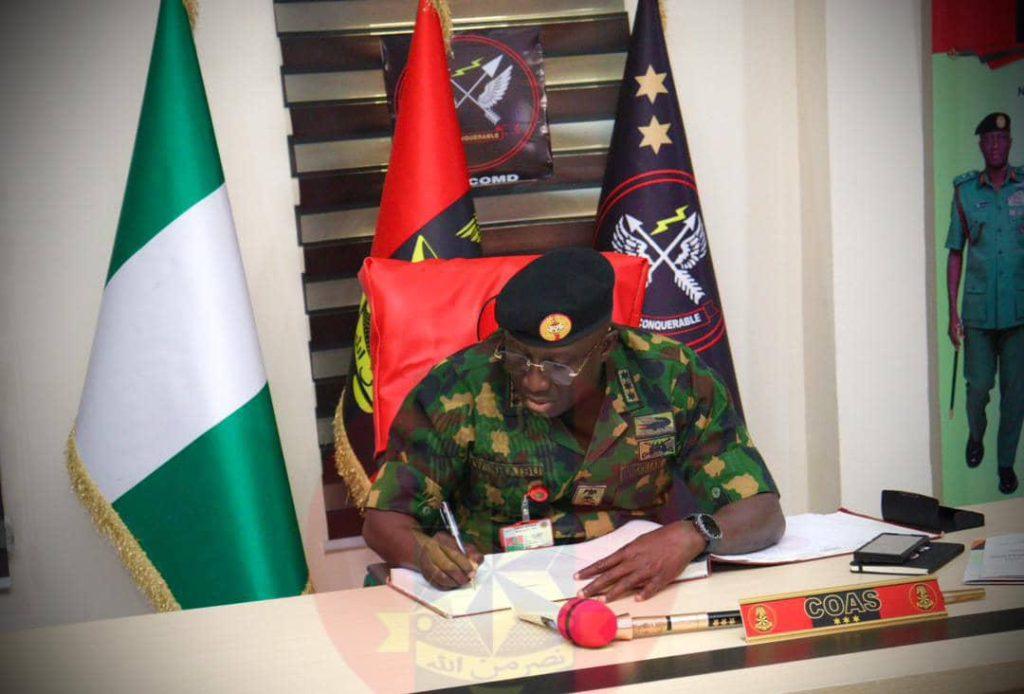
The Chief of Army Staff, Lieutenant General Waidi Shaibu, has directed troops of the 4 Special Forces Command to intensify and sustain high-impact operations aimed at decisively defeating terrorists and insurgents across Nigeria, declaring an end to reactive engagements in the country’s security campaign.

A statement issued by the Acting Director of Army Public Relations, Colonel Appolonia Anele, confirmed that the directive was delivered during the COAS’s maiden operational visit to the 4 Special Forces Command and the Nigerian Army Special Forces School in Doma on Tuesday.

Addressing officers and soldiers, the Army Chief described the Nigerian Army Special Forces as central to ongoing efforts to dismantle and neutralise criminal networks threatening national security.

He emphasised that precision-driven, intelligence-led operations must define the force’s posture, urging troops to remain proactive, adaptive, and mission-focused in an evolving battlespace that demands speed, surprise, and superior combat readiness.

Lieutenant General Shaibu reaffirmed that the era of reactive responses is over, warning that terrorists and violent criminal elements would find no sanctuary anywhere within Nigeria’s territory under the Army’s renewed operational tempo.

Earlier, the COAS received operational briefings from the Commander, 4 Special Forces Command, Major General Olurotimi Azubuike Awolo, and the Commandant, Nigerian Army Special Forces School, Brigadier General Umar Faruk Abubakar. Following the assessment, he approved the immediate construction of additional accommodation blocks and critical facilities to strengthen training capacity, operational efficiency, and troop welfare.

Reiterating his command philosophy, the Army Chief assured personnel that the welfare of soldiers and their families remains a leadership priority, stressing that a professionally grounded and well-supported force is essential to sustaining operational dominance. He pledged continued investment in training, logistics, and modern combat enablers to ensure the Special Forces maintain superiority over adversaries.

The visit concluded with a tree-planting exercise within the cantonment, signalling a commitment to environmental responsibility and sustainable development within Nigerian Army formations.

Anambra APC Elects New Party Chairman

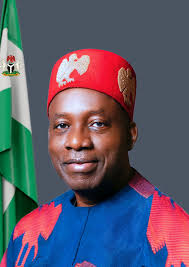
Nigeria’s ruling party, the All Progressives Congress (APC), has elected former federal lawmaker Emmanuel Obiajulu Anosike as chairman of its Anambra State chapter, in a move party leaders describe as a strategic reset ahead of the 2027 general elections.

Anosike, who represented Anambra North Senatorial District in the National Assembly between 2003 and 2007 and currently chairs the Anambra–Imo River Basin Development Commission, emerged through a consensus arrangement at the party’s state congress held Tuesday at its headquarters in Awka, the capital of Anambra State.

The congress formed part of the APC’s nationwide internal restructuring exercise and drew approximately 2,100 accredited delegates from across the state’s wards and local government areas.

The Chairman of the State Congress Committee and Returning Officer, Rear Admiral William Kayoda (rtd), declared the exercise “free, fair and credible,” citing provisions of the party’s constitution that allow for consensus-based leadership selection.

“In fulfillment of Articles 20 and 14 of our party Constitution, Senator Emma Anosike and members of the State Executive Committee are hereby duly elected and returned,” Kayoda announced to voice affirmation from delegates.

Read Also: Anambra APC Launches Statewide E-Registration Exercise

Anosike was elected alongside the Deputy Chairman Chidi Orji, the Secretary, Obi Okpala, and 34 other members of the State Executive Committee.

Consensus Party Strategy 

The harmonization process was overseen by Senator Uche Ekwunife, Chair of the Congress Harmonization Committee and Director-General of the Southeast Governors’ Forum. She said the adoption of what party officials described as a “basketing” consensus model was intended to prevent factional disputes and ensure the emergence of competent leadership.

“The era of imposing executives without due consideration for capacity is over,” Ekwunife said. “Stakeholders at ward and local government levels were fully engaged. This leadership reflects collective ownership.”

The outgoing executive committee led by Chief Basil Ejidike, who served for seven years, was formally dissolved following a motion adopted by voice vote.

In his valedictory remarks, Ejidike urged members to unite behind the new leadership, describing the transition as peaceful and orderly.

Anosike: “A New Dawn” for APC in Anambra

In his acceptance speech, Anosike framed his emergence as both a mandate and a responsibility to strengthen the party’s presence in a state traditionally dominated by opposition forces.

“This is a call to service. We shall ensure no stakeholder is sidelined. This marks a new dawn for the APC in Anambra State,” he said.

He further declared that the state chapter would align more closely with the national leadership to expand grassroots mobilization, improve internal cohesion, and prepare for competitive electoral contests.

“Our immediate task is reconciliation, membership expansion, and policy-driven engagement with the people of Anambra. We will build a party structure that is responsive, inclusive, and electorally viable,” Anosike added.

He also pledged support for President Bola Ahmed Tinubu ahead of the 2027 general elections, stating that the Anambra chapter would “work diligently to deliver victory for the APC at all levels.”


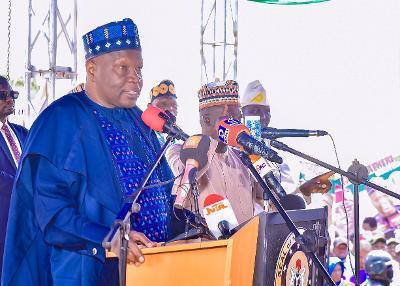
Gombe APC Elects New Leaders, Endorses President Tinubu for 2027

The Gombe State chapter of the All Progressives Congress, APC, has held its Congress to elect new state leaders who will oversee its affairs for the next four years.

The gathering also endorsed President Bola Tinubu as its sole presidential candidate for the 2027 General Election.

The motion for the endorsement was moved by the Chief Whip of the House of Representatives, Honourable Usman Bello Kumo, and seconded by the member representing Dukku/Nafada Federal Constituency, Honourable Abdullahi El-Rasheed.

It was subsequently supported overwhelmingly by members through a voice vote.

Addressing the congress, Governor Muhammadu Inuwa Yahaya, stated that endorsing President Tinubu as the party’s sole presidential candidate in the forthcoming elections was a demonstration of appreciation for courageous and effective leadership at a time when the nation is facing significant economic and governance challenges.

Read Also: Gombe State Inaugurates LG Coordinators to Drive Renewed Hope Initiative

He described Gombe State as a stronghold of the APC, noting that the party’s impressive membership strength and unity have positioned it among the most vibrant chapters nationwide.

Registered Members

The governor revealed that the state recorded over 400,000 registered members during the party’s recent e-registration and membership revalidation exercise, placing Gombe 10th nationally.

He said this achievement reflected the growing confidence of the people in the APC administration at both state and federal levels.

“I am proud of what we have achieved over the years as a party and as a government. During this period, we have executed projects and implemented policies and programmes that have impacted lives, particularly in underserved communities.

“I believe this substantial registration is a result of the good work we have been doing for the people. We are equally proud of what the federal government is doing under the leadership of Mr. President, especially at this challenging time in our nation’s history,” Governor Yahaya said.

He stressed that leadership required courage, commitment and vision, which had been demonstrated by President Tinubu.

 “There has never been a time when we sought support to deliver meaningful services to our people and did not receive it. I can confidently say that we now have purposeful leadership.”

Party’s Strength

The governor further emphasised that unity remains the party’s greatest strength in the state, assuring the national leadership that the APC family in Gombe is firmly united and prepared to secure victory in the next general election.

“In Gombe, the APC is united. Everyone is involved, and we are working together with a shared purpose. I assure you that I will continue to steer the party towards greater success and victory at all levels in 2027,” he added..


President Tinubu Nominates Oyedele as Minister of State for Finance

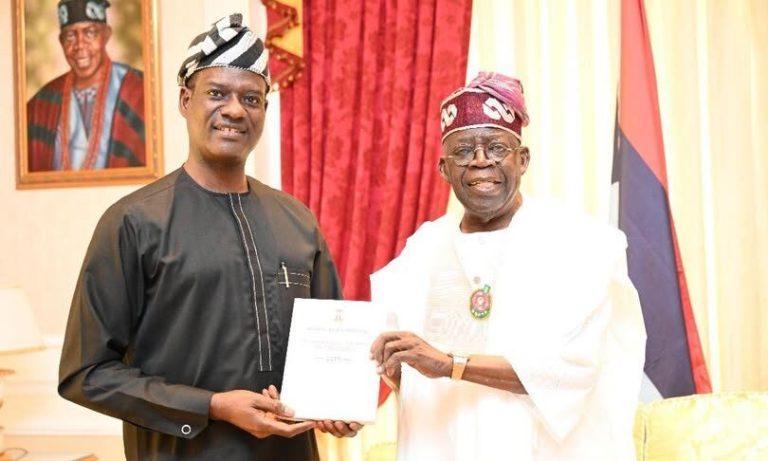
Nigeria’s President, Bola Tinubu has nominated Mr Taiwo Oyedele as the Minister of state for finance, replacing Dr Doris Uzoka-Anite.

A statement issued by the Presidential Spokesperson on Information and Strategy, Mr. Bayo Onanuga, stated that Uzoka-Anite will immediately move to the Ministry of Budget and National Planning, as the Minister of State, her third portf olio in the administration.

According to the statement, President Tinubu had on Tuesday, conveyed the nomination of Oyedele to the Senate for confirmation in a letter to the Senate President, Godswill Akpabio.

Until Oyedele’s nomination as minister,  the Ondo State born was the chairman of the Presidential Committee on Fiscal Policy and Tax Reforms, which overhauled Nigeria’s tax system.

Oyedele, 50, is an economist, accountant and public policy expert.

He attended Yaba College of Technology, where he obtained a Higher National Diploma (HND) in accountancy and finance. He attended Oxford Brookes University and earned a BSc in applied accounting.

He also completed executive education programmes at the London School of Economics, Yale University, the Gordon Institute of Business Science, and the Harvard Kennedy School.

Oyedele spent 22 years of his working career at PwC, joining in 2001 and rising to become the Fiscal Policy Partner and Africa Tax Leader.

Oyedele is also a professor at Babcock University in Ogun State and a visiting scholar at the Lagos Business School.


Migration Studies Key to Nigeria’s Diaspora Governance- NiDCOM

0

The Chairman/Chief Executive Officer of the Nigerians in Diaspora Commission (NiDCOM), Dr. Abike Dabiri-Erewa, has emphasised the critical role of Migration Studies in strengthening diaspora engagement and enhancing migration governance in Nigeria.

Dr. Dabiri-Erewa made the remarks while receiving the Director, Coordinator, and Master’s students of the Centre for Migration Studies, University of Abuja, during a field trip to the Commission’s headquarters in Abuja, Nigeria.

The leader of the delegation and Director of the Centre, Dr. Ifunanya Daniels, conveyed greetings from the Vice-Chancellor of the University of Abuja and expressed appreciation to NiDCOM for hosting the students.

She explained that the visit was organised to provide the Master’s students with practical exposure and hands-on experience in migration governance, complementing their classroom training.

Dr. Daniels noted that the Centre for Migration Studies, established four years ago, was created to deepen research, policy engagement, and academic discourse on migration issues in Nigeria and beyond.

She encouraged NiDCOM staff to enrol in the programme, describing it as a strong capacity-building platform capable of enhancing professional competence.

The Coordinator of the Centre, Dr. Peter Adeyanju, reiterated the importance of the field trip in broadening the students’ understanding of migration policy and administration.

He disclosed that ten admission slots had been reserved for interested NiDCOM staff and commended those already enrolled in the programme, describing them as worthy ambassadors of the Commission.

Dabiri-Erewa described the Migration Studies programme as a valuable opportunity to build capacity and tap into a reservoir of academic knowledge that can strengthen institutional effectiveness.

Ready to Support

She reaffirmed NiDCOM’s readiness to support the Centre and stressed the need for sustained collaboration between academia and government agencies in addressing migration-related challenges.

The NiDCOM boss also invited staff members currently enrolled in the programme to share their experiences, underscoring the importance of continuous learning in improving service delivery and diaspora engagement.

The visit further reinforced the existing partnership between NiDCOM and the University of Abuja, demonstrating a shared commitment to advancing structured migration governance in Nigeria.

NIMC Encourages Citizens to Enrol for NIN

0

The National Identity Management Commission (NIMC) has continued to encourage Nigerians and residents who have not yet enrolled for the National Identification Number to take advantage of the decentralised exercise and present themselves at designated ward enrolment centres for registration.

The Commission commenced the ward-level enrolment exercise on Monday, 16 February 2026, and it is ongoing, progressing steadily across the country.

In an official statement issued by the NIMC’s Head of Corporate Communications, Kayode Adegoke, the Commission reiterated that the National Identification Number (NIN) remains a fundamental requirement for accessing critical government services in Nigeria.

“To ensure smooth operations, members of the public are advised to check the NIMC website for the nearest designated enrolment point within their ward, cooperate with enrolment officials, provide accurate information during registration, Visit and follow this NIMC official communication channels for verified information and updates: www.nimc.gov.ng; please include the other social media accounts.” The statement informed.

It noted that NIMC was committed to achieving inclusive identity coverage nationwide and called on all citizens and residents to come out en masse to register and obtain their National Identification Number.

“For further details: contact us at www.nimc.gov.ng or call us on 08000616462.

For pre-enrolment services: kindly use the link below: penrol.nimc.gov.ng

For data modification: visit selfservicemodification.nimc.gov.ng

For your Digital Identity, download the NINAUTH app on iOS and the Play Store.

NIMC…. providing assured identity,” the statement read.

CBN Governor Announces Surge in Nigeria’s Foreign Reserves

The Governor of the Central Bank of Nigeria, Olayemi Cardoso, has announced that Nigeria recorded notable growth in both gross and net foreign reserves at the end of 2025, reflecting stronger external sector fundamentals and the positive impact of ongoing monetary and foreign exchange reforms.

Addressing journalists at the post-Monetary Policy Committee (MPC) briefing in Abuja, Cardoso stated that the country’s gross external reserves rose to 50.45 billion dollars as of February 16, 2026.

He also disclosed over the weekend that net foreign exchange reserves increased to 34.80 billion dollars at the close of December 2025.

According to the CBN Governor, the increase reflects enhanced transparency and credibility in foreign exchange management, which has helped boost investor confidence, attract stronger foreign exchange inflows, and improve overall reserve management practices.

He explained that net reserves climbed sharply from 3.99 billion dollars at the end of 2023 to 34.80 billion dollars at the close of 2025.

The 2025 net reserve figure, he noted, surpasses the total gross reserves recorded at the end of 2023, which stood at 33.22 billion dollars.

Providing further breakdown, Cardoso said net reserves rose from 23.11 billion dollars at the end of 2024 to 34.80 billion dollars by the end of 2025. Over the same period, gross external reserves increased from 40.19 billion dollars to 45.71 billion dollars, representing a growth of 5.52 billion dollars.

He described the development as a substantial strengthening in both the level and quality of Nigeria’s external buffers over the past three years, underscoring the country’s improved capacity to meet external obligations, support exchange rate stability and reinforce macroeconomic resilience.

Cardoso reaffirmed the apex bank’s commitment to sustaining prudent reserve management, ensuring orderly foreign exchange market operations, and maintaining macroeconomic stability in line with its statutory mandate.


NESREA Seals Abuja Quarry Over Fatal Blast

0

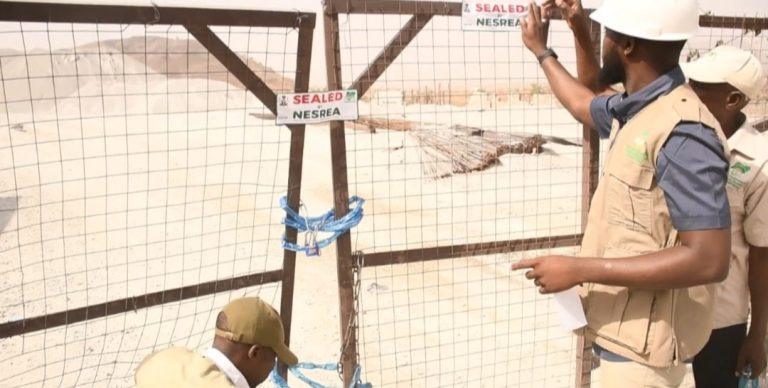
The National Environmental Standards and Regulations Enforcement Agency (NESREA) has ordered the temporary closure of Dai Jin Jia Quarry in ACO Village, Abuja, after a fatal incident involving a 10-year-old boy during blasting operations at the site.

The agency says the action is part of its standard regulatory response to ensure full compliance with environmental and safety protocols while investigations are ongoing.

The incident, which occurred on Friday, February 27, 2026, prompted an immediate response from the agency.

The Director of Environmental Quality Control, NESREA, Mr. Elijah Udofia, who spoke on behalf of the Director-General, Professor Innocent Barikor, described the development as deeply distressing and avoidable.

According to Udofia, “The quarry had previously been sealed last year as part of NESREA’s enforcement efforts to uphold environmental standards and protect host communities.”

He explained that despite regulatory warnings and oversight, the company allegedly continued operations in violation of national regulations.

“It is distressing to see that despite prior warnings and sealing, the facility chose to continue operations that not only violate National Environmental Regulations but also put lives at risk. The quarry has been sealed again, this time in response to the grievous consequences of its operations,” he said.

According to NESREA, “Preliminary investigations conducted by NESREA officials, alongside officers of the Nigeria Police, ACO Division, revealed serious regulatory breaches. The quarry reportedly failed to produce a documented Blasting Operation Plan and could not provide records of its Charge Load Density (CLD)—the quantity of explosives used for the blasting—contravening Regulation 23 of the National Environmental (Quarrying and Blasting Operations) Regulations 2013.”

Officials also discovered that the facility’s warning alarm system, which is designed to alert nearby residents before blasting operations, was faulty at the time of the incident.

Udofia assured the public that investigations are ongoing and that all responsible parties would be held accountable.

Strict Adherence to Environmental Laws

He emphasised that the tragedy underscores the urgent need for strict adherence to environmental laws, particularly in high-risk sectors such as quarrying and mining.

“This incident serves as a stark reminder of the critical importance of compliance with environmental regulations. We must prioritize not only adherence to the law but also the safety and well-being of our citizens,” he stated.

NESREA further called on operators within the quarrying sector and other industries to strictly comply with the provisions of national environmental regulations, warning that the agency would not hesitate to take decisive action against violators.

The agency reiterated its commitment to safeguarding the environment and protecting communities from preventable hazards, stressing that such tragedies must not be allowed to reoccur.

European Capitals Push Back as Ukraine Fast-Track EU Membership

0

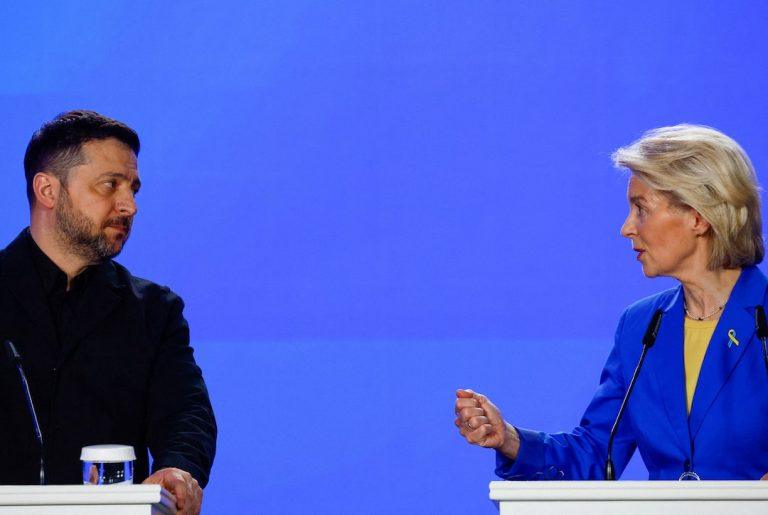
Ukraine’s push for a fast track into the European Union as part of any ​peace deal has hit stiff resistance from EU governments, who do not want to open the Pandora’s box of problems that they fear a quick accession would ‌unleash.

Ukrainian President Volodymyr Zelenskiy wants a 2027 date to join the EU as part of a settlement to end Russia’s war, hoping this would anchor his country in Europe’s main political club and offer a path to greater prosperity, security and stability.

A clear route into the EU could be vital for Zelenskiy in selling any peace settlement to Ukrainians, particularly if – as is widely expected – Ukraine does not regain control of all of its territory or join ​the NATO military alliance, analysts say.

But EU governments – including France and Germany – have privately voiced scepticism about a mooted reform of the accession process that would shorten Ukraine’s path ​to membership, diplomats say.

Recent reports has said that, eight European diplomats and officials, and many pointed to unease among EU capitals about the idea.

Among their concerns is that Ukraine and others would not press on with reforms, such as cracking down on corruption, if it has already been granted EU membership.
Ukrainian Deputy Prime Minister and lead EU negotiator ​Taras Kachka told Reporters that Kyiv was ready to address EU members’ concerns.

He proposed safeguards such as a monitoring system to check Kyiv was sticking to democratic standards and a transition period before it ​received EU farm subsidies.

But he said a political commitment to a membership date would be important. “This is necessary for the peace process, for the establishing of long-lasting and just peace in Europe,” he said.

Current Membership Process is Long and Complex

The current process for joining the bloc is usually long and bureaucratic, even in straightforward cases, involving years of detailed negotiations and legal reforms to meet EU democratic and economic standards.

Every step of the accession process, ​which is divided into chapters and clusters of policy issues, also requires approval from all EU members. Hungary has blocked Ukraine’s path early in the process.

European Commission President Ursula von der Leyen, head ​of the bloc’s executive, has floated a revamp of the process behind closed doors, diplomats say.

Instead of carrying out all the required reforms first, a country could join the EU after meeting some minimum requirements – but with ‌limited access to EU funds and decision-making until they meet all the membership benchmarks.

That could make it easier for Ukraine and others such as Moldova, Montenegro and Albania to join quickly – although Zelenskiy’s target of January 1, 2027, would still be unrealistic, not least as all 27 current EU members have to ratify any accession.

EU Governments Unconvinced By Commission Overtures

Kachka suggested Ukraine could at least sign an accession treaty with the EU next year, even if ratification and other steps might take longer to implement.

But analysts and diplomats see little appetite for such bold moves, including von der Leyen’s mooted revamp, known as “reverse enlargement” ​as it turns the process on its head ​by letting a country join before it has met all the current criteria.

The growing support for populist and anti-enlargement parties in several capitals makes governments cautious about being seen to accelerate a process they have not yet built public consent for,” said Anastasia Pociumban, a research fellow at the German Council on Foreign Relations.

The concept of reverse ​enlargement is dead,” said one EU diplomat. “There is also no support for giving a concrete accession date.”

A Western European official said: “Ukraine is just ​not ready and has rampant corruption.”

Von der Leyen tried to temper expectations in Ukraine last week. She told Zelenskiy publicly that “dates by themselves are not possible” even as she praised the country’s reforms in the midst of war.

Commission Expected to Continue Pushing for Kyiv

Nevertheless, the Commission is expected to continue to push for ways to get Kyiv into the EU in the next few years, arguing that membership would strengthen the bloc militarily amid fears Moscow may attack ​an EU member next.

Some say a model of gradual integration, whereby aspiring members take part in more and more EU ​programmes and meetings before joining the club, may be more feasible.

“I think a full accession within the next few years remains unlikely,” Corina Stratulat, associate director at the European Policy Centre, said of Ukraine’s prospects.

What seems more likely to happen instead ​is accelerated integration – single market access, energy, digital, transport – phased participation in EU programmes and policies.”


Reuters

Governor Soludo Unveils APGA’s Nationwide Digital Membership Reform

National Leader of the All Progressives Grand Alliance (APGA) and Governor of Anambra State, Chukwuma Soludo has formally launched the party’s nationwide electronic membership registration and revalidation exercise, marking a notable step in its institutional reform agenda and compliance with Nigeria’s evolving electoral framework.

The initiative, which commenced on March 1, 2026, is being implemented simultaneously across Nigeria’s 8,809 electoral wards, including the Federal Capital Territory.

It is designed to modernise APGA’s membership database, enhance transparency, and align the party’s administrative processes with recent amendments to the Electoral Act mandating political parties to maintain verifiable, digitised membership registers.

Governor Soludo and his wife, Dr. Nonye Soludo was among the first to complete the revalidation process, underscoring what the governor described as a “lead-by -example” approach to party discipline and accountability.

“This digital transformation is a game-changer. We are not merely updating our records; we are building a robust and credible party structure anchored on integrity and innovation. With National Identification Number integration, as stipulated by the new Electoral Act, we are strengthening the integrity of our membership database and setting a new benchmark in Nigerian politics,” Soludo said.

APGA transitioned to a digital registration platform in 2024, and a move party leaders say positions it ahead of many domestic political organisations in administrative innovation.

The current exercise expands that reform, integrating the National Identification Number (NIN) system to ensure accuracy, eliminate duplication, and reinforce compliance with statutory requirements.

Read Also: Anambra Releases Timetable for Governor Soludo’s Second-Term Swearing-In Ceremony

The National Chairman of APGA, Sly Ezeokenwa, described the exercise as both a legal necessity and a strategic milestone.

According to him, the amendments to the Electoral Act require all political parties to maintain comprehensive digital registers containing specific and verifiable information for every member.

“This is not just an administrative update,” party officials noted during a briefing at the party’s zonal headquarters in Awka. “It is a forward-looking reform aimed at fostering inclusivity, data integrity, and institutional credibility as we prepare for future electoral cycles.”

The party’s National Publicity Secretary, Ejimofor Opara stated that the exercise was open to existing members seeking revalidation as well as new entrants aged 18 and above.

Participants are required to present a valid National Identification Number, voter’s card, and two passport photographs at their respective ward registration centres.

The party has set a target of enrolling and revalidating over two million members nationwide.

Governor Soludo called on supporters and prospective members to take advantage of what he described as a seamless and simplified process.

“No one will be left behind,” he said, urging grassroots mobilisation to strengthen the party’s reach and democratic engagement.

Political analysts view the exercise as part of APGA’s broader effort to consolidate its organisational base and project itself as a reform-driven platform within Nigeria’s competitive multiparty system.

By aligning early with digital compliance standards, the party is positioning itself to navigate future electoral cycles with greater institutional resilience and credibility.