Home Blog Page 133

Senate Withdraws Motion Seeking for Removal of CAC Registrar

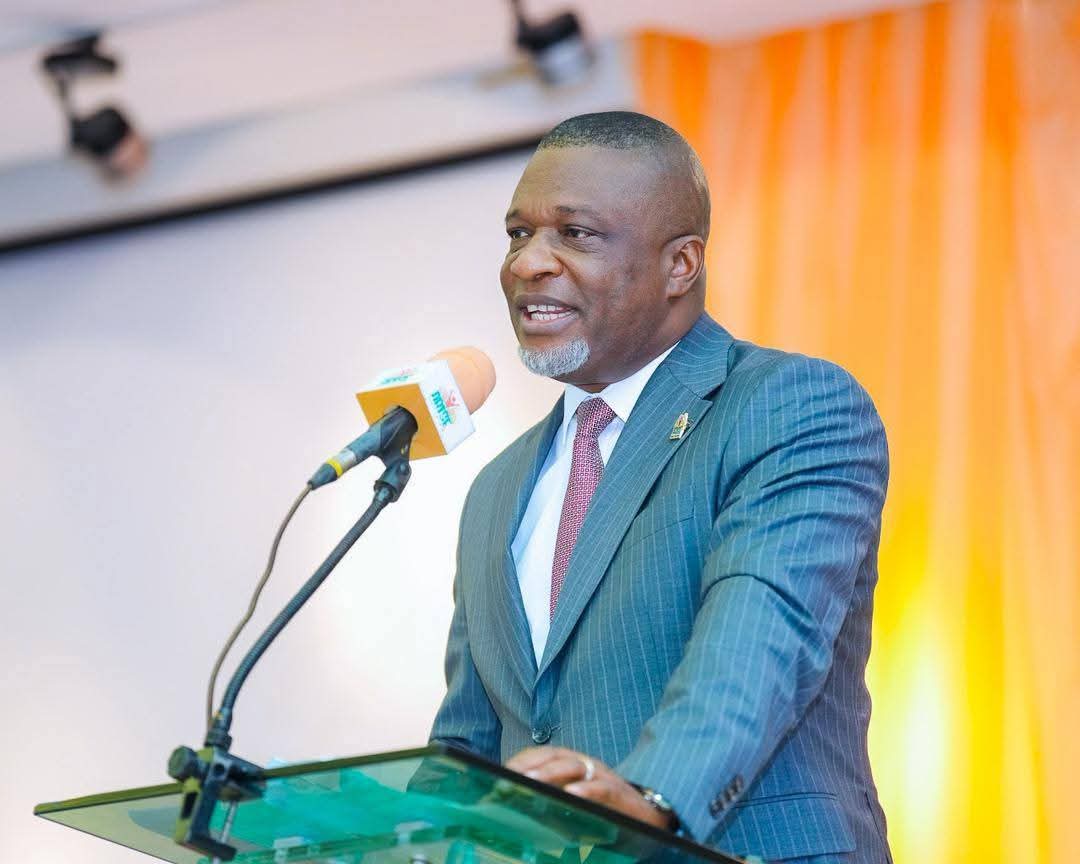
The Nigerian Senate, through its committee on Finance has rescinded its resolution taken last week for the removal of Registrar – General of the Corporate Affairs Commission ( CAC),  Hussaini Ishaq Magaji from office by President Bola Tinubu.

The committee had during a session it had with the federal government’s economic team last week, sought the removal of the CAC registrar from office by President Tinubu for allegedly refusing to appear before it repeatedly.

However, rescission of the resolution by the committee at another session on Monday followed remorsefulness shown by the CAC Registrar before it and a motion moved to that effect by Senator Jibrin Isa ( Kogi East ) and seconded by Senator Nasir  Musa  Zango Daura (Katsina  North).

Before the soft landing offered the CAC Registrar, the Chairman of the Committee, Senator Sani Musa had earlier taken him up for evading appearances in the past and pointedly told him that the committee was not happy with him.

” This committee is not happy with you for your persistent refusal to appear before it in the past or for sending junior officers to it.  That’s not acceptable.  The Constitution grants us oversight powers over all revenue-generating agencies. At our last sitting, the committee recommended your removal, but you appeared shortly after our pronouncement. We want an explanation.”, he said.

In his response Magaji tendered an unreserved apology and vowed that such would never happen again as according to him, a liaison office has been created by him to prevent communication breakdown that made him fail appearances in the past.

“Mr. Chairman, I sincerely apologise to the committee. I was returning from Lagos and asked my team to inform the committee ahead of time. Unfortunately, I arrived late.

“We have now created a dedicated liaison office to handle interactions with the National Assembly. I assure you this will not happen again. I take full responsibility and hold this committee in high esteem” he said.

Apparently satisfied with the remorse shown, members of the committee one after the other, sought forgiveness for him.

First to make the plea was Senator Diket Plang ( Plateau Central ), who said he had known the CAC Registrar for many years as a very respectful, dedicated, and patriotic Nigerian and not a disrespecter of a very important institution like the Senate or the National Assembly.

Similarly, Senators Ned Nwoko ( Delta North) and Jibrin Isa ( Kogi East), pleaded for forgiveness for the CAC Registrar, and also Senator Orji Uzor Kalu ( Abia North) who in his plea, sought the withdrawal of the motion incidentally moved by him last week.

The Chairman of the committee accordingly put the motion on withdrawal of the earlier motion to voice votes by members of the committee  which they all voted for,  affirmatively.

The committee however stood down reports on the 2024 and 2025 budgets presentation made by the CAC Registrar for allegedly being scanty and told to make a re-presentation on Thursday this week.

The Nigerian Senate has asked President Bola Tinubu to immediately remove the Registrar General of the Corporate Affairs Commission (CAC), Hussaini Ishaq Magaji from his office for ignoring several invitations to appear before the Legislature.

The Senate, through its Committee on Finance had last week Thursday, accused Magaji of failing to honour several Legislative’s invitations to account for the finances of his agency.

Committee Chairman Sani Musa accused Magaji of disregarding summons and instead sending junior officers to represent him during budget defense sessions.

Allegations of financial discrepancies also prompted the Senate’s strong call against the CAC leadership, and particularly Magaji.

Magaji was appointed to this position by President Tinubu on October 13, 2023.

As the Registrar-General of the CAC, Magaji is expected to work for the development and regulation of corporate affairs in Nigeria.

Kebbi State Distributes Farm Inputs, Ramadan Palliatives

The Kebbi state government has flagged off the distribution of farming inputs and Ramadan palliatives across the state.

The Minister of Agriculture and Food Security, Abubakar Kyari, who was at the launch of the Kaura Agricultural Development Agenda (KADAGE) in Birnin Kebbi, the state capital commended Kebbi State’s commitment to agricultural development.

He described Kebbi as a state where agriculture shapes the economy and sustains livelihoods while noting that more than 80 percent of the population is engaged in farming and related activities, making agriculture central to the state’s identity and economic strength.

Kyari emphasised that food security remains fundamental to national sovereignty and economic resilience, adding that President Bola Ahmed Tinubu has elevated agriculture to a strategic national priority.

He lauded Governor Nasir Idris for aligning with the federal government’s mandate to strengthen domestic production and deliver measurable results in food security.

The Minister praised Kebbi’s long-standing leadership in rice production, noting that the state has progressed beyond primary cultivation to structured value addition and agro-industrial growth. He highlighted the role of major rice mills in processing paddy into high-quality finished products for national markets.

Kyari also referenced the commissioning of fortification and quality control equipment at the Takalau Rice Mill, describing it as one of the few facilities in Nigeria capable of producing fortified rice. According to him, the facility bridges smallholder farmers with commercial-scale processing while meeting premium standards.

He assured that the Federal Ministry of Agriculture and Food Security would continue to support Kebbi State’s agricultural transformation and urged farmers to embrace innovation and technology. He also called for greater inclusion of youth and women in agricultural enterprises to sustain productivity and growth.

In his address, Kebbi State Governor Nasir Idris described the occasion as a significant milestone in the state’s agricultural transformation drive.

He said the Kaura Agricultural Development Agenda (KADAGE) remains focused on empowering farmers, improving productivity, and strengthening food security.

According to the Governor, sustained investment in free farm inputs, machinery, and extension services demonstrates the administration’s commitment to boosting agricultural output and reinforcing both state and national economies.

Idris disclosed that Kebbi recorded steady growth in rice production, with annual output rising from 3.05 million tonnes in 2023 to 3.15 million tonnes in 2024. Projections for 2025, he added, remain strong.

He reaffirmed that “Kebbi continues to rank among Nigeria’s leading rice-producing states, noting that other major crops have also recorded consistent increases”.

The Governor also announced the launch of the 2026 dry season farming programme, explaining that Kebbi operates two production cycles within a single dry season to maximize output.

He revealed that the state is distributing 2,000 solar-powered pumps, 5,000 power tillers, 5,500 sprayers, 24,000 litres of herbicides, 70,000 litres of liquid organic fertilizer, and 5,000 tonnes of assorted fertilizers to farmers across the state.

In addition, 6,500 tonnes of assorted grains including rice, maize, and millet are being distributed as Ramadan palliatives to support vulnerable residents during the holy month.

Idris stated that beneficiaries were carefully selected in collaboration with traditional rulers and farmers’ groups, warning that no substitutions would be tolerated.

He directed the distribution committee to ensure fairness and transparency and cautioned political office holders against diverting items meant for grassroots beneficiaries.

“Security agencies, he added, have been instructed to arrest anyone found selling the distributed inputs”.

Earlier, the Commissioner for Agriculture, Alhaji Shehu Mu’azu, said the event marked the third edition of the large-scale distribution initiative under the current administration. He described the programme as fulfillment of the governor’s promise to directly support farmers and improve livelihoods through practical interventions.

Mu’azu highlighted the expansion of solar-powered pump distribution from an initial 1,000 units to nearly 15,000 units over time. He stressed that the machinery and inputs are provided free of charge to enhance production capacity.

Speaking on behalf of beneficiaries, Alhaji Hayatu Muhammad from Birnin Kebbi thanked the governor, noting that more than one million farmers are expected to benefit from the initiative. He assured that recipients would utilise the items responsibly to boost productivity and support food security.

Also speaking, the Vice President of the Rice Farmers Association of Nigeria (RIFAN) Malam Auwal commended the governor’s sustained support for farmers and efforts to strengthen rice production in the state.


APC Attributes Growth to Digital Membership System

The National Chairman of the All Progressives Congress (APC), Professor Nentawe Yilwatda, has credited the party’s growing membership base and electoral competitiveness to its solid internal structures, technology-driven membership system, and transparent administration.

The Special Adviser to the National Chairman of the APC on Media and Communications Strategy, Mr. Abimbola Tooki, said in a statement that the National Chairman made the remarks while speaking at a public presentation in Abuja, the nation’s capital.

Professor Yilwatda said the party’s adoption of electronic registration has significantly strengthened its organisation and mobilisation capacity across the country.

According to him, the digital register provides accurate and verifiable data on members, including their locations and contact details, enabling efficient communication, planning, and electioneering.

He added that the system has improved the credibility of party primaries by ensuring that only duly registered members participate in the process.

“Our electronic registration gives us real-time access to our members. We know who they are, where they live, and how to reach them. This allows us to mobilise effectively and conduct more credible primaries,” he said.

The APC chairman further disclosed that the party’s membership database has been linked to the National Identity Management Commission (NIMC), a move he said has helped cleanse and validate the register, eliminate duplication, and strengthen internal accountability.

Party Primaries

On the debate surrounding direct and indirect primaries, Yilwatda noted that while direct primaries promote inclusiveness and give members a strong sense of participation, they also come with operational challenges if not properly managed.

He warned that poorly handled direct primaries could open the door to manipulation and the “colonisation” of delegates, limiting voters’ ability to make independent choices.

“This is why Nigerians should interrogate why almost all political parties tend to favour indirect primaries. The issue is not just the method, but the integrity of the process,” he stated.

Yilwatda noted that the APC remains flexible and has successfully conducted primaries through consensus, direct, and indirect methods, depending on what best promotes unity and internal democracy.

He cited instances where aspirants in several states agreed on consensus candidates without post-primary litigation, describing the feat as rare in Nigeria’s political landscape.

He also noted that the party’s presidential primaries were conducted using the direct primary system.

Addressing concerns over the influx of defectors into the APC, the chairman dismissed claims that the country is drifting toward a one-party state.

He argued that the movement of politicians from opposition platforms into the APC reflects political competition and organisational strength.

“It is natural in politics. Many parties are struggling, and their members want a viable platform. They see the APC as the most organised option,” he said.

He added that the party’s governance record, mobilisation structure, and internal management have made it attractive to politicians from across the spectrum, including members of the Peoples Democratic Party (PDP) and the Labour Party.

The APC currently controls about 31 governorship seats and maintains a majority in the National Assembly. Yilwatda said this dominance reflects voter confidence rather than coercion or exclusion.

On party funding, he stressed that the APC is owned and sustained by its members through dues and legitimate contributions, noting that the party does not operate a Board of Trustees structure.

“APC belongs to its members. Our funding comes from membership dues and lawful contributions, and that gives members true ownership,” he said.

Professor Yilwatda reaffirmed the party’s commitment to internal democracy, transparency, and continuous reform of Nigeria’s electoral and party systems, describing the APC as a model of effective political organisation and governance.

Lawmakers Move To Regulate Fintech Industries

The House of Representatives has moved to regulate the Fintech Industries in Nigeria.

This is as the House holds a public hearing on “A Bill for An Act To Provide for the Establishment of the Nigerian Fintech Regulatory Commission and for Related Matters (HB.2389).”

Declaring the hearing open, the speaker of the House of Representatives, Mr. Tajudeen Abbas said that the “It is to get inputs from stakeholders and the general public, in order to ensure that the laws we pass are enforceable, relevant, and consistent with the Constitution of the Federal Republic of Nigeria.

” I want to thank the Committees on Digital and Electronic Banking, Banking Regulations, Science and Technology, and Communications for working together to ensure that this event takes place. The crucial nature of this hearing is further emphasized by the way the issues at play intersect different sectors of the economy, requiring a legislation that is able to address current regulatory overlap, duplication and inconsistencies.

” This Hearing marks a significant step in the effort to position Nigeria as a leading financial technology hub in Africa, and a major player in the global fintech industry. In the last few years, our country has seen consistent growth and innovations in digital payments, blockchain technology, digital assets, crowdfunding, and other forms of embedded finance. Fintech has therefore become a major tool for advancing financial inclusion in a country with one of the largest unbanked populations in the world. It has created thousands of new jobs for our youth, brought in appreciable investment, and supported small and medium enterprises in line with President Tinubu’s Renewed Hope Agenda for inclusive growth.

” Sadly, regulation has not been able to keep pace with the speed of innovation in the sector. The absence of a single coordinated framework for fintech oversight has led to fragmented regulations, compliance difficulties, and general uncertainties for investors and consumers alike. It therefore becomes necessary to establish a Commission that will act as a coordinating body and eliminate duplication, streamline processes and remove the barriers that stifle innovation”, Abbas said.

He noted that the proposed Nigerian Fintech Regulatory Commission is expected to act as a statutory body that will oversee licensing, regulate and supervise fintech services, and replace the existing multi-regulatory approach with a one-stop model.

” As part of its mandate, it will be responsible for developing performance standards, creating a level playing field, and fostering investment in the fintech sector. The purpose of this public hearing therefore is to receive submissions from stakeholders, regulators, operators, investors, consumer protection groups and the general public over the legal, economic and institutional implications of establishing the Nigeria Fintech Regulatory Commission. This process will also help determine the appropriate scope, powers and limitations of the Commission and ensure that the proposed framework aligns with existing laws and institutions to avoid conflict, duplication, or regulatory challenges”. He said.

The Speaker pointed out that since Fintech is a relatively new financial system, it is essential that the Commission is able to protect investors and consumers, monitor cybersecurity risks, and promote consumer education, data privacy and national security.

He charged the committee to be mindful and providing clear guidelines to guard against regulatory proliferation.

” There must be no duplication of licensing processes or conflicting practices. The Commission is not in competition with existing institutions nor is it meant to replace or them. Its work must not undermine the work of the Central Bank of Nigeria, the Securities and Exchange Commission, the National Information Technology Development Agency of Nigeria or the Nigeria Deposit Insurance Corporation. Rather, it is supposed to operate as a complementary mechanism and to defer to primary regulators in their core mandates as already established by law”. He added.

The Chairman of the House Of Representatives Committees On digital and electronic banking, banking regulations; science and technology; Communication; and capital market and Institutions, Mr. Emmanuel Ukpong-udo, said that the engagement reflects the commitment of the House of Representatives to building a responsive and forward-looking legal framework that keeps pace with the rapid evolution of financial technology in Nigeria.

“The House recognises that financial technology is no longer a peripheral segment of the Nigerian economy.

” It is a central pillar of financial inclusion, youth entrepreneurship, innovation, and economic competitiveness. Nigeria has emerged as one of Africa’s leading fintech hubs, attracting significant domestic and foreign investment, driving digital payments adoption, and expanding access to credit and financial services. However, this rapid growth has also exposed regulatory fragmentation, compliance uncertainties, consumer protection gaps, and supervisory overlaps. HB. 2389 seeks to address these challenges in a structured and comprehensive manner.

” The Bill before us today is designed to establish the Nigerian Fintech Regulatory Commission as a specialised and independent regulatory authority with the mandate to provide coherent oversight of fintech activities. Importantly, this Bill must be carefully harmonised with the mandates of existing financial sector regulators to avoid duplication, conflict of jurisdiction, or unnecessary regulatory burdens. As we deliberate, we must consider institutional coordination, transitional licensing arrangements, proportionate compliance requirements for start-ups and emerging innovators, and the fiscal sustainability of the proposed Commission. Our objective is to craft a law that promotes innovation while safeguarding systemic stability.

“The House firmly believes that effective legislation must be shaped by robust stakeholder engagement. This Public Hearing provides a vital platform for regulators, fintech operators, deposit money banks, payment service providers, consumer advocacy groups, cybersecurity experts, academia, and development partners to present evidence-based submissions and practical recommendations”. Ukpong-udo said .

He added that the public insights will guide the refinement of this Bill to ensure that it is implementable, inclusive, and responsive to the realities of the market.

The sponsor of the Nigerian Fintech Regulatory Commission Bill, Mr. Fuad Kayode Laguda explained that he sponsored the bill to enhance businesses and operational activities of fintech operators and service providers in the country.

” I discover that Nigeria has no single regulatory authority regulating businesses, practices, and operations of fintech operators and service providers despite their impact on national growth and development.

” Creation of this Regulatory Commission will enhance profitability of fintech businesses and security of fintech users. Currently, Nigerian fintech sector is regulated by these organisations namely: CBN, SEC, NITDA, NOTAP and FIRS. This industry is governed by fragmented regulatory frameworks which threaten the confidence of fintech stakeholders. Rather than interfacing with multiple regulators, fintech stakeholders will only interface with the NFRC thereby enabling ease of doing business for them:”. Laguda said.

He said that ” As of January 2024, Nigeria has 250 fintech companies while the market value of Nigerian fintech industry was projected around $230 billion according to McKinsey & Company report. As of January 2026, nine (9) of the fintech firms have a combined valuation of $10.6 billion with over 430 fintech firms in 2025. Nigeria’s fintech industry had over 108 billion mobile money transactions amounting to over $1.6 billion in 2024.

“Nigerian Fintech Regulatory Commission, if established, will enforce standards, rules, and codes of practices for operators and investors. For the customers, the Commission will adequately protect them from digital frauds and build their trust in digital platforms. Generally, this Commission will sufficiently protect the interests of fintech investors and customers by implementing policies and measures that safeguard them from fragmented regulations and ensure they enjoy reasonable rates.”

Players in Nigeria’s fintech sector expressed differing opinions on the proposed creation of a Nigerian Fintech Regulatory Commission.

While some support the move, others warn it could create overlapping mandates and duplicate the roles of existing regulators.

 

Nigerian Stars Shine At Ivy League Conference Championships

0

Nigeria’s rising track and field stars delivered a sensational performance at the Ivy League Conference Championships, with sprint dominance from Forehan Abinusawa and a historic throw from Jessica Oji.

Oji,18, produced a moment of continental history in the women’s shot put, launching a massive throw of 18.50 metres to claim gold and set new Nigerian and African records.

Her mark surpassed the previous African record of 18.48 metres set just a day earlier by Mine de Klerk, which itself had eclipsed the long-standing record held by Vivian Chukwuemeka.

Remarkably, Oji achieved the feat in only her third competition representing Nigeria, instantly establishing herself as the greatest female shot putter the continent has produced.

Forehan Abinusawa

Forehan Abinusawa

Meanwhile, Abinusawa completed a stunning sprint double, storming to victory in the women’s 60m final with a blazing 7.25 seconds, comfortably ahead of Juliette Kosmont, who finished in 7.40 seconds.

She followed up with another commanding performance in the 200m, clocking a new personal best of 23.30 seconds to secure gold ahead of Alyssa Jackson, who ran 23.62 seconds.

Together, the two athletes delivered a memorable outing for Nigeria, underlining the country’s growing strength and depth in global athletics.

Nasarawa Secures $1.008bn in Domestic, Foreign Investments

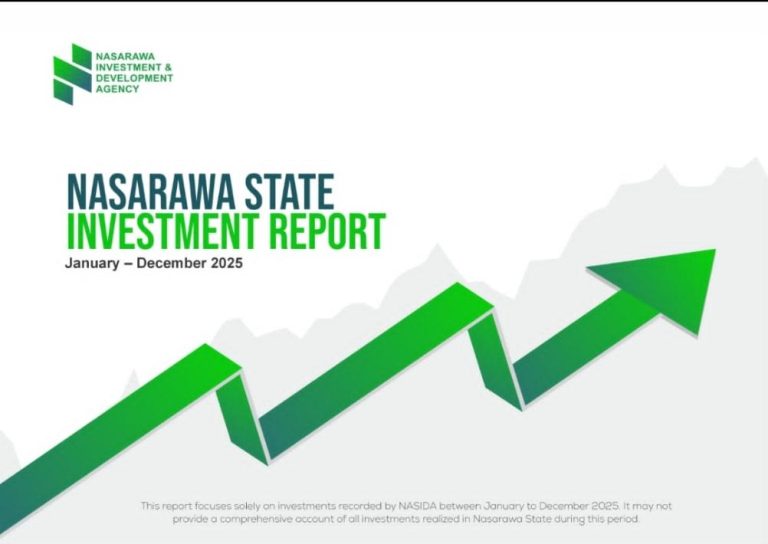
The Nasarawa State government has secured domestic and foreign direct investments totaling $1,008,529,220 between January and December 2025.

This figure is separate from other investments attracted within the same period by various Ministries, Departments, and Agencies of the state government.

A report detailing the Nasarawa Investment and Development Agency’s 2025 investment portfolio, indicates that the total amount comprises $505.7 million actualised investments, representing 50.14%, and $502.8 million announced investments, accounting for 49.86%.

Announced investments refer to public declarations or formal commitments such as Memorandums of Understanding (MoUs) and Letters of Intent made by investors, companies, or institutions expressing their intention to invest in the state. Actualised investments, on the other hand, represent deals that have progressed to the implementation stage.

The report shows that the announced investments totaling $502.8 million span key sectors including mining, agriculture, energy, manufacturing, among others.

The sectoral breakdown of announced investments includes: Mining – $300 million; Agriculture – $800,000; Energy – $70 million (13.9%); Manufacturing – $130 million; and Others – $2 million, respectively.

For actualised investments, eight companies injected a combined $505.7 million into priority sectors of the state’s economy.

The breakdown of actualised investments shows: Mining – $400 million; Agriculture – $48.8 million; Manufacturing – $46 million; Technology – $16.6 million; and Education – $10.9 million, respectively.

These investments are distributed across six Local Government Areas of the state: Kokona, Nasarawa, Akwanga, Keffi, Lafia, and Toto.

Kokona recorded investments worth $45.5 million (8.9%), followed by Nasarawa with $400 million (79%); Akwanga with $31 million (6.12%); Keffi with $25.9 million (5.2%); Lafia with $16.6 million (0.08%); and Toto with $3.3 million (0.7%).

Among the investing companies is Euphoria Press Limited, which operates in agriculture and manufacturing across three local government areas Kokona, Akwanga, and Keffi.

Other companies include Diamond New Energy Company LTD; Advent Integrated Service Limited; Saro Africa Agric Value Chain; Sequoia Cassava Farms; and China Witent Technology Co Ltd.

According to the report, companies that have announced investment plans and are actively working toward resource deployment include Nichi Mine Limited; Nok Motors Limited Electric; Caspian Pacific Africa Green Energy Limited; CMIG Drawin Nig. Ltd; EGTA Environmental Limited; and Maiyamco Investment Nig. Limited.

The document further reveals that a total of 22,645 jobs are projected to be created across the various sectors.

A breakdown of the projected employment figures shows that Agriculture will generate 10,025 jobs; Manufacturing – 6,600; Education – 5,000; Mining – 1,000; and Technology – 20, respectively.


Nigeria, Africa Finance Corporation Sign $1.3bn Refinery Deal

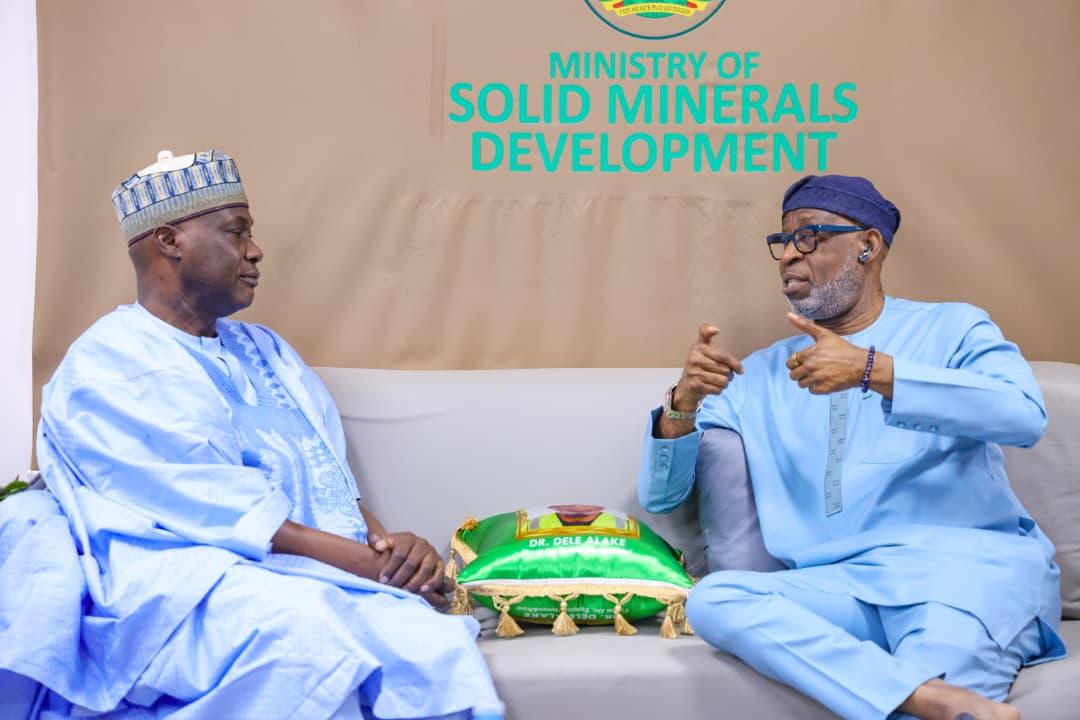
The Nigerian Government has signed a landmark $1.3 billion Memorandum of Understanding (MoU) with the Africa Finance Corporation (AFC) to jointly finance a major alumina refinery project, alongside a comprehensive national geoscience mapping programme and the establishment of a strategic investment vehicle to drive mining sector growth.

The agreement, executed through the Solid Minerals Development Fund (SMDF), marks the culmination of extensive discussions between AFC and SMDF to fund the construction of a $1.3 billion alumina refinery.

According to the Special Assistant on Media to the Minister of Solid Minerals Development, Mr. Segun Tomori, who disclosed this in a statement, the facility is expected to process up to one million tonnes of bauxite ore annually.

Mr. Tomori noted that the project will deploy a modern Bayer process flowsheet and be supported by an on-site gas-fired cogeneration plant to provide steam and power generation.

Speaking at the signing ceremony, Minister of Solid Minerals Development, Dele Alake, described the deal as a transformative milestone for Nigeria’s mining industry, noting that it would significantly boost the sector’s contribution to the nation’s Gross Domestic Product (GDP).

The Minister further emphasised that the deal aligns with the Ministry’s reform agenda, which he said has strengthened the investment climate, modernised regulatory processes, and established a transparent, world-class mineral licensing regime that is drawing credible private sector capital into the sector.

Reiterating the Federal Government’s resolve to accelerate mining sector development, the Minister confirmed that all necessary approvals have been granted to fast-track the AFC–SMDF investment programme. He directed relevant agencies under the Ministry to ensure timely processing of permits, titles, and regulatory clearances to guarantee smooth implementation.

Designed for an operational lifespan of approximately 20 years at 95 per cent utilisation, the refinery is expected to deliver a total alumina output of about 19 million tonnes over the project’s duration.

The Executive Secretary of SMDF, Fatima Shinkafi, hailed the agreement as the agency’s largest funding initiative since its inception.

She described the $1.3 billion capital expenditure (CAPEX) as an unprecedented achievement, underscoring SMDF’s growing capacity to facilitate large-scale investments in alignment with the Ministry’s value-addition policy.

According to the Special Assistant on Media to the Minister of Solid Minerals Development, Mr. Segun Tomori, the project is poised to become Nigeria’s largest private-sector mining investment and a landmark foreign direct investment.

“It is expected to contribute an estimated $1.2 billion annually to GDP, generate over $25 billion for the national economy across its lifecycle, and deliver approximately $8 billion in foreign exchange earnings.

“Initial feasibility studies conducted by AFC and SMDF have confirmed the project’s competitiveness and commercial viability, reinforcing the Ministry’s strategy to position Nigeria as a globally competitive minerals destination.

“Beyond the refinery, the partnership will support a nationwide geoscience mapping exercise aimed at generating critical mineral data, de-risking exploration activities, and attracting international investors. Both parties also agreed to establish a joint strategic investment vehicle to fast-track exploration, development, and production across selected mining assets in Nigeria.”

Permanent Secretary of the Ministry, Engr. Farouk Yabo, commended the initiative, describing it as evidence of the Ministry’s reform-driven transformation.

He reaffirmed the commitment of the Ministry’s bureaucracy to provide the necessary institutional support for the seamless execution of the project.

While Shinkafi signed on behalf of the Federal Government, Franklin Edochie, Deputy Director and Head of Metals & Mining at AFC, signed on behalf of the Corporation. The ceremony was witnessed by AFC President/CEO, Samaila Zubairu, alongside senior government officials.


Justice Remains Central to Women’s Development – Gender Expert

0

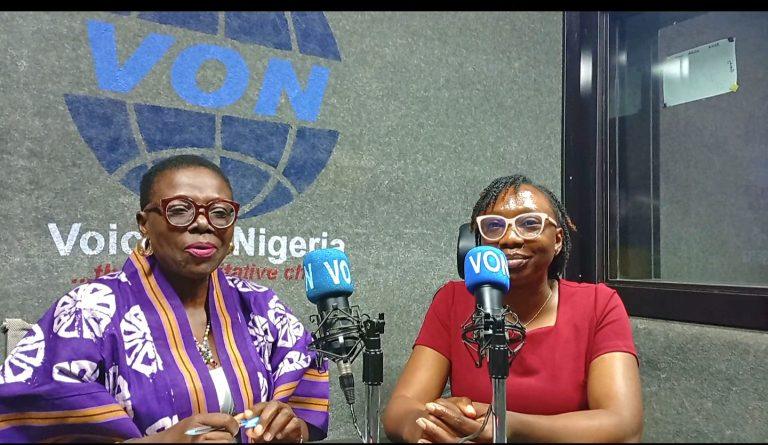
The Policy Innovation Centre (PIC) Gender Team Lead, Ms Adekemi Omole, says justice remains central to women’s development.

Speaking on Voice of Nigeria’s Women and Development programme, kickstarting the global commemoration of the 2026 International Women’s Day, she renewed calls for stronger justice systems, gender-responsive and inclusive policies to advance women’s rights.

The 2026 theme, “Rights, Justice, Action, For ALL Women and Girls”, calls for justice, rights and action for women and girls across the globe.

Omole emphasised that justice is critical to the agency of women in all spheres and sectors.

“Without justice, women’s voices will not be heard. If we do not give women a voice, we haven’t given them agency. And if we don’t give them the agency, we haven’t given them the power,” she stated.

She noted that insecurity, conflict and displacement further weaken access to justice, particularly for women and children.

“And as we’ve seen, even just from the case in Nigeria, how many times women, unfortunately suffer and children, you know, suffer most from insecurity,” she said, adding that survivors often bear “the whole burden, the burden of care.”

On government policy direction, Omole commended efforts toward social development but emphasised inclusive design.

“It is impossible, very critical that women who would use these systems, like they’re asked for their needs and the approach to which the processes are implemented, you know, we hear it from them,” she said. “So we should just not leverage a top-down approach, but we must ensure that we use a down-top approach.”

Assessing progress from the centre’s Gender and Inclusion Summit and its Purple Book recommendations, she said gains have been recorded in women’s economic participation, but gaps remain.

“However, we still see issues around women’s political participation. We’re not where we should be. We still see things around health indicators. We’re not where we should be,” she noted.

The Policy Innovation Centre (PIC) Gender Team Lead added that the centre’s model is rooted in evidence and inclusive designs, calling for “a multi-pronged approach, a top-down approach and a down top approach.”

On financing justice systems, Omole underscored the need for adequate budgetary releases beyond appropriations.

“You can only, without money, you can’t move the needle, particularly around issues around GBV

“Without money and budgetary allocation into the system, it just almost sucks,” she said.

Omole advocated mandatory gender-responsive budgeting saying; “It has to be mandatory because you would only cover for what you plan for. So you can’t assume that a blind budget will meet everyone’s needs.” 

On measurable commitments ahead of the 70th session of the Commission on the Status of Women, Omole called for functional systems and clear reporting channels, urging evidence-based reforms.

“Let’s do a rapid analysis of the context… then we can then move to implementing, you know, based on what evidence has told us,” she said, adding that reforms must combine “a multi-pronged approach, a top-down approach and a down top approach.” Omole reiterated.

Situating it within national priorities in the broader women empowerment drive of the Renewed Hope Agenda under Iman Sulaiman-Ibrahim, she commended current efforts,  underscoring greater operational imperatives: “We need systems. We need structures. And we need to put money into those structures to ensure that those systems are functional.”

According to Omole, embedding such evidence-based, budget-backed mechanisms within federal and state initiatives would reinforce accountability and deepen justice-driven gender inclusion nationwide.

The Policy Innovation Centre, an initiative of the Nigeria Economic Summit Group is Africa’s first national behavioural initiative, supporting governments and stakeholders in making evidence-based decisions and innovative solutions.

PIC hosts the annual Gender and Inclusion Summit to advance gender-inclusive policies across Africa. The Purple Book from each yearly convergence captures  Summit insights, commitments, and provides an action roadmap for governments, civil society and the private sector.


Guinea, US Sign 5-Year Health Cooperation Agreement

0

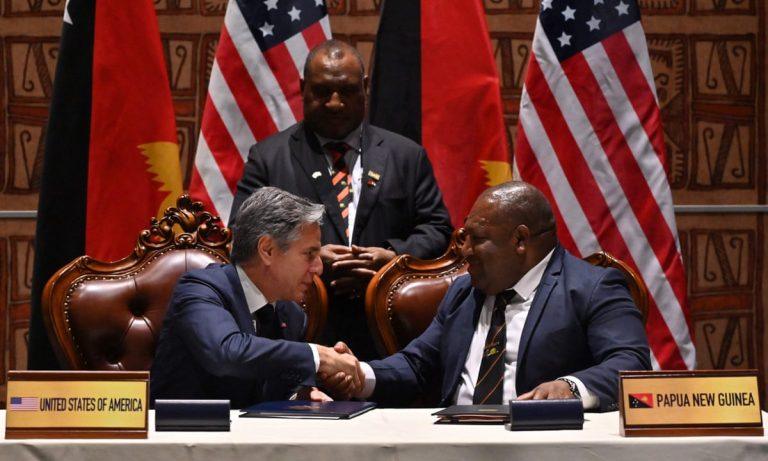
Guinea and the United States have signed a five-year health cooperation agreement totalling nearly $143 million in funding from both countries, Finance Minister Mariama Cire Sylla said.

The U.S. has been pursuing bilateral deals with African countries after dismantling its aid agency last year, cutting funding and contracts worldwide.

The Memorandum of Understanding will mobilise $142.6 million over the period 2026–2030, including $91.27 million that will be provided by the U.S. and $51.33 million by Guinea, the minister said in a post on Sunday.

READ ALSO: NiDCOM Unveils 2026 Diaspora Health Impact Initiative

“This partnership will strengthen the fight against malaria, accelerate the elimination of polio, modernise our laboratories, consolidate human resources in health, and improve the quality of our health data systems,” she said.

Global health advocates have criticised parts of the deals, including lines in some of which ask countries to promptly share data with Washington about pathogens that could spark epidemics in their countries, as a condition of getting the funding but without guarantees that countries will have any access to medical tools developed as a result.

The average yearly U.S. funding in the health deal is roughly a third of the aid that flowed to Guinea through USAID in 2024, according to U.S. government data.


Reuters

Akwa Ibom Clears N39.8bn Bank Debt, Reduces Gratuity Backlog

The Akwa Ibom State Government has cleared inherited commercial bank debts amounting to N39.831 billion, covering both principal and interest, as part of efforts to reform its financial management system.

The Commissioner for Finance, Mr Emem Bob, who made this known during a media briefing in Uyo, the state capital, said the government also reduced the gratuity backlog owed to retired state workers from N110 billion inherited to N80 billion as of December 2025.

According to him, the state “Increased its investment portfolio from N6 billion to N10 billion, recording returns of N260.646 million as of June 2025,”  adding that the state now prepares, presents and publishes its annual financial statements in line with internationally accepted standards on fiscal transparency.

“Monthly salaries and pensions are paid promptly,” the Commissioner stated.

He said annual Public Financial Management assessments have been conducted, alongside staff and pensioner verification exercises and the implementation of a Treasury Single Account system. The verification process identified over 3,000 ghost workers, creating room for fresh employment.

On procurement, the Commissioner said “audits were carried out across ministries, departments and agencies to ensure value for money, while personnel were trained on sustainable procurement procedures.”

He further noted that the state publishes annual Debt Sustainability Analysis reports and quarterly debt profiles to meet donor partnership eligibility criteria.

On external funding, the Exchequer disclosed that the state secured a 3.585 million dollar drawdown under the State Action for Business Enabling Reform programme and 500,000 euros under the NEWMAP initiative for erosion and flood control projects.

He added that N321.8 million was disbursed as staff housing loans to 212 civil servants.

The Commissioner also said the state had repaid 3.174 billion dollars out of 7.805 million dollars owed under the Afrexim credit facility to Ibom Power, with repayments continuing quarterly.

According to him, the government maintains over 85 per cent budget performance by executing only approved programmes and has strengthened citizen participation in the 2025 and 2026 budgets, which he described as largely driven by projects nominated by residents.

He explained that full implementation of the Treasury Single Account ensures that all internally generated revenue from ministries and institutions is channelled through the AkwaRemit platform into the state’s consolidated account.

Mr Bob said the reforms have repositioned the state’s financial system to support the administration’s ARISE Agenda and other development priorities.

Observers have commended this development as aligned with broader efforts to strengthen transparency and accountability in public finance management, noting that the measures support sub-national fiscal discipline and sustainable development objectives under the Renewed Hope Agenda.