
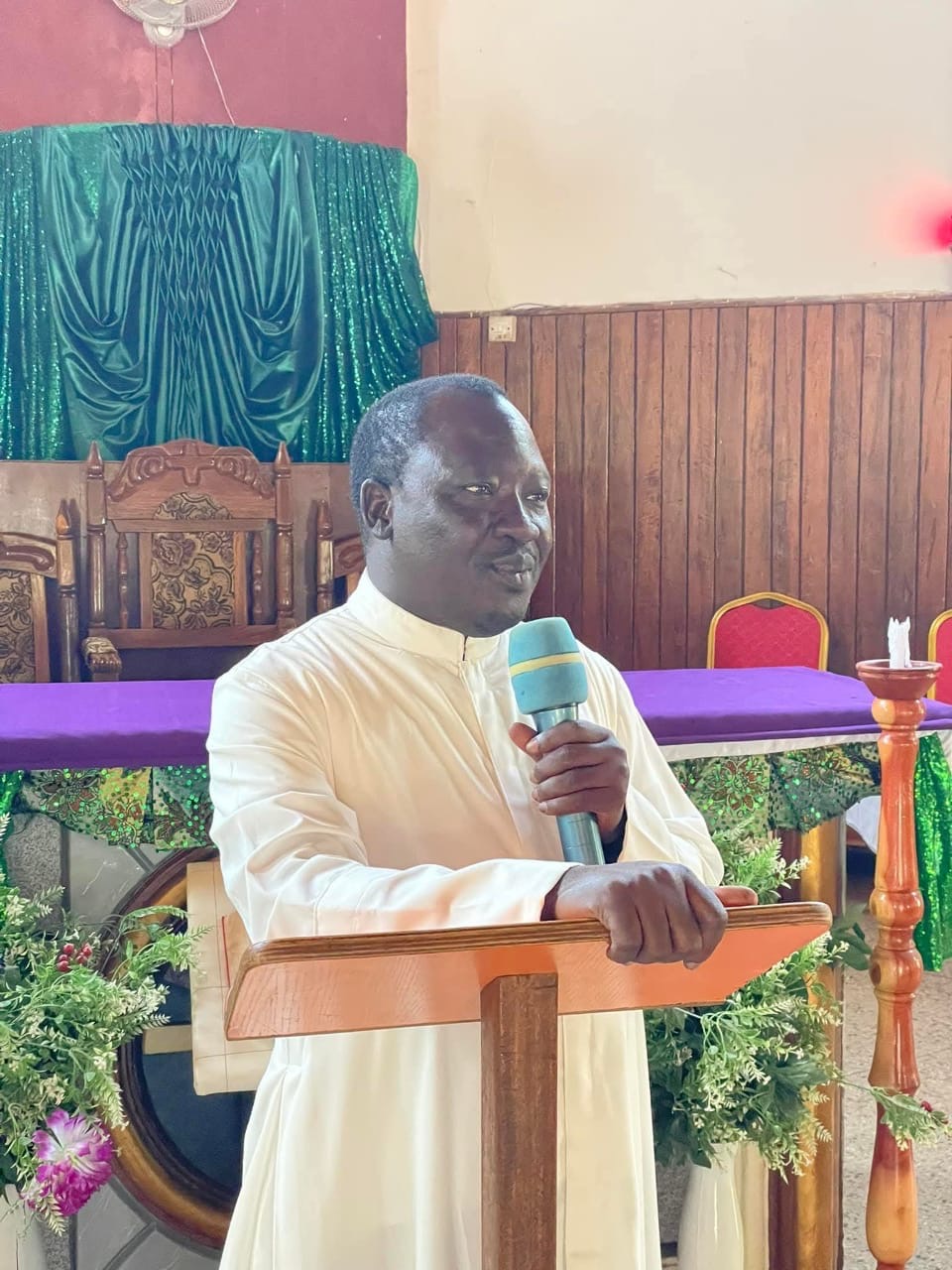
The Catholic Church has called for urgent ethical reflection on the growing influence of Artificial Intelligence (AI), warning that technology must not undermine human dignity, truth, and moral responsibility.
The call was made during the 60th Diamond Jubilee Celebration of World Communications Day 2026, organised by St. Augustine Major Seminary in collaboration with the Catholic Media Practitioners Association of Nigeria.
Delivering the keynote address, Professor Godfrey of the University of Jos said that “although AI offers vast opportunities for evangelisation, education, and communication, its misuse could pose serious ethical and societal challenges.”
READ ALSO: Catholic Archbishop Urges Faith, Prayer at Easter
“Our faces and voices are not data points; they are imprints of our humanity,” in light of that, technology should serve humanity rather than redefine it.
Professor Danaan noted that “AI is rapidly reshaping religion, politics, economics, governance, and social interaction, adding that society must learn to manage technological advancement responsibly.”
According to him, the greatest danger is not necessarily “superintelligence,” but humanity’s increasing dependence and misplaced trust in technology.
He expressed concern over the rise of misinformation, disinformation, and deepfakes, describing them as ‘threats capable of distorting truth and eroding public trust.’
He explained that deepfakes AI-generated manipulations of voices, videos, and images make it increasingly difficult to distinguish reality from fabrication.
“When your face or voice can be copied and manipulated, your dignity can also be stolen. I therefore urge individuals and institutions to embrace media literacy, AI literacy, and critical thinking in order to safeguard society from digital manipulation.
“I also encourage users to protect their personal data and verify information before sharing it online,” he stated.
Reflecting on the Church’s role in the digital age, Professor Danaan said “the Catholic Church does not fear technology but seeks to guide its development ethically and responsibly.’
He emphasised that AI can be a valuable tool for evangelisation and pastoral outreach when used in line with moral principles.
“The Church must not only exist in the digital space; it must participate meaningfully, responsibly, and consistently,” he said.
Professor Danaan also criticised the poor digital presence of many Catholic dioceses in Nigeria, noting that several diocesan social media platforms remain inactive or poorly managed despite the growing importance of online communication.
He commended some dioceses, including Nsukka, Lafia, Kontagora, Sokoto, Makurdi, and Bauchi, for maintaining stronger digital engagement, while warning that inactive online platforms create the impression that the Church is absent from contemporary conversations.
The keynote speaker further urged Church leaders, educators, parents, and media practitioners to build responsible digital communities rooted in truth, charity, accountability, and human dignity.
The Rector of the seminary, Rev Fr Dr Peter Hassan emphasised that while AI and digital technologies have expanded access to evangelisation, catechesis, and communication, they also pose moral and social dangers.
“Today, the Gospel can reach millions instantly through digital platforms. Catechesis, theological formation, and pastoral accompaniment are no longer limited by geography. However, while the Church acknowledges these benefits, it also raises a prophetic voice concerning the dangers that accompany the misuse of these technologies. Artificial intelligence, when detached from moral responsibility and respect for the human person, can become a threat to truth, freedom, identity, and dignity, “he said.
Fr. Hassan observed that we live in a time when manipulated images, misinformation, digital impersonation, cyber exploitation, hate speech, and addictive media consumption increasingly distort reality and weaken authentic human relationships.
The clergy further challenged Church leaders, media professionals, educators, parents, and young people, to cultivate a culture of responsible communication rooted in truth, charity, accountability, and human dignity.


, warning that...)