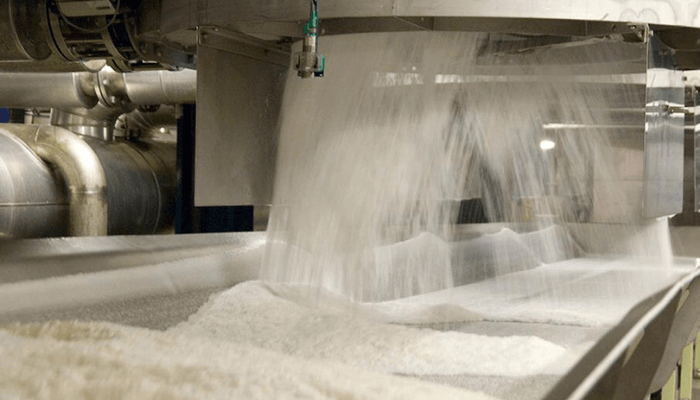
The Executive Secretary and Chief Executive Officer of the National Sugar Development Council, NSDC, Kamar Bakrin says the development of Nigeria’s sugar industry could generate about one million jobs and strengthen rural economies.
Bakrin also said it would improve national security, and reduce the country’s dependence on imports.
He stated this during a strategic meeting between the NSDC and the Nigeria Customs Service at the Customs Headquarters in Abuja.
Addressing the Comptroller-General of Customs, Bashir Adewale Adeniyi, and senior officials of the Service, the NSDC boss said; “a fully developed Sugar sector could transform Nigeria’s economy by converting annual import expenditures into local investments and employment opportunities.”
“If Nigeria succeeds in developing a proper sugar sector, one of the things we would do is convert an annual outflow of over one billion dollars into jobs, security, and industrialisation,” Bakrin said.
Sugar Value Chain
According to him, the sector has the capacity to create 250,000 direct jobs and an additional 750,000 indirect jobs across the sugar value chain in about 12 states nationwide.
“The sector can create 250,000 direct jobs and an additional indirect 750,000 jobs across its value chain, primarily across about 12 states. The beauty of it is that these are rural jobs, not city jobs,” he stated.
Bakrin also linked the expansion of sugar estates to improved national security, noting that large-scale projects would provide employment opportunities capable of reducing youth involvement in crime and social unrest.
“When you have sugar projects, you don’t have unrest or any security challenge because you create so many jobs for the youths,” he stated.
The NSDC Executive Secretary further explained that modern sugar estates are designed to generate electricity independently while contributing surplus power to the national grid.
National Grid
A sugar estate consumes only about 50 percent of the energy it produces, while the rest can be injected into the national grid,” Bakrin stated.
“And we are talking about 400 megawatts. That is enough to power at least a small modern city or community,” he said.
Bakrin described the Nigeria Customs Service as a critical institution for the successful implementation of the Nigeria Sugar Master Plan II, especially in areas relating to quota administration, import regulation, fiscal incentives, and anti-smuggling enforcement.
He noted that the Nigerian Government was committed to reducing Nigeria’s dependence on sugar imports through large-scale investments in domestic production supported by transparent policies and institutional collaboration.
The NSDC boss disclosed that Nigeria possesses more than one million hectares of suitable land for sugar cultivation, while only about 200,000 hectares would be needed to attain national sugar self-sufficiency.
Responding, the Comptroller-General of Customs, Adeniyi reaffirmed the Service’s support for the sugar sector transformation agenda.
“The potential for job creation, security, rural development, and the added value in terms of energy that we can use speaks directly to Nigeria’s economic priorities,” Adeniyi stated.
Customs Readiness
He assured the NSDC of Customs’ readiness to strengthen intelligence sharing, quota enforcement, operational collaboration, and anti-smuggling efforts to support effective implementation of the Nigeria Sugar Master Plan II.
Both agencies agreed to collaborate in five priority areas, including market stability, quota implementation, fiscal incentives, import data sharing, and tackling illicit sugar imports undermining investments in the sector.