

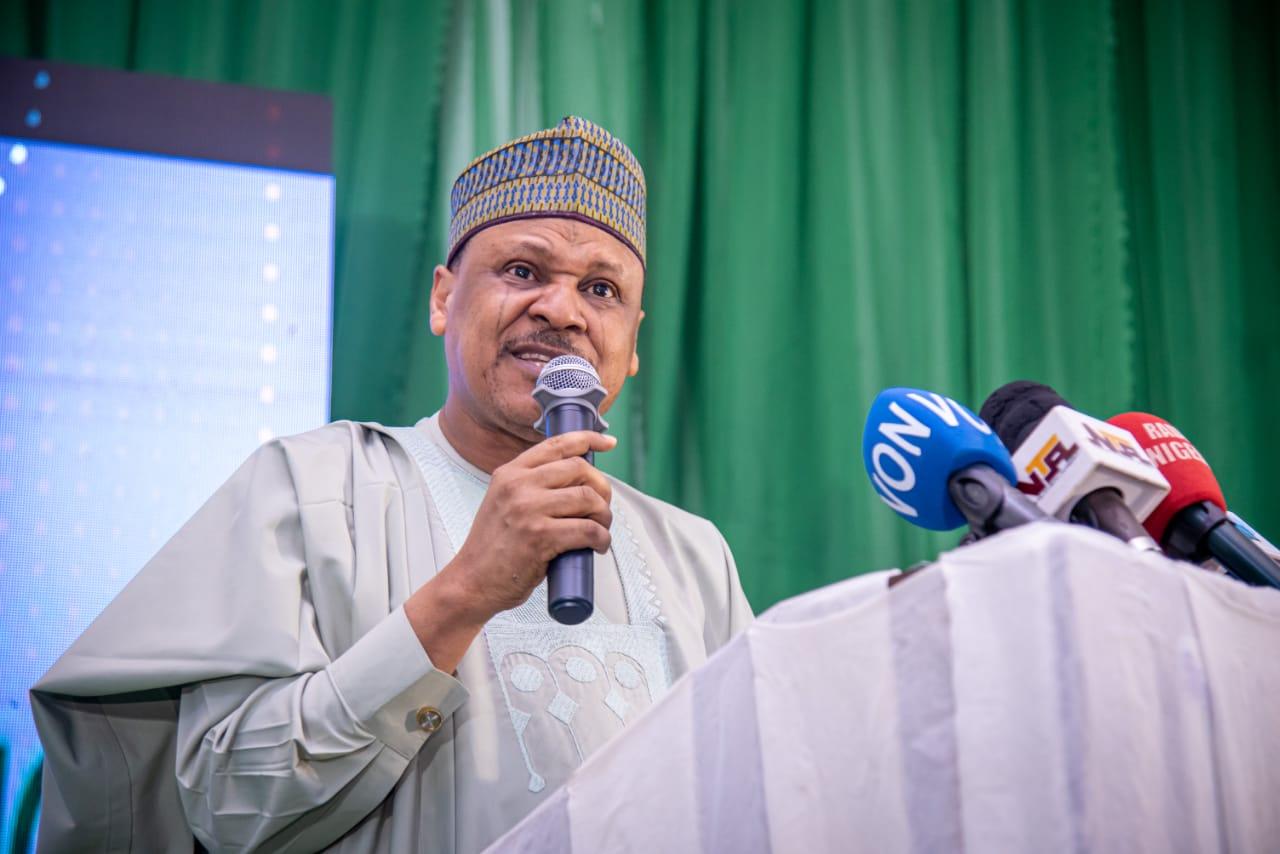
Nigeria’s Minister of Information and National Orientation, Mohammed Idris, has underscored the Nigerian media as a decisive key player in the country’s fight against corruption, money laundering, and terrorism financing, urging journalists to rise to the challenge of safeguarding national integrity.
The Minister stated this in Abuja at a National Anti-Money Laundering and Counter Financing of Terrorism (AML/CFT) Media Outreach Programme, with the theme, “The Role of Media in the Fight Against Corruption: Issues and Challenges.”
Idris, represented by the Executive Secretary and Chief Executive Officer of the Nigerian Press Council, Dr Dili Ezughah, emphasised that the media is far more than a passive observer; it is a powerful force that shapes perception, drives accountability, and influences national direction.
Idris reaffirmed that the President Bola Tinubu administration remains committed to combating corruption, emphasising Nigeria’s role as a responsible player in the global fight against financial crimes.
“Beyond commitment, this administration has taken deliberate and measurable steps to address corruption and illicit financial activities.
“Nigeria has significantly strengthened its financial intelligence architecture through the work of the Nigerian Financial Intelligence Unit (NFIU), improving the monitoring of suspicious transactions and enhancing compliance with global AML/CFT standards. We have deepened inter-agency collaboration, ensuring that relevant institutions work in a more coordinated and efficient manner to detect, investigate, and prevent financial crimes“, he noted.
- READ ALSO: Media Tasked With Ethical Reporting
The Minister pointed to improvements in financial intelligence driven by the Nigerian Financial Intelligence Unit, enhanced inter-agency cooperation, and regulatory reforms led by the Central Bank of Nigeria as evidence of measurable progress.
According to him, Nigeria is also deepening regional cooperation through partnerships with bodies such as the Intergovernmental Action Group Against Money Laundering in West Africa to combat cross-border financial crimes.
“The fight against corruption cannot be won without an informed society. Accurate reporting, investigative journalism, and sustained public enlightenment are essential tools for national development.
Idris explained that the government’s focus on digitalisation and accountability is helping to close gaps that previously allowed corruption to thrive. He, however, acknowledged challenges facing the media, including the complexity of financial crime reporting, misinformation, limited resources, and safety concerns.
“These challenges underscore the need for collective action. We must strengthen collaboration between government institutions and the media, invest in capacity building for journalists, and ensure timely access to accurate and credible information,” he said.
He urged journalists to build capacity in specialised reporting areas and maintain high ethical standards. While assuring that the Federal Ministry of Information and National Orientation will continue to support the media through public enlightenment and access to information.
“The fight against corruption is a shared responsibility. The government and the media cannot do it alone. But together, we can build a Nigeria where transparency is the norm, accountability is demanded, and corruption has no place to hide,” the Minister said.
Media as a Cornerstone in Shaping Societal Values
Also speaking, the Director General GIABA, Mr. Edwin Harris Jnr, who was represented by the Ag. Principal Officer, Communication and Advocacy GIABA, and Information Manager, Lagos Information Center, Timothy Melaye, described the media as a cornerstone that plays a vital role in shaping societal values and driving behavioural change against corruption.
“The media is a cornerstone of democratic governance and one of the most powerful checks on the abuse of power that any society can possess. Beyond the three arms of government, the executive, the legislature, and the judiciary, it is the media that shines a light on the dark corners where corruption festers. It is the media that gives voice to the voiceless, and it is the media that holds the powerful accountable to the people they are meant to serve“, he stressed
Melaye emphasised that consistent coverage of investigations, prosecutions, and asset recoveries by agencies such as the Economic and Financial Crimes Commission and the Independent Corrupt Practices Commission reinforces public confidence and deters wrongdoing.
He further urged media professionals to embrace investigative journalism, promote ethical reporting, and support whistleblowers, stressing that sustainable anti-corruption efforts require a shift in societal attitudes.
“The media bears a profound responsibility of behavioural change communication, whether through our legacy platforms of television, radio, and print, or through the new media channels of social media, podcasts, online news portals, and digital content creation. The media has an unrivalled capacity to shape norms, values, and attitudes across our society. We must harness this capacity deliberately and strategically”, he added
The outreach programme also featured sessions on Nigeria’s national risk assessment for money laundering and terrorism financing, as well as the country’s role within the global AML/CFT framework.
The event which brought together key stakeholders and media practitioners to strengthen collaboration in tackling illicit financial activities across Nigeria and the West African region, called for a united front among government, media, and citizens to build a transparent and accountable society where corruption finds no safe haven.