

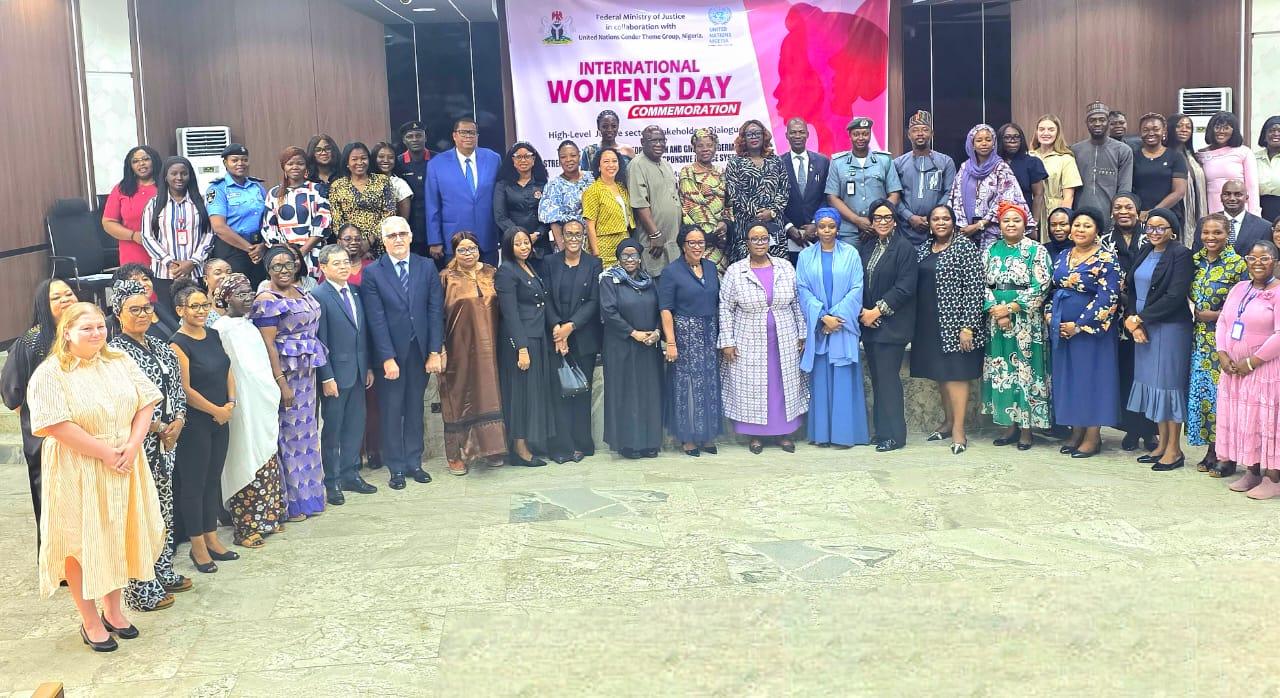
The Nigerian government and international partners have renewed high-level commitment to strengthening inclusive, gender-responsive justice systems.
At a convening organised by the Federal Ministry of Justice and the United Nations Gender Theme Group Nigeria in Abuja, themed “Equal Justice for Women and Girls in Nigeria: Strengthening Inclusive Gender-Responsive Justice Systems”, to mark International Women’s Day 2026, UN Resident Coordinator Mohammed Fall underscored the urgency of bridging the gap between legal frameworks and lived realities.
“For many survivors, justice remains an aspiration rather than a guarantee,” he said, stressing that “the real test lies in making these laws accessible, responsive, and centered on the dignity of survivors.”
He further emphasised the need for legislative action, noting that “its full impact can only be realised when it is passed, domesticated, and effectively implemented across all states,” adding that “passing the revised VAPP Bill is not just a legislative step; it is a moral obligation.”
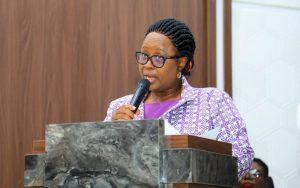
UN Women Representative to Nigeria and ECOWAS, Beatrice Eyong, speaking as co-chair of the Gender Theme Group, positioned justice as central to gender equality outcomes.
“Justice is not a peripheral concern in the gender equality agenda; it is its very foundation,” she stated, warning that without accessible systems, “every other gain… remains precarious.”
She called for implementation-driven reforms, emphasising the need for “budget lines, institutional protocols, and time-bound action” along with scaling legal aid, institutionalising gendersensitivity training, and strengthening referral pathways.
Eyong further acknowledged civil society as critical actors, noting, “They are the bridge between the women who need justice and the systems that are meant to deliver it.”
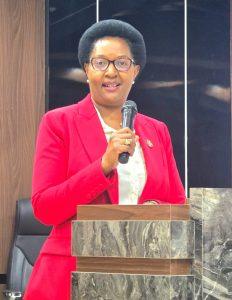
Reinforcing the human rights and service delivery dimensions, UNFPA Representative Muriel Mafico emphasised survivor-centered justice.
“Access to justice is a human rights imperative. It is about restoring dignity and ensuring that no woman or girl navigates injustice alone,” she said, aligning the dialogue with global commitments to inclusive and accountable systems.
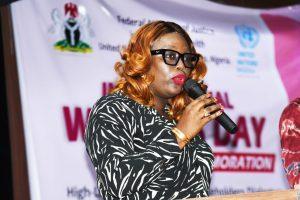
Furthermore, the Head, Sexual and Gender-Based Violence Response Unit, Federal Ministry of Justice, Yewande Gbola-Awopetu, reiterated institutional resolve to address systemic barriers.
“A justice system that inadequately protects its women and girls cannot truly be just,” she stated, stressing that justice must be “unselective, accessible, and uninfluenced by gender.”
Across submissions, a unified message emerged: move “beyond intention to action,”, ensuring justice becomes “a lived reality rather than an abstract promise” for every woman and girl in Nigeria.