

Stakeholders have stressed that modern taxation should extend beyond revenue generation to shaping economic opportunities through policies that reflect citizens’ realities and protect vulnerable groups, particularly from a gender perspective.
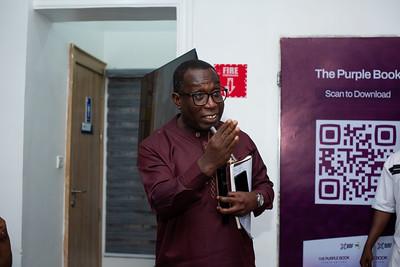
At the Policy Innovation Centre’s Purple Book presentation in Abuja, the founding Dean of Nile University’s Business School, Noel Tagoe, called for deliberate gender inclusion in tax policy design, noting that taxation can be used strategically to influence investment and economic behavior.
He explained that targeted tax incentives could encourage greater participation and leadership of women in business, stressing that taxation should no longer be treated as gender-neutral.
The founding Dean of Nile University’s Business School, also advocated for simplified and inclusive tax systems, alongside the introduction of financial literacy from primary school across African countries.
READ ALSO: Nigeria’s Tax Reforms Target Relief for Low-Income Earners
Prof. Tagoe further underscored the need for accountability, emphasising that public trust depends on transparency in how tax revenues are utilized.
Similarly, Amina Aminu Dorayi, West Africa Regional Director of Pathfinder International, grounded her remarks in the lived realities of citizens.
“These tax reforms must be designed in ways that promote inclusivity, fairness and reduce any burdens,” she said, pointing out that “the majority of the Nigerian workforce operating in the informal sector, as we all know, are women.”
She added, “economic opportunity, health, and gender equality are deeply connected,” stressing again that “These tax reforms must be designed in ways that promote inclusivity, fairness and reduce any burdens.”
Dorayi emphasised the power of inclusive systems to create enabling environments that “can unlock the potential of millions of women and young people who are already driving Nigeria’s informal economy.”
From the Federal Ministry of Women Affairs and Social Development, Dr Abia Udeme reaffirmed policy commitment to inclusion.

“The Federal Ministry of Women Affairs and Social Development remains committed to promoting policies that empower women and vulnerable groups, enhance economic participation, and ensure that development outcomes are inclusive and equitable,” she said.
She urged, “Let us work together to build a tax system that not only mobilises revenue for national development, but one that also promotes fairness, inclusion and shared prosperity for all Nigerians.”
From the Nigeria Revenue Service, Director Human Capital Management Angel Fadahaunsi highlighted institutional alignment.

“Effective tax systems function best when they are transparent, equitable and responsive,” she said, agreeing that “integrating gender perspectives into policy design, taxpayer engagement and institutional practises will support inclusive growth while strengthening voluntary compliance.”
She affirmed commitment to “policies that promote fairness and opportunity for all,” adding that inclusion helps “reinforce public trust and confidence in the tax system.”
While commending the 2026 Nigeria tax reform, stakeholders pointed to the urgency of addressing how to build a system that is not only efficient, but also equitable, with gender considerations for women at its core.