

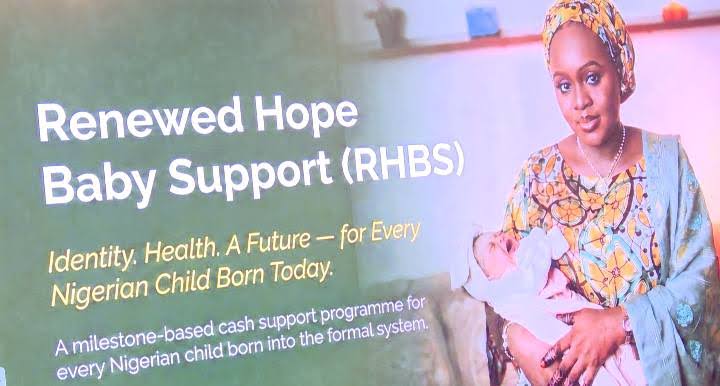
Vice President Kashim Shettima has applauded the Renewed Hope Baby Support (RHBS) programme, a national human capital development initiative aimed at providing every Nigerian child with structured identity and access to healthcare participation.
The initiative is also expected to provide long-term financial opportunities for beneficiaries.
VP Shettima said; “the programme initiated by the North East Development Commission (NEDC), aligns with President Bola Tinubu’s declaration of 2026 as the Year of the Family and Social Protection.”
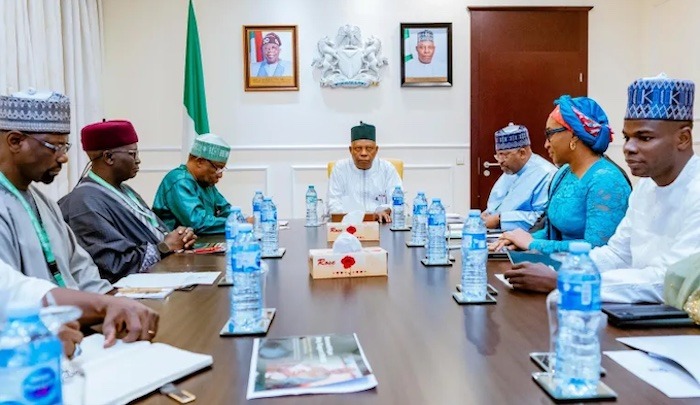
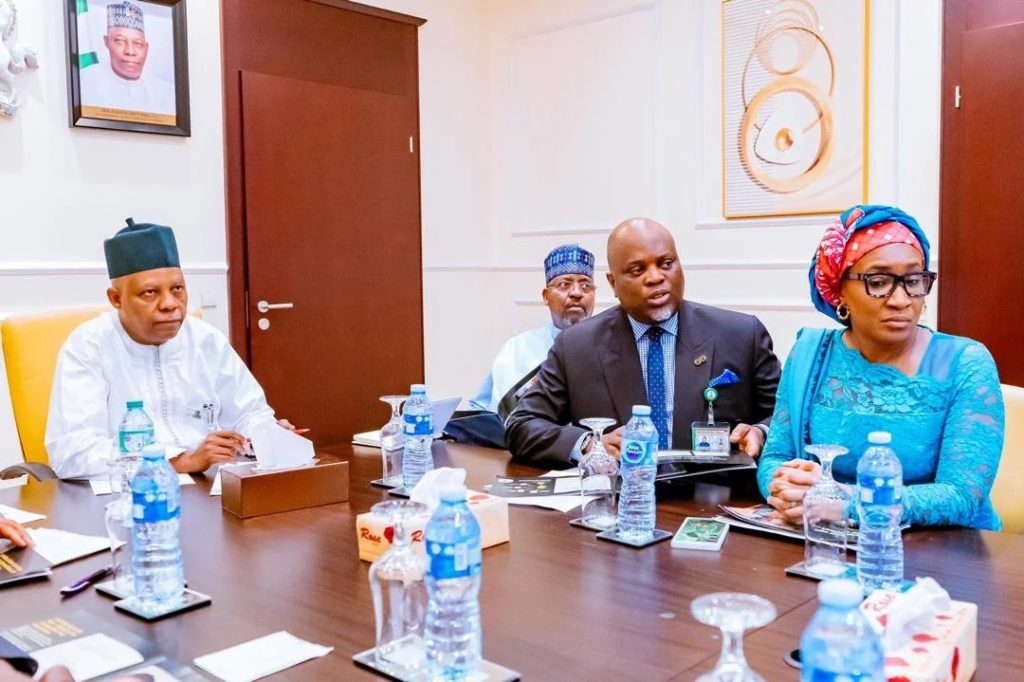
The Vice President disclosed this on Thursday when the management team of the NEDC, led by its Managing Director, Mohammed Alkali, presented the RHBS programme execution framework to him at the Presidential Villa, Abuja.
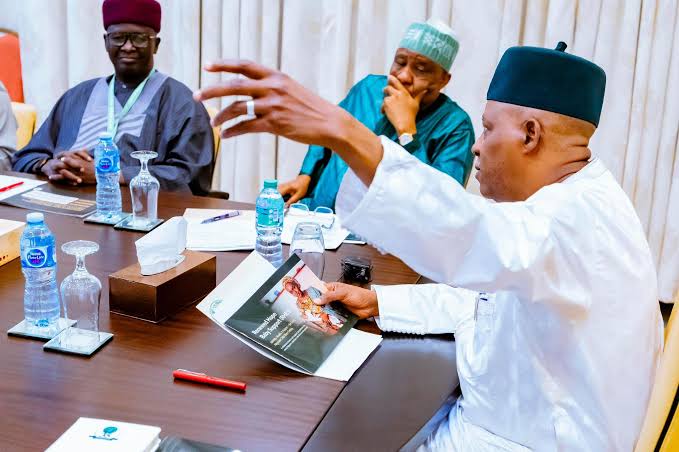
“As you are aware, Mr. President has declared 2026 as the Year of the Family and Social Protection, with clear directives for implementation across all levels of government. I commend the NEDC for taking proactive steps to translate this vision into concrete action, particularly through the Renewed Hope Baby Support (RHBS) programme.
“The RHBS is a very timely and strategic initiative. It sits squarely within the North East Stabilisation and Development Masterplan, aligning perfectly with its three critical pillars: peaceful society, healthy citizens, and an educated populace,” he stated.
The Vice President demanded seamless collaboration between the NEDC, the Federal Ministry of Humanitarian Affairs, and other relevant agencies to ensure the RHBS achieves maximum impact.
Direct Impact
By focusing on children and families, VP Shettima said “the RHBS programme will deliver direct impact on the most vulnerable Nigerians, while serving as an effective execution mechanism for President Tinubu’s social protection mandate.”
Describing the timing of the programme as auspicious, the Vice President noted that the RHBS “will serve as a strategic palliative that cushions the effects of necessary economic reforms in a dignified and structured manner.”
He said; “It demonstrates that while we implement difficult but essential policies, we remain deeply committed to the welfare of our people — especially the women and children of the North East.”
He maintained that the RHBS will further position the NEDC as a key player in the actualisation of President Tinubu’s Renewed Hope Agenda in the North East.
VP Shettima disclosed that since the initiative is primarily designed for children, the Presidency will shed more light on the implementation and rollout strategy by May 27, 2026, in commemoration of this year’s Children’s Day.
In her presentation, the Senior Special Assistant to the President on Regional Development and NEDC, Dr. Mariam Masha, explained that the RHBS programme is a national human capital infrastructure initiative.
She said while Nigeria records approximately 7.6 million births yearly, only “fewer than half are formally registered within the first year, resulting in millions of children beginning life outside national visibility and weakening long-term planning across education, health, economic, and social systems.”
According to her, the RHBS programme is designed to ensure every Nigerian child enters life through a structured pathway connecting identity, healthcare participation, and long-term opportunity formation.
“RHBS is positioned as a structured national programme, not a traditional welfare intervention. It uses milestone-linked support to connect children from birth to formal systems of identity, health, and opportunity.
“The programme serves as the operational mechanism to translate the President’s directive placing Nigerian families at the centre of governance into measurable outcomes, with a strong focus on early childhood development,” she stated.
Dr. Masha, however, stressed that the RHBS is not a social intervention but a structured national operating model for identity inclusion, developmental health participation, and long-term human capital development.

 programme, a national human capital development)