

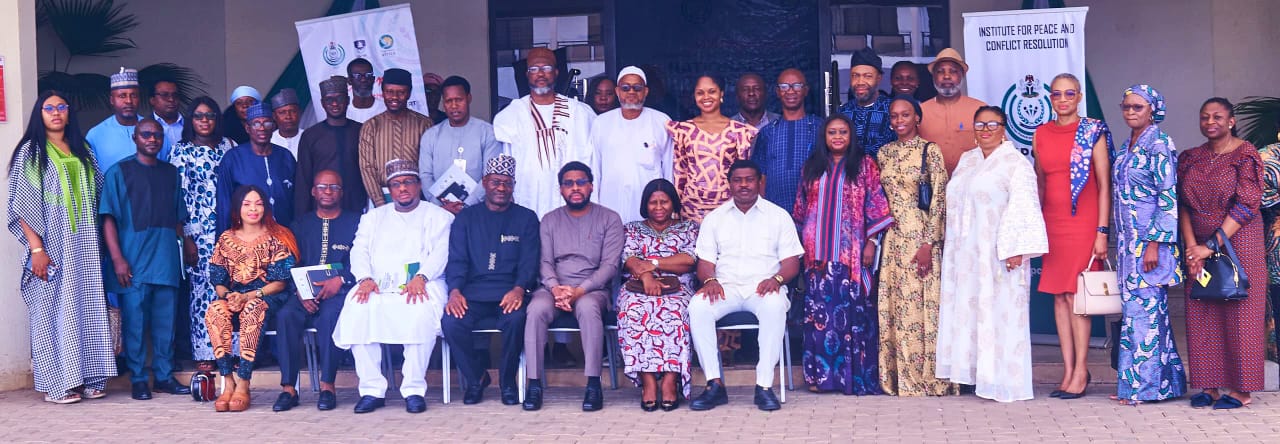
Stakeholders in Nigeria’s peacebuilding sector have renewed calls for stronger coordination, institutional alignment, and political commitment to ensure the successful implementation of the National Peace Policy (NPP).
Addressing the second High-Level Experts Dialogue convened by the Institute for Peace and Conflict Resolution (IPCR) in collaboration with the Office of Strategy, Preparedness and Resilience (OSPRE) and Triple Peace Africa in Abuja, Director-General of IPCR, Dr Joseph Ochogwu, said that peace remains fundamental to national development.
“The National Peace Policy is an initiative of the Institute for Peace and Conflict Resolution. There was a missed opportunity by the federal government in 2012 when it was first presented, you know, to the Federal Executive Council by the then government. To this, President Bola Ahmed Tinubu’s government presents another opportunity for us to revive the process for the National Peace Policy.” he said
Ochogwu noted: “It is critical for any nation-state to have the National Peace Policy to provide a coherent, consistent policy guideline on issues around peacebuilding. As we speak today, it is a bit chaotic in terms of the approach. People are working in silos. Resource allocation mobilisations are also not to focus on peacebuilding matters. So the National Peace Policy provides an opportunity to harmonise all these efforts and ensure that we all work in collaborations and in partnership to help us, you know, to reduce the level of violence, you know, that is in our society.”
On implementation, he stated, “Policymaking is a process. So right now, because of the review process, society is dynamic; human beings are dynamic. A lot of the things that were captured in 2012, you know, have gone. Now we are talking about issues around banditry, climate change, you know, and several other new dynamics within the conflict ecosystem, you know, that have changed.”
He emphasised collaboration, saying: “A framework for implementation is also going to be designed. It is a co-creation, not only by the Institute for Peace and Conflict Resolution but also by other critical partners, you know, that are involved, you know, in this process.”
Addressing politics ahead of 2027, he said: “Go for issue-based politics. Democracy is to serve the people and to promote peace.”
Representing the House Committee Chairman on Peacebuilding and Social Cohesion, Hon. Sadiq Tafida, Hon. Joshua Gana said, “We bring motions on the floor to report this to Nigerians and to see how both the security agencies and religious agencies can work together to bring about harmony for the livelihoods of Nigerians.”
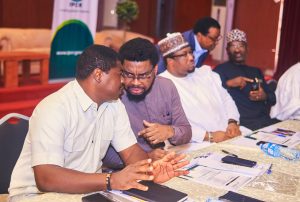
He emphasised, “We are not just being responsive; we are being proactive to ensure what comes out will work for Nigerians.”
Director-General of OSPRE, Chris Ngwodo, noted: “The goal is to move away from fragmented and competitive approaches towards a unified national effort.”
Also, Executive Director of Triple Peace Africa, Paul Nyulaku, said, “A lot has happened in Nigeria; we have seen an escalation of conflict in different parts of the country. It has changed in nature and in patterns, and so in updating this new policy we need to take account of all the different changes that have happened in the country.”
Nyulaku said, “One very important aspect as well is in terms of the infrastructure for peace, what some people refer to as the governance structure for peace in Nigeria, and what came out very clearly is that this must cascade from the federal level to the state level; the local government level as well as communities should play a very critical role in this policy.”
On strategy, he added: “We need to ensure that whatever work we do on peace touches on all these areas. Economic, social and psychological interventions.”
Stakeholders say the moment demands urgency, insisting that coordination must replace fragmentation as Nigeria’s peace framework now awaits decisive action