Home Blog Page 1070

WTT Contender Lagos Championship To Attract 126 Players

0

Over 126 players will compete in the 2025 WTT Contender Championship from July 22 to 26.

The President of the Africa Table Tennis Federation, Wahid Oshodi confirmed this during a media briefing held on Monday in Lagos.

READ ALSO: WTT Champions: Quadri Aruna Crashes Out In First Round

He said the event aims to promote excellence, offering top players a chance to compete and showcase their talents.

The tournament will take place at the Molade Okoya-Thomas Hall, Teslim Balogun Stadium, Lagos.

It will attract global talent, fostering the sport’s growth and development worldwide,” Oshodi said.

He added that the competition provides players with experience and exposure to high-level contests.

It also offers ranking points to help players boost their global standings,” he noted.

The WTT Contender series aims to bring innovation and excitement to table tennis, raising the sport’s global profile.

Oshodi stated it would give Nigerian players a chance to display their skills and inspire new talents.

Participation in the event will help Nigerian players improve through matches against elite international opponents.

He said the tournament could draw greater investment and support for table tennis in Nigeria.

This could lead to better infrastructure, improved training programmes, and more resources for athletes,” he said.

According to him, the WTT Contender will boost table tennis popularity and create fresh opportunities locally.

The Nigerian table tennis community remains optimistic about the sport’s growth prospects in the country.

Kweku Tandoh, the Tournament Director, also reaffirmed their commitment to a successful championship.

He said top-ranked players’ involvement would enhance the event’s reputation and competitiveness.

This WTT Contender Lagos is vital for Olympic preparation, helping players sharpen their skills,” Tandoh stated.

This year’s tournament features a prize pool of $100,000, up from $75,000 in the previous edition.

The event highlights table tennis excellence and provides a global platform for players to shine.

top players like Taiwo Mati and Mathew Kuti will be participating in the tournament.

The WTT Contender Lagos begins on Tuesday at the Teslim Balogun Stadium in Lagos


NAN
Nigeria Launches New Digital Hub for Teacher Training, Collaboration

0

The Federal Ministry of Education has launched a new digital platform under the Committee of Practice (CoPs) to support continuous professional development for teachers across Nigeria. The initiative aims to keep educators up to date with developments in the education sector, fostering innovation and capacity building in schools nationwide.

READ ALSO: GEFAS Unveils Digital Hub To Drive Soludo’s Re-Election Campaign

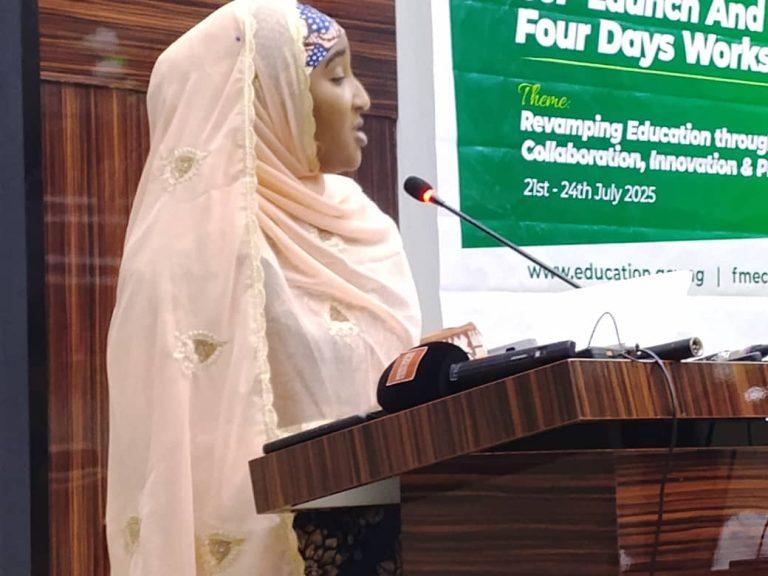
Speaking at the launch and opening of a four-day workshop in Abuja, Minister of State for Education, Professor Suwaiba Sa’id Ahmad, described the platform as a key step in revitalizing Nigeria’s education system. She said it will provide access to teaching resources, mentorship, collaborative learning, and experience sharing among educators.

“This platform promotes innovation, collaboration, and professional growth. For instance, a biology expert can share new teaching methods with peers. The platform ensures that teachers stay informed and supported by DECS officers and coordinators,” she explained.

Initially hosted on the Telegram social media platform, the programme will begin with 80 selected teachers from six Federal Unity Colleges. These teachers, trained as coordinators and subject experts, will later help onboard others from both public and private schools nationwide.

“This isn’t just for federal schools. Every teacher from state to private institutions will have access. We’re creating an inclusive community for all educators,” the Minister added.

Professor Mustapha Mohammed Tajordeen, Project Lead for CL4STEM, emphasized that the platform will enable teachers across different regions to connect, share knowledge, tackle challenges, and enhance teaching strategies using ICT.

“It’s designed to foster equity and inclusion while encouraging teachers to exchange experiences and classroom innovations,” he said, noting that teacher participation will be monitored for impact and progress.

Director of ICT at the Ministry, Zainab Abubakar, said the initiative signals Nigeria’s commitment to a more collaborative and tech-driven education system. She encouraged the participants to lead the transformation in their schools and zones.

“You are the torchbearers of this initiative. Take ownership, build communities, and create a ripple effect of excellence,” she said.

One of the participants, Emojiri Rabokletus from the Federal Technical College, Uromi, Delta State, said the platform will better prepare teachers for visual and tech-based teaching methods.

“With the pace at which today’s students learn, teachers must stay ahead. This platform equips us to teach more effectively in this digital age,” he said.

The four-day workshop is aimed at equipping the selected participants with the tools and skills required to navigate and utilize the platform effectively.

Egypt Offers Free Train Rides to Sudanese Refugees

0

Hundreds of people gathered at Cairo’s central train station on Monday to start the journey back home to war-torn Sudan.

The travel is part of a campaign by the Egyptian government providing free train rides back to Khartoum, the capital, which has been recently recaptured by Sudanese Armed Forces from its rival the paramilitary Rapid Support Forces, or RSF.

Sudan has experienced a civil war since April 2023.

The battle for power between the military and the RSF has caused one of the worst humanitarian crises in the world.

Over 40,000 people have been killed, and the war has caused one of the world’s largest displacement crises.

People have already started returning back to the capital as its slowly rebuilds since its recapture a couple of months ago.

Egypt hosts the largest number of Sudanese refugees from the war, with over 1.5 million people fleeing across to its border.

Africanews/Hauwa M.

ABU Secures 5M Euros Grant To Develop AI-Powered Microscope

0

Ahmadu Bello University (ABU) Zaria has secured a 5 million euros grant to develop an AI-powered microscope for diagnosing parasitic diseases.

The Director of Public Affairs, Directorate of the university, Auwalu Umar, made this known on Monday in Zaria.

Umar said that the microscope would be able to detect diseases such as African trypanosomiasis, malaria, leishmaniasis, and filariasis.

He said that the grant was won through MultiplexAI, the first Horizon Euro-funded project to be hosted at ABU’s Africa Centre of Excellence for Neglected Tropical Diseases and Forensic Biotechnology (ACENTDFB).

The Vice-Chancellor of the university, Prof. Adamu Ahmed, congratulated ACENTDFB on the feat.

Ahmed also commended Dr Gloria-Dada Chechet, the Scientific Project Leader of the MultiplexAI project, for the great role played in securing the grant.

According to Umar, the MultiplexAI project was designed for use in rural and hard-to-reach areas.

It said that the tool also enables health workers to accurately detect multiple infections at the point of care, using only a microscope, smartphone, and app.

NAN/Jide Johnson.

Senegal: Tensions Persist Between Sonko, Faye

0

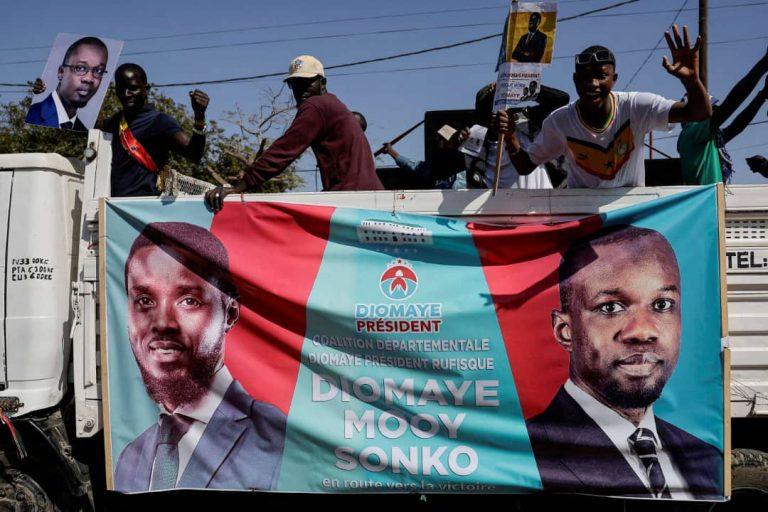
The assurances given by the Senegalese president have failed to ease tensions at the top of the country.

Bassirou Diomaye Faye may have felt that there was no problem with his prime minister, but Ousmane Sonko’s criticism continue to fuel controversy.

Supporters of the head of government continue to denounce the president’s attitude, with some going as far as to remind him that he owes his presidency to Ousmane Sonko.

They do not hesitate to express scathing criticism, whether on social media or in various media outlets.

On the other hand, people close to the President are trying to defuse the bomb, like the Head of State himself, who said he still considered Ousmane Sonko to be his friend.

This episode has put Pastef under pressure and raised a few questions about the relationship between the two men.

Some believe that divorce is just around the corner, in any case, the prime minister and the president no longer seem to be living in blissful love.

In a speech on 10th July, Ousmane Sonko argued that Senegal had one problem: a lack of authority.

He even spoke of an absence of authority, implying that he did not have enough powers to govern.

He also criticized President Bassirou Diomaye Faye for his failure to support him in the face of the personal attacks he claims to have suffered.

The relationship between the two men had long been perceived as a key element to guarantee a united front at the head of the state.

Its apparent crisis puts pressure on the government and fuels questions about the country’s political future.

Africanews/Hauwa M.

Women Affairs Minister Affirms Child Rights Action

0

The Minister of Women Affairs, Hajiya Imaan Sulaiman-Ibrahim, has affirmed that the Nigerian government is actively addressing recent allegations of child rights violations in parts of the country.

According to a statement issued on Tuesday in Abuja by EmemMaria Offiong, Head of Press and Public Relations at the ministry, efforts are underway to safeguard children, support families, and strengthen legal protection frameworks.

The statement followed a courtesy visit by the African Committee of Experts on the Rights and Welfare of the Child (ACERWC), led by Mr Robert Nanima, Nigeria’s Country Rapporteur and head of the delegation.

Sulaiman-Ibrahim reaffirmed Nigeria’s unwavering commitment to the protection and well-being of every child under President Bola Tinubu’s Renewed Hope Agenda.

“Child protection, development, and family cohesion are not just policy objectives; they are national imperatives,” she stated.

While investigations into the allegations are ongoing, the minister emphasised that Nigeria continues to take proactive, systemic steps to ensure a safe, just, and nurturing environment for every child.

She highlighted several ongoing reforms and programmes focused on protecting vulnerable children and strengthening family structures.

These include a review of the Child Rights Act to ensure full domestication across all 36 states and updates to the National Child Policy.

Read Also: ICRC Raises Alarm Over Worsening Northeast Food Insecurity

Further initiatives mentioned were the amendment of the Violence Against Persons (Prohibition) Act (VAPP) and the establishment of a Child Protection and Development Agency.

She also outlined the implementation of the EVAC Costed National Action Plan and the National Action Plan on Ending Violence Against Children.

The minister unveiled a newly launched national campaign titled “See Something, Say Something, We Do Something,” designed to provide citizens with accessible platforms to report abuse, exploitation, and neglect.

The campaign, she noted, aims to enable real-time responses and justice for affected children.

Additional efforts include the expansion of child-friendly courts, provision of legal aid for vulnerable children, and capacity building for justice sector professionals on child protection laws and protocols.

She also noted the rollout of alternative care guidelines prioritising family-based reintegration over institutional placement.

To strengthen family systems, the government will inaugurate the National Family Cohesion and Development Programme, which targets over five million Nigerians to help build resilient and stable family units.

“To track real-time improvements and guide policies, the government is establishing a National Child Protection Database and a Child Well-being Index,” she added.

The minister also disclosed plans to operationalise a Child Protection Research and Information Centre, with technical support from UNICEF and other development partners, in collaboration with state governments.

In his remarks, Mr Robert Nanima expressed appreciation for Nigeria’s hospitality and transparency during the ACERWC’s visit.

“We are not here to indict but to collaborate. Nigeria’s willingness to engage and share its efforts shows true leadership in child rights.

“Africa must work as a community to give its children the future they deserve,” he said.

Other members of the delegation included Joseph Sunday-Sinnah, ACERWC Member; Dr Ayalew Getachew-Assefa, Acting Executive Secretary of the ACERWC Secretariat; and Ms Adiam Zemenfes Tsighe, Senior Legal Researcher.

Also in attendance were Ms Opal Sibanda Masocha, Legal Researcher; Mr Solomon Onsase, Senior Finance Officer; and several other technical experts.


DRC Peace Deal with M23 Rebels, Experts Remain Skeptical

0

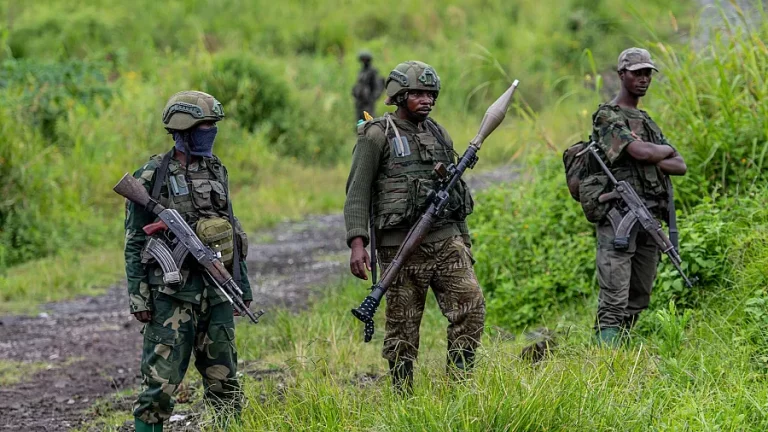
Weeks after signing a peace deal with Rwanda, the Democratic Republic of the Congo has reached an accord with M23 rebels operating in the country’s North Kivu region.

But long-time observers of the DRC’s attempts to restore peace within its borders aren’t ready to celebrate.

Following an initial peace deal with Rwanda last month, the DRC signed a ceasefire agreement with M23 rebels on Saturday in Qatar.

In this Statement of Intent, the parties agree to protect civilians and respect Congolese sovereignty.

But on the ground in Goma, provincial capital of North Kivu and under the control of Kigali-backed insurgents, observers are sceptical.

For Congolese journalist and Pan-African civil rights activist Maude-Salomé Ekila, this latest agreement is reminiscent of many others that raised hopes when they were signed but were trampled underfoot on the altar of the interests of each stakeholder:

“What’s dramatic is that we’ve been systematically reproducing the same patterns for all these years. There’s a system of international predation organized to exploit Congolese resources. And we forget that this is the heart of the matter. And every possible tool is being used so that this predation and this plan, which has been going on for decades now, can achieve certain objectives.”

Like many local observers, Ekila is frustrated by an agreement that demonstrates the inability of the Congolese government to ensure the integrity of its territory.

“You see, we’re once again in a position of great weakness, because we’ve had a defense apparatus that’s been corrupted in every sense and that hasn’t allowed us to face up to the hyper-sophisticated army we had in front of us, an army completely supported by the Rwandan army in reality, which supports the M23, which supports the AFC politico-military platform,” Ekila.

“And so we found ourselves in a weak position to negotiate. What did we negotiate? That’s the question: are we going to be able to meet the deadline set in this communiqué?”

The problem, Ekila says, is justice:

“From the moment when the protagonists know that they can do it again, that in any case, there will be agreements that will not be kept and that will reproduce other militias, because there has been no justice, because justice has been bartered on the altar of so-called peace, just as justice is bartered on the altar of pseudo-democracy every time, we find ourselves in a situation where the facts are repeated. It’s cyclical and, as a result, a system of predation quietly goes on its way.”

The Statement of Intent will come into force immediately upon signing and must be implemented by 29 July.

It provides for the opening of direct negotiations for a comprehensive peace agreement by 8 August.

These discussions will be based on the agreement signed last month in Washington between the DRC and Rwanda.

The aim is to conclude and sign this comprehensive peace agreement by 18 August.

Experts, however, doubt that the timetable will be met.

Africanews/Hauwa M.

Kenyan Activist Defiant After Court Appearance

0

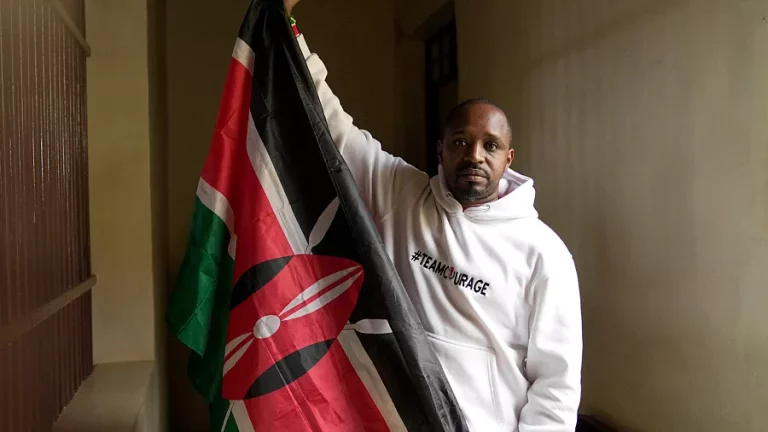
Outspoken Kenyan activist Boniface Mwangi has dismissed the government’s attempt to link him to anti-government protests, calling it a weak and desperate move to silence dissent.

Mwangi appeared in court on Monday, charged with unlawful possession of ammunition, a case stemming from his alleged role in the youth-led demonstrations that have gripped the country for months.

The charge sheet accused Mwangi of illegally possessing three tear gas canisters.

His lawyer, Njanja Maina, strongly denied the allegations, calling them fabricated.

The Kenya Human Rights Commission also condemned the case as a “trumped-up accusation.”

Mwangi was released on bond shortly after the hearing, outside the court, he delivered a defiant message to journalists, calling President William Ruto a “real terrorist.”

“Because we are terrorizing Ruto’s heart and Ruto knows that he’s going home, because Ruto is a real terrorist,” Mwangi said. “So we guys are not terrorists, we’re terrorists’ hunters. We’re hunting Ruto to leave power because he’s killing us and we’re tired of being killed by our government.”

The arrest follows a raid on Mwangi’s home over the weekend, during which his wife, Njeri Mwangi, said security agents seized electronic devices and spoke of terrorism and arson.

Many had feared Mwangi would be charged with terrorism.

In court, Mwangi distanced himself from organizing the recent protests, crediting young Kenyans, the so-called “Gen Z” movement with leading the charge.

“These kids are saying we want real change and that’s why they’re protesting. They are so brave that when they leave their homes, they even write obituaries,” he said. “So this route tying to personalize the struggle for a better Kenya, about personality, it is very weak.”

The protests erupted in mid-2024 after President Ruto proposed a controversial set of tax increases.

Demonstrators have since expanded their demands to include action against corruption and what they describe as the regime’s broken promises to ordinary Kenyans.

As activists prepare for fresh demonstrations on August 8 dubbed “nane-nane” Mwangi made it clear the fight for a more accountable government is far from over, even as the state seeks to silence its critics through legal pressure.

Africanews/Hauwa M.

Zamfara Establishes Small Claims Court to Boost Businesses

As part of commitments to boost business activities, the Zamfara state government has amended some business enabling laws, established five small claims courts to boost business class in the state.
Zamafara state Deputy Governor, Mallam Mani Mummuni, announced this at a town hall meeting with stakeholders on State Action on Business Enabling Reforms (SABER) organised by Presidential Enabling Business Environment Council (PEBEC) held in Gusau, the Zamfara state capital.
The Deputy Governor explained that PEBEC was established to oversee Nigeria’s Business Environment Reforms Intervention with dual mandate of removing bureaucratic and legislative constraints to doing business.
“Zamfara State Government has keyed into this very important initiative of the Federal Government, by constituting State Ease of Doing Business Council. However, the program was also domesticated under the State Action on Business Enabling Reforms (SABER)”, Mallam Mummuni explained.
According to him, the State Government amended many of its Business Enabling Laws, at the same time enacted new ones either by Legislation or Executive Orders regarding to Land Administration, Simplified Tax Regime, Improved Deployment of Infrastructures, Waivers, Business incentives and determination of commercial disputes.
“One of the important areas is the establishment of Five (5) small Claims Courts and provision of Practice Directions to these Courts for the betterment of our business class,” he stated.
Resilient Economy
In his remarks, the Zamfara state Focal person PEBEC, Sani Bukkuyum, who doubled as the Permanent Secretary Ministry of Budget and Planning, urged stakeholders at the meeting to actively participate in the meaningful discussions, come with solutions, that would assist government’s efforts in building a resilient and inclusive economy for all to benefit.
“Let us make Zamfara, a state with a future, where our businesses thrive, with more development,” he said.
In their separate goodwill messages, the Permanent Secretary Ministry of Commerce, Aminu Guraguri, Permanent Secretary Donor and Multi Literal Agency, Hajiya Saadatu Abdu Gusau, described the meeting as timely and would go a long way in realising various business potential in the state.
“Zamfara State is blessed with abundant human and natural resources, and with the right policies, partnerships, and reforms, we can unlock its full economic potential”, they said.
She noted that the proactive steps taken by the state government to improve ease of doing business, reduce bureaucratic bottlenecks, and enhance investors’ confidence are ways toward a promising Zamfara state.
“Today’s dialogue provides a valuable platform for stakeholders to collaborate, share insights, and align strategies for a more business-friendly Zamfara.
“By working together, we can address challenges,streamline processes, and implement policies that will make Zamfara a model of economic prosperity in Nigeria”, they noted.

China Ships 31 Electric Mining Trucks to Africa

0

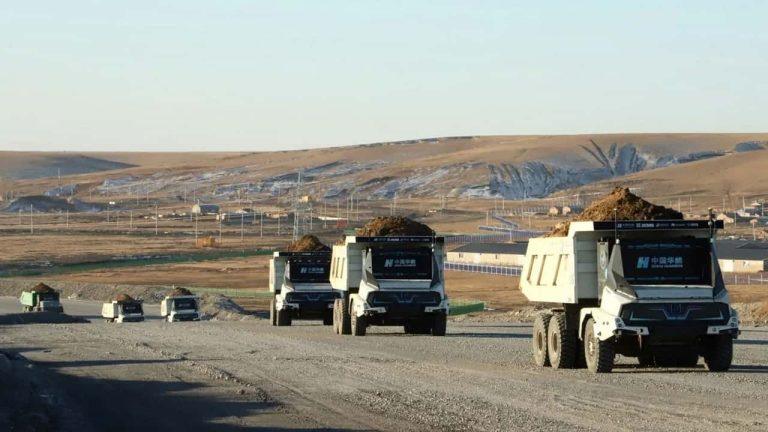
China sent a fleet of 31 pure electric mining trucks to Africa for use in a copper mining project in Zambia.

The trucks are provided by Breton Technology, a Chinese high-tech company specialising in green construction machinery.

They will be used by an African branch of China’s state-owned company 15th Metallurgical Construction Group.

“The overseas cooperation [is] the first large-scale deployment of electric mining trucks at one go to a mining project in Africa. It will help further upgrade the local mining equipment”, said Li Wenjie, the chairman of China 15th Metallurgical Construction Group’s construction trade company in Africa.

Breton Technology is responsible for providing a zero-carbon mining robot system, including electric vehicles, autonomous driving, and clean energy technologies.

“We believe that in the near future, unmanned mining fleets will be seen operating in Africa”, said Teng Fei, head of strategy and overseas business at Breton Technology.

The mining trucks are expected to reach Durban in South Africa after a 20 to 25 day journey.

China has pledged $5 billion to Zambia’s mining industry by 2031, despite controversies surrounding the environmental and social impact of Chinese-owned mines.

In February, a spill from a Chinese-owned copper mine contaminated a major Zambian river.

The failure of a dam at the Sino-Metals Leach Zambia mining facility allowed 50 million litres of acidic waste to be released into a stream leading to the Kafue River.

Signs of pollution were detected at least 100 kilometres downstream from the facility.

Africanews/Hauwa M.