Home Blog Page 214

Nigeria Reaffirms Commitment to Transforming Cassava Sector

The Federal Ministry of Budget and Economic Planning has reaffirmed the Nigerian Government’s commitment to transforming Nigeria’s cassava sector into a major industrial and renewable energy driver.

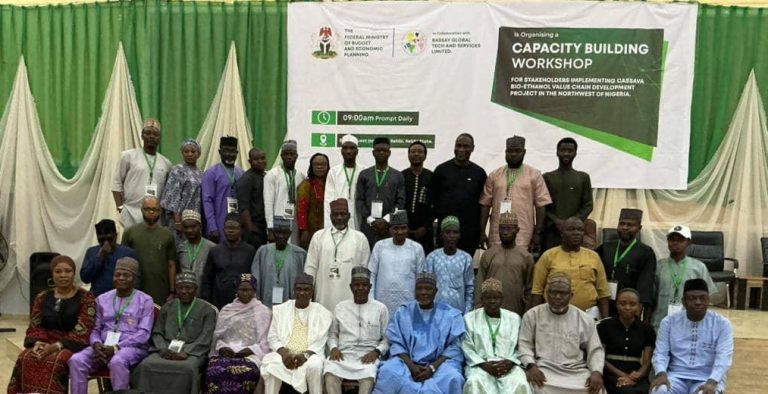
This was reaffirmed as it convened a two-day capacity building workshop for stakeholders on the Cassava Bioethanol Value Chain Development Project in the North West Geo-Political Zone.

The workshop, which held on 11th and 12th February 2026 at Saffar Guest Inn Limited, Birnin Kebbi, Kebbi State brought together key stakeholders across the Triple-Helix framework, Government, Academia/Research Institutions, and the private sector in collaboration with technical partner Bassay Global Tech & Services Limited.

The Minister of Budget and Economic Planning, Senator Atiku Abubakar Bagudu, who was represented by the Director of Economic Growth, Mr. Auwal Muhammad, described the initiative as a strategic pillar of President Bola Ahmed Tinubu’s Renewed Hope Agenda. “This workshop is more than a training session,” he stated. “It is a strategic gathering designed to ensure that Nigeria no longer just grows cassava to eat, but grows cassava to power our nation.”

Driving industrial growth through Bio- ethanol, Nigeria remains the world’s largest producer of cassava, yet much of its potential has remained untapped. The Cassava Bioethanol Value Chain Development Project seeks to reposition cassava—often referred to as “white gold”—as a catalyst for industrialization and energy transition.

By blending bioethanol with Premium Motor Spirit (PMS), the initiative aims to: reduce reliance on imported fuel, save trillions of naira in foreign exchange, stabilize the naira, promote cleaner, renewable energy alternatives, build a diversified, bio-based economy beyond oil dependency

The Minister emphasized that the initiative targets over 14 million smallholder farmers, enabling them to transition from subsistence farming into active participants in an industrial value chain.

Under the National Bio-Economy Policy, the Ministry is promoting a circular economy approach that goes beyond ethanol production.

The value chain includes high-quality cassava stems and starch, carbon dioxide capture during fermentation, and animal feed derived from distillery grains. “This is not just about building factories,” the Minister noted. “It is about building a future where Nigeria becomes a global hub for bio-resources“ he said.

Strategic Initiative

The Director Agriculture Division of the Economic Growth Department, Mr. Olaifa, described the project as a strategic initiative positioned at the intersection of industrialization, energy transition, and rural empowerment.

He acknowledged the vital role of private sector collaboration, particularly with Bassay Global Tech & Services Limited, stressing that such partnerships were essential for translating policy into commercial and industrial success.

The workshop aims to: equip stakeholders with technical competencies for high-yield cassava production and efficient processing, foster collaboration between aggregators, processors, and off-takers to reduce post-harvest losses, currently estimated at nearly 40%, standardize production processes to meet global ethanol specifications for fuel and industrial applications.

Cassava Industrialization

In a goodwill message delivered on behalf of the National President of the All Farmers Association of Nigeria (AFAN), Muhammad Magaji, and represented by Moh’d Umar Birnin Magaji, the association commended the Federal Government for prioritising cassava industrialisation.

The message described the initiative as a transformative opportunity for farmers, noting that cassava’s potential extends beyond food security to renewable energy production and economic prosperity.

Agriculture, he emphasised, remains a cornerstone of Nigeria’s economy, and initiatives such as the Cassava Bioethanol Value Chain Development Project provide farmers with a pathway to greater value addition, income growth, and long-term sustainability, thereby ensuring value for national investment.

As the coordinating ministry, the Federal Ministry of Budget and Economic Planning reiterated its commitment to ensuring that every naira invested in the project translates into measurable returns—particularly in youth employment, rural empowerment, industrial expansion, and national food security.

Synergy

The workshop concluded with a renewed call for synergy among farmers, processors, regulators, researchers, investors, and development partners to drive implementation from dialogue to industrial output.

The Cassava Bioethanol Value Chain Development Project is a Federal Government initiative under the National Bio-Economy Policy designed to harness Nigeria’s cassava production strength to drive renewable energy production, reduce fuel import dependence, promote industrial growth, and empower millions of smallholder farmers through value-chain integration.


 

Inter Miami’s Messi Suffers Injury

0

Argentine International and Inter Miami star, Lionel Messi, missed training after suffering a muscle strain in his left hamstring, an injury that has forced the postponement of the club’s preseason finale.

The reigning MLS Cup champions confirmed that Messi sustained the injury during last weekend’s preseason match against Barcelona Sporting Club in Ecuador.

The Argentine forward scored in the game but was substituted in the second half. Subsequent medical examinations confirmed the hamstring strain, the club said in a statement.

Lionel Messi’s Inter Miami set for PSG showdown at the FIFA Club World Cup.

“His gradual return to training will depend on his clinical and functional progress in the coming days,” Inter Miami noted.

As a result, Friday’s scheduled friendly against Ecuadorian side Independiente del Valle at Juan Ramon Loubriel Stadium in Puerto Rico has been rescheduled for February and Inter Miami are set to kick off its MLS campaign on February 21.

IFAD Appoints Nigeria’s Agric Minister as Council Chairman

0

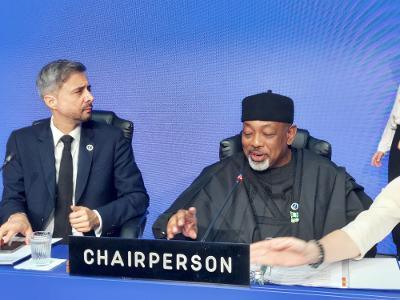
Nigeria’s Minister of Agriculture and Food Security, Senator Abubakar Kyari, has been appointed Chairman of the 49th Governing Council of the International Fund for Agricultural Development (IFAD) in Rome, Italy.

Delivering his acceptance speech at the 49th session in Rome, Sen. Kyari pledged his commitment to an impartial, inclusive, and strategically focused administration that will foster consensus, deepen multilateral cooperation, and uphold the integrity and credibility of the institution.

He stated: “It is with profound humility and an abiding sense of duty that I accept the honour to serve as Chairman of the 49th Governing Council of the International Fund for Agricultural Development. I thank you for the trust you have placed in me, and accept it with a full awareness of the responsibility it carries.

“I receive this mandate not merely as a personal distinction, but as a solemn obligation to the millions of rural women and men whose hopes rest on the decisions we take in this chamber.

“I pledge to discharge this duty with impartiality, inclusiveness, and strategic foresight. I will work tirelessly to foster consensus, deepen multilateral cooperation, and uphold the integrity and credibility of this great institution.”

Sen. Kyari reaffirmed his commitment to IFAD’s mandate “to ensure that IFAD remains financially robust, policy-driven, and relentlessly impact-focused, delivering measurable, transformative outcomes for smallholder farmers, rural youth, women, and vulnerable communities across continents.”

He expressed appreciation to Nigeria’s President, His Excellency, President Bola Ahmed Tinubu, noting: His resolve to reposition agriculture as the backbone of prosperity and stability continues to inspire our engagement on the international stage.”

“I am equally indebted to His Excellency, Vice President Kashim Shettima, GCON, and to the distinguished members of the Federal Executive Council, the National Economic Council, and the management and staff of the Federal Ministry of Agriculture and Food Security, whose collective wisdom and support underscore Nigeria’s enduring belief in multilateralism, solidarity, and shared progress,” he added.

Sen. Kyari also thanked the outgoing IFAD Chairman, Christophe Schiltz, for his distinguished stewardship of the Council.

 “His leadership and dedication have strengthened our collective resolve and advanced IFAD’s mission at a critical time for global food systems.”

Also Read: Nigeria, IFAD Launch 2nd Supervision Mission for SAPZ

The minister restated his commitment to the Governing Council, IFAD’s supreme decision-making authority, emphasising: “We are entrusted with shaping the policies that guide rural transformation, safeguarding the financial strength of this institution, appointing its leadership, admitting new members, and approving the strategic direction that defines its global impact.

“These are not routine tasks; they are defining responsibilities that require unity of purpose, discipline of thought, and courage of conviction.”

He commended the dedicated leadership and professionalism underpinning IFAD’s work globally: “I extend my appreciation to the President of IFAD, His Excellency Álvaro Lario, the Vice President, Her Excellency Gerardine Mukeshimana, the Secretary of the Fund, Dr Claudia Ten, as well as the senior management and the entire IFAD team.

“I also recognise the invaluable work of IFAD’s country offices and field teams across all regions, whose tireless engagement continues to translate policy into impact and deliver meaningful results for rural communities.”

Sen. Kyari acknowledged the immense pressures on global food systems from climate shocks, economic volatility, conflict, and demographic change, assuring that collective determination will accelerate innovation and strengthen partnerships.

 “Together, we shall advance bold and forward-looking policies that empower farmers, enhance resilience, unlock rural enterprise, and secure sustainable global food systems for generations to come.

“I look forward to working hand in hand with all Member States to further strengthen IFAD’s noble mandate and to build upon its proud legacy of impact, partnership, and hope” he said.

Kogi Begins N50bn Lokoja International Airport Project

The Kogi State Government in North-Central Nigeria has commenced the process of establishing the Lokoja International Airport, valued at N50 billion.

The project, located in Zariagi community, will be executed in collaboration with a Sukuk financial institution, which will provide funding. Construction work on the project is expected to commence soon.

Officials of the Sukuk inspected the proposed project site, which covers 4,000 hectares of land, as part of the requirements for accessing funds for the airport’s execution.

Amin Mohammed, a Sukuk financial expert and Head of Public Sector at AVIA Capital, disclosed to journalists that the N50 billion funding for the project will be interest-free.

Sukuk, as financier of the project, will be a part owner, as the whole idea is aimed at facilitating investments for the state’s accelerated development,” he said.

A Director in the Kogi State Ministry of Transportation, Engineer Achem Enemaku, who conducted the Sukuk officials round the proposed airport site, said the visit was part of preparations towards the commencement of work.

The project already has an approved budget of N50 billion, while the feasibility study and design have been completed. Governor Ahmed Usman Ododo has also approved bidding for the project, and work is set to commence after the necessary due process,” he stated.

The team also inspected the ongoing construction of the Lokoja International Market located along Zone 8 Road, where Mohammed expressed satisfaction with the pace and quality of work.

The ongoing construction of the Lokoja International Market under our funding will cost N31 billion, of which N7 billion has been paid as mobilisation. The project is expected to be completed within 36 months,” Mohammed disclosed.

The Kogi State Government earlier had decided to relocate the International Market from its present location due to traffic congestion experienced at the location.

Nigeria Pledges Safety Measures to Protect Schoolchildren

0

The Nigerian government has pledged to deploy all necessary measures under the Safe Schools Initiative to protect children and ensure uninterrupted learning nationwide.

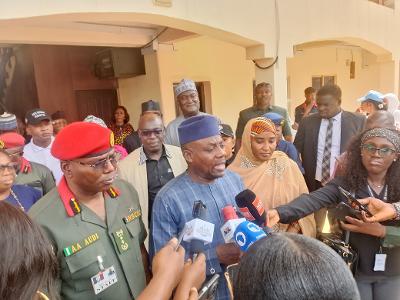
The Minister of Education, Dr Tunji Alausa, stated this during a courtesy visit to the Commandant-General of the Nigeria Security and Civil Defence Corps (NSCDC), Ahmed Audi, in Abuja, the nation’s capital.

Alausa, who acknowledged ongoing efforts to safeguard schools, said the nation has zero tolerance for attacks on educational institutions. He added that the government would strengthen coordination of the Safe Schools Initiative with the NSCDC.

The initiative, launched in 2014, aims to protect students, teachers, and school infrastructure from attacks, kidnappings, and violence.

According to him, recorded incidents of student abductions in the country are unacceptable, and efforts will move beyond knee-jerk responses to ensure a continuous presence of security operatives in schools, especially in vulnerable areas.

“Our children must remain safe in school, and this administration is committed to providing the resources and structure required,” said the minister.

Also Read: Senate Launches Probe Into Safe School Initiative Program

During a tour of the Safe Schools Data Coordination Centre, Alausa stressed the need to improve rapid responses to crises using technology-driven alert mechanisms, such as panic buttons linked to command centres. He added that more command centres should be established in states and local governments to cover even remote districts.

“We need to work on systems where you press a button in schools during a crisis, and you get an alert at the command centre. This would enable quick deployment of security operatives,” he said.

Alausa also revealed that a department is being established in the Federal Ministry of Education to coordinate national implementation of the Safe Schools Initiative and enhance collaboration with the NSCDC. He emphasised that sustainable financing options are being explored to ensure continuous funding for school security, particularly given delays in budgetary releases.

The minister noted that the NSCDC remains the lead agency in the initiative, urging stakeholders to take a more active role in securing schools. “Protecting children in schools is a collective responsibility, not just that of the government, security agencies, or communities alone,”he said.

Establishment of Community Security Structures

The NSCDC Commandant-General, Audi, commended plans to cascade command centres to Local Government Areas, noting that it will improve rapid response strategies. He disclosed that currently, only six states, in collaboration with the NSCDC, have operational command centres.

He said nationwide vulnerability assessments revealed that more than 60,000 out of 81,000 schools lacked adequate security, prompting the corps to develop an operational strategy to safeguard schools effectively.

“These schools are porous in the sense that there was no presence of security personnel or fences. There was an urgent need for security, which guided us in developing our operational strategy for mutual safety in schools,” he said.

Audi highlighted that the strategies include establishing specialised female squads and community security structures, which have prevented over 110 security threats against schools nationwide.

“The School Security Vanguard, the Safe Schools Protection Squad, and the community engagement initiatives have significantly strengthened intelligence gathering and emergency response,” he said.

The Commandant-General also identified funding as a major challenge hampering effective operations but assured of the corps’ full commitment to safeguarding schools across the country.

Former Nigerian VP Osinbajo Calls for Africa’s Operational Sovereignty

0

Nigeria’s former Vice President Yemi Osinbajo has called for Africa’s operational sovereignty, noting that the continent has moved beyond rhetorical independence and is now actively shaping global systems through trade architecture, mineral leverage, demographic weight, and climate strategy.

While delivering a keynote address at the International Lecture and Leadership Conference in honour of the former Head of State General Murtala Muhammed, Osinbajo recalled Muhammed’s 1976 declaration that “Africa has come of age” and recast it as a living doctrine rather than a historical slogan.

Doctrine and Historical Continuity

Osinbajo situated his argument within the ideological arc that began in the post-independence era, when political sovereignty was the overriding objective. He recalled Muhammed’s insistence that Africa would define its own interests and reject external prescriptions.

He argued that while the 1976 moment consolidated political confidence, the present moment demands economic and institutional consolidation. Coming of age, he suggested, is not about the absence of constraints but about the assertion of agency and the capacity to build systems aligned with continental priorities. “The shift,” he said, “is from symbolic sovereignty to operational sovereignty.”

Economic Sovereignty and Industrial Strategy

Central to that operational shift is the African Continental Free Trade Area, which he described as the most consequential economic reform of the post-independence era. The agreement integrates 1.4 billion people across 54 countries with a combined GDP exceeding 3.4 trillion dollars, creating the largest free trade area by number of participating states.

Osinbajo pointed to the growing share of industrial goods in intra-African trade, including machinery, pharmaceuticals, and processed products, as evidence that the continent is gradually moving beyond raw commodity dependence.

“The debate is no longer about access to markets abroad but about strengthening value chains within Africa,” he said.

On critical minerals, he underscored that Africa holds roughly 30 percent of global reserves essential to the energy transition, including cobalt, lithium, and manganese. Increasingly, countries are adjusting export regimes to prioritise local beneficiation and value addition before export. He linked mineral policy to industrial diplomacy, arguing that “control over processing and supply chains translates into bargaining power in a decarbonising global economy.”

Demographics, he noted, reinforce this leverage. “By mid-century, Africa will account for a quarter of the global workforce, positioning it as a labour and innovation frontier at a time when ageing populations are reshaping advanced economies.”

Also Read: Coup d’état in West Africa: VP Osinbajo calls for proactive steps  

Energy Transition and Climate Leverage

Osinbajo framed the energy transition as both a risk and an opportunity. Africa remains energy deficient, yet it holds significant renewable potential and natural gas reserves that can serve as transition fuels.

He pointed to expanding renewable projects across North, East, and Southern Africa, alongside emerging green hydrogen initiatives, as signals that the continent is positioning itself within the next generation of industrial fuels.

“Climate strategy,” he said, “must align growth with sustainability. Africa’s forests, wetlands, and biodiversity assets, including the Congo Basin, represent global carbon sinks of strategic importance. These natural assets must be recognised within international financing and carbon markets.”

Governance, Institutions, and Political Will

Osinbajo stressed that structural opportunity will not translate into power without institutional coherence and political will. Trade agreements, mineral policies, and climate frameworks require regulatory discipline, infrastructure investment, and continuity across administrations.

He highlighted financial and payment integration mechanisms designed to ease cross-border transactions, describing them as foundational to deeper market integration.

“The decisive test,” he suggested, “is whether African states can align national reforms with continental commitments in ways that strengthen credibility and investor confidence.”

Strategic Signal to the World

Beyond economics, the address carried geopolitical undertones. Osinbajo indicated that Africa’s expanding economic footprint and resource leverage position it to negotiate from strength rather than dependency.

The continent’s engagement with global powers, he implied, should be guided by interest-based partnerships rather than ideological alignment. Strategic autonomy, in this sense, is expressed through diversified trade, industrial capacity, and climate relevance.

Returning to Muhammed’s assertion that “Africa has come of age,” Osinbajo suggested that the measure of maturity today lies in institutional depth and bargaining confidence rather than rhetorical defiance.

“If the continent converts trade integration, mineral leverage, demographic momentum, and climate positioning into durable industrial capacity over the next three to five years, Africa’s role in global supply chains and climate negotiations will materially expand,” he said.

He added that the variables to watch are beneficiation enforcement, AfCFTA implementation depth, energy infrastructure build out, and governance continuity.

US to Promote AI at APEC Amid China Tensions

0

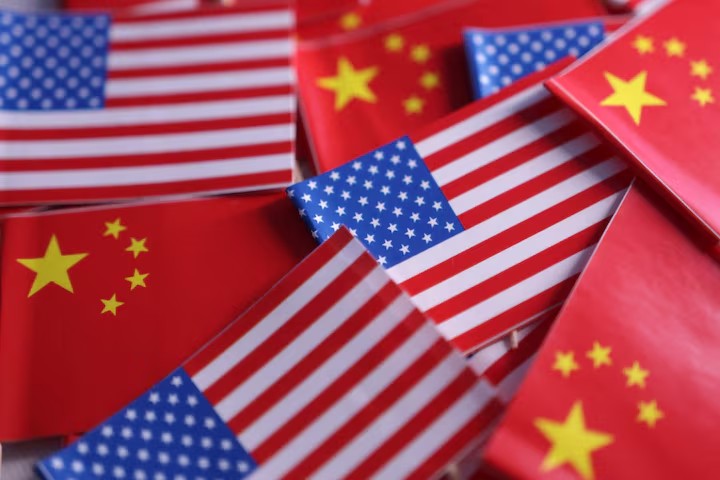
The Trump administration says it is promoting artificial intelligence exports and maritime surveillance technology at Asia-Pacific Economic Cooperation (APEC) meetings in southern China this week, as Washington seeks to counter Beijing’s technological and maritime influence.

U.S. senior official to APEC, Casey Mace, said the Trump administration had launched a $20 million fund to support adoption of American AI technologies by partner economies in the region, part of a broader effort to strengthen U.S. leadership in emerging technologies.

The initiatives come ahead of President Donald Trump’s expected visit to China in April and China’s hosting of APEC’s annual leaders’ summit in Shenzhen in November, events likely to spotlight intensifying U.S., China competition over technology and economic influence across the Asia-Pacific.

China is looking to narrow the technological gap with the U.S. in advancing artificial intelligence-related sectors, though the lack of advanced chip making tools is hobbling China’s advances.

“China’s AI technology promotes CCP propaganda and censorship, while its vision for AI governance seeks to enable authoritarian repression,” a State Department spokesperson added.

READ ALSO: US Reaches Nuclear Deal With Armenia

China says it supports global cooperation on AI governance and has previously rejected Western accusations that its technology exports enable censorship.

In July last year, President Trump signed an executive order aiming to ensure that American AI technologies, standards, and governance models are adopted worldwide.

The United States is also using APEC to promote American private-sector technologies designed to combat illegal, unreported and unregulated fishing, which Washington says threatens food security and maritime sovereignty in parts of the Pacific.

The Acting Principal Deputy Assistant Secretary of State for Oceans and International Environmental and Scientific Affairs, Ruth Perry, said on Tuesday that China’s 18-million-strong distant-water fleet posed enforcement challenges for smaller coastal states.

“Many countries are negatively impacted and China is a perpetrator … the size of the fleet can’t be ignored across the Pacific,” noting reports that suggest an unusual level of state coordination among its actions.

Perry said U.S. companies were developing technologies including satellite vessel tracking, artificial intelligence-based analytics, acoustic detection systems and sensor-equipped ocean buoys to help governments monitor fishing activity.


Reuters

Reps Committee Steps Down NACETEM 2026 Budget Consideration

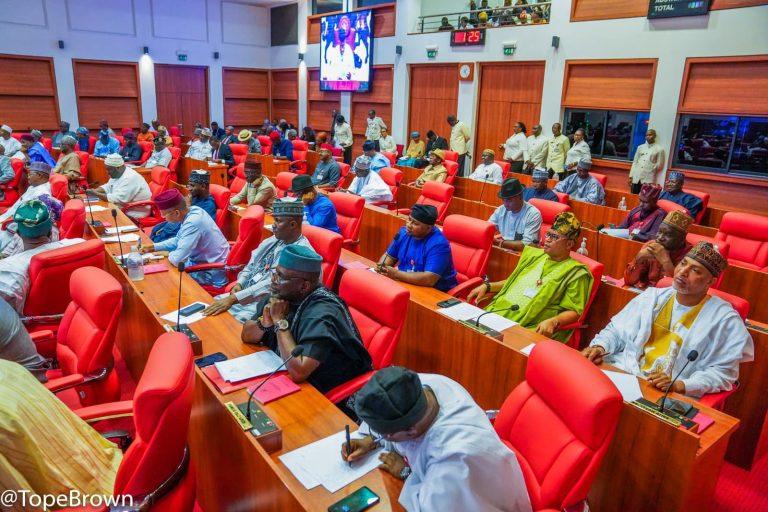
The House of Representatives Committee on Science and Engineering has stepped down the consideration of the 2026 budget proposal of the National Centre for Technology Management (NACETEM).

The committee also resolved to expunge the agency’s budget from the national appropriation bill.

The committee also recommend the removal of the Director-General of the National Centre for Technology Management (NACETEM). Dr. Olushola Odusanya, for failing to appear before the panel to defend the proposal and for not submitting required documents for legislative scrutiny.

The decision was taken during the 2026 budget defence session held in Abuja.

Chairman of the committee, Mr. Inuwa Garba said that “if President Bola Tinubu could personally appear before the National Assembly to present the national budget, none of his appointees should consider themselves too important to honour an invitation from the legislature”.

He stressed that the committee would not tolerate any act perceived as disrespect to the Constitution, the Legislature, or democratic governance under any guise.

According to him, the committee’s action would serve as a deterrent to other government appointees who might contemplate similar conduct.

In a related development, the committee expressed dissatisfaction with the 2025 budget performance and the 2026 budget proposal of the Nigerian Council of Food Science and Technology (NiCFOST).

Lawmakers particularly frowned at the agency’s low Internally Generated Revenue (IGR), which stood at about N385,000 in 2024 and N285,860 in 2025.

The committee also queried the sharp increase in the agency’s overhead costs, which rose from N95.40 million in 2025 to N195.73 million in the 2026 proposal.

Responding, the Registrar of NiCFOST, Mrs. Veronica Nkechi-Eze, explained that the council’s only sources of revenue are registration fees and annual professional dues.

She said the council charges N5,000 for registration and N2,000 as professional dues from its approximately 10,000 members.

However, the registrar admitted she had no explanation for the significant rise in the overhead component, noting that the increase was not part of the proposals originally submitted to the Budget Office.

In his ruling, the committee chairman said the matter required further scrutiny, adding that the panel would engage the agency further before taking a final decision.

Abuja to Host 2026 World Public Relations Forum

0

Nigeria’s Capital City, Abuja will host delegates from about 126 countries in November for the 2026 World Public Relations Forum, a major global gathering of communication professionals.

A Professor of Mass Communication at the University of Ilorin and Council Member of the Nigerian Institute of Public Relations (NIPR), Professor Saudat Abdulbaqi disclosed this in Ilorin while briefing journalists on the Institute’s upcoming national and international activities.

The conference, themed Responsible Communication: The Voice of the World,” is expected to spotlight growing global concerns about ethics, accountability and professionalism in communication, particularly in the age of artificial intelligence.

According to Professor Abdulbaqi, the timing of the event will coincide with the conference of the African Public Relations Practitioners Association, enabling NIPR members to attend both gatherings with a single registration.

Speaking on the increasing influence of Artificial Intelligence (AI) in the profession, she cautioned against excessive dependence on technology.

“People should not over-rely on artificial intelligence. That is why training on the use of AI is very necessary,” she said.

She stressed that AI should serve as a supportive tool rather than a substitute for human judgement and expertise, warning that over-reliance could weaken critical thinking and ethical decision-making.

Also Read: Nigeria Set to Host World Public Relations Forum in 2026

The professor described public relations as the management of communication for mutual benefit, noting that the responsibility has become more complex in a digital era where narratives can easily be distorted.

She linked this to broader concerns about Nigeria’s reputation, revealing that NIPR recently conducted a nationwide Public Relations Perception and Reputation Perception Index.

Findings from the survey, she explained, showed that Nigerians rated the country low on key indicators such as trust, leadership and governance, raising concerns about the nation’s image both locally and internationally.

“We must be careful not to demarket our own country through careless narratives,” she warned.

Professor Abdulbaqi further announced that this year’s Nigeria Public Relations Week will take place in Kaduna under the theme Food Security and Reputation Management.”

She said the event was examine emerging challenges in the profession, including the responsible use of technology.

At the state level, she noted that the Kwara State chapter of NIPR has revived its monthly meetings and professional clinic to keep members abreast of developments in digital communication and related technologies.

Emphasising the need for continuous professional development, she stated: “Technology will keep changing, but professionals must remain relevant by thinking, questioning and acting responsibly.”

NFVCB Clears 102 Films for Release in January

0

The National Film and Video Censors Board (NFVCB) says it classified 102 films for distribution and exhibition in January.

This was disclosed in a statement on Thursday in Lagos by the Board’s Director of Corporate Affairs, Ogbonna Onwumere.

Onwumere explained that the figure represents a significant rise in classification activity compared with the previous month.

He noted that the January total reflects a 161.5 per cent increase over the 39 films classified in December 2025.

He added that English-language productions dominated the list, accounting for 86 of the films.

Other classifications included eight Igbo titles, three Yoruba films, three Hausa productions and two Hindi films.

According to him, the figures highlight the dominance of English-language content in Nigeria’s film market, while also showing steady contributions from indigenous languages and foreign productions.

An analysis of the rating categories showed that three films were classified as G (General Viewing), four as PG (Parental Guidance), four as 12A, 64 as 15 and 27 as 18.

Onwumere said the large number of films in the 15 and 18 categories underscores the Board’s commitment to age-appropriate content and the protection of young audiences from harmful material.

He also commended stakeholders across the film value chain and reiterated the NFVCB’s resolve to enforce compliance with film classification, especially for online distribution.

“We will begin issuing takedown orders for films that have not been classified by the Board. Any unclassified content on any platform will be removed,” he said.