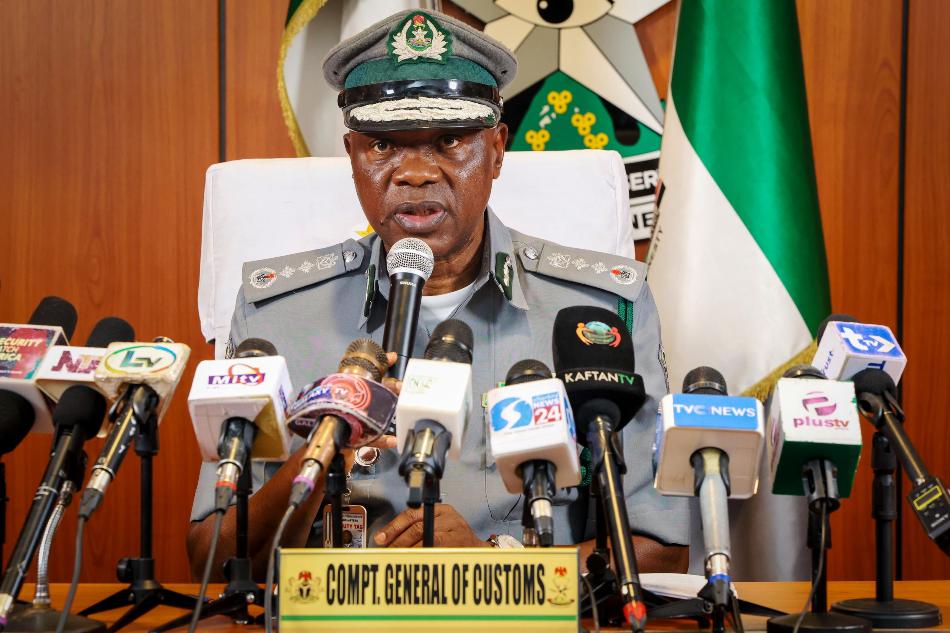
The Nigeria Customs Service has unveiled its licensing and permit regime to reduce bottlenecks, improve transparency, and fast-track trade to enhance port efficiency and trade at the Port.
Speaking at the 2026 Annual Conference and Awards of the Association of Maritime Journalists of Nigeria, the Public Relations Officer of the Lagos Free Trade Zone Command, CSC LA Abdullahi, said the new regime aligns with global best practices and supports the conference theme, “Attaining Port Efficiency in the Face of Emerging Technology”.
According to Abdullahi, modern port efficiency goes beyond cargo handling to include automation, compliance integrity, transparency, and seamless interaction among stakeholders.
He noted that the reforms, championed by the leadership of the Customs Service, are designed to modernise trade processes and improve Nigeria’s competitiveness in global commerce.
Abdullahi explained that the previous manual licensing system was plagued by delays, administrative bottlenecks, and fraudulent practices, which increased the cost of doing business. He added that the transition to a fully automated system marks a significant shift toward efficiency and accountability.
“Port efficiency begins with documentation integrity, compliance, and trust,” he said, adding that embracing digital transformation is critical to the future of Nigeria’s ports.
The new licensing and permit regime is anchored on a centralised digital portal that enables end-to-end electronic processing of applications, renewals, approvals, and compliance monitoring, he explained.
He said, “Stakeholders can now obtain permits—including import and export licences, bonded terminal approvals, warehouse permits, and excise licences—without physical visits.”
Abdullahi highlighted digital verification as a key feature of the system, noting that it eliminates fake permits and ensures the authenticity of submitted documents.
The system integrates with major trade platforms such as Form M, the Pre-Arrival Assessment Report, authorised dealer banks, and the Single Window system, thereby reducing duplication and improving coordination among regulatory agencies.
The Customs spokesperson said the reform has already begun to improve port operations by enabling pre-arrival processing, reducing cargo clearance delays, and minimising human interference.
He also noted that enhanced data management would provide better visibility into trade activities, revenue streams, and compliance patterns.
Implementation Challenges
Despite the benefits, Abdullahi acknowledged challenges in implementation, including digital literacy gaps among stakeholders, resistance to change, and the need for sustained awareness campaigns.
He emphasised the importance of continuous stakeholder engagement, education, and policy clarity to ensure the success of the initiative.
He also underscored the role of maritime journalists in driving the reform, urging members of AMJON to act as policy interpreters and public educators by promoting accurate information and countering misinformation.
The new licensing and permit regime is a strategic national reform aimed at improving trade efficiency, safeguarding government revenue, and strengthening Nigeria’s position in the global trade environment.