Stakeholders in the agriculture and food production sector have advocated for the strengthening of food supply chains across the country to address the intensifying nutritional and agricultural challenges.
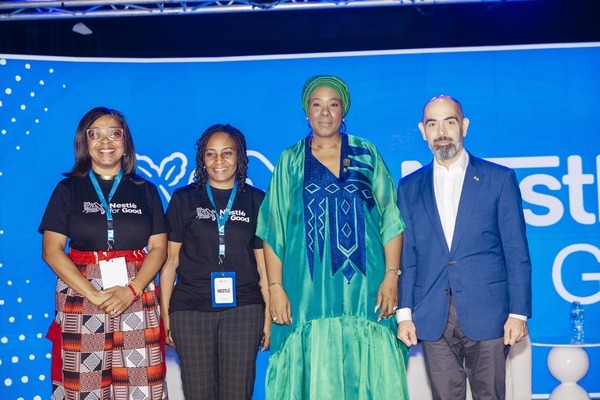
This came up as Government officials, health experts, and private sector leaders gathered in Lagos for the Nestlé for Good Summit 2026 to address existing challenges in public health, nutrition and agriculture.
The event shifted the focus toward cross-sector partnerships as a critical driver for human capital and economic growth, moving away from short-term corporate handouts toward long-term systemic fixes.
READ ALSO: Gombe Inaugurates Committee to Curb Theft of Nutrition Supplies
In her address, the Lagos State Commissioner for Commerce, Cooperatives, Trade and Investment, Folashade Ambrose-Medebem, stressed that the current food crisis extends far beyond agriculture.
“The conversations we are having today are not only about food. They are about human capital, productivity, public health, economic growth, and ultimately, the future of our society,” she said.
Ambrose-Medebem emphasised that scaling up nutrition outcomes requires a unified framework combining state policy, industry capacity, and community engagement.
While setting the tone of dialogue to focus heavily on stabilising local food systems, the Managing Director and CEO of Nestlé Nigeria PLC, Wassim Elhusseini, argued that consistent food delivery requires strengthening every link of the supply chain, starting with how raw materials are sourced.
“Delivering good food consistently and at scale depends on strong systems across the value chain — from responsible sourcing and manufacturing to distribution, livelihoods, capability development, and environmental sustainability,” Elhusseini said.
Industry experts at the summit also noted that relying on fragmented, short-term interventions no longer works in the current economic climate.
The Head of Corporate Communications, Public Affairs and Sustainability for Central and West Africa, Patricia Ekaba, stressed that sustainable progress requires looking beyond temporary fixes,.
She noted that business growth and social progress are fundamentally linked.
“Sustainable progress requires looking beyond short-term interventions. Business growth and social progress are interconnected, and lasting impact comes from creating value for both the business and the communities it serves,” she said.
A key feature of the Summit was an impact showcase, where participants engaged with real stories of beneficiaries connected to Nestlé’s initiatives in women empowerment, youth capability development, dairy development, and environmental sustainability.
These stories illustrated how targeted interventions across the value chain are contributing to improved livelihoods, stronger communities, and more sustainable practices.
Providing further perspective on the company’s approach, Corporate Communications, Public Affairs and Sustainability Lead at Nestlé Nigeria, Victoria Uwadoka, stated that the platform aims to prove how products, sourcing, and community investments connect in practical ways to support healthier lives.
“Nestlé for Good is not simply about showcasing individual initiatives. It is about demonstrating how our products, sourcing, partnerships, and community investments connect in practical ways to support healthier lives and more resilient communities,” she said.
As Nigeria navigates complex development hurdles, attendees concluded that regular, measurable dialogues between the state and the private sector will be vital to keeping local supply chains resilient and improving public health outcomes.