The National Broadcasting Commission (NBC) and Nigerian Communications Satellite Limited (NigComSat) has defended Nigeria’s revised Digital Switch-Over (DSO) strategy, describing it as a technologically inclusive framework designed to expand access to digital broadcasting, eliminate barriers to entry and create a commercially sustainable media ecosystem.
The agencies also projected that the long-delayed transition from analogue to digital broadcasting would unlock over N605 billion in advertising revenue and generate more than $1 billion from digital spectrum auctions.
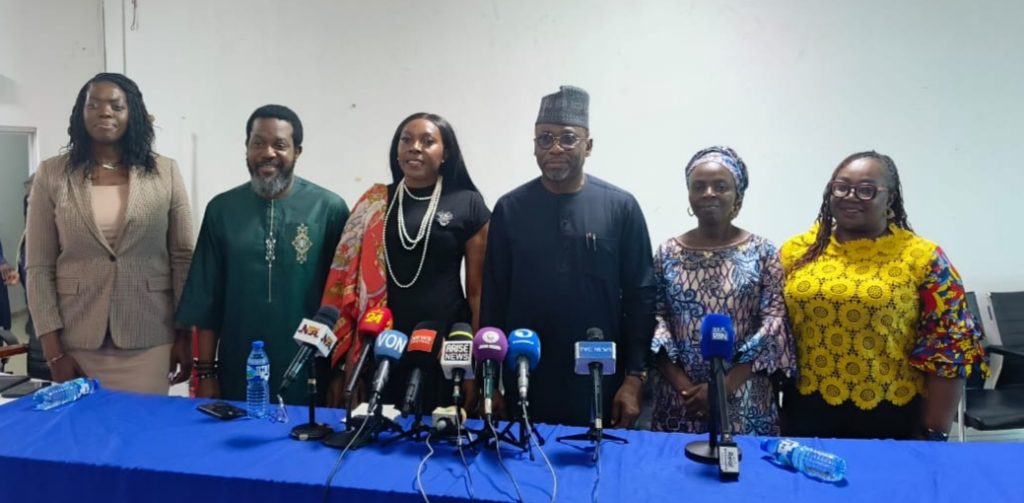
Speaking at a joint press conference in Abuja, the Director-General of the NBC, Charles Ebuebu, dismissed concerns surrounding the implementation of the new digital broadcasting framework, particularly fears about the affordability of decoders and accessibility for ordinary Nigerians.
According to him, Nigerians would not be required to purchase specialised decoders before accessing the FreeTV platform.
“The solution we are going for is not about special set-top boxes. We already have about 10 million digital assets in the market. You simply connect. There is no need for anybody to come to your house or sell special software to you”, he said.
He explained that existing open-standard digital receivers already available in the market could connect directly to the platform, giving households access to over 100 television channels without monthly subscription fees.
Ebuebu disclosed that Nigeria’s DSO strategy had evolved from the previous Digital Terrestrial Television (DTT)-only model into a hybrid system integrating Direct-to-Home satellite broadcasting (DTH), Digital Terrestrial Television and Internet Protocol (IP)-based streaming.
He noted that the new FreeTV platform would also be accessible through mobile applications, enabling users to watch television content on smartphones and internet-enabled devices.
“The future of broadcasting is convergence. Nigerians must be able to access content seamlessly, whether through television sets, mobile phones or internet-enabled devices,” he noted.
Read Also: Nigeria to Launch Digital Switch-Over Project
NIGCOMSAT Unveils Phase Two of Space-Tech Accelerator
The Federal Government fixed June 17, 2026, for the nationwide launch of the revised digital broadcasting framework, while the final analogue switch-off has been scheduled for December 31, 2028.
According to the NBC, the DSO initiative is expected to transform Nigeria’s broadcasting and creative economy by opening up new revenue streams through verifiable audience measurement systems.
Target Revenue
The Commission stated that the release of the 700MHz and 800MHz digital dividend spectrum could generate more than $1 billion in auction proceeds, funds expected to be reinvested in digital infrastructure and rural broadband expansion.
The NBC also said Nigeria’s creative industry, which contributes about N5 trillion to the country’s Gross Domestic Product and employs over 4.2 million people, would benefit from improved content distribution capabilities across West Africa through NigComSat-1R.
Defending the adoption of the hybrid broadcasting architecture, Ebuebu maintained that relying solely on terrestrial television would no longer guarantee nationwide access in a country with Nigeria’s geographic and infrastructural realities.
“We must build a broadcasting system that is inclusive, commercially viable and capable of reaching Nigerians wherever they are,” he said.
The NBC boss disclosed that broadcasters joining the FreeTV platform would enjoy an 18-month free carriage window, nationwide visibility and access to audience data through the proposed GARB measurement system.
He also revealed that discussions were ongoing regarding subsidy schemes and financing support for low-income households to ease the transition process.
Calling for collaboration among industry stakeholders, Ebuebu urged broadcasters, telecom operators, advertisers, signal distributors, manufacturers and state governments to support the implementation of the DSO programme.
He added that a national stakeholders’ meeting would be convened within 30 days after the June 17 launch to address implementation concerns and strengthen industry participation.
Satellite Infrastructure
On the issue of satellite infrastructure sustainability, the Managing Director of NigComSat, Jane Egerton-Idehen, revealed that the country’s current communications satellite would be replaced in 2028.
She said technical planning and procurement processes for the replacement had already commenced after a two-year evaluation involving international vendors.
“We don’t want subscribers or viewers to worry about technology. Our focus is to ensure continuity of service without disruption, even as we prepare for the next-generation satellite infrastructure“, she said
Egerton-Idehen further assured Nigerians that the replacement satellite would retain the same orbital slot, meaning users would not need to reposition their dishes or purchase new receiving equipment during the transition.
The digital broadcasting platform is expected to provide more than 100 television channels, including indigenous language channels aimed at promoting local content and cultural diversity across Nigeria.