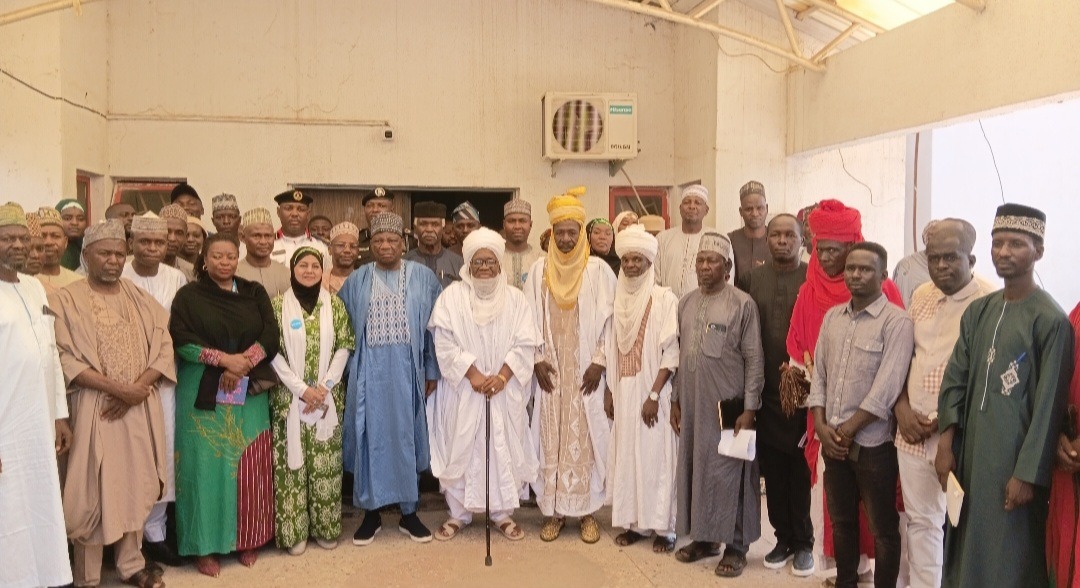
The United Nations Children’s Fund (UNICEF) has launched the Climate Resilient Infrastructure for Basic Services (CRIBS) initiative, aiming to strengthen child protection and improve the wellbeing of children in Gombe State.
The CRIBS project focuses on enhancing critical basic services, particularly in the health and education sectors, with a special emphasis on water, sanitation and hygiene (WASH) facilities in schools and healthcare settings.
Speaking at the launch in Gombe, the chief of UNICEF’s Bauchi Field Office, Dr Nuzhat Rafique, expressed gratitude to Governor Muhammadu Inuwa Yahaya for supporting the initiative and providing an enabling environment for its implementation.
Dr Rafique noted that access to clean water and proper sanitation remains essential for preventing infections, protecting children, and ensuring safe learning and healthcare environments.
She explained that the project is funded by the British Government through the Foreign, Commonwealth and Development Office, FCDO, supporting the construction and upgrade of nine schools and 14 healthcare facilities across Gombe State, bringing the total number of benefiting facilities to 23.
READ ALSO: UNICEF, Cross River Partner to Improve Childcare Practices
According to her, the project is aimed at ensuring that schools and primary healthcare facilities are built to withstand climate-related hazards and provide safe environments for children, mothers, teachers and healthcare workers.
Dr Rafique commended Gombe State for maintaining strong development performance despite funding constraints that affected similar projects elsewhere, noting that no facility allocated to Gombe was removed from the programme.
She stressed that climate change is no longer a future concern but a present reality, citing rising temperatures, flooding, sandstorms, rainstorms and damage to infrastructure as evidence of worsening environmental challenges.
The UNICEF official called on traditional rulers, community leaders, school administrators, local government chairmen and other stakeholders to actively support the project’s implementation and ensure high-quality delivery of all construction work.
Speaking on behalf of the Gombe State Government, the Deputy Governor, Dr. Manassah Daniel Jatau, reaffirmed the state government’s commitment to strengthening its partnership with UNICEF and improving critical sectors, particularly health, education, water supply, sanitation, and climate-resilient infrastructure.
Dr Jatau described UNICEF’s CRIBS initiative as a timely intervention that aligns with the state’s development priorities, especially in addressing the challenges posed by climate change.
He said Gombe State had continued to benefit from several UNICEF-supported interventions and remained open to constructive criticism aimed at improving service delivery.
According to him, feedback from UNICEF officials during previous visits to schools in the state prompted the government to intensify environmental sanitation measures across public institutions.
“You once told me that while Gombe looked clean on the outside, the classrooms were in poor condition. We acted on that observation immediately,” he said.
The deputy governor disclosed that the state government was pursuing long-term solutions to water scarcity through partnerships with international organisations, including Moroccan experts exploring innovative water-generation technologies.
On project implementation, Dr Jatau called for greater transparency and community participation in contract execution, advising contractors and development partners to publicly display project details, including contract value, duration, scope of work, and completion timelines, so that citizens could monitor progress and hold contractors to account.
“The community must know what a contractor is expected to deliver. That is the only way people can effectively monitor projects and demand accountability,” he stated.
Dr. Jatau also urged local communities to take ownership of public projects and protect government facilities from vandalism.