Home Blog Page 1058

Nigeria Inaugurates Committee On Traceability Framework, To Enhance Palm Oil Production

Nigeria’s government  has inaugurated the National Palm Oil Traceability Framework and Inter-Agency Committee to boost the production of palm oil, consumer’s confidence as well as export.
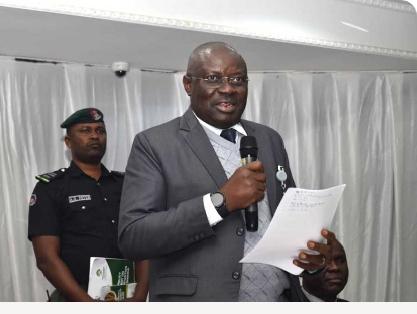
Minister of Agriculture and Food Security, Sen. Abubakar Kyari who was speaking  during the inauguration of the committee, held in Abuja  stated that the Palm Oil Traceability Framework Committee is aimed at tackling adulteration, poor processing, and packaging, among others
Sen. Kyari noted that the Committee would serve as the driving force behind the traceability system, fostering coordination across federal and state government agencies, private sector actors, farmers’ cooperatives, processors, market associations, development partners, and donors.
He revealed that ‘’the establishment of a national traceability system for palm oil is a clear demonstration of our determination to modernize agricultural value chains, enhance global competitiveness, and promote responsible production and sourcing throughout Nigeria’s oil palm sector’’.
He pointed out that “Traceability is essential for boosting consumer confidence and upholding product integrity. 
It helps to eliminate adulteration, enforces compliance with national and international quality benchmarks, and strengthens the competitiveness of our palm oil in key industries such as food processing, pharmaceuticals, and cosmetics’’.
The Minister explained that the committee will operate under the National Initiative for Sustainable and Climate-Smart Oil Palm Smallholders (NISCOPS) in Nigeria.
 ‘’Nigeria must not only produce for local consumption but also for export in order to boost the country’s revenue’’, he added.
In his welcome address, Director, Federal Department of Agriculture, Mr Iwara Edet Bassey said that the initiative would establish a comprehensive National Palm oil Traceability System that monitor production, certification, value and supply chain data, among others.
In his remarks, Programme Manager, Oil Palm of Solidaridad Nigeria, Mr.  Kennechukwu Onukwube, stated that ‘ “Solidaridad has borne the responsibility to midwife a process that has, first, opened the consciousness of people to the need for a traceability system for our oil palm in Nigeria because that is currently non-existent  and the need for all stakeholders to align around a common policy that will enable us to process a sustainable future’’.
The highlight of the event was the inauguration of the Inter-Agency Committee on Palm oil traceability.
Oyenike Oyeniyi 
Lagos Partners Stakeholders On ₦500 Billion Offtaker Agric Initiative

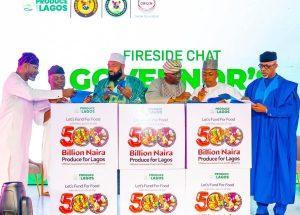
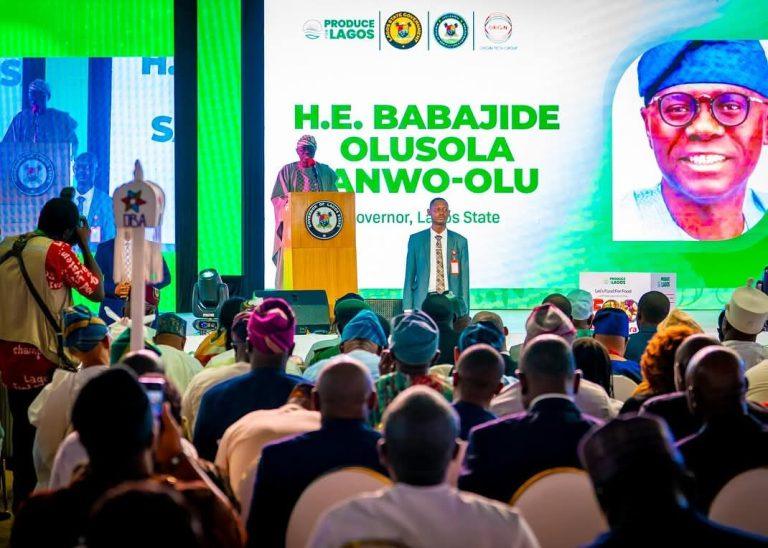
The Lagos State Government has launched a ₦500 Billion Food Offtaker Guarrantee Fund towards enhancing food security and agricultural productivity in the state.

The programme according to the government was designed to ensure stable food supply and development of a modern, efficient food value chain through public-private partnership.

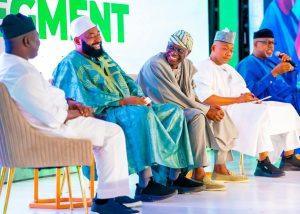
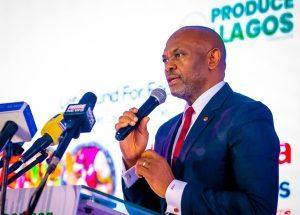
Speaking during the launch of the initiative held at the Lagos House Ikeja, Lagos State Governor, Mr Babajide Sanwo-Olu said that the idea is to catalyse private sector investment in agriculture and food systems, boost agricultural output and improve food logistics and storage infrastructure.

Governor Sanwo-Olu who described the launch of the program as a watershed moment towards the drive to make Lagos food-secure and self-reliant, expressed optimism that the programme would provide guaranteed off-take contracts, access to financing, and connecting Lagosians directly with Lagos’s dynamic food economy.

He stressed further that the initiative will boost agricultural production and reduce reliance on informal and uncoordinated supply channels, create jobs for our youth and increase economic returns for all ecosystem stakeholders.

It will be implemented through the Lagos Food Systems Infrastructure Company (LAFSINCO) and supported by key Special Purpose Vehicles like the Lagos Bulk Trading Company, Ekolog (Eko Logistics), and the Produce for Lagos Fund.

“This ₦500 Billion Offtake Guarantee Fund will provide working capital for bulk traders, finance for logistics operators, liquidity for aggregators, and credit support for food producers across Nigeria. It is a demonstration of our understanding that our food economy cannot thrive on policy alone – it requires financing.

“This fund is not a subsidy; it is an investment vehicle that will catalyse private capital, stabilise food prices, and de-risk agricultural operations across the value chain. What we are doing here is creating a whole new agricultural ecosystem, one that rises to meet the demands of today and of tomorrow—combining policy, financing, infrastructure, and data.” Sanwo-Olu said.

The Governor called on all state governors, financial institutions, development organisations, foreign missions and diplomatic representatives from our valued partner nations, regulatory bodies, multilateral organisations, captains of industries, our able farmers nationwide, and other relevant value chain actors to produce for Lagos.

According to him “Let us rise together to feed this nation sustainably. Let us collaborate across borders, build resilient infrastructure, support, and secure our food future not just for Lagos but for Nigeria. Let us lead, let us inspire, and let us grow for the prosperity of our people and the greatness of our country.”

State counterparts

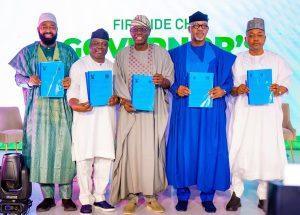
Speaking during the event, Governors Dapo Abiodun of Ogun State, Mohammed Bago of Niger State, Agbu Kefas of Taraba and Usman Ododo of Kogi commended Governor Sanwo-Olu and the Lagos State Government for the bold initiative on food security.

The governors, whose states are expected to be major beneficiaries of the Produce for Lagos Programme and ₦500 billion Offtake Guarantee Fund, expressed readiness to partner with Lagos State in the areas of comparative advantages in boosting food security, not only in Lagos but in Nigeria.

Applauding partnership

Also speaking, the Minister for Digital Economy, Bosun Tijani; the Minister of Livestock, Idi Maiha; and the Minister of State for Finance, Doris Aniete, hailed the Lagos State government for the Produce for Lagos Programme, noting that it underscores the state’s commitment to food security and partnership with other states.

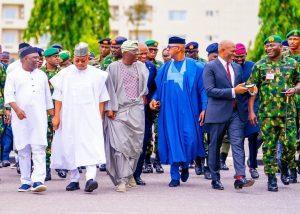
The Chief of Defence Staff, General Christopher Musa, expressed his confidence in the initiative, stating that it would work well in addressing food security challenges in the state, while expressing the readiness of the Armed Forces of Nigeria to support the Produce for Lagos Programme initiative, which, according to him, will tackle hunger in the country.

Sustaining Food Systems

In her remarks, Lagos State Commissioner for Agriculture and Food Systems, Ms. Bisola Olusanya, maintained that the State government is desirous of building and sustaining a truly sovereign food system that will provide for the future.

Olusanya stressed that the initiative is a bold and history-shaping intervention to rewire the food chain, reconnect rural abundance with urban demand, and reward those who farm, trade, transport, and nourish the Nigeria’s population.

This is the justice demanded of us by the tomato farmer in Zaria whose harvest rots by the roadside, for the pepper trader in Mile 12 who pays double for logistics yet earns half for her labour, and for the millions who sleep hungry not because we lack food – but because we lack systems.

“Produce for Lagos is not just a policy but a promise, that Lagos, Africa’s largest urban consumer base, will no longer be fed by chance, but through coordination, commitment, and shared responsibility. And the ₦500 billion offtaker Guarantee Fund serves as the anchor that will give offtakers the confidence to buy, farmers the assurance to plant, financiers the boldness to invest, and Nigerians the certainty of daily nourishment.

“This is not the beginning of the journey but a summit that has been patiently and intentionally climbed since the start of this administration in 2019.

“It began with a vision cast in strategy with the unveiling of the Lagos State 5-Year Agricultural and Food Systems Roadmap, which laid the groundwork for everything we celebrate today.” she said

The Commissioner mentioned that the state has taken audacious steps with other initiatives such as the Lagos Fresh Food Hubs, Lagos Agrinnovation, Club, Eko Flavours, Lagos Food Festival, Lagos Agric Scholars’ and Lagos Agripreneurship programmes, Ounje Eko initiative among others, stressing that “Produce for Lagos” is not just about Lagos, but linking the city to every root, stalk, and grain grown across the federation.

She however emphasised that the programme is a blueprint for how the private sector and states can collaborate, not compete, in the work of feeding the people.

Oyenike Oyeniyi 

Super Falcons Visit Defender Gabriela Salgado After Horror Injury

0

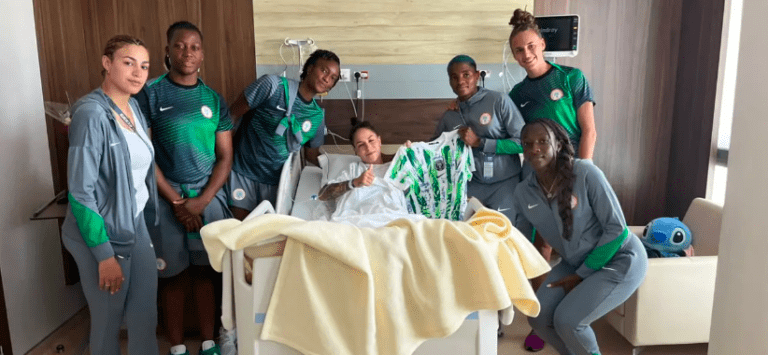
In a show of class and sportswomanship, the Super Falcons of Nigeria showed up at the Mohamed VI University Hospital in Casablanca to visit South African defender Gabriela Salgado, following what has been described as a horror injury.

Salgado sustained a severe injury during the CAF Women’s Africa Cup of Nations (WAFCON) semi-final match between Nigeria and South Africa, at the Larbi Zaouli Stadium in Casablanca, Morocco.

The reaction of both sets of players alerted those watching the game inside the stadium and across the world. Hands on their heads, some in tears, others with their heads to the grass and some took to the technical benches for comfort.

The visit by the Super Falcons served as a powerful morale booster for Salgado, who is currently recuperating. Pictures and reports from the visit showed a visibly touched Salgado, encouraged by the unwavering support.

Such gestures are vital for athletes facing long rehabilitation processes, reminding them that they are not alone in their journey back to full fitness. The Super Falcons, known for their fighting spirit on the pitch, demonstrated that same unity and strength off it.

This act of camaraderie not only provides emotional support to Salgado, but also sends a strong message about the team’s collective spirit and commitment to their colleagues, both in triumph and adversity.

Fans across the world have praised this visit as a showcase of humanity and how football brings the world together.

The entire Nigerian football community wishes Gabriela Salgado a swift and full recovery.

Nigerian Government Reviews Public-Private Partnership Agreement On Road Development 

The Nigerian government has reviewed policies on road infrastructure development Public-Private Partnership programme under the Highway Development Management Initiative, HDMI.

The aim of the review is to strengthen the concession policy for concessionaires and to enhance funding and private sector participation in the HDMI programme.

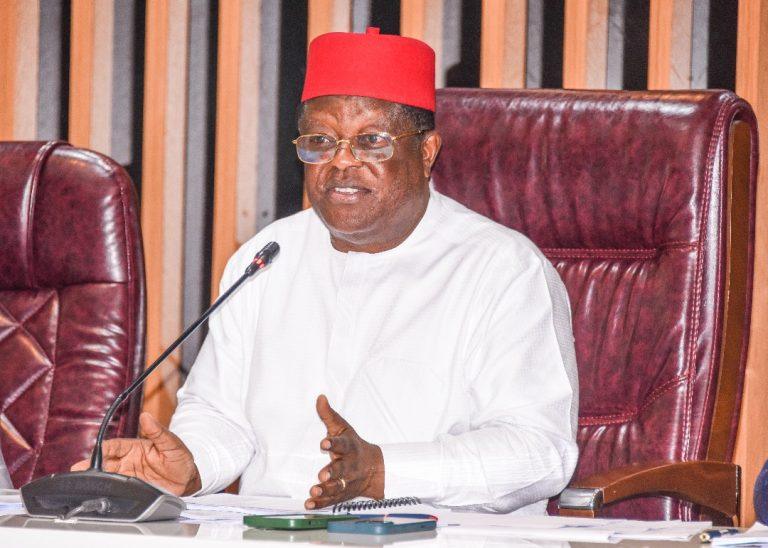
The review was done during a two days meeting held at Ministry of Works Headquarters in Abuja and by the Minister of Works, Mr. David Umahi, Minister of State for Works, Mr. Bello Goronyo, Concessionaires and stakeholders.

At the meeting, the Works Minister identified several issues for discussion including the issue of “Put-Call Option Agreement (PCOA), additional facilities, performance security, shifting of encumbrances on site, the role of the independent engineer, competing road/alternate road, change in project scope, revision of toll fees, force majeure and stakeholder consensus building to ensure active citizenship participation in the effective take-off of project construction, tolling and maintenance”.

Mr. Umahi presented a new addendum to the policy which states that concessionaires shall construct compulsory facilities to include CCTV and solar streetlights, rest areas and any other additional facilities needed to improve travel safety and comfort of road users.

Some of the requirements listed by the Minister for concessionaires to activate the implementation of their projects includes

their obligation to ensure mutual termination of existing contracts before taking over their respective sites, the need to show evidence of their capacity and readiness, including proof of source of funds for the project, payment of all outstanding debts owed to the existing contractors, evidence of technical and financial competence, and availability of company or partner’s equipment”.

All issues raised were subjected to extensive discussions by the Ministry’s officials and stakeholders.

The Minister of Works promised that the reviewed policy would be presented to the principal stakeholders (Heads of relevant MDAs) within 7 days for further and final deliberation and that each of the concessionaires should communicate their acceptance of the agreement as reviewed or communicate the Federal Ministry of Works on grey areas so that such concerns would be reviewed in a meeting of the principal stakeholders.


Oyenike Oyeniyi 

Nigeria Launches National Soyabean Production Policy And Strategy To Achieve Food Sovereignty

Nigeria’s Government has launched National Soybean Production Policy and Strategy to achieve food sovereignty, economic diversification as well as harness the opportunities linked to the soybean value chain.

Speaking during the unveiling of the National Soybean Production Policy Strategy and the launch of the Nigerian Soybean partnership held in Abuja, Nigeria, Minister of Agriculture and Food Security, Sen. Abubakar Kyari, CON, said that the National Soybean Production Policy and Strategy would provide a clear blueprint to scale up production, drive value addition and expand domestic and international markets, noting that the target is to cultivate I million hectares of farmland and deliver 460,000 metric tons of soybean grain to the market within two years.

The Minister pointed out that President Bola Ahmed Tinubu, GCFR, made it clear that food security is not merely an aspiration but an urgent mission that would rebuild rural economies, create jobs and position Nigeria as a global agricultural powerhouse.

He revealed that soybean policy and strategy is a critical tool that aligns with the Renewed Hope Agenda, which places agriculture at the centre of Nigeria’s economic transformation.

According to the Minister, “to achieve this vision, we must address the realities of our current production, Nigeria currently produces approximately 1.35 million tons of soybeans annually, yet our national demand surpasses 2.7million metric tons, fueled by the growing food, feed, and industrial sectors”.


“This supply gap is both a challenge and an opportunity to expand production, strengthen processing capacity, and create jobs”, the Minister added.

He pointed out that “this makes it even more important to recognize the value of soybean, not only as an industrial and economic crop but as a source of essential nutrition containing about 40% high quality protein and essential amino acids, making it crucial in the fight against malnutrition and improving household diets”.

The Minister further stated that Nigeria’s soybeans are naturally non-GMO, which is on high demand making Nigeria well positioned to compete globally and becoming a leading supplier of both raw grains and value added products such as soybean oil, flour, tofu and protein isolates.

He also revealed the role soybeans play locally, “serving as the backbone of our animal feed industry, with roughly one third of Nigeria’s soybean production going into poultry feed, where it constitutes about 20-25% of the feed mix”.

Sen Kyari, called for a collective commitment and leadership, stressing that “time has come to take the next decisive step for Nigerian Soybean Partnership, which we are here to launch today, this partnership is designed to unite federal and state governments, private sector stakeholders, farmer’s cooperatives, and development partners in building an integrated and competitive value chain”.

In his remarks, the Executive Governor of Benue State, Rev. Father, Hyacinth Alia stated that the National soybean Expansion strategy will be a bold, forward looking partnership designed to generate N3.9 trillion in annual revenue, create one million jobs across 22 states and the FCT, and position Nigeria as a powerhouse in global agriculture.

He further re-iterated that Benue State stands as the linchpin of this vision. Since the introduction of the “Malayan’ Soybean variety in 1937, our fertile Guinea Savanna has nurtured generations of hardworking farmers. Our fields, enriched by nature and sustained by tradition, has made Benue the leading producer of soybeans in Nigeria and Sub-Saharan Africa”, he emphasized.

Earlier, the Permanent Secretary, Federal Ministry of Agriculture and Food Security, Dr. Marcus Ogunbiyi stated the launch was aimed at the expanding soybeans production in Nigeria and repositioning it as a strategic commodity for national food security for industrial growth and export earnings.

He therefore commended the development partners of the Soybeans value chain for their utmost commitment, noting that their presence underscores the national importance of the policy and strategy.

Highlight of the event was the signing of the Memorandum of Understanding (Mou) with Dantata Group and Benue State Government.

In attendance were Hon. Commissioners of Agriculture, Directors of the Ministry, Development partners from Commodity Development Initiative (CDi), Nigeria Soybean Partnership, Expera Global Cooperation, National Agricultural Development Fund among others.


Oyenike Oyeniyi 

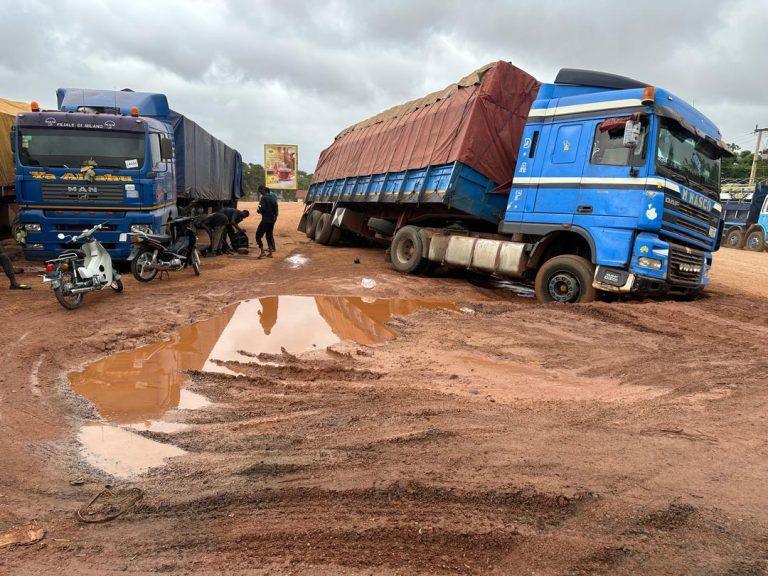
Nigerian Government To Begin Emergency Repairs On Kaduna-Abuja Expressway 

The Nigerian government has promised to commence immediate repair works on failed portions of the Kaduna-Abuja Expressway.
The Minister of State for Works, Mr. Bello Goronyo stated this during an inspection visit of the road upon the directive of the Nigerian President.
The Minister noting existing funding constraints said President Bola Tinubu’s priority is to ensure that Nigerian roads are safe for use hence the swift interventions wherever necessary.
The affected stretch is approximately 500 meters by the Federal Cooperative College at Abuja Junction in Kaduna.
Mr. Goronyo assured the public that the Ministry has assessed the identified portion of the road and will commence immediate emergency repairs.
Oyenike Oyeniyi 

World Bank Partners With Nigeria On Fibre-Optic Cable Project 

The World Bank Group, in collaboration with international development and financial institutions, is partnering with Nigeria to implement a transformative 90,000-kilometre fibre-optic cable project.

The initiative is to revolutionise the nation’s digital infrastructure and catalyse inclusive economic growth.

The Managing Director and Chief Financial Officer World Bank, Anshula Kant, announced this following a high-level delegation meeting with President Bola Ahmed Tinubu at the State House in Abuja.

Also present at the meeting were Nigeria’s Minister of Finance and Coordinating Minister of the Economy, Mr. Wale Edun, and the Minister of Communications, Innovation and Digital Economy, Dr. Bosun Tijani.

Addressing journalists after the closed-door engagement, Kant said the World Bank was fully committed to supporting Nigeria’s digital transformation agenda, as well as broader macroeconomic reforms being implemented under President Tinubu’s leadership.

“One of the biggest forthcoming projects we are partnering on is in the digital space, providing broadband access across the country. We also have ongoing collaborations in agribusiness, energy, education, health and social protection. Nigeria is a very valuable partner for the World Bank Group, and we believe our priorities are strongly aligned”, Kant said.

Commending the Tinubu administration’s bold economic reforms, she noted that Nigeria was already experiencing positive momentum as a result of the policies being implemented.

“I congratulated the President for embarking on such ambitious macroeconomic reforms and staying the course. These are not easy, but they are already showing strong results,” she added.

Kant also emphasized the World Bank’s overarching mission to eradicate poverty on a sustainable planet by promoting accelerated growth and creating improved job opportunities for young people.

According to her, sustainable growth depends on a strong foundation of both physical and human capital, encompassing access to digital services, reliable energy, enhanced education, and quality healthcare.

Minister of Finance, Wale Edun, characterized the fibre-optic cable initiative as one of the largest projects of its kind globally, structured around a sustainable and commercially viable financing model.

He emphasized that the 90,000-kilometre network is designed to be self-financing, with users paying for the services, ensuring its long-term viability.

Edun highlighted that the partnership, also aligns with Nigeria’s broader strategy for sustained, inclusive growth that fosters quality job creation and poverty reduction

“This 90,000-kilometre fibre project is a landmark, and the World Bank is a major partner. It is self-financing and structured to ensure the users of the infrastructure will pay for its services, making it highly viable,” Edun explained.

“There is consensus around the need to focus on agriculture, infrastructure like digital connectivity, and affordable access to finance, particularly for SMEs. This is the path to national growth and transformation,” he added.

Further Speaking on the Fibre optic initiative, the Minister of Communications, Innovation and Digital Economy, Dr. Bosun Tijani, said the fibre-optic initiative was designed to be future-facing and growth-driven.

“We’re laying 90,000 kilometres of fibre across Nigeria — with rings across geopolitical zones and full state coverage. It is about solving connectivity once and for all. We want every home, office, school, and hospital to have access to fibre-based broadband”, Tijani explained.

Tijani said the Federal Executive Council (FEC) had already approved the initiative, which is being implemented through a special purpose vehicle (SPV) with funding support from the World Bank and private investors.

“The World Bank is helping structure this project through an SPV where government is investing, but the private sector will hold 51% equity and run it independently. This will ensure sustainability and proper management,” he said.

He emphasized that the project would not only expand digital access but also underpin Nigeria’s broader development objectives in agriculture, healthcare, education, and the creative economy.

“There’s evidence that a 10% improvement in broadband quality can increase GDP by 1.35%. There are very few investments with that kind of return. The President is focused on growth, and this is exactly the type of infrastructure that supports that goal,” he noted.

Dr. . Tijani further revealed that the project design has been finalized and will be made public in the coming months, providing Nigerians with a clear view of the network’s layout and the benefits it will bring to communities.

He expressed confidence that implementation could begin before the end of 2025.

The Minister expressed President Tinubu’s committment to building resilient, growth-oriented infrastructure that positions Nigeria for long-term competitiveness.

“Mr. President has made it clear — we must invest in infrastructure that allows our economy to grow and thrive,” he added.


Olusola Akintonde

WAFU B U20: Nigeria Falls To Cote d’Ivoire In Finale

0

The Young Elephants of Cote d’Ivoire took home the 2025 WAFU B U20 men’s tournament trophy after a 1-0 defeat of Nigeria’s Flying Eagles in the competition’s finale, played in Accra, Ghana

Seven-time African champions Nigeria turned out a hard nut to crack for the Ivorians in Wednesday’s final, but they finally found a way through.

Nigerian Goalkeeper Ebenezer Harcourt dropped the ball from a free-kick in added time, allowing an alert Zakaria Tindano to poke into the net for the only goal of the encounter.

The Ivorians had an unblemished tournament, winning all their five matches and stamping their authority on each, with a disciplined and dedicated squad that rose to the occasion each time to decimate their opponents.

Their superiority was not in question as they edged Burkina Faso 2-1 in their first match, conquered Niger Republic and Togo with 1-0 and 2-0 scorelines respectively in their other two matches in the group phase.

Cote d’Ivoire then came from behind to defeat host nation Ghana 2-1 in the semi finals, before defeating the Flying Eagles in the final.

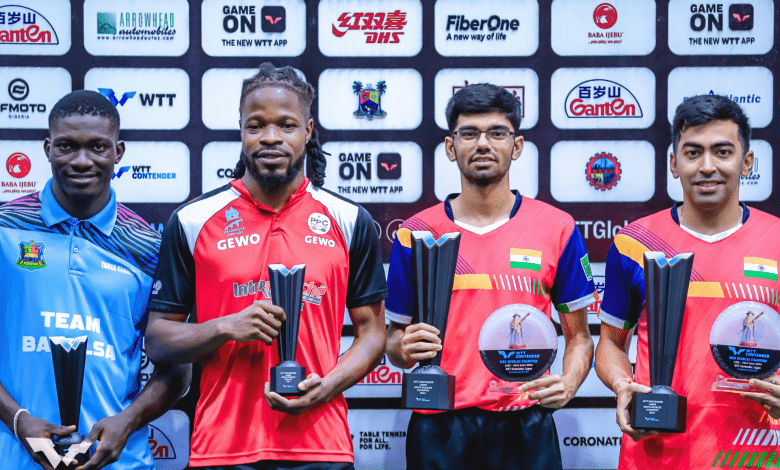
WTT Contender Lagos: Top Players Chase Points, Top Prize

0

The 2025 WTT Contender Lagos main draw begins on Thursday as top seeds chase ranking points and the tournament’s top prize.

The five-day tournament is underway at Molade Okoya-Thomas Hall of the Teslim Balogun Stadium in Lagos.

International stars are targeting the title. The absence of Nigerian legend Quadri Aruna gives local talents a better chance to shine on home ground.

Players like Olajide Omotayo, Matthew Kuti, Abdulbasit Abdulfatai and Taiwo Mati are poised to make a strong impression on the international stage.

Tunisia’s Wassim Essid and Cameroon’s Ylane Batix are also in contention, aiming for a breakthrough in the second WTT Contender event hosted in Africa.

In the Women’s Singles, defending champion Sreeja Akula faces stiff competition, including Japan’s Hina Hayata, Honoka Hashimoto, Egypt’s Hana Goda and France’s Prithika Pavade.

“I won the Women’s Singles title last year, and I’m aiming for another this year,” she said. “The competition is much stronger, but I just want to give my best and enjoy the tournament.”

Another rising name is John Oyebode, who plays for Italy but has strong Nigerian roots and deep family ties to the sport.

Son of former Nigerian international Michael Oyebode, John is determined to leave a mark while competing on familiar soil.

“What makes WTT Contender Lagos special is the fans’ massive support, no matter where the players come from. They truly love the sport.

“Nigeria is home to me, and I want to enjoy myself by giving my best against the world’s finest,” Oyebode said.

2024 Men’s Doubles runners-up Olajide Omotayo and Azeez Solanke return with renewed drive to claim the title this year.

Expert Advocates Overhaul of Freight Forwarding Industry for Enhanced Professionalism

The Managing Director and Chief Executive Officer of Janksmay Global Services Ltd, Mr. Ifeanyi Onwuachu, has called for a sweeping transformation of Nigeria’s freight forwarding and logistics industry through professionalism, transparency, and a client-centered approach.

In an exclusive interview with Voice of Nigeria, Onwuachu stressed that freight forwarding is far more than the movement of goods, it’s about safeguarding clients’ businesses, optimizing global trade processes, and delivering sustainable value.

 “A competent freight forwarder is like a good lawyer, not just winning cases, but protecting clients before trouble arises,” Onwuachu said. “Our job is not just logistics; it’s strategic business support.”

Onwuachu acknowledged that while the logistics and freight sector in Nigeria has experienced growth, it remains hampered by poor infrastructure, limited regulation, and unprofessional practices.

 “You’re not just dealing with ports and paperwork; you’re operating in a global arena. If you don’t meet international standards, you risk your client’s entire consignment,” he warned.

He emphasized the need for intellectual capacity, regulatory literacy, and strict adherence to international documentation and shipping laws—especially when interacting with global partners in markets like China, the United States, or the European Union.

Janksmay Global Services, according to Onwuachu, operates with a strong client-first philosophy rooted in integrity and long-term partnerships.

 “We handle every job as if it’s our own business. My client’s success is my success,” he said. “Satisfaction isn’t a metric, it’s our foundation.”

He criticized the industry trend of underquoting to win contracts, calling it a short-sighted tactic that erodes trust.

Some agents lure clients with below-market quotes, only to impose hidden charges later.

That’s not just unprofessional, t’s unethical,” he said. “We’d rather lose a job than compromise our principles.”

For Onwuachu, transparency is a non-negotiable principle. Clear communication, honest pricing, and proactive client updates are part of the company’s operational DNA.

Surprises kill trust in this business. We ensure our clients know exactly what to expect. That’s how trust grows—and trust brings referrals.”

According to him, one satisfied client recently referred nearly ten others—a testament to the power of relationship-based service.

Onwuachu identified continuous staff training as a key differentiator. He believes that a well-informed team is essential for both compliance and customer experience.

No matter how great your brand is, an uninformed staff can destroy it.

We train continuously so that our service is always precise and professional,” he noted.

Though affordability is important, he insists it must never come at the cost of quality. Janksmay advises clients on tariffs, customs procedures, and documentation to help them remain compliant and cost-efficient.

 “No two shipments are the same. Each consignment demands new thinking, due diligence, and custom execution. Freight forwarding is a business of precision, not duplication,” he emphasized.

He concluded with a strong appeal to fellow logistics providers in Nigeria: embrace global standards, operate with integrity, and put clients first.

If we want to unlock the true potential of Nigeria’s logistics sector, we must rise above mediocrity. Professionalism, transparency, and ethical conduct are not optional, they’re essential,” Onwuachu stated.

Janksmay Global Services is a Nigeria-based logistics and freight forwarding company known for its reliable operations, regulatory compliance, and tailored client services.

The company offers international shipping, customs clearance, warehousing, and cargo consolidation, with a mission to deliver peace of mind and long-term value at every point of engagement.

Victoria Ibanga