Home Blog Page 327

Abia State: Deputy Speaker Commissions Rehabilitated Electricity Project

0

The Deputy Speaker of the House of Representatives, Mr Benjamin Kalu, has commissioned a rehabilitated power line project that has restored electricity to Bende Federal Constituency in Abia State, ending twenty-three years of darkness in the area.

The project, which also reconnected Uzuakoli and Ozuitem to the national grid, is expected to revive small-scale businesses, cottage industries, and factories in the region.

Speaking during the commissioning in Bende, the Deputy Speaker, who represents the Federal Constituency, said the towns and communities had relied on solar electricity and generators since 2002 to power homes and run businesses, expressing his joy at the new development.
Mr. Kalu, however, urged the communities to protect the new electrical installations, warning that no acts of vandalism would be tolerated.

He called on the Presidents-General of autonomous communities, traditional rulers, and youths to form a vigilante group to safeguard the assets, reiterating that vandalism would not be tolerated.

He emphasised that the development will bring economic benefits and improve the overall quality of life in Bende, Uzuakoli, and Ozuitem.

Speaking at the event, Mr. Kalu said:
“We thank God for this worthy development. Darkness has vanished in Bende. In the last 24 years, it’s been either solar or a generator. I have tried in the past to make this happen; unfortunately, it failed, but this one, I insisted, it must work even though it cost us so much.

“I therefore asked the community to ensure that this asset is well protected to avoid vandalisation.

“I am happy to say that this will revive small-scale businesses in Bende. Cottage industries and factories will also spring up.

“The Presidents-General of all the autonomous communities, the traditional rulers, and the youths of these communities should form a vigilante group to protect the installations and make Bende safer. We will not take it lightly with anyone caught vandalising the assets.”

It will be recalled that, in the penultimate week, the Deputy Speaker also commissioned a 1000KVA solar-powered electricity system he built in Bende headquarters to provide light to the five communities that make up the town.
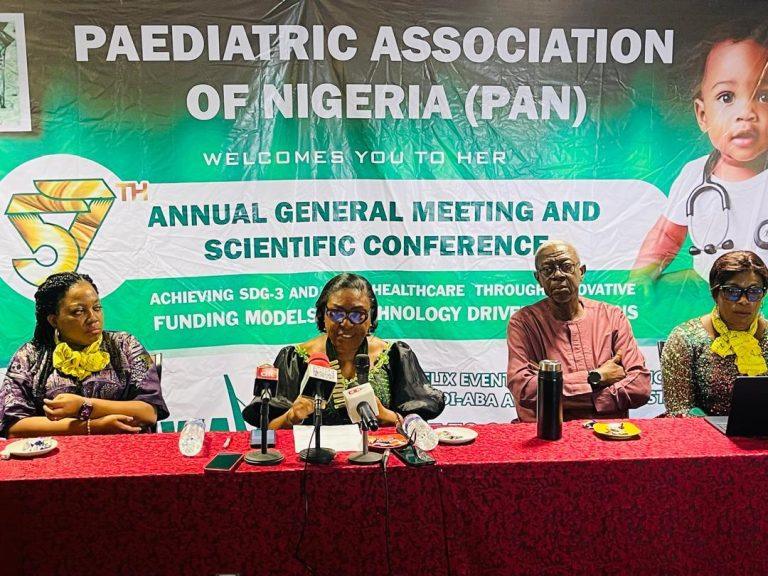
Paediatricians Urges Action on Nigeria’s Child Health Goals

0

The Paediatric Association of Nigeria (PAN) has called for renewed, coordinated action to accelerate progress on child health and wellbeing.

Speaking in Abeokuta, Ogun State, ahead of the Association’s 57th Annual General Meeting and Scientific Conference (PANConf Gateway 2026), the President of the association, Dr. Ekanem Ekure said preventable newborn and under-five deaths remain unacceptably high, with more than 800 Nigerian families losing a newborn every day.

The conference, scheduled for January 21–23, 2026, will convene pediatricians, policymakers, development partners, technology innovators, and civil society leaders from across Africa and beyond.

Dr. Ekure noted that Nigerian children continue to die from malaria, pneumonia, diarrhoea, measles, diphtheria and malnutrition — conditions the world already knows how to prevent and treat — while millions remain zero-dose or under-immunised, placing them at lifelong risk.

While acknowledging ongoing efforts by government and development partners, she said gaps in access to quality healthcare, clean water, sanitation, nutrition, education and child protection, particularly in rural and vulnerable communities, are slowing progress towards SDG-3.

According to her, the theme of PANConf Gateway 2026, “Achieving SDG-3 and Child Health Care through Innovative Funding Models and Technology-Driven Solutions,” reflects the need for practical, scalable responses.

She said technology and smarter financing must now be central to solutions, citing digital immunisation tracking, disease surveillance, telemedicine, and data transparency, alongside public-private partnerships, blended finance and outcome-based funding to complement government investment.

Read Also : Nigeria Reaffirms Commitment to Eliminate Paediatric HIV by 2030

“Technology is no longer a luxury; it is central to effective child healthcare delivery,” Dr. Ekure said “Digital tools can strengthen immunisation tracking, disease surveillance, telemedicine, research, data transparency and accountability.

“Government spending on child health must increase, but it must be complemented by innovative financing models tied to measurable child health outcomes.”

The Paediatric Association of Nigeria, the country’s foremost professional body for child health specialists, is dedicated to improving the survival, growth, and development of every Nigerian child.

Its key goals and objectives include: · Advancing high-quality paediatric practice, research and training

· Advocating for strong child-centred health policies and increased investment in child health

· Promoting universal immunisation and equitable access to essential healthcare services

· Strengthening child protection, nutrition, and early childhood development systems Driving innovation and partnerships to accelerate progress towards the Sustainable Development Goals

Through its annual scientific conference, the Association provides a global platform for knowledge exchange, policy dialogue, and collaborative solutions to Nigeria’s child health challenges.

Jigawa Governor Reaffirms Commitment to Human Capital Development

0

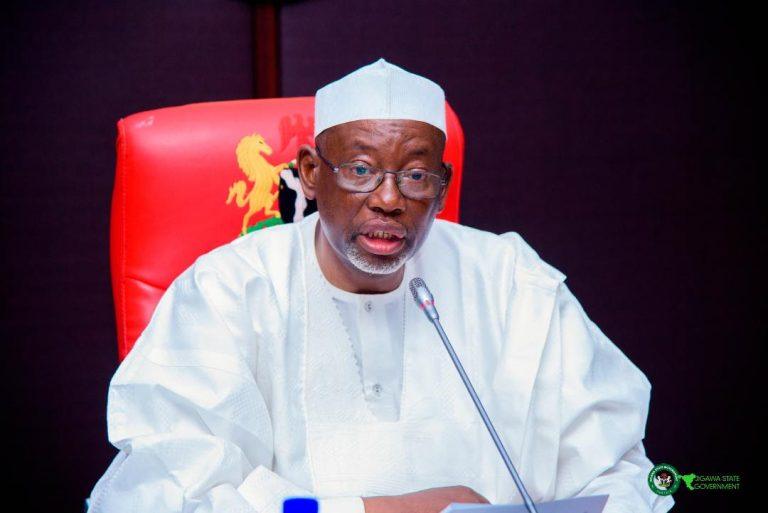
The Jigawa State Governor, Umar Namadi, has reiterated that human capital development remains a top priority of his administration.

He noted that meaningful and sustainable development can only be achieved through consistent investment in people, strong values, and institutional competence.

The Governor made this assertion at the closing ceremony of a five-day life skills development training organised by the Sir Ahmadu Bello Memorial Foundation in partnership with the Jigawa State Government, held in Dutse.

According to Governor Namadi, the training reflects his administration’s determination to build a disciplined, skilled, and values-oriented workforce capable of addressing emerging social and economic challenges. He stressed that empowering citizens with relevant skills is key to reducing poverty, expanding economic opportunities, and improving livelihoods.

“Our government has placed human capital development at the centre of its policies because a knowledgeable and skilled population is the foundation of sustainable growth

“By supporting initiatives such as this, we are unlocking the potential of our people and positioning them to contribute effectively to the progress of Jigawa State.” The Governor stated

Also Read:  Deputy Speaker Calls For Investment in Human Capital Development

He explained that youth empowerment through skills acquisition and entrepreneurship has remained a major focus of his administration, with deliberate investments aimed at tackling unemployment and promoting self-reliance.

He cited the interventions of the Jigawa State Youth Empowerment and Employment Agency, which has implemented vocational and entrepreneurial training across key sectors including ICT, agriculture, livestock production, and micro, small, and medium-scale enterprises.

Governor Namadi emphasised that leadership and public service must be guided by integrity, accountability, and a strong sense of responsibility. He urged participants to regard the training as a platform for service and personal transformation rather than merely an academic exercise.

He encouraged beneficiaries to apply the life skills gained such as leadership, critical thinking, effective communication, and adaptability in their professional and community engagements, adding that real development begins when knowledge is put into practice.

The Governor further revealed that more than 400,000 youths and women across the state have benefited from various empowerment and skills development programmes initiated by his administration through strategic partnerships and targeted interventions. He added that capacity building, particularly within the civil service, remains a critical component of effective governance.

Governor Namadi commended the Sir Ahmadu Bello Memorial Foundation for its consistent efforts in promoting leadership development and human capital advancement across Northern Nigeria, describing the foundation as a dependable partner in fostering ethical leadership.

Also speaking, the Chairman of the Board of Trustees of the Foundation, Alhaji Babangida Aliyu (Talban Minna), said the training was inspired by the enduring leadership values of the late Sir Ahmadu Bello, whom he described as an icon of integrity and selfless service.

“The programme was designed to remind participants that leadership is a test of character and that accountability is a duty owed to both the people and God,” he added.

Details of the engagement are contained in a press statement by the Chief Press Secretary to the Governor, Hamisu Mohammed Gumel.

MPB Chairman Hails Recognition of Nigeria’s Military Veterans

0

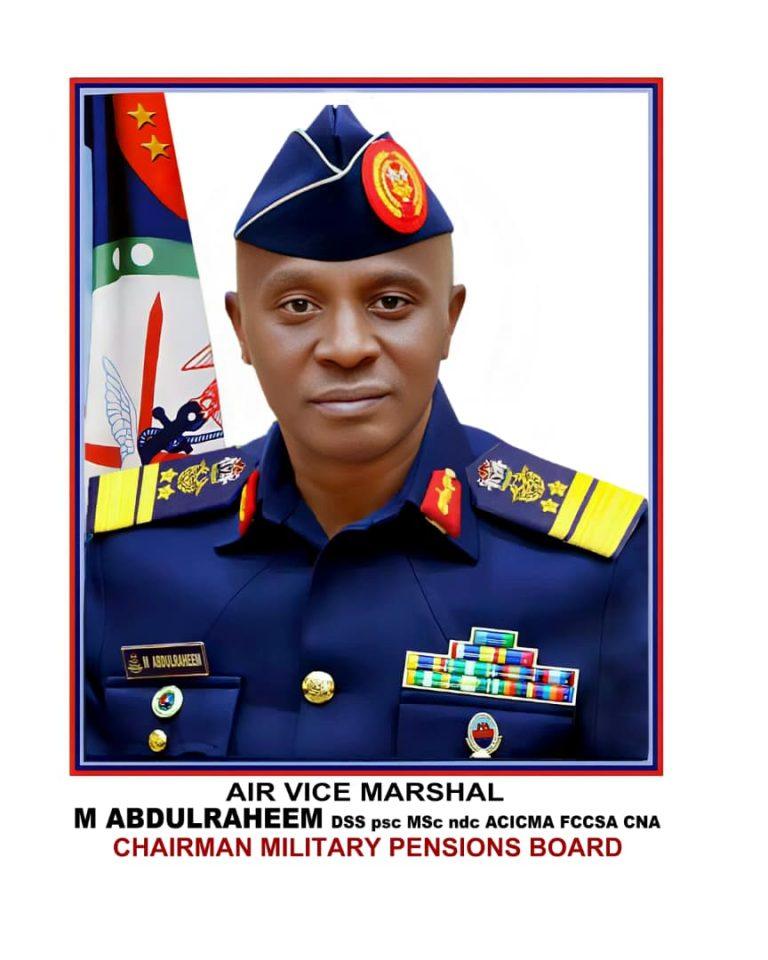
The Chairman of the Military Pensions Board (MPB), Air Vice Marshal Mikail Abdulraheem, has described the recognition of Nigeria’s military veterans as a symbolic tribute to their distinguished service and sacrifices.

He made the remarks while paying a courtesy visit to Master Warrant Officer Michael Etuwe, former orderly to the late Head of State, General Murtala Ramat Muhammed, in Masaka, Nasarawa State.

The visit was intended to honour Master Warrant Officer Etuwe, whose close service to General Muhammed places him among the few living witnesses to a defining period in Nigeria’s national history.

Abdulraheem noted that such engagements reflect the nation’s enduring gratitude to veterans whose dedication contributed significantly to the defence and stability of the country.

Master Warrant Officer Etuwe served as an orderly to General Muhammed during a critical era of Nigeria’s governance and military leadership, providing him with a unique perspective on the operations and personal discipline of one of the country’s most revered leaders.

Recalling a historic moment, Etuwe was on duty and seated in the official vehicle on 13 February 1976, when General Muhammed was assassinated in Lagos. His presence during the incident makes him one of the few surviving witnesses to a defining event in Nigeria’s political and military history.

Also Read: Legion Chair, Military Pension Board Meet On Veterans’ Welfare

The courtesy visit was attended by representatives of various veterans’ associations, alongside members of the Ministerial Committee on Veterans’ Welfare. Stakeholders commended the MPB Chairman for his leadership style and unwavering commitment to veterans’ affairs, describing the engagement as timely and deeply reassuring to the retired military community.

In his remarks, Pa Michael Etuwe expressed profound delight at the visit, describing it as a rare and meaningful honour. He conveyed his heartfelt appreciation to the Chairman of the Military Pensions Board and members of the veterans’ community for the recognition and show of solidarity.

He stressed that the sacrifices of veterans remain an enduring pillar of Nigeria’s peace, unity and national development.

The visit concluded in an atmosphere of reflection and mutual respect, reinforcing the shared responsibility of preserving the legacy, history and wellbeing of those who served the nation with courage, loyalty and selfless dedication.

Anambra: Police Officers Undergo 5-Day Capacity-Building Programme

0

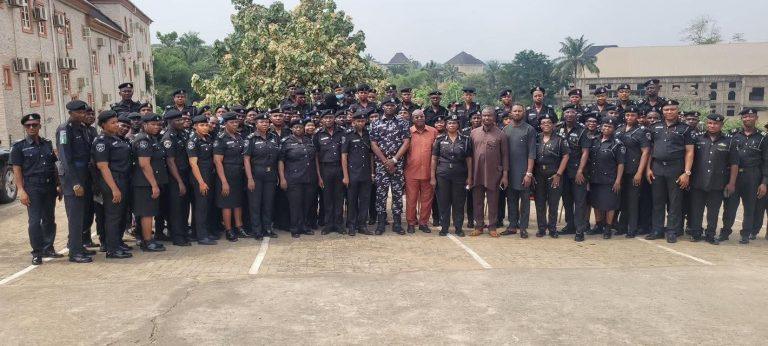
The Nigeria Police Force has commenced a five-day capacity-building programme aimed at strengthening professionalism, ethical conduct and people-centred policing among officers serving in Anambra State.

The training, themed Strategic Police Conduct, Emotional Intelligence, Human Relations, Communication Skills and Attitudinal Change, was formally declared open in Awka on Monday by the Inspector-General of Police (IGP), Kayode Egbetokun. He was represented at the opening ceremony by the Deputy Commissioner of Police in charge of Finance and Administration, Anambra State Command, DCP Ngozi Ezeabata.

According to a statement issued by the Anambra State Police Command Public Relations Officer, SP Tochukwu Ikenga, the programme is taking place at the Trig-Point Hotel Hall, Awka, and is sponsored by the Police Trust Fund. It is scheduled to run until 23 January 2026.

Also Read: NYSC: India to partner with Nigeria on capacity building 

Participants in the programme were drawn from various departments and formations within the Anambra State Police Command. They are undergoing intensive sessions designed to enhance operational effectiveness through modern policing strategies, emotional intelligence, effective communication and positive behavioural transformation.

Speaking on behalf of the IGP, DCP Ezeabata emphasised the importance attached by the police leadership to emotional intelligence, sound human relations and effective communication in contemporary policing. She noted that these competencies are critical to building public trust, strengthening police–community relations and ensuring the professional and efficient discharge of duties.

She further observed that the evolving nature of security challenges requires officers to possess not only technical expertise but also the right attitudes, ethical orientation and interpersonal skills to engage the public responsibly and professionally.

The Anambra State Police Command expressed appreciation to the Inspector-General of Police and the Police Trust Fund for facilitating the programme, describing it as a timely and impactful intervention expected to significantly enhance security operations and service delivery in the state.

Resource persons at the training are engaging participants in sessions on conflict management, ethical policing, leadership development and attitudinal change, with a strong emphasis on professionalism, accountability and respect for human rights.

The programme reflects the Nigeria Police Force’s broader commitment to continuous capacity development and the transformation of policing practices in line with global best standards and community expectations.

NAPTIP to Review Anti-Trafficking Strategies

0

The National Agency for the Prohibition of Trafficking in Persons (NAPTIP) will review its counter-trafficking strategies and policies in 2026 to strengthen operations and curb human trafficking across Nigeria.

The commitment was contained in a statement issued in Abuja by NAPTIP’s National Press Officer, Vincent Adekoye and made available to Journalists

The agency’s Director General, Binta Adamu Bello, while reviewing the agency’s performance in 2025 and outlining its strategic priorities for 2026, disclosed that NAPTIP secured 93 convictions of human traffickers last year and intercepted more than 2,500 potential victims who were deceived, recruited and trafficked for various forms of exploitation within and outside Nigeria.

She added that many of the rescued victims were rehabilitated.

According to Bello, the planned review is aimed at enhancing operational effectiveness and tightening enforcement against trafficking networks across the country.

Also Read: NAPTIP Intensifies Fight Against Gender Violence

The statement read in part: “It is worth recalling that, following the directive from the Director General, Binta Adamu Bello, to all Commands to increase monitoring and vigilance, the agency doubled its activities in 2025, resulting in increased interception and rescue, partnership, awareness creation, prosecution, and conviction of offenders.

“The year 2025 was unpleasant for human traffickers in the country. We outsmarted the traffickers and their antics, and this resulted in the impressive number of convictions we recorded. The agency recorded 93 convictions. This is remarkable, bearing in mind what it takes to prosecute and convict one trafficker.

“In 2025, NAPTIP went after a number of the so-called high-profile traffickers, while scores of them were smoked out of their hiding, arrested, prosecuted and convicted; others are still under close watch. Among the high-profile traffickers were some popular operators of orphanages and care homes across the country whose alleged nefarious activities were busted, and over 120 suspected trafficked children were rescued.

“In the same vein, NAPTIP, in collaboration with international partners and stakeholders, rescued over 370 Nigerian victims of human trafficking from countries such as Ghana, Senegal, Côte d’Ivoire, and others.

“As unpleasant as the year 2025 was for the traffickers, I wish to point out that a real hard time awaits them in the year 2026. We have deliberately scaled up our operations to address the evolving challenges and trends. Specifically, we shall increase our collaboration and cooperation with other sister law enforcement agencies, development partners, civil society organisations, and other categories of stakeholders.”

The Director General further called for increased synergy with actors within the three levels of government, as well as with non-state actors, including the Association of Local Governments of Nigeria (ALGON), to enhance grassroots surveillance and detection of human trafficking.

FMAFS Trains Officers To Boost Food Security

0

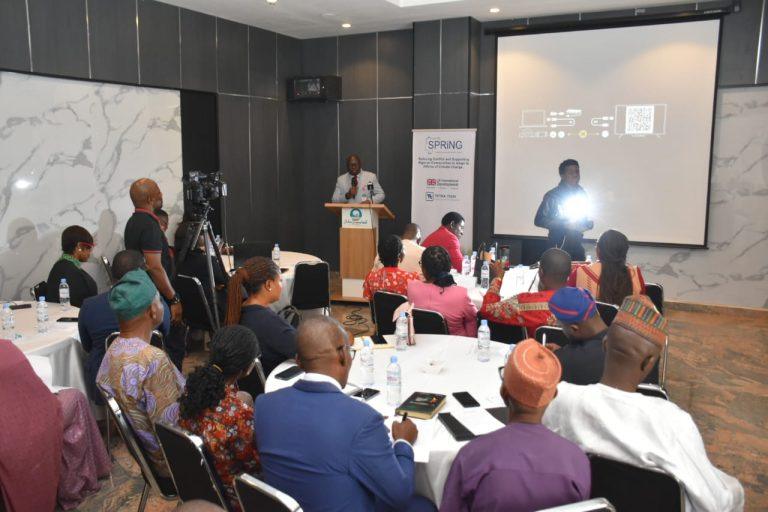
The Federal Ministry of Agriculture and Food Security (FMAFS) has trained officers of the ministry on the Smallholder Horticulture Empowerment and Promotion (SHEP) approach, alongside other agricultural initiatives, to boost and reposition the sector as a driver of food security, economic diversification, employment generation and national stability.

Speaking at the opening ceremony of the four-day Capacity Building Workshop held at Lake Green, Kado, Abuja, the Permanent Secretary of the Ministry, Dr Marcus Olaniyi Ogunbiyi, said the SHEP approach would transform smallholder farmers from a “grow and sell” subsistence mindset to a “grow to sell” business-oriented approach.

According to him, the initiative would improve farmers’ income by building their technical skills and market access through farmer-led market surveys, gender partnerships and business linkage development, thereby turning farming into a profitable enterprise.

Dr Ogunbiyi noted that the training aligns strongly with the Renewed Hope Agenda of the Federal Government, particularly its priority of achieving sustainable food security and reducing poverty through inclusive agricultural growth.

He explained that the capacity building programme was a deliberate investment in human capital aimed at strengthening the technical backbone of the Ministry.

The Permanent Secretary added that the programme covers critical thematic areas central to modern agricultural governance and effective service delivery.

He commended “the well-thought-out modules included in this programme, such as improving agricultural and pastoral practices, modern extension methodologies, climate-smart approaches, strengthened monitoring and evaluation systems, policy formulation, contract farming and the SHEP approach.

“Collectively, these areas are expected to promote all-year-round crop production, address food shortages, create employment opportunities, support climate adaptation, and ensure that development initiatives are guided by sound evidence and reliable data,” he said.

Dr Ogunbiyi urged participants to ensure that the capacity building does not end with the workshop, stressing that its true value lies in improved performance, better service delivery and tangible outcomes for Nigerian farmers and agribusinesses.

He assured participants that the Ministry remains firmly committed to achieving food security in line with President Bola Ahmed Tinubu’s Renewed Hope Agenda.

In his remarks, the SPRiNGS Coordinator, Dr Ukoha Ukiwo, represented by the Head of Research and Evidence at SPRiNGS LEAD, Ephraim Enuch, said the organisation would work in partnership with the Ministry to strengthen extension services, monitoring and evaluation, data systems and policy formulation within the agricultural ecosystem.

Threat of Sanctions Overshadow Senegal’s AFCON Celebrations

0

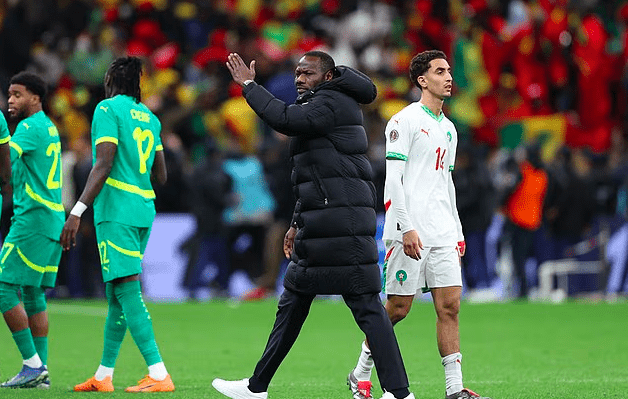
Senegal might be celebrating their Africa Cup of Nations victory, but will anxiously await possible sanctions for their walk-off during Sunday’s final against Morocco.

Senegal staged a lengthy protest after a penalty awarded in the dying stages of the game to hosts Morocco after a VAR review, walking off the pitch before returning to continue.

Senegal coach, Pape Thiaw, called his players off the pitch in protest in the AFCON final.

Senegal coach Pape Bouna Thiaw, who ordered his players off, and some of those who went to the changing room can expect to face disciplinary charges.

Morocco squandered the penalty, taking the match to extra time where Senegal scored to win 1-0 and emerge victorious for a second time in the last three Cup of Nations editions.

But their actions have been widely condemned, including by FIFA President Gianni Infantino and the Confederation of African Football (CAF).

With a trip to the FIFA World Cup next for Senegal, they will be concerned the manager and key players could be suspended for matches at the finals in Canada, Mexico and the US in June. Senegal’s opening two games against France and Norway are in New York.

Thiaw has expressed belated regret for his actions, although a chance to address the post-match press conference after Sunday’s final was quickly ended when he was jeered by Moroccan journalists.

But in a television interview, he said: “I don’t want to dwell on the events of the match. In hindsight, I really shouldn’t have told my players to come off.”

“I apologise for the sake of football. After further consideration, I brought them back on. We know what happens behind the scenes,” he added, referring to conspiracy theories around hosts Morocco being favoured by the referee.

“We can react in the heat of the moment, and we must also ask ourselves whether that was a penalty? Now, we accept the referee’s mistakes; it can happen. We shouldn’t have done it, but it’s done. Now, we apologise to football.”

CAF said it was reviewing footage and that disciplinary proceedings will follow, adding that it “condemns the unacceptable behaviour from some players and officials.”

“CAF is reviewing all footage and will refer the matter to competent bodies for appropriate action to be taken against those found guilty,” African football’s governing body said in a statement earlier.

Olumide Oyedeji Wins World Olympians Association Leadership Vote

0

Nigerian Olumide Oyedeji has been elected Secretary-General of the World Olympians Association, polling 55 of the 106 valid votes cast.

Drafted 42nd overall by Seattle SuperSonics in the 2000 NBA Draft, Oyedeji captained D’Tigers to All-Africa Games gold in 2011. He also co-captained Nigeria’s team that won the country’s first AfroBasket title in 2015.

Nigeria’s Olumide Oyedeji (15).

A statement in Lagos by Afolabi Oni, his media assistant, said Oyedeji secured 51.89 per cent to defeat Salvador Salguero of El Salvador and Liston Bochette of Puerto Rico.

Oyedeji’s emergence means he becomes the first African to attain that position. He succeeds Anthony Ledgard of Peru.

Oyedeji, President of the Nigeria Olympians Association and Third Vice President of the Nigeria Olympic Committee (NOC), will serve a four-year term on the board.

Olumide Oyedeji.

“He will serve alongside President Pernilla Wiberg of Sweden and Treasurer Wei-Tsu Thomas of Chinese Taipei,” Oni said.

The Chairman of the Nigeria Athletes Commission thanked the outgoing Executive Committee, led by Joel Bouzou, for lasting contributions to Olympians worldwide.

He pledged that integrity would guide decisions, transparency would define actions and inclusive leadership would remain the standard.

Oyedeji said every continent, National Olympians Association and Olympian matters, adding that the board would listen, engage and act collectively.

He said the secretariat would work closely with the International Olympic Committee as a key partner in the Olympic Movement.

“This will be achieved through open dialogue, mutual respect and shared purpose,” he said.

“The association will unite the Olympians family, empower associations, amplify voices and translate Olympic values into measurable impact.”

Oni said other board members include Rosa Rakotozafy, Andrew Owusu, Claire Carver-Dias, Willie Banks and Gilian Akiko Guevara. Others are Deepak Bista, Stavroula Kozompoli, Igor Boraska, Julia Bell and Carl Probert, representing Asia, Europe and Oceania.

Drafted 42nd overall by Seattle SuperSonics in the 2000 NBA Draft, Oyedeji captained D’Tigers to All-Africa Games gold in 2011. He also co-captained Nigeria’s team that won the country’s first AfroBasket title in 2015.

Nigeria Opens Applications for Tuition-Free Technical Colleges Nationwide

The Nigerian Government, reaffirming its commitment to free technical education and skills development, has announced the commencement of applications for admission into tuition-free Federal Technical Colleges across the country, aimed at enhancing skills development.

The announcement was made by the Federal Ministry of Education following the approval of the initiative by the Minister of Education, Dr Maruf Tunji Alausa.

A statement by the Director of Press of the ministry, Boriowo Folashade, noted that the initiative aligns with the Federal Government’s broader strategy to expand access to quality technical and vocational education and to equip young Nigerians with practical, employable and industry-relevant skills.

“Registration for the National Common Entrance Examination (NCEE) into Federal Technical Colleges will open on Monday, 26 January 2026, and close on Sunday, 24 May 2026. The entrance examination will be conducted nationwide on Saturday, 6 June 2026.

“Prospective candidates are required to complete their applications through the official National Business and Technical Examinations Board (NABTEB) online portal via the designated website:  https://student.nabteb.gov.ng.

Also Read: Nigeria Makes Technical Education Free in Federal Colleges

The ministry emphasised that possession of a valid National Identification Number (NIN) is compulsory for all applicants and remains a prerequisite for successful registration.

The Federal Government further reiterated that technical education in Federal Technical Colleges is fully funded upon admission, underscoring its commitment to human capital development, youth empowerment and enhanced national productivity.

“Admission is open to candidates aged between 13 and 20 years. Parents, guardians and prospective candidates are advised to strictly comply with all application requirements and obtain information solely from official channels of the Federal Ministry of Education and designated examination bodies,” she said.

She added that the Federal Ministry of Education remains focused on expanding access to free, quality technical education that empowers youths with relevant skills, promotes self-reliance, and contributes meaningfully to national economic growth and sustainable development.