Home Blog Page 326

Nigeria Bans Sand Mining Near River Niger

0

The Nigerian Government has announced a ban on sand mining within a 10-kilometre radius of the River Niger as part of measures to protect the First and Second Niger Bridges and other critical federal infrastructure nationwide.

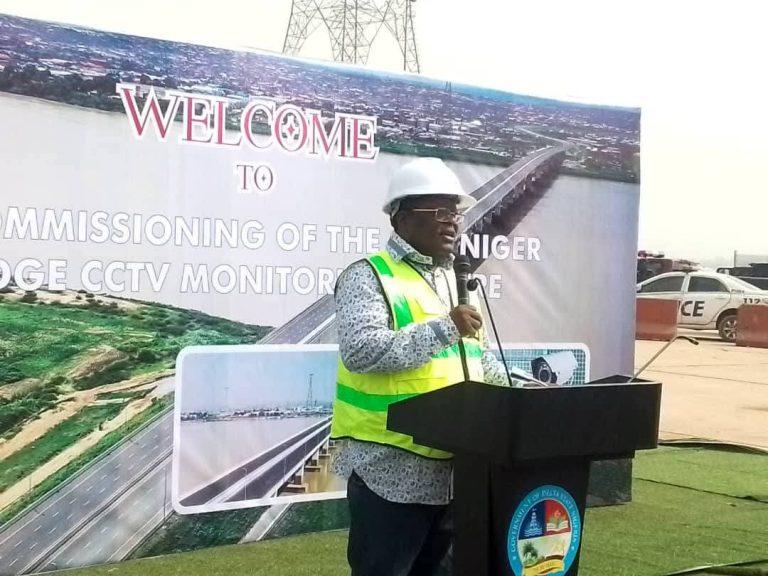
The Minister of Works, Senator David Umahi, disclosed this in Asaba, Delta State, during the commissioning of the Second Niger Bridge CCTV Surveillance and Monitoring Centre.

He said the decision was approved by the Federal Executive Council (FEC) and would be strictly enforced to safeguard the structural integrity of major bridges across the country.

Umahi directed the Delta State Police Command and other security agencies to arrest anyone found engaging in sand mining within the restricted zone.

He said the Federal Government would provide a patrol boat and two patrol vehicles to enhance enforcement around the bridge environment.

The Minister also announced that tolling on the Second Niger Bridge would not commence until all access and bypass roads on both the Anambra and Delta State axis are fully completed.

According to him, although the toll plaza is ready, government will ensure that motorists have unhindered alternative routes before tolling begins.

CCTV Monitoring

He explained that the newly commissioned CCTV monitoring centre is designed to provide round-the-clock security on the federal highway, stressing that there would be no physical security checkpoints along the road.

Instead, security operatives would monitor activities remotely through the surveillance system and respond to emergencies within five minutes.

“The idea is to have a free-flowing highway without checkpoints. Security agencies will operate from the CCTV monitoring centre and ensure rapid response to any incident along the corridor,” Umahi said.

On road infrastructure, the Minister revealed that the 17.5-kilometre Asaba bypass of the Second Niger Bridge, valued at ₦279 billion and designed to divert traffic away from Asaba township, is scheduled for commissioning in April.

He stated that the two access roads to the bridge have been redesigned and are being constructed with reinforced concrete pavement for durability.

He further disclosed that similar construction is ongoing on the Anambra axis, covering 17.7 kilometres at a cost of ₦140 billion, with five bridges and two flyovers.

Umahi commended the Delta and Anambra State governments for their commitment to the payment of compensation to affected communities.

Presidential Approval

The Minister also announced presidential approval for the reconstruction of the 11.5-kilometre Summit Junction, Niger Bridge road in Asaba, a Type 2 highway project costing ₦48 billion.

He said ₦15 billion has already been released for the commencement of the project, which will include extensive drainage infrastructure to permanently address traffic congestion along the corridor.

During an inspection of the Anambra axis access road, Umahi charged contractors to accelerate work and adhere strictly to project specifications, while expressing dissatisfaction with the slow pace of construction in some sections.

In their remarks, the Asagba of Asaba, Professor Epiphany Azinge, commended the Federal Government for the completion of the Second Niger Bridge, highlighting its significant socio-economic benefits to the region and the country.

Similarly, the Chairman of the Anambra State Council of Traditional Rulers and Igwe of Obosi, Igwe Chidubem Iweka, said the opening of the bridge has eased traffic congestion on the old Niger Bridge, particularly during the Christmas and New Year festivities.

He noted that the installation of CCTV cameras would further boost the confidence of commuters and called for the speedy completion of all access roads to the bridge.
President Tinubu Returns to Nigeria After Abu Dhabi Trip

0
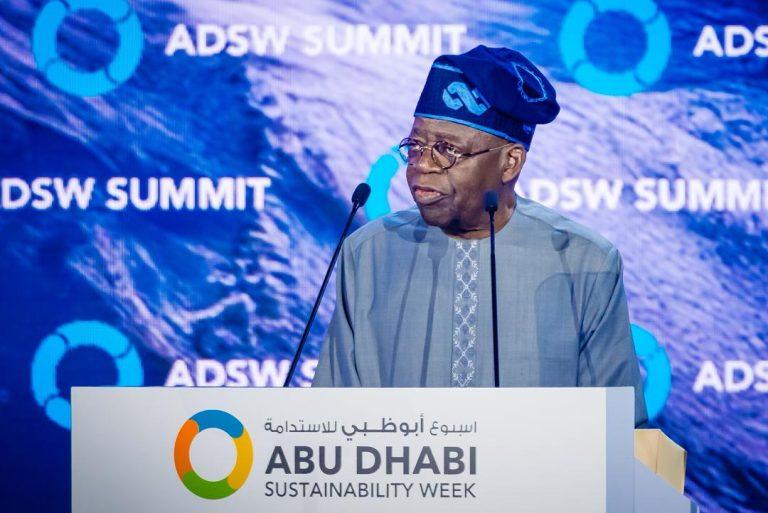
President Bola Tinubu has returned to Nigeria after participating, alongside some members of the Federal Executive Council, in the 2026 Abu Dhabi Sustainability Week (ADSW 2026) held in the United Arab Emirates.
On the sidelines of the global sustainability summit, Nigeria signed a Comprehensive Economic Partnership Agreement (CEPA) with the United Arab Emirates, a move aimed at strengthening bilateral economic relations between both countries.
The agreement is designed to deepen economic cooperation, boost trade and investment flows, promote technology transfer, and expand collaboration across critical sectors such as energy, infrastructure, agriculture, mining, and renewable energy.
Addressing participants at the summit, President Tinubu announced that Nigeria will host a joint Nigeria UAE INVESTOPIA in Lagos in February 2026.
The President said the initiative is targeted at attracting global investors and showcasing Nigeria’s growing investment opportunities.
The President further reaffirmed Nigeria’s commitment to climate action and sustainable development, disclosing that the country is working to mobilise up to 30 billion dollars annually in climate and green industrial finance.
He noted that the funds would support Nigeria’s ongoing energy transition reforms and efforts to expand electricity access nationwide.
President Tinubu’s participation at ADSW 2026 underscores Nigeria’s renewed drive to position itself as a key destination for sustainable investment while advancing economic growth, energy security, and climate resilience.


Anambra to Launch Measles–Rubella Vaccination Drive

0

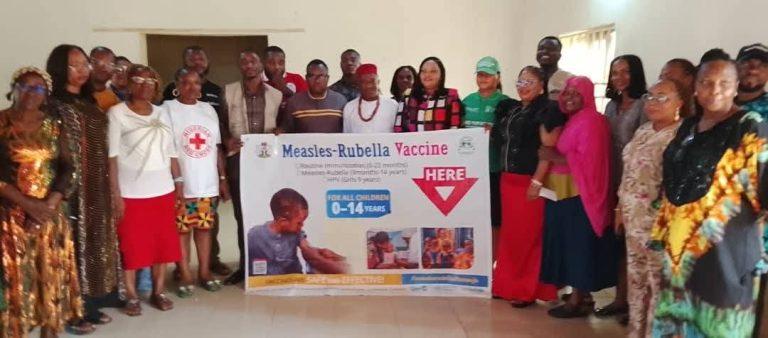
The Anambra State Government has announced plans to roll out a statewide measles–rubella (MR) vaccination campaign from 4 to 15 February 2026.

The Executive Secretary of the Anambra State Primary Health Care Development Agency (ASPHCDA), Chisom Uchem, made this known during stakeholders and media engagement held in Awka, the state capital.

She said the campaign would target children aged nine months to 14 years, the age group most vulnerable to measles and rubella infections.


According to Uchem, the engagement was organised to equip journalists, community leaders, religious institutions and civil society organisations with accurate and timely information, ensuring that awareness of the vaccination reaches even the most remote communities across the state.

She noted that Anambra State is participating in the second stream, Phase Two, of Nigeria’s national measles–rubella vaccination programme.

“The media and community stakeholders are critical partners in this exercise. We are relying on them to serve as ambassadors before, during and after the campaign, so that no eligible child is missed,” she said.

Uchem assured parents and caregivers that the vaccines are free, safe and effective, and will be administered strictly by trained and licensed health professionals in line with national and international health standards.

Addressing misinformation and vaccine hesitancy, she stressed that the health and well-being of children remain the top priority of the government and its partners.

The campaign is being implemented in collaboration with the National Primary Health Care Development Agency (NPHCDA), the United Nations Children’s Fund (UNICEF) and other development partners.

Speaking at the event, Okonkwo Obunike of the NPHCDA reaffirmed the agency’s commitment to supporting Anambra State in strengthening its healthcare delivery system and improving access to essential health services.

UNICEF’s Social and Behaviour Change Consultant for the state, Mr Victor James, emphasised that protecting children’s health is central to the agency’s mission.

Describing children as the future of Anambra State, he said preventable diseases such as measles and rubella should no longer pose a threat where effective vaccines and adequate information are available.

“It should not be heard that any child suffers from measles or rubella when we have proven preventive measures. The vaccine is safe and has no adverse effects, and we urge all stakeholders to ensure that no child is left out,” James said.

A paediatrician, Dr Uju Chinenye, warned that failure to immunise eligible children could lead to outbreaks, increased child mortality, long-term disabilities and economic losses for families and communities.

She added that sustained immunisation, backed by strong community participation and government commitment, remains the most effective way to prevent such outcomes.

Earlier, the State Health Educator, Mrs Uju Onwuegbuzina, explained that vaccination teams would be deployed to health facilities, schools, churches and mosques to ensure wide and equitable coverage throughout the campaign period.

Traditional rulers and community leaders, including the traditional ruler of Ukwalla Community in Anambra West Local Government Area, Igwe Joseph Ajodo, were also in attendance.

IMF Board Completes Fourth Ethiopian Financial Review

0

The executive board of the International Monetary Fund, IMF has completed the latest review of Ethiopia’s current financial program.

In a statement, the fund said the move would lead to the disbursement of around $261 million to the Ethiopian government.

The East African nation secured its $3.4 billion lending program with the IMF in 2024 as part of a far-reaching economic reforms package that also includes an overhaul of its external debt.

“Maintaining reform momentum is essential to consolidate gains and support growth and poverty reduction in the medium term,” the IMF said in a statement.

Staff of the fund and the government reached a deal on the review, the fourth under the program, last month.

According to IMF, Maintaining tight monetary conditions remains important to sustain disinflation.

The government in Addis Ababa said earlier this month that it had reached a preliminary agreement with a group of bondholders of its sole $1 billion international bond on how to restructure it after negotiations.

The deal requires approval from the IMF and bilateral creditors.

On Thursday, the IMF said the initial deal marks an important step on Ethiopia’s journey to restore debt sustainability.

The Fund’s head of communications, Julie Kozack said “IMF staff are assessing the consistency of the agreement with the objectives and parameters of the IMF-supported program.”

The East African nation defaulted on its Eurobond two years ago after it opted to rework its external debt under the G20’s Common Framework initiative, which requires similar treatment of all creditors in the event of a restructuring.

In July last year, it formalised a restructuring deal with its bilateral creditors which is designed to provide cashflow relief of more than $3.5 billion.

Reuters/Hauwa M.

Nigeria Commences State-Level Health Fellows Screening

0

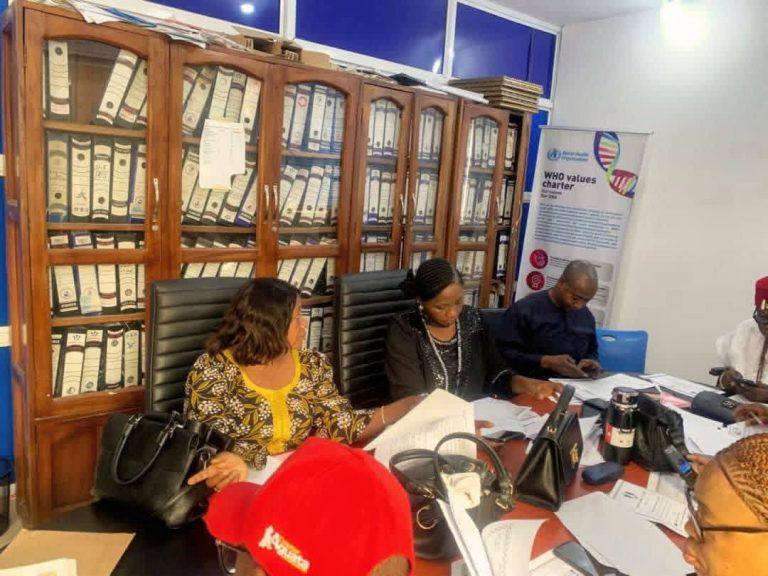
The Federal Ministry of Health, in collaboration with the Anambra State Ministry of Health and key development partners, have commenced the state-level screening of candidates for the second phase of the National Health Fellows Initiative.

The screening exercise, which forms part of the Federal Government’s National Health Fellows (NHF) 2.0 Selection Programme, began on 12 January and will run until 16 January 2026, simultaneously across Nigeria’s 36 states and the Federal Capital Territory.

Speaking on the initiative, the Desk Officer for the Sector-Wide Approach (SWAp) of the Federal Ministry of Health, Dr Obianuju Okoye, said the programme was designed to select one Health Fellow from each local government area in Anambra State.

She explained that the initiative seeks to improve frontline healthcare services while developing a new generation of leaders equipped to drive health sector reforms in Nigeria.

“The National Health Fellows Initiative is about strengthening service delivery at the primary healthcare level and building a sustainable leadership pipeline for the health sector,” Okoye said.

In Anambra State, the screening exercise is taking place at the World Health Organisation (WHO) office within the Jerome Udoji Secretariat Complex in Awka, the state capital.

The screening panel comprises senior health and government officials, including the Anambra State Coordinator of the World Health Organisation, Dr Mohammed Bonos; the SWAp Desk Officer, Dr Obianuju Okoye; and the Mayor of Aguata Local Government Area, Chibueze Oforbuike.

Other panel members include Dr Uche Umeh of the Department of Community Medicine, Chukwuemeka Odumegwu Ojukwu University Teaching Hospital (COOUTH), Awka, as well as representatives of the Anambra State Primary Health Care Development Agency, the Federal Ministry of Health and the Anambra State Ministry of Health.

The National Health Fellows Initiative is expected to play a key role in revitalising Nigeria’s primary healthcare system, improving health policy implementation at the grassroots level and enhancing access to quality healthcare services in communities across Anambra State and the country as a whole.

A Beacon of Unity: Nigeria Mourns Imam Who Sheltered Hundreds from Violence

0

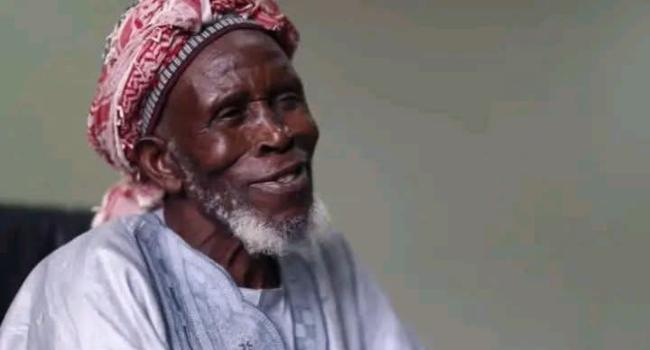
Nigeria is celebrating the extraordinary life and legacy of Imam Abdullahi Abubakar, a revered Islamic leader whose fearless act of humanity during a violent crisis became a global symbol of courage and interfaith solidarity.

The Imam passed away peacefully at 92, leaving behind a nation united in gratitude.

In 2018, when sectarian violence threatened a community in Plateau State North Central Nigeria Imam Abubakar made a decision that would define his life:

He opened his mosque and his own home, sheltering and protecting over 300 neighbors—most of them Christians—from the attackers.

His unwavering moral stand saved countless lives and became a powerful story of Nigeria’s enduring spirit of brotherhood.

News of his passing has drawn heartfelt tributes from prominent Christian leaders across the nation, highlighting the profound cross-cultural respect he earned.

Pastor Dr. Yohanna Buru, General Overseer of the Christ Evangelical Ministry, spoke for many: “Imam Abubakar was a rare symbol of unity.

In our moment of trial, he showed us that true faith is expressed in love and protection, not division. His loss is felt deeply in every church and mosque across Nigeria.”

This sentiment was echoed by other Christian leaders like Rev. Dajuma Makama and Pastor Maxwell Sanda, who praised the Imam’s selfless leadership and his lifelong dedication to building bridges between communities.

Imam Abubakar’s story transcends borders. It is a powerful testament to the idea that one person’s courage can be a light against darkness, inspiring not just a nation, but all who believe in peace.

His legacy is not one of tragedy, but of triumphant humanity—a narrative that truly represents the heart of Nigeria.

Leaders from all faiths have extended their condolences to his family, the people of Plateau State, and the Nigerian Muslim community, honoring a man who embodied the very best of the country’s character.

NSCDC Tasks Private Security Operatives on Professionalism

0

The Nigeria Security and Civil Defence Corps (NSCDC) has called on private security operatives to demonstrate high level of professionalism, discipline and strict compliance with operational guidelines in the discharge of their duties.

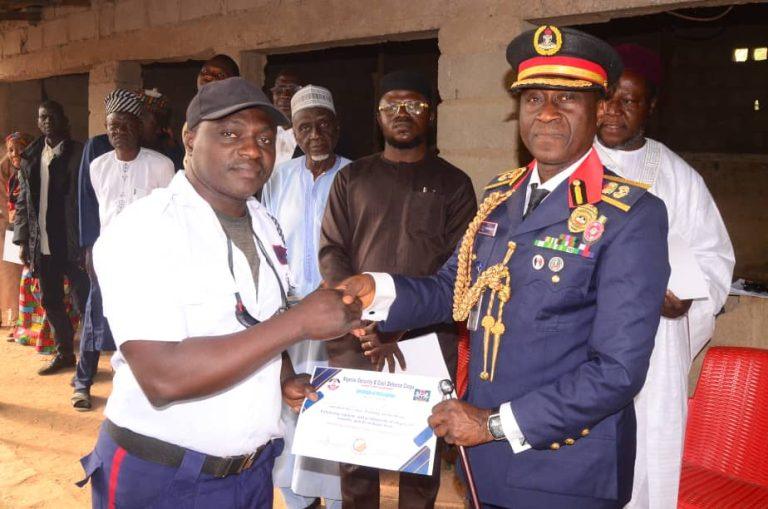
The charge was given by the Kano State Commandant of the NSCDC, Mohammed Hassan Agalama, during the graduation ceremony of 131 operatives from various Private Security Companies (PSCs) who completed a capacity-building training programme in Kano.

The training was organised by the NSCDC Kano State Command through its Private Guard Companies Department, in collaboration with the Association of Licensed Private Security Practitioners of Nigeria (ALSPN), Kano State chapter.

Commandant Agalama explained that the programme was aimed at enhancing the competence, ethical standards and service delivery of private security personnel, in line with the Corps’ statutory responsibility of regulating and supervising private guard companies across the country.

He noted that private security operatives play a vital complementary role in protecting lives and property, stressing that their conduct must reflect professionalism, respect for human rights and effective collaboration with conventional security agencies.

“The training was designed to equip you with modern security skills, instil discipline and ensure strict adherence to operational standards. You are expected to be good ambassadors of your companies and dependable partners with statutory security agencies,” he said.

The Commandant warned against acts of indiscipline, unprofessional behaviour and abuse of office, assuring that the Corps would sanction any operative or company found to be in violation of established regulations.

He also urged the graduates to remain vigilant, law-abiding and proactive in sharing credible intelligence with relevant authorities.

Agalama reaffirmed the commitment of the NSCDC Kano State Command to sustained training, monitoring and collaboration with licensed private security companies to strengthen security across the state.

In his remarks, the Kano State Chairman of ALSPN, Dr Idris Adamu Pukuma, commended the NSCDC for organising the training and for its partnership with the association.

He disclosed that 24 out of 32 registered member companies of the association participated in the programme.

Dr Pukuma assured the Commandant of the association’s full compliance with all regulatory requirements, adding that the knowledge and skills acquired during the training would be effectively utilised by private security operatives in the state.

The ceremony featured the presentation of certificates to the graduating operatives, as well as awards of merit to the Kano State Commandant, the Head of the Private Guard Companies Department, DC Nura Karofi, and the ALSPN state chairman.

The training programme covered parade and physical drills, lectures and other practical security sessions, alongside goodwill messages from stakeholders in the private security sector.


Trump Threatens Tariffs on Countries Resisting U.S. Control of Greenland

0

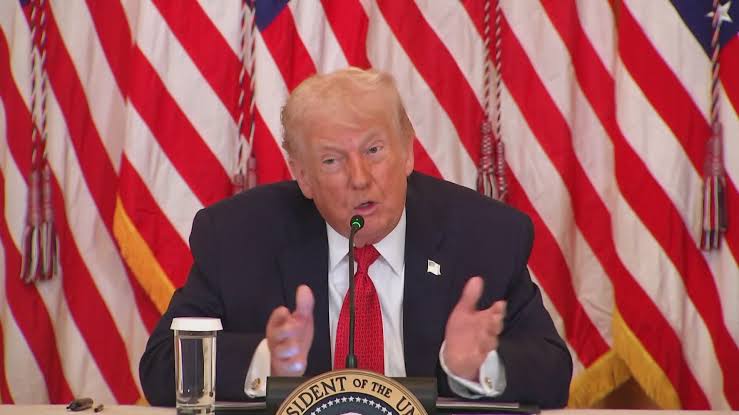
U.S. President Donald Trump on Friday suggested that he may punish countries with tariffs if they don’t back the U.S. control of Greenland, a message that came as a bipartisan Congressional delegation sought to lower tensions in the Danish capital.

Trump for months has insisted that the U.S. should control Greenland, a semiautonomous territory of NATO ally Denmark, and said earlier this week that anything less than the Arctic island being in U.S. hands would be “unacceptable.”

During an unrelated event at the White House about rural health care, he recounted how he had threatened European allies with tariffs on pharmaceuticals.

“I may do that for Greenland too,” Trump said. “I may put a tariff on countries if they don’t go along with Greenland, because we need Greenland for national security. So I may do that,” he said.

He had not previously mentioned using tariffs to try to force the issue.

Earlier this week, the foreign ministers of Denmark and Greenland met in Washington with U.S. Vice President JD Vance and Secretary of State Marco Rubio.

That encounter didn’t resolve the deep differences, but did produce an agreement to set up a working group — on whose purpose Denmark and the White House then offered sharply diverging public views.

European leaders have insisted that it is only for Denmark and Greenland to decide on matters concerning the territory, and Denmark said this week that it was increasing its military presence in Greenland in cooperation with allies.

Nurturing Stronger Relations

In Copenhagen, a group of senators and members of the House of Representatives met Friday with Danish and Greenlandic lawmakers, and with leaders including Danish Prime Minister Mette Frederiksen.

Delegation leader Sen. Chris Coons, a Delaware Democrat, thanked the group’s hosts for “225 years of being a good and trusted ally and partner” and said that “we had a strong and robust dialogue about how we extend that into the future.”

Sen. Lisa Murkowski, an Alaska Republican, said after meeting lawmakers that the visit reflected a strong relationship over decades and “it is one that we need to nurture.” She told reporters that “Greenland needs to be viewed as our ally, not as an asset, and I think that’s what you’re hearing with this delegation.”

The tone contrasted with that emanating from the White House. Trump has sought to justify his calls for a U.S. takeover by repeatedly claiming that China and Russia have their own designs on Greenland, which holds vast untapped reserves of critical minerals. The White House hasn’t ruled out taking the territory by force.

We have heard so many lies, to be honest and so much exaggeration on the threats towards Greenland,” said Aaja Chemnitz, a Greenlandic politician and member of the Danish parliament who took part in Friday’s meetings. “And mostly, I would say the threats that we’re seeing right now is from the U.S. side.”

Murkowski emphasized the role of Congress in spending and in conveying messages from constituents.

“I think it is important to underscore that when you ask the American people whether or not they think it is a good idea for the United States to acquire Greenland, the vast majority, some 75%, will say, we do not think that that is a good idea,” she said.

Along with Sen. Jeanne Shaheen, a New Hampshire Democrat, Murkowski has introduced bipartisan legislation that would prohibit the use of U.S. Defense or State department funds to annex or take control of Greenland or the sovereign territory of any NATO member state without that ally’s consent or authorization from the North Atlantic Council.


AP.


Uganda Police Deny Opposition Leader’s Arrest

0

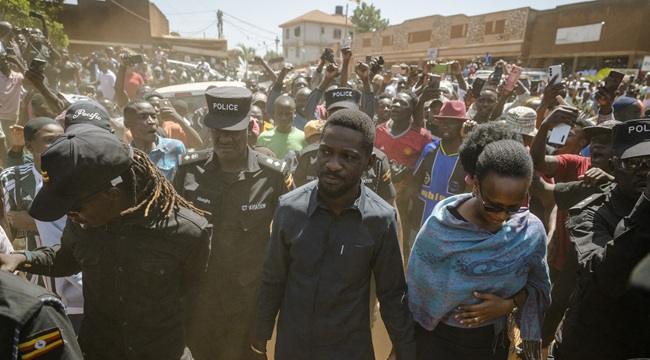
Ugandan police has denied allegations by opposition leader, Bobi Wine’s party that he had been arrested by soldiers as President Yoweri Museveni closed in on a landslide re-election.

Wine’s National Unity Platform (NUP) said an army helicopter landed in his compound in Kampala and “forcibly took him away to an unknown destination”.

National police spokesperson Kituuma Rusoke told a televised news conference that Wine was at his home and free to move.

“He is not under arrest,” Rusoke said. Wine and representatives of the NUP could not be immediately reached for comment.

Wine has alleged mass fraud during Thursday’s election, held under an internet blackout, and called on supporters to protest.

His party said on Thursday he had been placed under effective house arrest.

The vote has been widely seen as a test of the 81-year-old Museveni’s political strength and ability to avoid the unrest that has rocked neighbors Tanzania and Kenya.

As of early hours of Saturday, Museveni, who has been in power since 1986, held a commanding lead with nearly 72% of the vote, the electoral commission said.

Wine trailed with 24%, with more than 90% of polling stations counted.

After a campaign marred by clashes at opposition rallies and what the United Nations said was widespread repression and intimidation, voting passed peacefully on Thursday.

But violence broke out in the early hours of Friday in the town of Butambala, about 55 km (35 miles) southwest of the capital Kampala, according to a police spokesperson and a member of parliament from the area, who gave differing accounts of events.

Deadly Violence

Local police spokesperson Lydia Tumushabe said machete-wielding opposition “goons” organised by local MP Muwanga Kivumbi attacked a police station and vote-tallying centre.

“Security responded in self-defence because these people came in big numbers. Police fired in self-defence,” she said, statng that 25 people were arrested.

Kivumbi, however, said the victims were killed at around inside his house, where they were waiting for election results for his parliamentary seat to be announced.

“They killed 10 people inside my house. There were people inside the garage who were waiting for the results to celebrate my victory.”

“They broke the front door and began shooting inside the garage. It was a massacre,” he said.

He said security forces had earlier dispersed crowds outside but disputed the police’s assertion that the deaths occurred during clashes between the two sides.

Tumushabe, the police spokesperson, said she was not aware of an incident at Kivumbi’s house, which she said was close to the police station.

Reuters/Hauwa M.

Information Minister Restates Government’s Commitment to Long-term Growth

0

Nigeria’s Minister of Information and National Orientation, Mohammed Idris, has reiterated President Bola Tinubu’s commitment to laying strong foundations of long-term growth and shared prosperity.

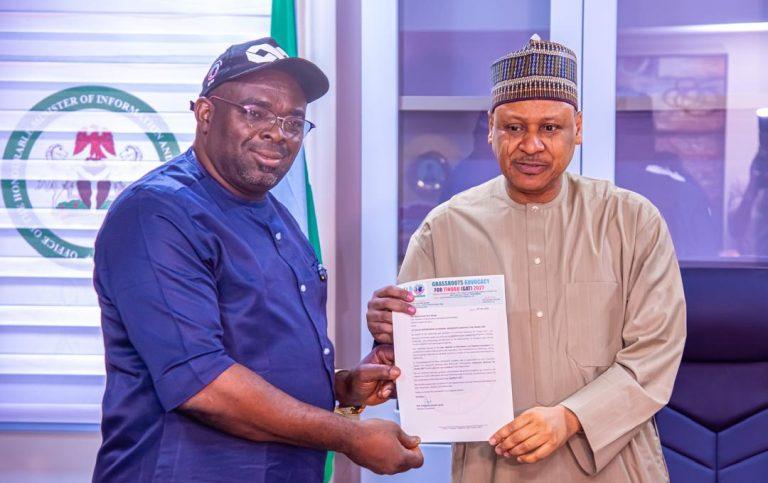
The Minister spoke when he received members of the Grassroots Advocacy for Tinubu (GAT) 2027 on a courtesy visit in Abuja, Nigeria.

According to Idris, the Tinubu administration has taken bold and sometimes difficult decisions to place Nigeria on a more sustainable path, emphasising that early signs of recovery are becoming evident across key sectors of the economy.

“These steps were taken to stabilise the economy and restore confidence. What we are seeing today is the foundations of long-term growth and shared prosperity.

“As a result, Nigeria’s improving economic outlook must be protected through unity, responsible communication, and collective support for national policies,” he said.

He warned that distorted narratives about the country has hurt investor confidence and slowed down development, which calls for the need to rebuild Nigeria’s reputation.

He said, “We must speak positively and truthfully about Nigeria, When we project stability and unity, we attract investment and create opportunities for our people.”

The Minister commended the GAT 2027 group for its civic engagement and acceptance of responsibility in supporting accurate public information.

He welcomed their proposal for partnership with the Federal Ministry of Information and National Orientation in the areas of public enlightenment, youth engagement, and strategic communication.

“Advocacy groups play an important role in helping government policies reach the grassroots, effective communication is essential to national stability and development”, he said.

While reaffirming President Tinubu’s commitment to making Nigeria work for all citizens, regardless of religion or background, the Minister stressed that national cohesion remains central to the administration’s vision.

He further assured the delegation that the Ministry would continue to work with credible groups to ensure that effective communication which is essential to sustaining public trust is accurately shared widely.

The National Coordinator, Grassroots Advocacy for Tinubu, 2027, Professor Ochugudu Achoda Ipuele, said the aim of the visit was to formally brief the Minister on its activities and to show solidarity with his mandate of informing Nigerians and clarifying government policies.

“We are here to show solidarity with you on the mandate you have for Nigeria, which is to inform the country, clarify government policies, and take information to the grassroots,” he said.

He added that the group was committed to supporting President Tinubu’s policies by countering distorted narratives, especially during election periods, and by engaging young people.

“This group is poised to respond in real time to false or misleading information in the public space and to engage the youth, so that as we approach 2027, the Renewed Hope agenda continues with even more programmes for the country,” he added.