Home Blog Page 485

US to Cut Aid to South Sudan Over Governance Failures

0

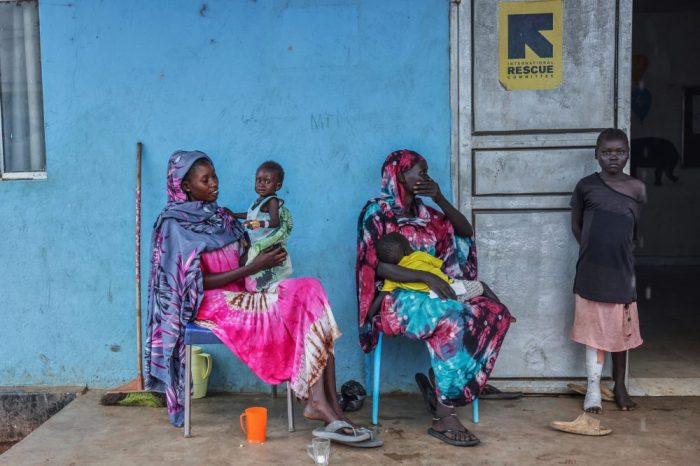
United States of America has issued a sharp warning to South Sudan, saying it may cut foreign aid after accusing the government of imposing exorbitant fees on humanitarian groups and blocking their operations.

In a statement from the State Department’s Bureau of African Affairs, Washington said these actions violate South Sudan’s international obligations and could lead to a review and potentially significant reductions in U.S. assistance.

The U.S. is one of South Sudan’s largest donors. Decades of conflict and weak governance have left more than 70 percent of the country’s 11 million people dependent on humanitarian support for food, health care and other basic needs.

Washington said the crisis is being worsened by poor governance, mismanagement of public funds and what it called predatory practices targeting aid organizations.

Since South Sudan’s independence in 2011, the U.S. has provided over 9.5 billion dollars in assistance, while the government has collected roughly 25 billion dollars in oil revenue with little improvement in public services.

The U.S. urged Juba to stop obstructing aid efforts and ensure transparency in public spending.

The South Sudanese government has not yet responded.


Africanews/Hauwa M.

Ethiopia to Hold General Elections 1 June 2026

0

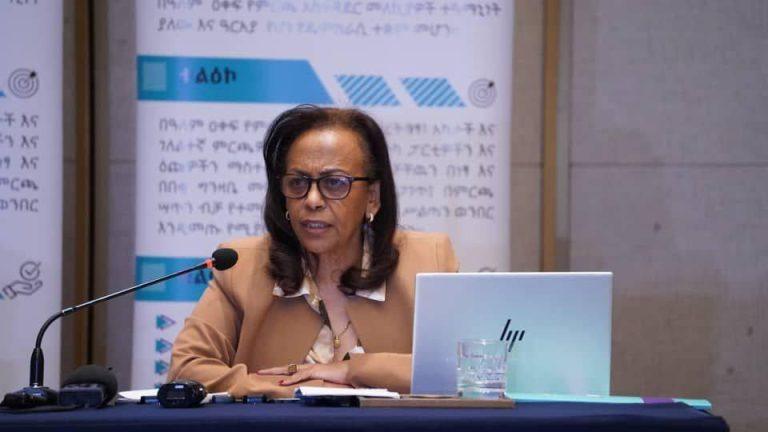
Ethiopian electoral commission have announced that the country’s general election will hold on 1 June 2026.

The chairperson of the National Board of Ethiopia, Melatwork Hailu told local media that activities aimed at “organizing branch offices and ensuring that polling stations are conducive were carried out.”

She also said political parties have received training to publicise their programmes to the public.

Organising elections in Ethiopia presents various challenges.

The nation is still recovering from the civil war that opposed the Tigray People’s Liberation Front and federal forces from 2020 to 2022

The conflict killed at least 600,000 people and about 1 million people remain displaced according to various estimates.

The country is also facing persistent violence in the Oromia and Amhara regions.

In an address to parliament on 28 October, Ethiopian Prime Minister Abiy Ahmed said “the government has the capacity and the will necessary to conduct these elections.”

He added they would be the “best organised” in Ethiopia’s history.


Africanews/Hauwa M.

University of Jos Marks 50 Years Anniversary

0

The University of Jos (UniJos) has announced a series of significant achievements as it prepares for its 35th and 36th Combined Convocation Ceremonies, held alongside the institution’s 50th anniversary celebration.

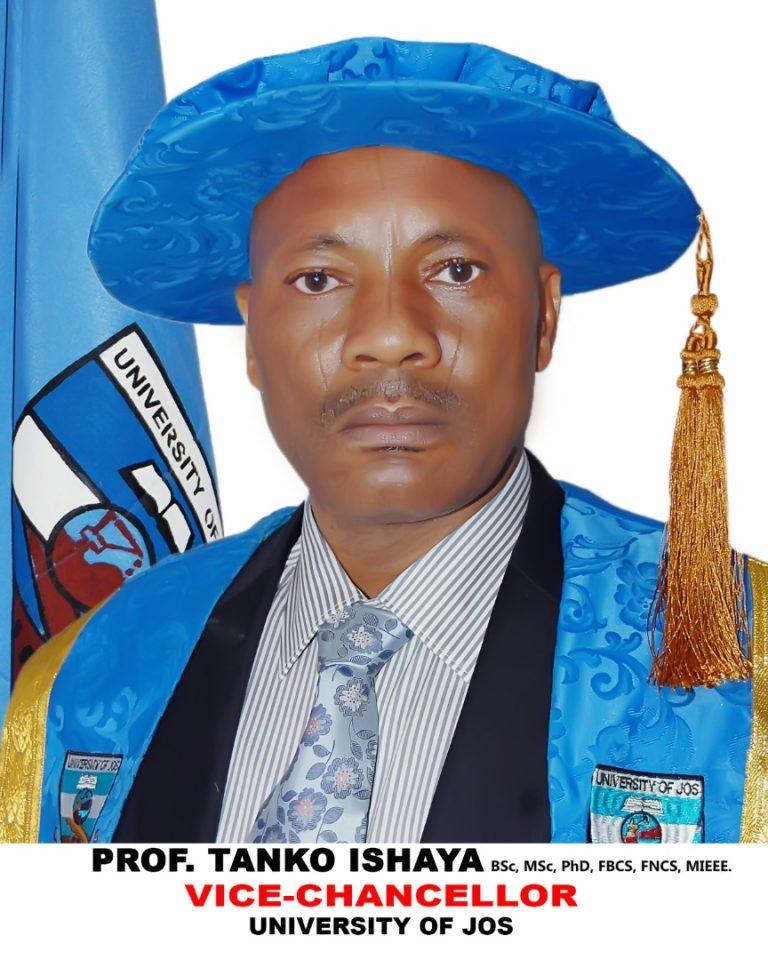
During a press briefing in Jos, the State Capital, Vice-Chancellor Professor Ishaya Tanko described the events as a landmark moment in the university’s history, noting that UniJos is marking five decades of scholarly excellence and steady progress.

He also highlighted that December 1, 2025, marked his fourth year as the institution’s 10th substantive Vice-Chancellor.

Professor Tanko outlined the substantial transformation the university has undergone since its last convocation two years earlier, stressing that UniJos has continued to grow despite financial, security, and infrastructural challenges.

The Journey

Reflecting on the university’s journey, Professor Tanko recalled that UniJos began in 1972 as a campus of the University of Ibadan and became a fully established institution in 1975. From an initial four faculties, it has grown to 17 faculties and 93 academic programs.

“60,000 students will graduate during the combined ceremonies, comprising 9,236 diploma recipients, 37,741 first-degree graduates, and 13,023 postgraduate awardees — one of the largest cohorts in UniJos’s history. This is a defining moment because so many positive developments have taken place, with even more underway,” he said.

Anniversary Lecture

He disclosed that the ongoing Golden Jubilee programs, which began earlier in the year, will feature an Anniversary Lecture by Defence Minister Christopher Musa, and a Convocation Lecture by alumnus Bosun Tijani, Minister of Communications, Innovation, and Digital Economy.

Professor Tanko also highlighted several new programs approved over the past year, including Cyber Security Science, Data Science, Software Engineering, Forensic Science, Radiography, Physiotherapy, Public Administration, Social Work, Entrepreneurship, and various education-related programs.

He noted that Plateau State has been selected as one of six locations for the Federal Government’s Technology Centres of Excellence, with the UniJos center focusing on Artificial Intelligence and Data Science.

The hub is expected to produce skilled professionals and strengthen Nigeria’s emerging digital industries.

He further revealed that the university secured ₦4 billion through the TETFund Special High Impact Intervention to support medical education infrastructure, alongside another ₦4 billion from the French Development Agency’s ICT-DEV Project, bringing total recent funding to ₦8 billion.

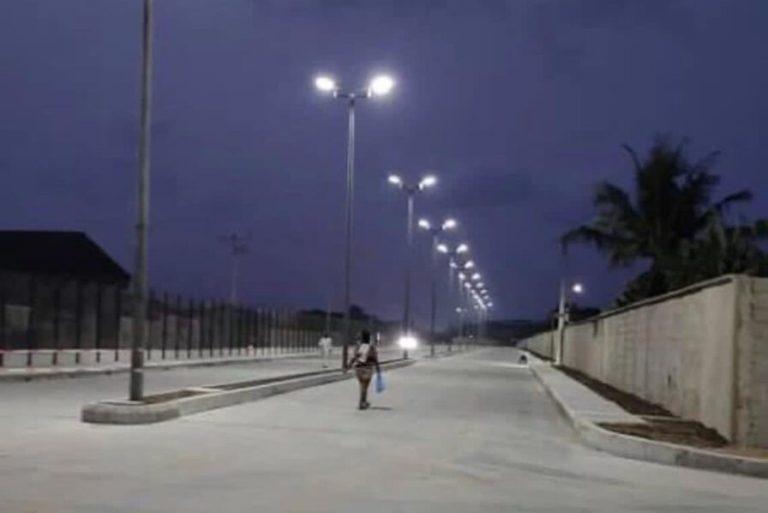
“The Rural Electrification Agency supplied 430 solar streetlights, 100 of which are already operational, and selected UniJos as one of three beneficiaries of the Energizing Education Programme Phase VI, supported by the African Development Bank’s Desert to Power Initiative,” he stated.

The Vice-Chancellor also celebrated UniJos’s successful hosting of the 27th Nigerian University Games (NUGA), which recorded unprecedented participation.

Expressing appreciation to the Federal Government, Plateau State Government, donor organisations, staff unions, alumni, and development partners, Prof. Tanko reaffirmed the university’s commitment to building on the vision of its founders and creating lasting legacies for future administrations.

He concluded by inviting all stakeholders to join the festivities, support forthcoming projects, and collaborate in elevating UniJos to even greater heights as it commemorates 50 years of transformative service.

PIAK

NPC, NCC Collaborate to Combat Online Piracy

0

The Nigerian Press Council (NPC) has reaffirmed its commitment to collaborating with the Nigerian Copyright Commission (NCC) to combat online piracy.

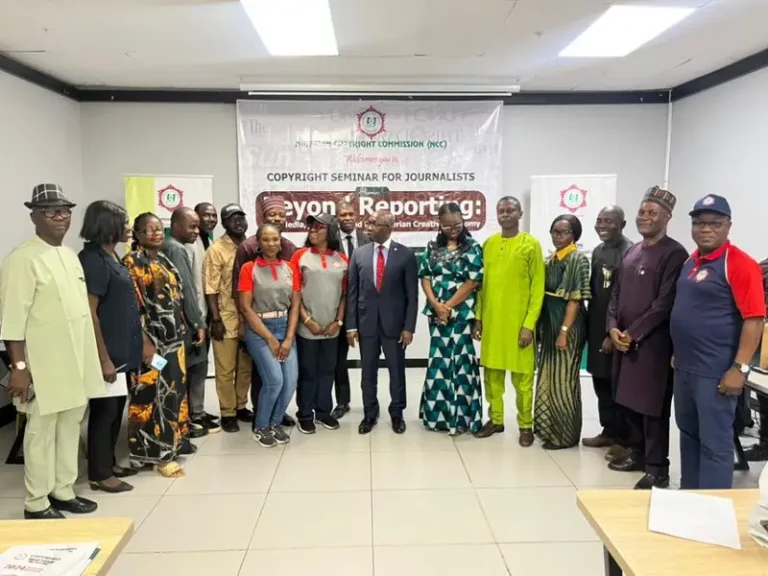
NPC’s Executive Secretary, Dr. Dili Ezughah, stated this during a seminar organised by the NCC for journalists on Wednesday in Abuja. The seminar was themed, Beyond Reporting: The Media, Copyright and the Nigerian Creative Economy.”

Represented by Mr. Jacob Atang, the Director of Marketing, Ezughah noted that the council’s partnership with the NCC would help significantly curb online piracy. He added that the NPC is responsible for regulating print media operations and ensuring that journalists uphold ethical standards in their work.

He noted that Nigeria currently faces numerous cases of fake news, misinformation, and disinformation, especially across online platforms.

He explained that the rise of digital media has enabled individuals without journalistic training to publish content using just a smartphone, often spreading information that could trigger serious issues in the country.

READ ALSONNPC, Foundation Champion Rural Childhood Cancer Awareness

The NPC chief added that the council is developing a pre-fact-checker app to help monitor and curb such activities.

“The pre-fact checker will be able to identify that this thing an individual is doing is not correct. It is misinformation, disinformation, and then stops the disinformation from going public.”

“We want to stem the tide of this misinformation, fake news, disinformation and other things,” he said.

He added that NPC was working on expanding its scope of operations.

“We have prepared a bill, an amendment to the existing bill, to ensure that the Press Council covers the electronic media.”

“Electronic media, where we hope that the pre-fact checker app that we are presently working on will be of great use and importance to the country.”

”I want to assure NCC DG that NPC will partner with the commission to fight against online piracy,” he assured.

Mr. Jahman Anikulapo, an Arts and Culture Advocate, speaking on the topic “The Journalist’s Guide to Effective Reportage of the Copyright Sector,” emphasized that the media’s core responsibility is to inform and educate.

Anikulapo, a veteran journalist, stressed that the information shared should enlighten and empower the public. He noted that when journalists themselves are well-informed and empowered, they are better positioned to fully express their professional potential.

He encouraged journalists to view their roles not just as reporters, but also as advocates.

“As a cultural reporter, you must be an advocate who will engage the public and the creative sector you are covering, as you belong to the ecosystem.”

“We should be observant to see copyright abusers and advocate for it.”

“Copyright is somebody`s work, infringement is stealing. We have to advocate on it and partner with NCC to ensure that people’s work is not infringed,” he said

According to him, when you defend the rights of others as a journalist from the creative community, you are equally defending your rights as well.

“Build relationships with NCC to enable them to reinforce their work for the betterment of society,” he said.


NAN/Oluchi

UNODC Warns of Cybercrime Threat to Nigeria

0

The United Nations Office on Drugs and Crime (UNODC) and its partners have unveiled a new Cybercrime Assessment Report, warning that Nigeria must act urgently to strengthen its digital security or risk deeper economic and social harm.

Presenting the report in Abuja, the UNODC Country Representative, Sheikh Ousmane Touré, said the assessment was not just a report but a roadmap for action, stressing that Nigeria’s rapidly growing digital economy had created new vulnerabilities.

“Cybercrime is one of the fastest-growing threats in the world today. It doesn’t respect borders, it does not discriminate, it undermines economies, erodes trust, and threatens national security,” he stated
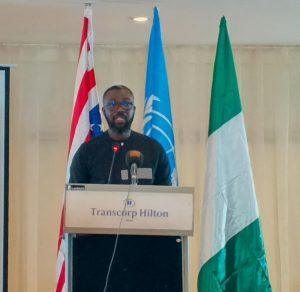
Touré commended the institutions that contributed to the assessment, as well as the U.S. Department of State’s Bureau of International Narcotics and Law Enforcement Affairs, for funding the study.

“Your commitment has made this assessment research a report that is doable, possible, and for that we are very grateful,”  the UNODC Country Representative noted.
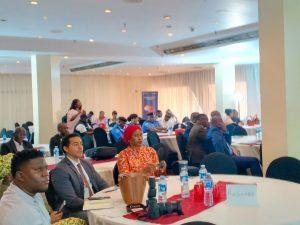
He warned that despite recent progress, Nigeria still faced critical gaps, including limited technical capacity in law enforcement and the judiciary, weak public awareness, and insufficient private-sector involvement.

“Cybercrime is evolving faster than our ability to respond. With cybercrime moving at the speed of light and law enforcement moving at the speed of the law, without sustained investment, the gains we have made risk being eroded,” he explained.

Touré also raised alarm over the rise in sextortion and revenge porn, describing them as crimes that damage children and destroy lives. He appealed to lawmakers to strengthen intelligence coordination across security agencies.

“We all have daughters, we all have children… and we know how those images can be used. The damage is not only physical harm but reputational harm that can create bullying and even stop brilliant children from wanting to go to school. Nigeria doesn’t lack intelligence. The problem is predictive analysis and a common position to work on intelligence. If we achieve that, Nigeria will be safer and will predict the move of criminal networks before they act,” Touré said.
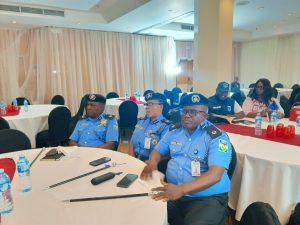
The Director of the U.S. Embassy International Narcotics and Law Enforcement Affairs Office, Douglas Grane, said the assessment formed part of a shared responsibility between both countries, noting that Nigerian-linked cybercrime had caused enormous financial damage globally.

“Crimes such as sextortion, business email compromise and other kinds of online fraud and abuse have harmed thousands, really millions of Americans,” he stated.

Grane added that Nigeria now ranks fifth globally as a source of cybercrime and lost an estimated 500 million U.S. dollars to cybercrime in 2022 alone.

“Business email compromise schemes linked to Nigerian accounts caused losses of over 1.8 billion dollars in a single year, most of them suffered by Americans,” he said.

Grane stressed that cybercrime was not a victimless crime and called for deeper collaboration, noting that cooperation between the two countries had already produced results.
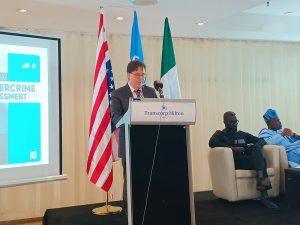
“Our children, our nieces, our nephews are all vulnerable to sexual exploitation online, especially this wicked crime of sextortion. For this reason alone, we are partners in this fight. The work of trained Nigerian officers has led to extradition, prosecution, and the recovery of 700,000 dollars in victim restitution since I arrived in August,” he disclosed.

Stronger Inter-agency Collaboration

Also speaking, the Chairman of the Senate Committee on ICT and Cybersecurity, Senator Shuai Afolabi-Salisu, commended the partnership with the United States and UNODC.

“The presentation of the assessment shows the progress we have made in our determined and committed drive to stem the tide of cybercrime and change the narrative of our country from being a haven for cybercrime to being recognised for who we are. We are Nigerians. We are enterprising, we are talented, we make marks. We will not allow a few among us to define us,” he said.

Afolabi-Salisu urged the U.S. to continue its support, especially in training Nigerian law enforcement and judicial officers. He called for stronger inter-agency collaboration.

“What is the essence of having a cybercrime law if you walk into a police station to report an incident and the man you are reporting to is as clueless as you? Unless we build the capacity of our law enforcement agents, our fight against cybercrime will not be as profound as we want it to be. It does not matter who identifies the crime first. What is important is that we must work collaboratively to bring an end to this crime,” he added.

On the legislative front, the Chairman of the House Committee on Digital Information Technology, Stanley Olajide, said the report provided an honest, data-driven evaluation of Nigeria’s cyber posture.

He gave the assurance that the National Assembly would take the report’s recommendations seriously.

“Nigeria’s digital economy is expanding rapidly but with this growth comes increased exposure to cyber threats that endanger our national security, economic stability, and societal trust. Our committee will work closely with ministries, security agencies, regulators and the private sector to strengthen our legal frameworks. This includes improving the Cybercrime Act, enhancing inter-agency coordination, expanding capacity building, and supporting investment in critical digital infrastructure,” he said.

Dr Olajide reaffirmed Nigeria’s commitment to global cyber cooperation, stressing that cyber threats were borderless and required collaborative efforts to curb the menace.

The report, funded by the United States Department of State’s Bureau of International Narcotics and Law Enforcement Affairs, was made possible with the contributions of the Department of State Services (DSS), the Economic and Financial Crimes Commission (EFCC), the Federal High Court (FHC), the Office of the National Security Adviser National Cybersecurity Coordination Centre (ONSA-NCCC), the Nigeria Police Force National Cybercrime Centre, the Independent Corrupt Practices and Other Related Offences Commission (ICPC), the National Drug Law Enforcement Agency (NDLEA), the Nigerian Financial Intelligence Unit (NFIU), the National Agency for the Prohibition of Trafficking in Persons (NAPTIP), the Ministry of Justice (Cybercrime and Central Authority Units), the National Assembly, and the National Judicial Institute (NJI).

The event ended with renewed commitments from all partners to implement the report and strengthen Nigeria’s cyber resilience.

PIAK

Alumni Lights Up School to Boost Girls’ Education

0

The Unity Chapter of the Edgerley Old Girls’ Association has launched a solar-powered lighting project at Edgerley Memorial Girls Secondary School in Calabar, aiming to improve night-time learning and create a safer environment for students.

The initiative, unveiled during the “Night of Excellence and Empowerment” in Abuja, demonstrates how alumni can complement government efforts in advancing Nigeria’s education sector.

The project addresses longstanding challenges at the school, where inadequate lighting had previously limited study hours and compromised student safety.

Alumni, some of whom graduated as far back as the 1970s, took the initiative to install solar-powered lights across the campus to enhance learning conditions and protect students.

The President of the Edgerley Old Girls’ Association – Unity Chapter, Atim Ejike said the project was inspired by the school’s motto, “Not for school, but for life.” She added, “We visited the school last December and found it in darkness. We knew something had to be done.”

Similarly, Vice President Mrs Egan Okon-Effiong stressed that while government efforts in education continue, individuals and associations must complement them with initiatives that improve discipline and overall student performance.

The school principal, Ekei Duke said the project’s impact would be immediate and profound, enhancing academic engagement and output.

“Edgerley Memorial Girls Secondary School will be lighted up with solar lights, and the entire environment will be illuminated. This will increase the learning abilities of the girls and encourage goal attainment and achievement. They will no longer reduce their prep period to one hour; we can now extend it to two or three hours because everywhere will be lit,” he said.

The alumni’s support extends beyond lighting, with past projects including library renovation, dormitory construction, sanitary towel distribution, book donations, and empowerment programmes for students and staff.

The Unity Chapter says it remains committed to fostering sustained, community-driven support to bridge gaps where government resources fall short.

Stakeholders at the event, including representatives of the Minister of Trade and Industry, senators, and security officials, praised the alumni for modelling civic engagement, noting that such initiatives are essential to creating disciplined and productive learning environments alongside ongoing government efforts.

PIAK

Stakeholders Seek Urgent Reform of Juvenile Justice System

0

Stakeholders have renewed calls for rapid and coordinated reform of Nigeria’s juvenile justice system.

They warned that structural failures continue to endanger the welfare and future of children in conflict with the law.

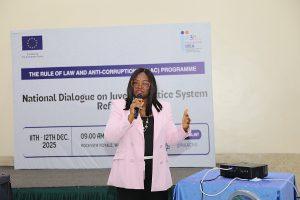
The call was made in Abuja at a Sub-National Dialogue on Juvenile Justice System Reform, organised by the Rule of Law and Anti-Corruption (RoLAC Phase II) Programme of the International Institute for Democracy and Electoral Assistance (IIDEA).

Project Officer for Criminal Justice Reform at IIDEA, Mr Joshua Gbenga Dada, said Nigeria’s juvenile justice framework has suffered “long-standing neglect” despite years of reform efforts.

“We have observed that the juvenile system, quite unfortunately, hasn’t been given as much attention as it deserves,” he said, noting that the country has only about three borstal homes, which need urgent attention to meet global standards.

“The number of juvenile courts available, the number of juvenile judges or family court judges… point us to the fact that, quite unfortunately, the juvenile system hasn’t been given the kind of attention it deserves,” Dada stated.

Long-term Consequences

He stressed the long-term consequences of poor handling of young offenders, saying: “The way they are handled would influence how they eventually pan out as adults… If the children aren’t taken through the right system, we’re more likely going to have recidivism and more adults… involved with crime.”

Calling for proactive, reform-oriented approaches, he added: “The society needs to begin to focus on reform-oriented justice, not retributive… We need to begin to go into the root causes.”

Meanwhile, State Coordinator of the Child Protection Network, Lagos State Chapter, Aderonke Oyelakin, condemned the detention of minors in police stations.

“Detaining children in police stations is totally not acceptable,” she said, citing an ongoing Lagos case in which a child slept in a police station for more than four days.

“They’re supposed to go through the juvenile welfare centres… not labelling the child as a criminal. In no reason, in no circumstance should a child be left to sleep at the police station,” she said.

Highlighting diversion and rehabilitation programmes, she stressed: “A rehabilitation centre is supposed to be a place for children to… understand why they are doing what they are doing… and diversify them into different areas of vocational skills… We don’t have enough borstal homes, correctional facilities… We should look towards a better unified system for our children.”

Similarly, Executive Director of the Centre for Health, Ethics, Law and Development (CHELD), Professor Cheluchi Onyemelukwe, identified implementation gaps requiring urgent interventions.

“The Child Rights Act requires that children should not be put together with adults in detention… In some states, the family courts are not working properly… The courtrooms are not child-friendly,” she said, urging actionable reforms from 2026.

Representing the Comptroller-General of Corrections, Deputy Comptroller Custody Jerry Dauda clarified that minors are not held in adult custodial centres.

“We don’t have juveniles in detention because the custodial centre is meant for those that are 18 years and above,” he said, adding that borstal institutions cater for those under 18 and that children born in custody receive special care.

“We have juvenile institutions to take care of young offenders that came in conflict with the law. And most importantly, everything that has to do with their education is well taken care of. Their health, even the food they eat, is a special food, because we know they are the future of Nigeria, the future of this country. Without taking good care of them, we fall back to what we did not even expect,” he added.

Key stakeholders in attendance included family court judges, magistrates, lawyers from the Nigeria Bar Association, and representatives from the Federal Ministry of Women Affairs and State Ministries of Women Affairs.

The dialogue aimed to strengthen inter-agency coordination, improve accountability, and develop state-led reforms to reset Nigeria’s juvenile justice system.

PIAK

Agency Promotes Media Initiative on NCD Awareness

0

The National Primary Health Care Development Agency (NPHCDA) has thrown its weight behind efforts to strengthen media reporting on Non-Communicable diseases (NCDs).

It describes the initiative as vital to improving Nigeria’s response to the growing burden of hypertension, diabetes, cancers, and other chronic illnesses.

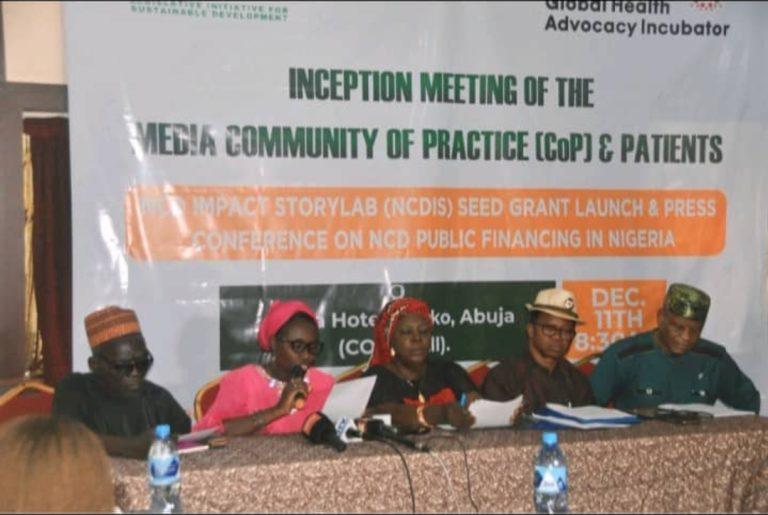
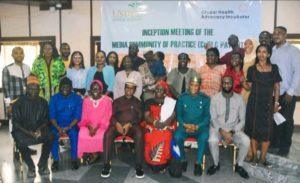
The support was conveyed in a goodwill message delivered by Dr. Mark-Anthony Okoli of the NCDs Unit, on behalf of the Agency, at the inception meeting of the NCDs Media Community of Practice and the launch of the NCD Impact Story Lab Seed Grant in Abuja.

Dr. Okoli said the event represents a significant milestone in the country’s push for sustainable NCD financing, stronger accountability, and effective public communication.

He commended LiSDEL, the Campaign for Tobacco-Free Kids/Global Health Advocacy Incubator, and other partners for championing the APH-FiP project, which he said is deepening collaboration among media professionals, civil society, and health stakeholders.

Read Also: NPHCDA, partners organise workshop to strengthen healthcare delivery

“The launch of the NCDs Media Community of Practice and the Seed Grant would empower journalists with the knowledge, tools, and professional networks needed to deliver accurate and impactful reporting on NCD financing and public health reforms.

“A more informed and engaged media landscape will strengthen public awareness, enrich policy conversations, and promote accountability in health-sector spending,” he said.

NPHCDA expressed confidence that the discussions and outcomes from the meeting would support Nigeria’s ongoing journey toward Universal Health Coverage (UHC) and improved NCD services across all communities.

In a communiqué jointly read by Mrs. Ijomoa Joseph-Agbara and Mrs. Maimuna Baran, a cancer survivor, on behalf of the Patient Advocacy Working Group (AWG) for NCDs Public Financing in Nigeria, the group called on the Federal Government to urgently translate its commitments into tangible action by releasing funds allocated for NCDs in the 2025 budget.

Speaking on behalf of patients living with hypertension, diabetes, cancers, and chronic respiratory illnesses, Mrs. Joseph-Agbara expressed concern that despite NCDs being among Nigeria’s highest public-health burdens, less than 20 percent of patients have access to diagnosis and treatment.

She noted that although the 2019–2025 multisectoral action plan targets 80 percent diagnosis and treatment coverage, “only six percent of Nigeria’s health budget is allocated to NCDs, most of which remain unimplemented.”

Also speaking, Mrs. Maimuna Baran condemned the non-execution of key NCD budget activities, including the establishment of cancer treatment centres, eye-care facilities, community medical outreaches for hypertension and diabetes, and training programmes for health workers.

She stressed that the situation contradicts the principles of UHC, which Nigeria is commemorating this week.

The group issued three major demands: immediate release of NCD budget lines in the 2025 budget; legislative action to ring-fence Sugar-Sweetened Beverage (SSB) tax revenue for NCD interventions; and stronger integration of NCD services within existing UHC frameworks.

While commending ongoing efforts to increase the SSB tax from N10 per litre to a more impactful rate, they insisted that at least 40 percent of the revenue should support NCD prevention and control programmes.

“We call on the National Health Insurance Authority (NHIA) and the Basic Health Care Provision Fund (BHCPF) to expand benefit packages to cover NCD screening, diagnosis, and treatment. Half of Nigerians with diabetes remain undiagnosed while only one in five people with hypertension have their condition controlled,” she added.


Adamawa Governor Consoles Bayelsa Over Deputy Governor’s Death

0

Adamawa State Governor, Ahmad Fintiri, has extended his heartfelt condolences to the government and people of Bayelsa State following the death of Deputy Governor, Lawrence Ewhrudjakpo.

Ewhrudjakpo reportedly passed away after a brief illness at the Federal Medical Centre, Yenagoa.

In a condolence message signed by his Chief Press Secretary, Humwashi Wonosikou, Governor Fintiri said he received the news with deep shock and sadness, describing the late Deputy Governor as “a remarkable leader who embodied trust, integrity, and dedication.”

He expressed sympathy to the bereaved family, friends, associates, and the Bayelsa State Governor, Douye Diri, urging them to find strength in the impactful life the late statesman lived.

Governor Fintiri hailed Senator Ewhrudjakpo’s courage and commitment to public service, noting that his contributions to the growth and development of Bayelsa State would remain unforgettable.

“His tireless efforts and passion for progress inspired many. His legacy will continue to guide future generations,” Fintiri said.

He prayed for God to comfort the family and grant the soul of the departed eternal rest.

“May his memory be a blessing to Bayelsa State and Nigeria, and may his contributions to nation-building continue to inspire us all,” the Governor prayed.

PIAK

NDDC Urges Universities to Prioritise Problem-Solving Education

0

The Managing Director of the Niger Delta Development Commission (NDDC), Dr Samuel Ogbuku has urged Nigerian universities to overhaul their teaching models and shift from certificate-driven learning to problem-solving education.

He warned that the current system was failing to meet national development needs.

At the 2nd Convocation Lecture of the Federal University Otuoke (FUO) in Bayelsa State, his call for a radical reinvention of Nigeria’s higher-education system echoed across the packed convocation hall.

Delivering his keynote address titled “From Degree-Awarding to Problem-Solving Institutions: Retooling University Education for Nation-Building,” Ogbuku decried what he described as an entrenched academic culture where promotion and prestige depended more on the number of journal papers published than on research that solved local problems.

“We have built an academic culture where promotion is often tied more to the number of papers published… than to the impact of research on society,” he lamented.

Speaking with urgency, he painted a stark picture of a widening gap between universities and the productive sectors of the economy.

According to him, employers frequently complained that graduates struggled with critical thinking, creativity, digital competence, and hands-on experience skills central to thriving in a modern economy. The consequences, he warned, were becoming increasingly visible.

He linked these challenges to decades of underfunding and infrastructural decay, Dilapidated laboratories, outdated libraries, overcrowded classrooms, and poorly motivated staff, he said, had pushed universities towards theory-heavy, exam-driven teaching models that rewarded memorisation rather than ingenuity.

“A system that is underfunded struggles to be innovative,” he stressed.

As part of the solution, Ogbuku recommended introducing compulsory capstone projects across disciplines, projects tied directly to real problems in communities, industries, or government sectors.

This shift, he argued, would promote practical thinking and anchor academic work in genuine societal needs.

Strengthen Entrepreneurship and innovation

further urged universities to strengthen entrepreneurship and innovation ecosystems on their campuses.

Although centres for entrepreneurship existed in many institutions, including FUO, he noted that they were often treated as mere attachments rather than strategic hubs for creativity and enterprise.

Strengthening them, he said, was critical to producing graduates who could create opportunities rather than wait for them.

Ogbuku highlighted the Niger Delta’s environmental crises, oil spills, gas flaring, flooding, biodiversity loss and challenged universities in the region to lead research and innovation targeted at solving these long-standing problems.

“Nigeria cannot afford to be a passive consumer of other people’s innovations,” he warned.

Instead, he called for bold investments in digital technology, local manufacturing, and climate-focused research.

Reiterating that “education is the most powerful weapon which you can use to change the world,” the NDDC boss encouraged graduating students to see themselves as problem-solvers equipped to shape the nation’s future. “The degree in your hand is not a trophy; it’s a tool… Do not treat your degree as the end of learning.”

Demonstrating the Commission’s commitment to educational development, Ogbuku announced that the NDDC had awarded contracts for a five-kilometre internal road network at FUO, a modern convocation arena, and a five-star Corpers’ Lodge.

He also pledged to endow two professorial chairs in the university, one in honour of his late father and another dedicated to cancer research.

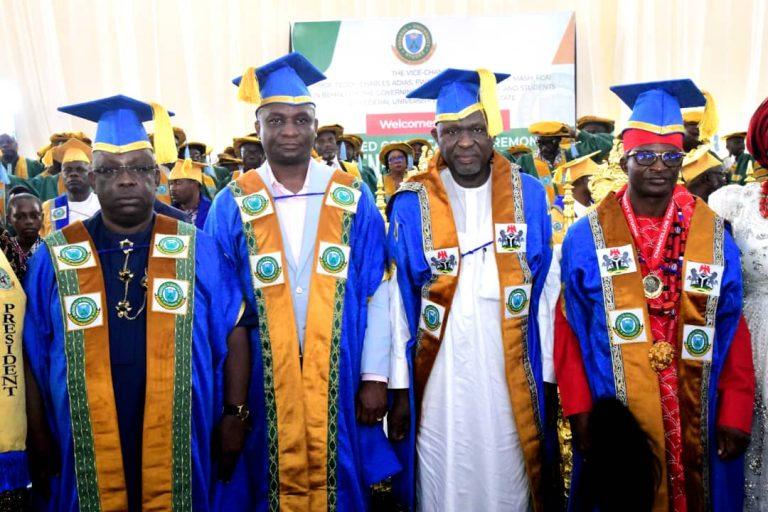
The Vice-Chancellor, Professor Teddy Charles Adias, expressed gratitude to President Bola Ahmed Tinubu for appointing a new Chancellor to one of the nation’s youngest federal universities.

He urged graduating students to embrace lifelong learning, stressing that “learning never ends.”

The event also featured the formal installation of the Paramount Ruler of Idoma Worldwide, Elaigwu Obagaji, as the new Chancellor of the university, an honour that added a regal flourish to a day centred on reflection, transformation, and hope.

In the end, Ogbuku’s message resonated: Nigeria’s path to sustainable nation-building lay not in producing graduates with stacks of certificates but in nurturing thinkers, innovators, and problem-solvers capable of transforming their communities and, ultimately, the nation.

PIAK