Home Blog Page 53

Nigeria Reaffirms Commitment to Digital Border Control, Financial Integrity

The Nigerian Government has restated its commitment to improving Nigeria’s correctional system, strengthening border control through technology, and promoting greater financial accountability across its institutions.

The Minister of Interior, Dr Olubunmi Tunji-Ojo, made this known on Wednesday while receiving the President and Chairman of Council of the Institute of Chartered Accountants of Nigeria (ICAN), Mallam Haruna Yahaya, who led a delegation on a courtesy visit to his office in Abuja.

Speaking during the meeting, the Minister stressed that the correctional system remains a key responsibility of government, noting that the focus must go beyond custody to proper rehabilitation and reintegration of inmates into society.

“Government has a duty of care to its citizens. Even where freedom is restricted by law, we must ensure that those in our custody are treated with dignity and given the opportunity to return to society better than they came.”

He explained that the transition from the old Prisons Act to the Nigerian Correctional Service Act was a deliberate step to move the system away from mere detention toward one that promotes reform and reintegration.

On border management and internal security, the Minister disclosed that the Correctional Information Management System (CIMS) now holds over 50 million records collected over the years, covering operations at the nation’s seaports and airports, with ongoing efforts to integrate land borders.

READ ALSO:Women Inclusion Drives Nigeria’s Economic Transformation Agenda

According to him, the system helps identify irregularities and prevent unauthorised entry, noting that modern security systems are increasingly focused on prevention rather than reaction.

“We are building systems that can stop problems before they happen, not just respond after the damage is done,” he said.

The Minister also spoke on the need to strengthen internal systems across government institutions, particularly in financial management. While acknowledging the role of audits, he stressed that greater attention should be placed on preventive controls.

“It is not enough to detect issues after they occur. The real goal is to put systems in place that make such issues difficult to happen in the first place,” he noted.

He called on professional bodies like ICAN to continue supporting national development efforts, especially in areas such as revenue assurance, internal control, and transparency. He also encouraged closer collaboration between government and the private sector to improve efficiency and build investor confidence.

On infrastructure, the Minister noted the importance of an effective fire and rescue service, adding that expanding coverage across the country would require innovative funding approaches, including partnerships with the private sector.

He congratulated ICAN on its leadership and its forthcoming West Africa Accountants Conference scheduled for December 2026, assuring them of government support. He also commended the increasing role of women in professional leadership, describing it as a positive development for the future.

Earlier, the ICAN President, Mallam Haruna Yahaya, commended the Ministry for the reforms introduced so far and proposed the establishment of a Joint ICAN–Ministry Financial Integrity and Revenue Assurance Task Force.

He explained that the proposed task force would focus on areas such as revenue assessment within the Nigeria Immigration Service, payroll analysis across uniformed services, and procurement risk review, with the aim of reducing leakages and strengthening accountability.

UNESCO, CWAY Launch Initiative for Adolescent Well-being, Learning

0

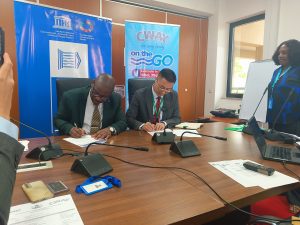
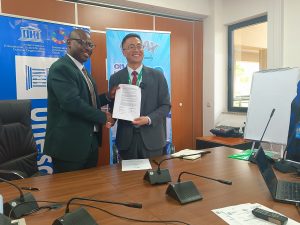
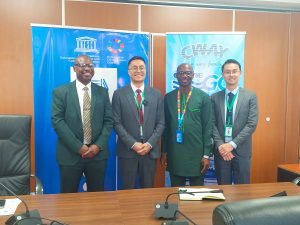
The United Nations Educational, Scientific and Cultural Organisation (UNESCO), in partnership with CWAY Group, has launched an initiative aimed at improving adolescent well-being and education in Nigeria, marked by the signing of a strategic collaboration between UNESCO and CWAY Group.

The initiative, titled “Strengthening Adolescent Health and Inclusive Learning,” targets Enugu State, the Federal Capital Territory (FCT), Lagos State, and Ogun State, with a projected reach of over one million learners.

Speaking at the official signing ceremony, the Head of Office and Representative of UNESCO in Nigeria, Jean-Paul Ngome Abiaga, described the project as a transformative step towards improving the lives of young people.

“Today is more than a signing. It reflects a shared vision, careful planning, and strong commitment. We are shaping a healthier, more inclusive, and more educated future for Nigeria’s adolescents. It is a shared promise—to expand opportunity, protect dignity, and improve the future of adolescents across these states. Inclusion is not optional; it is essential,” he said.

Dr Abiaga also highlighted the strong connection between education and health outcomes.

“Healthy adolescents learn better, and educated adolescents make informed, confident decisions about their health and future. Every adolescent regardless of gender, ability, or background deserves access to quality education and the health information they need to succeed. The project seeks to address both areas simultaneously,” he highlighted.

The UNESCO representative further underscored the importance of collaboration in achieving sustainable impact. According to him, the initiative will deliver evidence-based interventions designed to promote adolescent well-being, strengthen inclusive education systems, and expand access to accurate health information.

“Partnership is the engine of lasting change. This collaboration with CWAY demonstrates how the private sector can lead with purpose investing not just in a project but in Nigeria’s future. This collaboration demonstrates how the private sector can lead with purpose investing not just in a project but in Nigeria’s future,” he said.

He called on all stakeholders to remain committed throughout the implementation phase.

“Together, we can create environments where every adolescent can learn, stay healthy, and reach their full potential,” Abiaga said, reaffirming UNESCO’s commitment to advancing education in line with Sustainable Development Goal 4.

On his part, the Deputy Director of CWAY Group, Moses Wang, expressed gratitude for the partnership and reaffirmed the company’s commitment to community development.

“We started from the community, and we are returning to the community. This initiative allows us to elevate our corporate social responsibility to a national scale,” he said.

Mr Wang noted that CWAY, with over two decades of operations in Nigeria’s manufacturing sector, is expanding its CSR focus on education and health.

“Education is key to national development, and health is equally critical. Through this collaboration, we aim to strengthen both areas and create a lasting impact,” he said.

He also acknowledged the support of the Nigerian government and stakeholders present at the event, describing the partnership as a “great start” that will extend beyond the EFLO states in the future.

Also speaking, the Secretary-General of the Nigerian National Commission for UNESCO, Olagunju Lateef, emphasised the importance of collective action.

“Today’s signing goes beyond ceremony; it reflects our shared commitment to investing in the well-being, education, and future of every adolescent,” she said.

Dr Lateef, represented by the Head of Education Sector, Eunice Ayara, expressed confidence that the initiative would deliver measurable outcomes, particularly for underserved and vulnerable populations.

“We are optimistic that this partnership will equip young people with the knowledge, resources, and opportunities they need to succeed,” she added.

NASS, Executive Move to Align Budget with National Development Goals

The National Assembly and the Executive have expressed their commitments to work together and address the gaps between the budget process, implementation and the objectives of National Development plans to ensure proper linkage and coordination to achieve the quest for Nigeria’s development.

This was disclosed by the Minister of Budget and Economic Planning, Senator Atiku Bagudu, the Chairman, House Committee on National Planning and Economic Development, his Senate counterpart, Senator Musa Mustapha in their separate remarks on the second day of the Two-Day National Policy Dialogue being held in Abuja on Wednesday.

The Dialogue with the Theme “The Imperatives Of National Development Plan And Effective Budgeting System For Sustainable Growth Of The Nigerian Economy” was organised by the National Assembly Joint Committee On National Planning And Economic Affairs/Development in partnership with the Offices of the Vice President, Minister of Budget and Economic Planning, the Minister of Finance and the Budget Office of the Federation.

READ ALSO:Nigerian Senate Passes N68.3Trn 2026 Budget

In his address, the Minister of Budget and Economic Planning, Senator Atiku Bagudu, noted that, without the support of the National Assembly, the reforms that have been undertaken by the administration wouldn’t have been possible.

“Let me appreciate the support that the committees and also the National Assembly as a body have given to the reforms that have taken place in the last three years, because by every stretch of imagination, they are bold, they are courageous, they are difficult choices, and for those whose daily function involves interaction with these constituencies and having to explain and having to defend, one has to appreciate.” Mr Bagudu said.

He, however, informed  that, planning is a constitutional responsibility of every person in authority in Nigeria which must not be toyed with if the country is to make a meaningful development.

Senator Bagudu stated, “National planning in Nigeria is mandated and obligated by the constitution. The further ingredients of the national plan are a whole chapter in our constitution, chapter two of our constitution, fundamental objectives and directive principles of state. It clearly stated that Nigeria is a constitutional federation.

“Section 13, which is the first section of another fundamental objective and directive principle of state, is a command to all those in authority to work together, observe, and seek to conform to the fundamental objective or directive principles of state.

“The constitution clearly stated that all those in authority, including legislative, judicial, and executive, have to work together. Equally, the president, vice president, national assembly members, the governance, state assembly members, and the office they swore to – the wordings are dictated by the constitution.

“And the wordings include expressly not just upholding the constitution, but the seven elements of the wardens are to uphold and seek the achievement of governance of the fundamental objectives and directive principles of the state. So one can see in those elements that the obligation to work for the achievement of the irreducible minimum of consensus, which are the fundamental objectives, is sanctioned by the constitution. And so what we are doing in national planning which leads to effective budgeting in order to generate sustainable growth is in tandem with our constitution.”

The minister emphasised that, Nigeria being a market economy, the Constitution provides a reducible minimum of economic objectives that we should aspire to: good security objectives, environmental objectives, educational objectives, social objectives, and even duties of citizens, as well as being consistent with constitutional federalism demanding that the three types of government must work together.

Giving an overview, the Chairman, House of Representatives Committee on National Planning and Economic Development, Hon. Gboyega Isiaka, stated that it is a collective responsibility for the executive, the legislature and all other stakeholders to work towards addressing the gaps and other challenges as regards budgeting and national planning objectives.

He noted that the 10th National Assembly is always ready to cooperate and collaborate very effectively with the President and the executive arm of government.

He said, “Therefore, the committees follow the same pattern. The Senate and the House Committee on Economic Planning have been following, and some of the ministers have said, the beautiful work being done by the ministry, the coordination and all of that. We feel that we need to collaborate more beyond oversighting and working sessions.

“We are aware, for example, that following the… the fact that the 2026-2030 plan is still taking itself from the prospective plan, the 30-year prospective plan, we know that a lot of work will need to be going into this. I want to be practical in putting that together. We are also aware of the $1 trillion objective economy that the federal government is working on.

“We have had sessions with various MDAs, and we are aware of some of the questions that have been raised about the envelope system of projects. The various reforms that we have going on in the nation, physical regime, monetary regime, and all of that; we are aware of also a number of questions that have been raised about that.

“And in all of this, therefore, we feel that beyond asking questions during oversight, we feel that all of these, and more, that I don’t want to assume begin to go into, are enough for us to bring, to come together, and to renew. The plan for 2026-2030 is also being put together, and we also want to be practical in that so that we can start all from the beginning.”

On his part, the Chairman, Senate Committee on National Planning and Economic Affairs, Senator Musa Mustapha, said it is imperative to address the fundamental pillar of national progress, which is to align National Development Plans with the budgeting system to drive sustainable economic growth.

He said, “Our National Development Plan requires meticulous, aligned, and disciplined budgetary support to achieve its set objectives. However, the persistent disconnect between ambitious development plans and actual annual budgetary allocations has historically hindered our growth trajectory.

“As Chairman of the Senate Committee on National Planning and Economic Affairs, I maintain that our developmental aspirations cannot be achieved through disjointed fiscal actions. We must stop treating the budget as merely a document for expenses but rather as the primary engine for implementing our national development agenda.

“An efficient budget is often regarded as the cornerstone of comprehensive national progress. It allows the government to allocate resources wisely, prioritise development initiatives, and boost economic activity.

“Too often, however, our national planning and budgeting have operated in isolation, leading to inefficient resource distribution and projects that fail to fully benefit Nigerians. We aim to address this gap. Indeed, the goal of this administration is to foster a performance-driven culture in which public resources are used efficiently to support meaningful, sustainable development.

“Our planning process is no longer driven by short-term political expediency but by a clear, strategic roadmap towards a $1 trillion economy by 2030—anchored in grassroots empowerment initiatives such as the Renewed Hope Ward Development Programme and targeted support for our MSMEs.

“This presidential vision is fully reflected in our 2026 Budget of Consolidation, Renewed Resilience and Shared Prosperity, which is grounded in realism, prudence, and strict fiscal discipline. By removing wasteful subsidies, unifying the foreign exchange market, and expanding our non-oil revenue base through fair and efficient tax administration, President Tinubu’s reforms have secured a seven-year high in our external reserves and unlocked substantial capital to fund the nation’s real priorities.

“Today, under his guidance, we are spending with purpose—investing trillions in critical infrastructure, food security, student loans, and the modernisation of our security architecture. This is not a budget of mere promises but a powerful statement of national intent. The transformative policies of President Bola Ahmed Tinubu are yielding measurable results, ensuring that the economic recovery already engineered translates directly into a better quality of life for every Nigerian household.

“It is heartening to note that the President is already leading from the front. Under the visionary leadership of His Excellency, President Bola Ahmed Tinubu, our national journey over the past few years has been defined by bold, necessary, and sometimes painful choices that are now yielding visible, undeniable results across the federation. Guided by the Renewed Hope Agenda, Mr President has courageously confronted long-standing structural weaknesses, stabilised our economy, rebuilt investor confidence, and laid a durable foundation for an inclusive and dynamic Nigeria,” he added.

 

Maritime Journalists To Host Port Efficiency Conference

0

Key maritime stakeholders under the Association of Maritime Journalists of Nigeria (AMJON) will host a port efficiency conference aimed at addressing operational challenges in Nigerian seaports through the adoption of emerging technologies, improved coordination and enhanced industry collaboration.

The conference, scheduled for Thursday, April 30, 2026, in Apapa, Lagos, will assess the impact of technological advancements on seaport efficiency, encourage exchange of ideas and strengthen collaboration across the maritime industry.

The theme of the conference is “Attaining Port Efficiency in the Face of Emerging Technology”.

Discussions will also address persistent challenges affecting the performance of major ports, including Warri, Calabar and Port Harcourt.

READ ALSO: Stakeholders Advocate Urgent Reforms to Boost Ports Efficiency

In a statement, the Chairman of the Organising Committee, Raymond Tedunjaiye, said the conference would provide a credible forum for industry experts to deliberate on critical national issues, particularly those related to maritime development and economic growth.

“The outcomes and recommendations from the conference will be documented and presented to relevant government authorities for consideration and possible implementation,” Tedunjaiye said.

The event is expected to bring together key stakeholders from both the public and private sectors to engage in meaningful dialogue aimed at enhancing port operations and unlocking Nigeria’s economic potential.

Key agencies expected at the conference include the Nigeria Customs Service, Nigerian Ports Authority, Nigerian Maritime Administration and Safety Agency, Nigeria Police Force, as well as representatives of maritime labour unions and terminal operators.

A highlight of the conference will be an award segment recognising individuals and organisations that have made significant contributions to the growth and development of the maritime sector.

Speaking on the importance of the conference, the President of AMJON, Vera Osokpo, said the event has been designed to address pressing industry concerns.

She noted the growing role of technology in port operations, even as infrastructural challenges such as inadequate road networks, limited rail connectivity and unreliable power supply continue to pose constraints.

Osokpo added that discussions will focus on trade facilitation strategies that improve efficiency without compromising security.

Other key areas include the adoption of automation and smart port technologies, as well as the digital transformation of port processes.

The Association of Maritime Journalists of Nigeria is a leading body of maritime journalists drawn from print, electronic and online media.

AANI Calls For Increased Funding For NIPSS

0

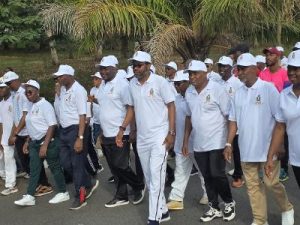
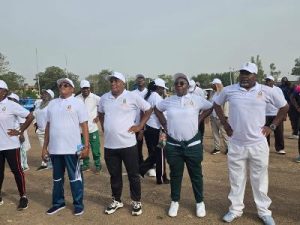
The Alumni Association of the National Institute for Policy and Strategic Studies (AANI) has called for increased funding for the National Institute for Policy and Strategic Studies (NIPSS) during an awareness walk held in Abuja, Nigeria’s capital, ahead of its 46th Annual General Meeting (AGM) scheduled for April 18, 2026.

The AGM, with the theme State Police and Community Policing: Challenges, Options and Opportunities”, is expected to produce policy recommendations on Nigeria’s evolving security challenges.

Leading the exercise, AANI National President Ambassador Emmanuel Okafor, mni, said the association remains a body of intellectuals and professionals committed to national development.

“We are bound by a shared vision to build a better society. AANI will continue to provide strategic insights and policy solutions to address national challenges,” he said.

Expressing concern over Nigeria’s security situation, Okafor stressed that safeguarding the nation is a collective responsibility.

“Security is everyone’s responsibility. While we commend our security agencies, greater support is critical to strengthening their capacity.” 

He also called for improved funding and infrastructure for NIPSS, noting that the institute must be better equipped to meet rising national demands.

“As we interrogate the concept of state police and community policing, our goal is to deliver practical, forward-looking policy recommendations,” he added.

In the same vein, AANI’s National Publicity Secretary, Engr Ifeanyi Jude Ngama, mni, said the awareness walk reflects renewed efforts to reposition the association at the centre of national discourse.

“This is beyond conversation. The AGM and colloquium will produce actionable solutions to strengthen Nigeria’s security architecture,” he said.

The awareness walk attracted participants from across the country, including former presidents of the association, serving and retired military officers, and members of various Senior Executive Courses, including SEC 9/1987.

As preparations continue, attention is now focused on AANI’s 46th AGM, where key policy ideas are expected to shape discussions on Nigeria’s security future.

Nigeria Reaffirms Commitment to Maternal, Newborn Health Outcomes

0

The Nigerian government has reaffirmed its commitment to improving maternal and newborn health outcomes, emphasising quality care as key to saving lives.

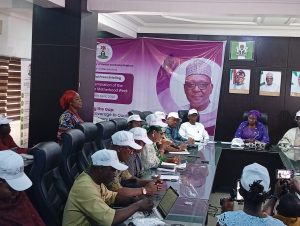
The Coordinating Minister of Health and Social Welfare, Prof Ali Pate, made this known during a ministerial briefing to mark the 2026 Safe Motherhood Day in Abuja.

Representing the Coordinating Minister of Health and Social Welfare, Prof Ali Pate, the Permanent Secretary, Daju Kacholom, stated that although Nigeria has made progress in expanding access to maternal health services, gaps remain in ensuring that every woman receives timely and life-saving care.

“This year’s theme reminds us that access alone is not enough, what truly saves lives is the quality, timeliness, and equity of care provided to every woman, everywhere in Nigeria,” he said.

Kacholom highlighted the Maternal and Neonatal Mortality Reduction Innovation Initiative (MAMI), now operational in 32 states, noting that it has strengthened service delivery and improved emergency response systems.

“Through MAMI, we have scaled up targeted interventions and ensured that no woman is left behind, with over 32,000 women and 1,700 newborns already benefiting from emergency obstetric and neonatal care,” he added.

He further disclosed that the National Emergency Medical Services and Ambulance System (NEMSAS) has deployed over 600 ambulances nationwide and transported more than 78,000 beneficiaries.

“Pregnant women account for about 60 per cent of these cases, demonstrating the critical role of emergency transport in reducing delays and saving lives,” he said.

The Permanent Secretary also noted improvements in antenatal care attendance and a 20 per cent increase in skilled birth attendance in some high-burden areas, stressing that the effective implementation of policies rests with states and other stakeholders.

“Every maternal death is a tragedy. It is preventable, and it is unacceptable. We must move from commitments to concrete actions,” he emphasised.

Earlier, the Executive Director of the National Primary Health Care Development Agency (NPHCDA), Dr Muyi Aina, stated that strengthening primary healthcare remains central to achieving safe motherhood in Nigeria.

“We have focused on revitalising primary healthcare systems, ensuring that facilities are equipped, staffed, and able to provide 24-hour quality services for pregnant women,” Aina said.

He disclosed that over 19,000 skilled birth attendants have been recruited across more than 20 states, alongside nearly 4,000 community health workers engaged on a sustainable basis.

“This is not ad hoc employment; it is a deliberate effort to build a resilient workforce that will continue to deliver quality care at the grassroots,” he stated.

Aina added that thousands of mama kits have been distributed to encourage facility-based deliveries, noting a steady rise in antenatal care attendance.

“We are seeing improvements in ANC attendance and retention, which signifies not just increased utilisation, but also improved quality of care,” he said.

In his welcome address, the Permanent Secretary of the Federal Ministry of Health and Social Welfare, Daju Kacholom, represented by Dr Kamil Shoretire, stressed the importance of strengthening health systems to deliver quality care.

“Expanding access is important, but what saves lives is care that is timely, skilled, and respectful, delivered through a resilient health system,” he said.

Kebbi Hosts Peace, Security Workshop For Religious Leaders

0

The Kebbi State Government has organised a workshop for religious leaders aimed at promoting peace and security in the state.

Governor Nasir Idris said the state has made progress in achieving stability through the prayers and support of religious leaders.

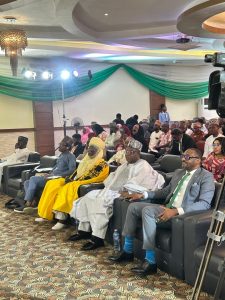
He made the remarks at a workshop titled “The Role of Ulama and Clergymen in Promoting Purposeful Leadership, Peace and Security in Kebbi State,” organised by the Ministry of Religious Affairs in Birnin Kebbi.

READ ALSO: Religious leaders unite to champion peace, tolerance in Nigeria

The governor said his administration has recorded achievements in infrastructure, education, agriculture and healthcare and pledged to sustain their efforts.

He also expressed concern over the alleged non-payment of teachers’ entitlements.

He explained that, based on the payment table presented by the Nigeria Union of Teachers (NUT), the Nigeria Union of Local Government Employees (NULGE) and other labour unions, the government has implemented 70 per cent of the minimum wage.

In his welcome address, the Commissioner for Religious Affairs, Sani Aliyu, said religious leaders have a critical role to play in promoting good governance and finding lasting solutions to insecurity.

He said 24 religious groups were invited to the workshop and urged Muslim clerics to preach peace and unity among people regardless of tribe.

In their presentations, Sheikh Abbas Jega, Professor Muhammad Abubakar Wali, Khalifa Faruku Usman Mukhtar, Reverend Nuhu Mamman Gudal, Hafiz Imam Yusuf Abubakar Suru and Mallam Ibrahim Isah Sarkin Malaman Gwandu called on religious leaders to continue promoting peace and unity among their followers.

Also speaking, the Chairman of the Christian Association of Nigeria (CAN) in Kebbi State, Bishop Ayuba Yafi Kanta, said there is more that unites Christians and Muslims than divides them.

He urged Christian leaders to preach the teachings of the Bible and called on Christians to continue praying for leadership, regardless of their ethnic background.

NGX Urges SMEs to Leverage Capital Market for Growth

The Nigerian Exchange Group Plc has partnered with the Bank of Industry to unlock opportunities for business growth for Small and Medium sized Enterprises in Kano State.

The collaboration speaks to the commitment to expanding access to finance and supporting the growth of small and medium-sized enterprises across Nigeria, particularly in regions with strong commercial potential such as Northern Nigeria.

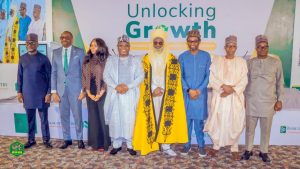
At a one-day workshop tagged “UNLOCKING GROWTH – HARNESSING THE CAPITAL MARKET FOR SME GROWTH WORKSHOP”, the Chairman of the Nigerian Exchange Group Plc (NGX Group), Umaru Kwairanga, acknowledged Kano as a city with a proud legacy of commerce and enterprise.

Kwairanga, while reaffirming NGX Group’s unwavering commitment to supporting enterprise development across all regions of Nigeria, stated that “Kano provides a fitting backdrop for this engagement.

According to him “It represents both a longstanding commercial hub and a gateway to significant untapped potential. The opportunity before us is to connect that potential to the capital and structures required for sustainable growth.”

The NGX boss highlighted the importance of SMEs as being the backbone of most economies, being that they account for the majority of businesses and employment in most countries.

READ ALSO:NGX Ends Week Trading Session on High Note

He stated that while big conglomerates and multinational companies get the big headlines, it is SMEs that promote innovation, drive employment and economic growth, and provide the big enterprises with raw materials and distribution of finished goods.

“The natural instinct of human beings and businesses is to aspire to grow and so at some point, SMEs such as yours will aspire to grow bigger and stronger. To grow, you will require greater capital. I know that many of you for now rely on banks for such capital, but bank financing is usually short-term and expensive because of the structure of deposit liabilities that they rely on to finance borrowers. It is actually the capital market that offers long-term capital that matches the needs of entrepreneurs such as you. That is where the Nigerian Exchange Group comes in”, he said.

He said that the NGX Group recognises that enabling entrepreneurial growth requires more than just access to funding but also requires the right structures and platforms.

“Through our Growth Board, we have created a dedicated pathway for small and medium-sized enterprises and high-growth companies to access the capital market. The platform is designed to support businesses that may not yet meet the requirements of the Main Board, while still promoting transparency, governance, and long-term sustainability. It provides these enterprises with the opportunity to raise long-term capital, enhance their visibility, and position themselves for scale, ultimately creating a pipeline for the next generation of leading companies in our market,” Kwairanga said.

He further said that, as Nigeria aspires to become a trillion-dollar economy, SMEs must be at the centre of that journey, stressing that achieving these goals requires a shift towards more structured, transparent, and long-term approaches to financing.

The NGX boss highlighted a few of its major collaborations that are aimed at improving the ease of doing business, particularly for SMEs, saying that through strong partnerships and deliberate action, new opportunities can be unlocked and businesses strengthened, which would drive inclusive economic growth.


Oyo Confirms Lassa Fever Case, Activates Emergency Response

0

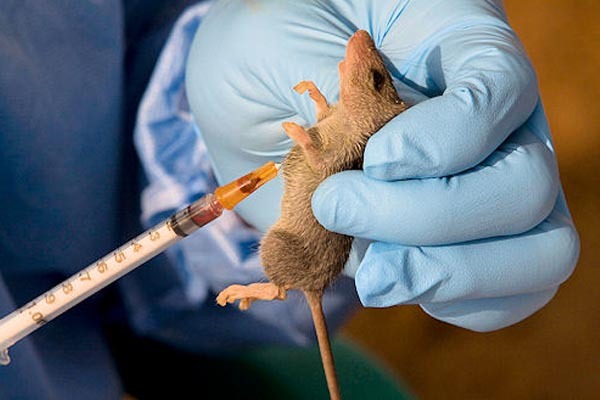
The Oyo State Government has confirmed a Lassa fever case at the University College Hospital (UCH), Ibadan.

The case involved a 44-year-old female who was managed at UCH and unfortunately passed away on 11 April 2026, while laboratory confirmation of Lassa fever was received on 13 April 2026.

In a statement by the Honourable Commissioner for Health, Oluwaserimi Ajetunmobi, the State Government, through the Ministry of Health, immediately activated its emergency response mechanisms following confirmation of the case, adding that the Incident Management System (IMS) for Lassa fever has been fully activated to coordinate all response activities.

The Commissioner explained that key steps have been taken to identify and monitor all contacts of the deceased, ensuring that a safe and dignified burial is conducted.

Dr Ajetunmobi urged residents to seek immediate medical attention if they experience any symptoms such as persistent fever, weakness or extreme fatigue, sore throat, vomiting or diarrhoea, unexplained bleeding (from gums, nose, urine, or injection sites), chest pain, or difficulty in breathing, emphasising that early presentation at any health facility will significantly improve chances of survival.

The Commissioner further explained that Lassa fever is a viral haemorrhagic illness caused by the Lassa virus, which is primarily transmitted through contact with food or household items contaminated by urine or faeces of infected rodents.

She stressed that it can spread from person to person through contact with the bodily fluids of infected individuals, particularly in healthcare settings where appropriate precautions are not taken.

Speaking further, the Honourable Commissioner advised residents to maintain a high level of environmental hygiene by keeping their homes and surroundings clean, storing food in rodent-proof containers, disposing of waste properly, and avoiding drying food items on the ground or by the roadside.

She said, “They should take deliberate steps to avoid contact with rodents by sealing holes and other entry points in their homes.”

“Good personal hygiene must be practised at all times, including regular hand washing with soap and water and the use of hand sanitisers where necessary.”

The Commissioner reiterated that the Oyo State Government remains fully committed to protecting the health and safety of all residents.

She noted that surveillance has been intensified across the state, and all health facilities have been placed on high alert.

Consequently, the Government is strengthening collaboration with relevant stakeholders to ensure a coordinated and effective response. The Commissioner said that residents are hereby assured that there is no cause for panic and the situation is under control.

All necessary public health measures are being effectively implemented. Lassa fever is preventable and treatable, especially when detected early.

Kaduna Government Releases ₦4.289bn for Pension, Gratuity Payments

Governor Uba Sani of Kaduna State has approved the release of N4.289 billion for the payment of pension entitlements, gratuities and death benefits to retired civil servants and the families of deceased workers across state and local government services.

The funding covers obligations under both the Contributory Pension Scheme (accrued rights) and the Defined Benefit Scheme (gratuities and death benefits).

The move is part of the administration’s broader effort to clear outstanding liabilities and strengthen social protection for senior citizens.

In a statement issued on Tuesday by the Honourable Commissioner for Information and Culture, Malam Ahmed Maiyaki, the initiative was described as a reflection of Governor Sani’s people-centred governance.

“Governor Uba Sani remains deeply committed to the welfare of our senior citizens.

This intervention goes beyond the settlement of liabilities; it is about restoring dignity, honouring years of meritorious service, and assuring our retirees and the families of deceased workers that their sacrifices will never be forgotten,” Maiyaki said.

READ ALSO: Kaduna state releases N920m for pensions, gratuities payment

The commissioner noted that the latest disbursement reinforces ongoing efforts to address pension backlogs and rebuild trust in the system.

“With this release, the cumulative sum paid since the inception of the current administration has reached N17.796 billion, benefiting no fewer than 8,344 retirees and families of deceased workers,” he said.

Maiyaki further emphasised that the governor’s interventions in the pension sector are part of wider governance reforms aimed at promoting fiscal discipline, transparency and sustainability in public finance management.

He reassured that the Kaduna State Government will continue implementing prudent financial strategies and institutional reforms to guarantee timely settlement of pension obligations while safeguarding the long-term viability of the system.

The administration, he added, remains resolute in upholding the dignity of labour and ensuring that public servants retire with a sense of fulfilment, security and respect.