Home Blog Page 650

Minister of Works hails Kwara’s strategic infrastructure progress

0

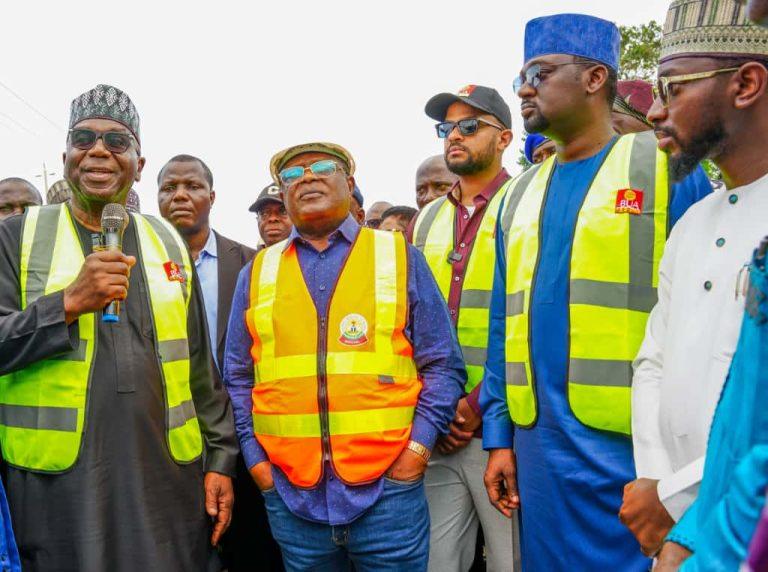
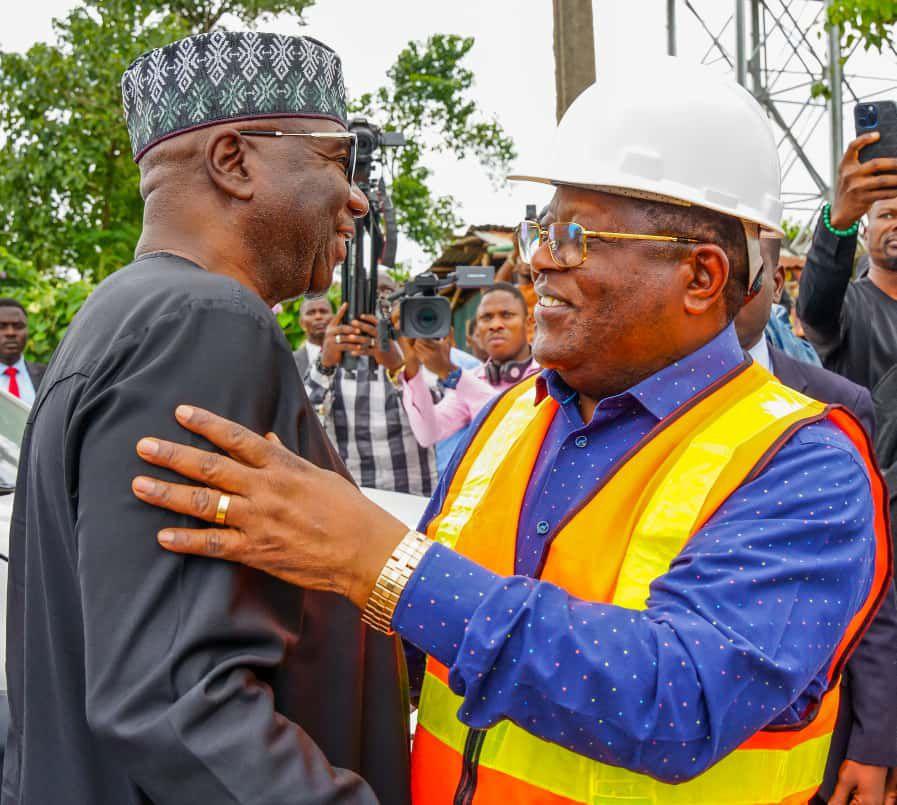
Nigerian Minister of Works David Umahi has commended the Kwara State Government for what he described as “quiet but impactful” infrastructure development across the state, saying the Federal Government remains committed to supporting such efforts through strategic partnerships.

Speaking during an inspection of the 42.6 km Eiyenkorin–Afon–Ojoku–Offa road, Umahi praised Governor AbdulRahman AbdulRazaq for his leadership and unwavering support for President Bola Tinubu’s Renewed Hope Agenda.

“We are very proud of what Your Excellency is doing in Kwara State without much noise,” the minister said. “The Federal Government appreciates your leadership and support for President Tinubu. The Oko Olowo flyover has now been approved, and we will ensure its implementation to end the accidents and gridlocks in that corridor.”

The minister explained that the Eiyenkorin–Offa concrete road, being handled by the BUA Group under the federal tax credit scheme, was awarded in May 2023 and commenced in September of the same year. He said the use of reinforced concrete pavement would make the road last between 50 and 100 years.

Umahi also disclosed that the ministry would return to Kwara next month for the inspection of the Kwara stretch of the Sokoto–Badagry Super Highway, which cuts across several states in the North-Central and South-West zones.

Earlier, Governor AbdulRazaq, who accompanied the Minister on the tour, had flagged off the construction of the 15.1km Ojoku–Ilemona road in Oyun Local Government Area.

The governor said his administration had already delivered more than 100 km of road projects in Kwara South alone and was working on an additional 109 km under the Rural Access and Agricultural Marketing Project (RAAMP).

“This road represents the dividends of democracy and the Renewed Hope agenda,” AbdulRazaq said. “It connects agrarian communities, encourages trade, and opens up opportunities for investment. Olam is already about to commission a $25 million soybean processing plant along this corridor.”

He urged residents to protect public infrastructure and reminded the Minister of other key federal projects in the state, including the dualisation of the Ilorin–Lokoja road, the Share–Patigi road, and the Moro Bridge, which he described as vital to economic integration and national connectivity.

Traditional rulers, including the Elerin of Erin-Ile, Oba Adesoye Adebowale Jimoh, and the Olojoku of Ojoku, Oba Abdulrazaq Adegboyega Afolabi, lauded the governor’s developmental strides, saying the new projects would boost local commerce and reduce travel time within the region.

The Commissioner for Works, Engr. Abdulquawiy Olododo said the Ojoku–Ilemona road would “transform the axis into a corridor of growth,” improving access to healthcare, education, and markets.

The inspection and flag-off ceremony were attended by federal and state lawmakers, cabinet members, local government chairmen, and community leaders.


President Tinubu’s Reforms Strengthen Democracy For Citizens– Minister

0

Nigeria’s Minister of Information and National Orientation, Mohammed Idris, says the reform agenda of President Tinubu’s administration has freed up resources, creating headroom for state governments to embark on people-oriented projects.

The minister made this statement when he led commissioners of information from APC-governed states on an inspection tour of federal and state projects in Borno State, on the margins of their quarterly strategic meeting in the state.

Idris noted that: “The reform agenda of Mr President is working. It’s putting resources into the coffers of the subnationals so that they can use it to work for the people,” he noted

At the completed University of Maiduguri 12 MW Hybrid Solar Plant, developed by the Rural Electrification Agency (REA) and supported by the World Bank, the Vice Chancellor of the University, Prof. Mohammed Mele, said, “The plant serves and meets the energy needs of the university and its teaching hospital, adding that the facility is saving the institution N170 million in monthly payments to the Electricity Distribution Company.”

The group visited the 50 MW Maiduguri Emergency Power Plant, commissioned by the President Buhari administration and ramped up to full capacity by the current government, providing a steady energy supply to households and businesses in the city and its environs.

The Borno state government has also constructed 104 mega schools across the 3 senatorial districts of the state in the last year, while 35 others are at various stages of completion.

During the visit to one of the schools named after President Bola Tinubu, Minister Idris lauded the Gov. Zulum-led Borno government for putting to good use the increased allocation to the state by investing massively in education and the future of the children of the state.

Other projects of the state government visited include the soon-to-be-commissioned fourth flyover of the state, Borno Express Terminus Flyover, for which construction commenced at the beginning of the year. “This is what the synergy between the federal government and the subnationals can do,” said Idris, while attributing the success of the state government in infrastructure development to the collaborative efforts of the Tinubu administration.

Herwa EV station, one of the seven electric vehicle mega charging stations established by the Borno State Government with the support of the North East Development Commission (NEDC), was also inspected, which, according to Idris, “aligns with the federal government’s cleaner and renewable energy migration drive,” he noted

The information minister added that work is also progressing on the international wing of the Muhammadu Buhari International Airport, Maiduguri.

It would be recalled that President Tinubu approved the upgrade of the Maiduguri airport to the status of an international airport in March 2025, making it the only international airport in the North East geo-political zone.


Nigeria Advocates Sign Language Inclusion In Schools

0

The Nigerian government has called for the adoption of sign language in schools to bridge educational gaps and ensure that girls with disabilities are not left behind.

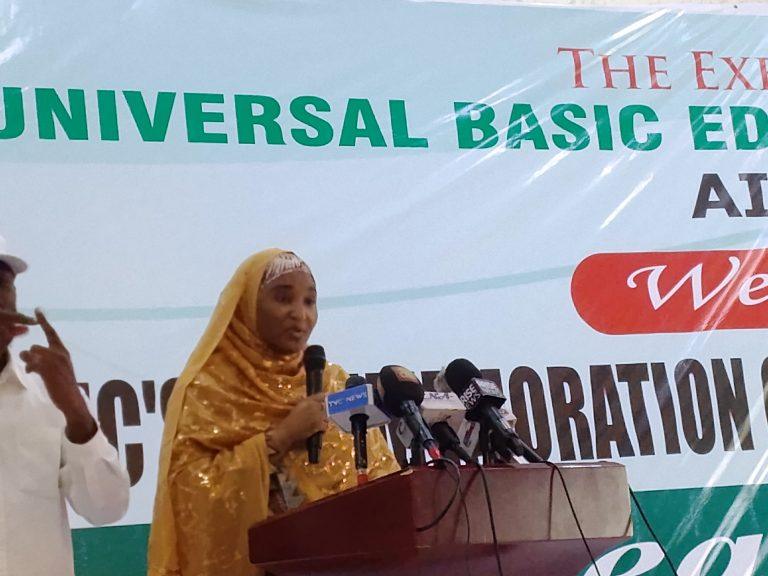
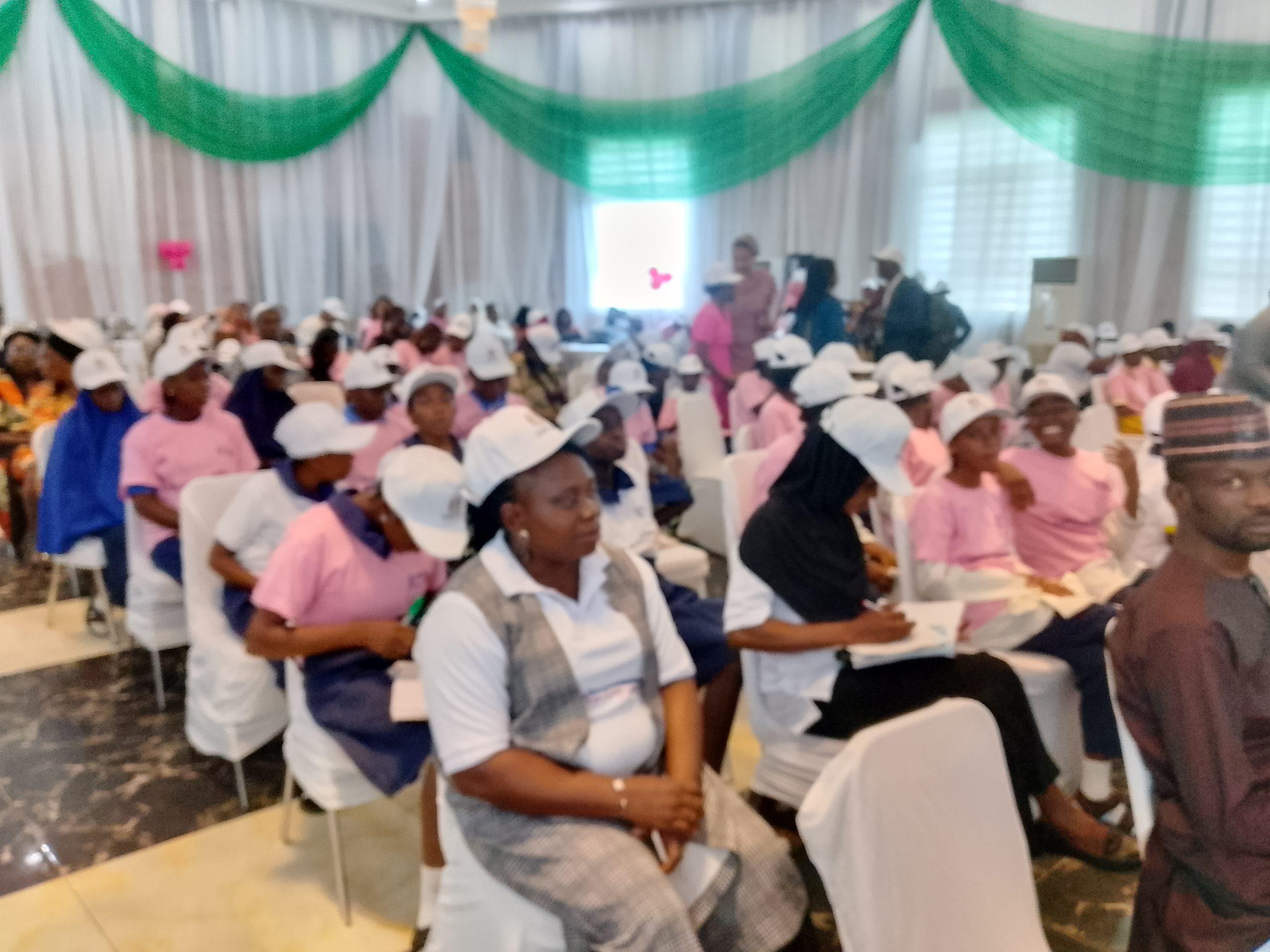
The Minister of State for Education, Prof. Suwaiba Ahmad, made the call at the commemoration of the 2025 International Day of the Girl Child, organised by the Universal Basic Education Commission, UBEC, with the theme “Leada Change: Learn Sign Language Today.”

She said the event and the theme are a call to action to remove barriers to inclusion and widen access, ensuring that every girl, regardless of ability, background, or circumstance, has a voice, a seat at the table, and a path to success.

“To our girls, who navigate the world with unique challenges, I want you to know that doors of education are widening for you. Your dreams are legitimate, your contributions invaluable, and your futures bright with possibility,” Ahmad said.

“I call for the training of more sign language interpreters, the introduction of sign language across teacher-training curricula, and the equipping of classrooms with tools to support visual-gestural communication,” she said

Professor Suwaiba said, “Sign language is a bridge, not a barrier, as it connects minds, shapes friendships, and unlocks futures, with such emphasis laid on training more teachers in the area.

“We will train more sign language interpreters, introduce sign language across teacher-training curricula, and make it a recognised part of our national education framework,” she said

She noted that the commemoration reaffirms Nigeria’s commitment to inclusive education, the rights of persons with disabilities, and the belief that every girl can thrive when given the right support and opportunities.

She equally expressed the need for coordination among government agencies and stakeholders to ensure that every girl’s educational journey, from primary to secondary and vocational levels, remains inclusive and uninterrupted.

“The Universal Basic Education Commission has a crucial mandate: to ensure that every child has access to free, compulsory, and quality basic education. We will continue to expand inclusive education programmes, ensuring adaptive learning environments, sign language interpretation where needed, and teaching methodologies that meet diverse learning needs,” she said.

The minister acknowledged challenges such as poverty, stigma, and safety concerns that continue to restrict girls’ access to education. She, however, called for unified action and sustained policy alignment to overcome the challenges.

“Today, we choose to lead a change again and again by learning, by listening, and by acting together,” she added.


NELFUND Urges Schools to Upload Student Records For 2025/2026

0

The Nigerian Education Loan Fund (NELFUND) has directed all accredited tertiary institutions across the country to update and upload their students’ records on its Student Verification Portal ahead of the official launch for the 2025/2026 academic session.

In a statement issued by Director of Strategic Communications, Mrs Oseyemi Oluwatuyi, NELFUND, noted that the exercise is a proactive step aimed at ensuring a seamless verification and loan application process for students once the application portal opens.

“Institutions have been directed to capture and upload accurate data of all students, both returning and newly admitted, using each student’s admission number or other unique verifiable identifiers.

“NELFUND recognises the critical role tertiary institutions play in the success of the Education Loan Scheme and seeks their continued cooperation and partnership to expand access to higher education for all eligible Nigerian students,” she said.

According to her, only students whose details have been duly uploaded and verified through their respective institutions will be eligible to apply for and benefit from the student loan scheme.

“To ensure the process runs smoothly, institutions are urged to commence and complete the upload exercise promptly and to designate qualified officers to oversee the activity in line with NELFUND’s technical guidelines.

“This collaboration is key to ensuring that no eligible student is left behind as we prepare to open the portal for the new academic session,” she added.

The Fund reaffirmed its commitment to the Renewed Hope Agenda of President Bola Ahmed Tinubu’s administration by facilitating equitable access to higher education through financial support to students who need it most.


Olusola Akintonde

Ex Speaker Dogara Lauds President Tinubu’s Education Policies

0

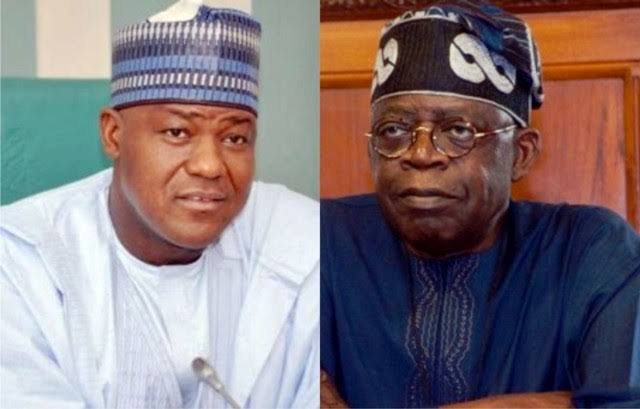
Former Speaker House of Representatives, Yakubu Dogara has lauded the educational policies of the Tinubu administration.

Dogara spoke at the Federal University of Lokoja while delivering a Special Public Lecture, titled: “Empowering the Future Generation: The Founders’ Vision and Legacy.”

The Public Lecture was part of the week long activities for the Institution’s 9th Convocation.

Dogara said; “the President deserves commendations, especially on the establishment of the Nigerian Education Loan Fund (NELFUND), which gives hope to the students whose educational dreams would have been cut short for lack of fund.”

According to him, “Education remains our most powerful weapon against poverty, ignorance and underdevelopment. It is the idea of planting seeds of hope, creating pathways to opportunity, and building a place where talents are refined and human potential is unlocked.

“NELFUND – a Programme designed to remove financial barriers to higher education for indigent Nigerian students with interest -free loans had disbursed N99.5billion to fund tuition and upkeep allowances.

“As we speak, and as part of President Bola Ahmed Tinubu’s Renewed Hope Agenda, he has prioritised inclusivity and equity in access to education. We are witnessing the gradual dismantling of systemic barriers, particularly for marginalised grounds such as women and persons with disabilities. No one doubts Mr. President’s commitment to ensuring that every young Nigerian, regardless of background, has access to quality education.

“To those who have often wondered why I promote President Tinubu’s education policies – you have found one of the answers. Why would any sensible person who has benefited immensely from education do otherwise?”

The Former Rep Speaker however enjoined the graduands to take advantage of their knowledge to solve Nigerian problems, urging them to develop a global mindset with local relevance.

He said; “Think globally but act locally. While embracing international best practices, never forget your roots. The solutions to Africa problems must be African- led, though globally informed. Weather you become engineers, doctors, teachers, entrepreneurs or public servants, always ask: How can I apply global knowledge to solve local problems?”

He also tasked them to seek innovation and entrepreneurs, embrace lifelong learning, commit to ethical leadership and be a good stewards for the university.


Olusola Akintonde

World Meteorological Organization to Hold Extraordinary Congress 2025

0

The World Meteorological Organisation (WMO) will hold an Extraordinary Congress from October 20 to 23, 2025, bringing together representatives from its 193 member states and territories to advance global cooperation in weather, water, and climate services.

The event, which coincides with the 75th anniversary of WMO as a United Nations specialised agency, will celebrate the organisation’s legacy of promoting the free exchange of meteorological data since 1950, a foundation for improved forecasts, warnings, and climate services that protect lives and support sustainable development.

A key focus of the Congress will be the Early Warnings for All (EW4All) initiative, launched by UN Secretary-General António Guterres in 2022.

The programme aims to ensure that everyone on Earth is protected by multi-hazard early warning systems by 2027.

Highlights include the high-level event “Bridging the Gaps: Turning Early Warning Ambition into Action” on October 20, featuring government leaders and the launch of the EW4All in Focus: Hazard Monitoring & Forecasting report.

The same day will also feature a side event on WMO’s Coordination Mechanism for humanitarian early warnings.

On October 21, discussions will turn to the role of artificial intelligence (AI) in weather forecasting, exploring ways to bridge the digital divide between developed and developing nations.

The Congress will culminate on October 22 with a special address by UN Secretary-General António Guterres, marking WMO’s milestone anniversary and reaffirming global commitment to early warning systems for all.

Congress sessions will be livestreamed on the WMO YouTube channel, and detailed agenda information is available on the WMO website.


Rivers Government Reiterates Focus on Peace, Progress

0

The Government of Rivers State, South-South Nigeria, has stated that governance has been reactivated, with major stalled projects revived across the local government areas, reaffirming the commitment to development and peace in the state.

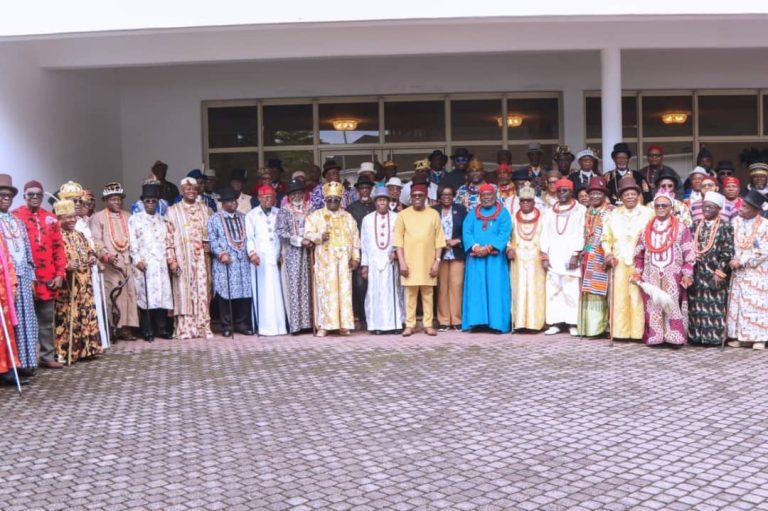
The Governor of Rivers State, Siminalayi Fubara, disclosed this during a meeting held at the Banquet Hall, Government House, Port Harcourt, the state capital, with traditional rulers to acquaint them with the return of governance after the emergency rule in the state.

The governor informed the traditional rulers of the government’s efforts to reactivate stalled projects across the state, assuring them that major works, including the Port Harcourt Ring Road, hospitals, and roads, have resumed.

He emphasised that the interests of Rivers people remain paramount in all government undertakings, adding that the administration is committed to addressing any challenges facing the communities.

“My meeting with you this afternoon is to tell you that we are back. It’s not me, all of us. The government has started again. Our projects, if you are aware, most of the project sites have all reopened. The Ring Road has restarted. The hospitals are mobilised back to sites. The roads, as of today, we’ve had meetings with all the contractors. They’ve all moved back to sites.” Fubara said.

He acknowledged the unique position of the traditional rulers as the closest leaders to the people and the vital role they play as custodians of culture and grassroots leaders in fostering peace and driving development, and appealed to them to continue to maintain peace within their domains as a way of supporting government initiatives.

“Also, the issues of other developments. I believe that most of them that were truncated, we will revisit them. Because at the end of the day, it has to do with the people. We must make sure that the interests of our people are supreme in whatever we’re doing. If you observe, every sector of the system has been activated.” He said.

Governor Fubara pledged to respect the traditional institutions, describing them as the ancestors and pillars of the state, and assured them of continued engagement and support.

“You cannot control from Port Harcourt, living in Government House, to decide what happens in the most interior place in Kula. You might have a local government chairman; you might have a councillor, but who is the closest, who controls the sub-leaders of the families, communities that make up the big Kingdoms? It is you all here that control them. So, if we have to pray for peace, if we have to yield for development, who should be the people I should always listen to? It is you.” He said.

The governor further announced plans to fulfil pending commitments to the traditional rulers, including the provision of vehicles and other benefits according to their hierarchy, promising that these would be delivered by the end of November.

“You know the problem; you understand the needs of the people. So, we are appealing that we need more peace. You want us to succeed; ensure that you maintain peace in your communities. Ensure that you support the government programmes. On my own part, I will give you the respect that you deserve.” He said.

He also addressed the importance of the quarterly council meetings, urging the Council Chairman to remain apolitical and focused on promoting the collective interests of the state.

In his remarks, the Chairman of the Rivers State Council of Traditional Rulers, Eze Chike Worlu Wodo, Eze Oha Apara (IV), Paramount Ruler of Apara Kingdom, reminisced the experience of the state and traditional rulers during the emergency rule and expressed gratitude to God for the return of the Governor and thanked him for the maturity and courage exhibited during the trying moment.

In their separate speeches, the Oba, Eze Ogba of Ogbaland, Eze Nwachukwu Nnam Obi, the III; the Amanyanabo of Bonny, King Asimini William Dappa Pepple III, Perekule XI; the Amanyanabo of Abonnema, King Disreal Gbobo Bob-Manuel; and the Eze of Omuma Kingdom, King Onyekachi Amaonwo, noted the organic support Rivers people have for the Governor, ascribing his return to God’s answer to the people’s prayers.

They noted that Rivers State is back on its feet and urged the governor to continue with the developmental projects that he had always put in place and focus on youth empowerment, job creation and community development.

Saying that these are the surest foundations for enduring peace, they assured the governor of the traditional institution’s commitment and readiness to continue to support the government’s developmental agenda.


Thousands Attend State Funeral Of Former Kenyan Prime Minister Odinga

0

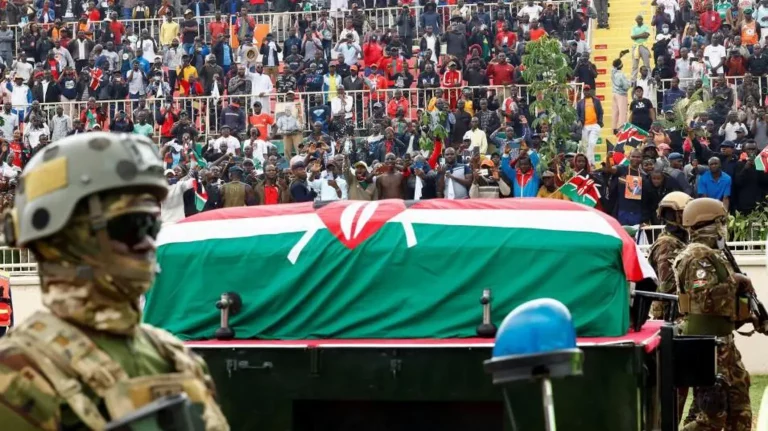
Thousands of mourners on Friday, gathered to attend the state funeral of former Prime Minister Raila Odinga at a national stadium in Kenya’s capital.

Many carried national flags, portraits of the late leader, and wore T-shirts printed with his image to pay their final respects.

Security was tight in and around the stadium, with police and military officers deployed to the ceremony.

The presidents of Somalia and Ethiopia are among the regional leaders who attended the funeral service at the Nyayo National Stadium.

As Odinga’s body entered the stadium in a ceremonial military procession, mourners broke into chants, whistles, and songs.

They chanted “Raila usilale, bado mapambano”, a popular Swahili political slogan, which translates as “Raila, don’t sleep, the struggle is not over“.

Raila hated dishonesty. He hated greed. The greed that has affected the fabric of our society,” said Ida, Odinga’s widow, in her speech.

Bishop David Kodia, who led the service, said Odinga never used his political power and money to intimidate people.

Earlier on Friday morning, Odinga’s body was taken to parliament, where MPs and selected dignitaries viewed it.

Odinga, a giant figure on Kenya’s political scene, died on Wednesday, aged 80, in India, where he had been receiving medical treatment.

Mourners have been carrying branches and palm fronds, a symbol of mourning and grief among the Luo ethnic group to which Odinga belonged.

On Saturday, his body will be transported to Kisumu, a city in western Kenya on the shores of Lake Victoria – his political stronghold.

Members of the public will get a chance to view the body before he is buried on Sunday at his farm in Bondo, about 60km (40 miles) west of Kisumu.

According to the family, it was Odinga’s wish to be laid to rest within the shortest time possible.

Seven days of mourning have been declared.

He was a towering figure in Kenyan politics and, for many years, was the country’s main opposition leader, losing five presidential campaigns, most recently three years ago.

Odinga repeatedly said he was cheated of victory, citing the manipulation of votes.


Reuters/Oyenike Oyeniyi 

Nigeria Reaffirms Commitment to Data-Led Migration Policies

0

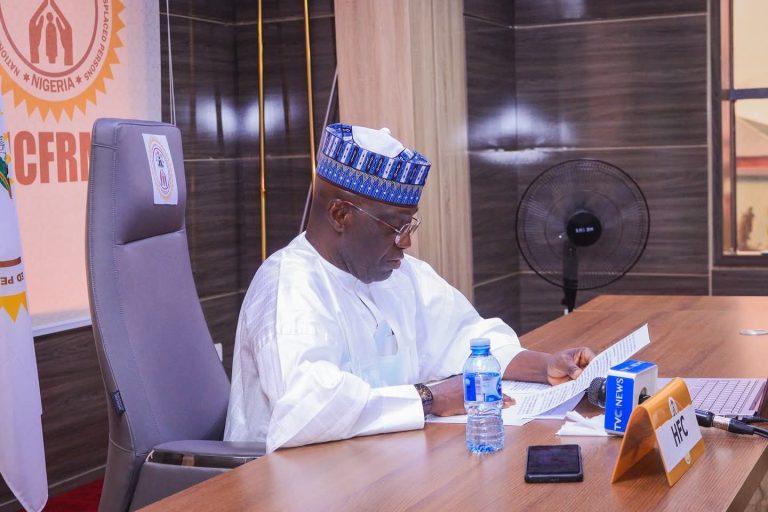
As Nigeria prepares to host the second thematic meeting of the Rabat Process, it says data remains the key tool for evidence-based policymaking in migration issues.

The Federal Commissioner of the National Commission for Refugees, Migrants and Internally Displaced Persons, Tijjani Ahmed, made this remark while addressing global partners during a webinar.

He said the thematic meeting is apt and timely because migration across the Rabat Process region continues to evolve in scale, complexity, and impact.

He restated that when data is reliable, disaggregated, and accessible, it enables stakeholders to understand migration patterns, identify emerging trends, and respond effectively to the challenges and opportunities that mobility presents.

“ It ensures that migration contributes not only to economic growth and innovation but also to social inclusion, human rights protection, and sustainable development.

“The Objective 1 of the Global Compact for Safe, Orderly and Regular Migration emphasises the importance of ‘collecting and utilising accurate and disaggregated data as a basis for evidence-based policies.

“Likewise, Goal 17 of the Sustainable Development Goals calls for strengthened national capacities to produce ‘high-quality, timely, and reliable data’ that reflects the diversity of our societies and populations.”

These recommendations, according to him, underscore the importance of strengthening administrative data sources, enhancing collaboration across institutions, and improving comparability across countries, noting that together, they represent a renewed international consensus that good migration policy begins with good migration data.

“This webinar offers a valuable opportunity to deepen that collaboration. By bringing together policymakers, technical experts, and data producers, we can collectively address the persistent gaps that hinder the effective use of data in migration policy.

“The discussions here will also help identify practical solutions to strengthen national and regional migration observatories, build technical expertise, and promote coherence across data systems. Importantly, this dialogue also reminds us of the need for a whole-of-route approach, as migration journeys transcend borders.”

The Federal Commissioner added that to better understand migration dynamics, data systems must connect countries of origin, transit, and destination, ensuring that collective responses are coordinated, informed, and humane.

Stakeholders Reaffirm Police-Community Trust for Peacebuilding

0

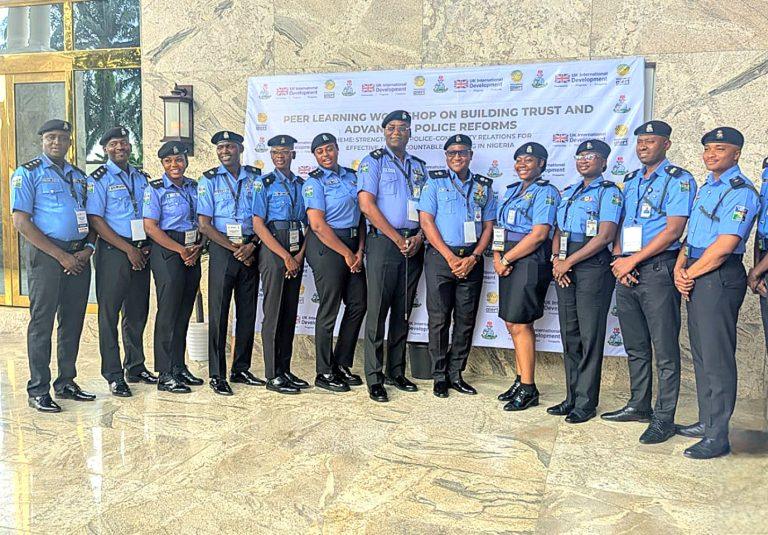
Stakeholders at the Learning Exchange Workshop on the Mutual Accountability and Community Scorecard (MACS) Initiative reaffirmed that rebuilding trust between the Nigeria Police and local communities is essential to achieving peace, justice, and effective security in the country.

In submissions made during the two-day workshop held in Uyo, Akwa Ibom State, participants emphasised that welfare, transparency, collaboration, and responsible information management are central to transforming public perception, strengthening accountability, and advancing national security and community cohesion.

Read Also: Police, Citizens Deepen Trust through Mutual Accountability Initiative

Commitment to Peace and Collaboration

Addressing participants, the Board Chairman of International Alert, Mr David Nussbaum, reaffirmed the organisation’s commitment to promoting trust, justice, and inclusion through peacebuilding initiatives across Nigeria.

Nussbaum stated that International Alert’s global mission of fostering peaceful solutions to conflict is being effectively demonstrated through its partnerships with the Nigerian Police Force and local communities.
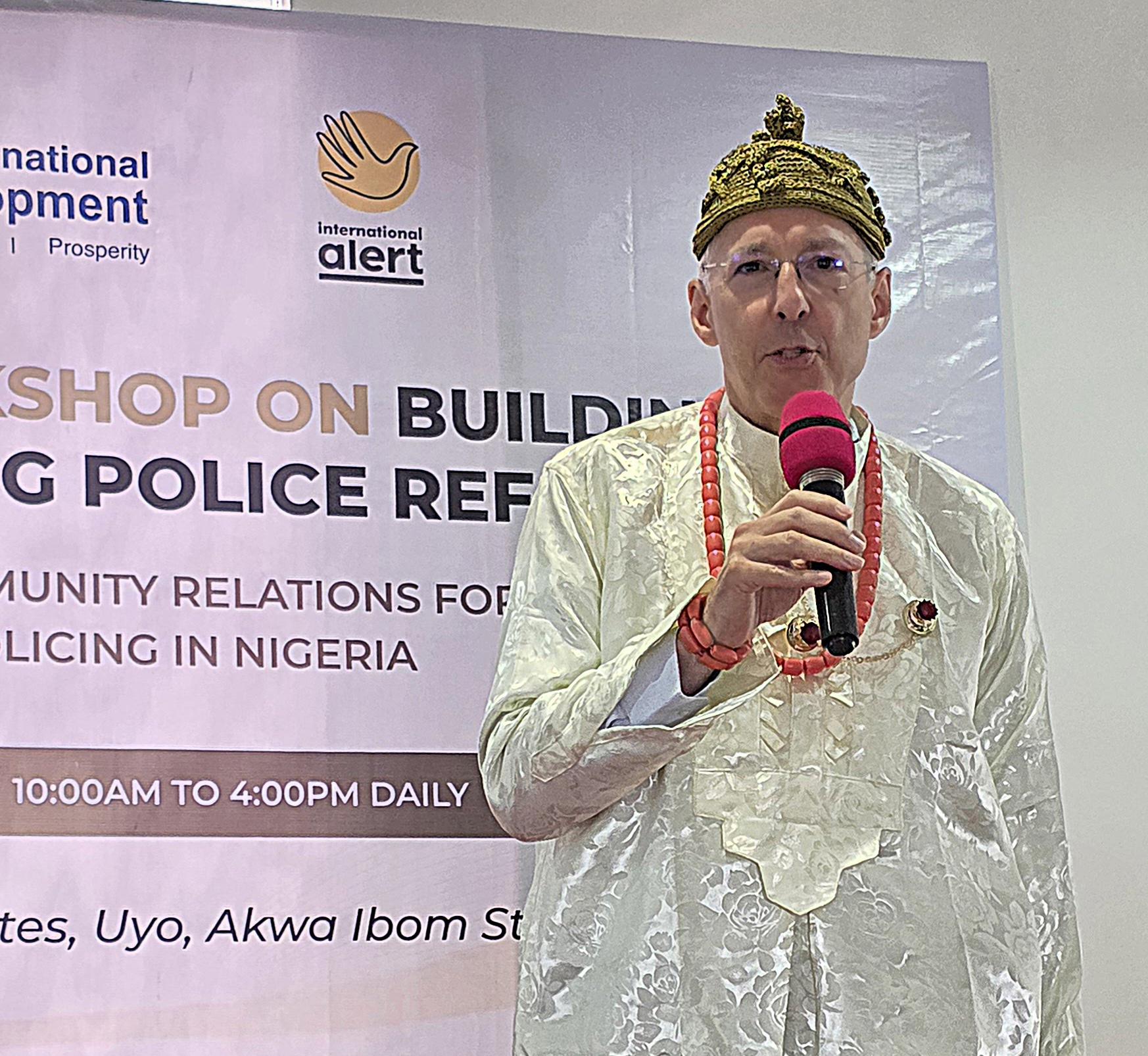
“We believe that sustainable peace requires collaboration, transparency, and mutual accountability between the state and the people it serves,” Nussbaum said.

He commended the Nigeria Police Force, the UK Foreign, Commonwealth and Development Office, and other partners for “their shared commitment to building a safer and more peaceful Nigeria,” adding that initiatives like the MACS framework are “helping bridge divides, improve communication, and rebuild trust in public institutions.”
Royal Father Advocates Police Welfare

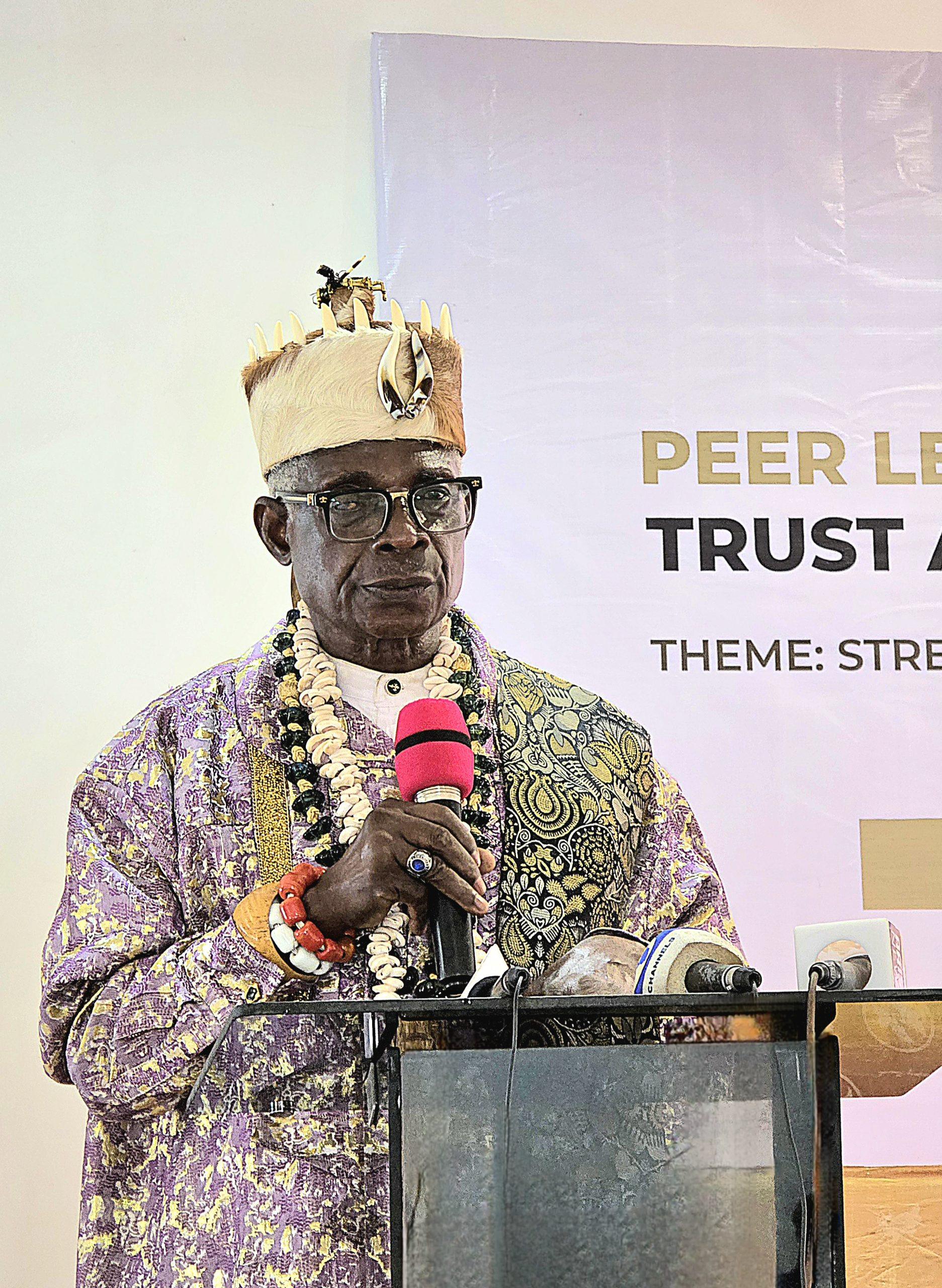
Speaking at the event, the Paramount Ruler of Ibesikpo Asutan, Edidem III Clement Ekpenyong, urged the Federal Government to prioritise the welfare of police officers as a prerequisite for sustainable reform and rebuilding public trust.

“Before we talk about reform, we must first ensure that those who protect us are themselves protected and provided for,” he said.

The royal father stressed that meaningful reform must begin with improved welfare, logistics, and morale of officers, particularly those deployed at the grassroots.

He added: “Before we can reform policing relationships with the citizenry, we have to first recognise that the police are human beings… They stand on the streets every day, think about our safety day and night.”

Edidem Ekpenyong further called for a policy review that embeds welfare and operational readiness into Nigeria’s broader security reform agenda.

“We need to make consensual reform policies for the government. That is the best way to strengthen relationships between the police and the community,” he said.
Forging Police and Citizens’ Trust

The Police Public Relations Officer, Akwa Ibom State Command, DSP Timfon John, called for mindset reorientation among citizens to rebuild confidence between the police and the public.

“You have to see the police beyond the uniform. We are first humans before officers. We are not masquerades, so you shouldn’t be running away from us.” DSP John said.

She stressed that fear and misconceptions often drive public distrust, urging citizens to see the police as partners in safety rather than threats.

“If you don’t even think crime in your heart, I don’t see a reason why you see police and be running,” she added.
Similarly, the Police Public Relations Officer, Enugu State Command, SP Daniel Ndukwe, described trust as “a two-way street,” emphasising that both the police and citizens must work together to deepen mutual understanding.

“You can’t even hold a policeman accountable if you don’t truly understand what a policeman is meant to be doing. Trust comes when citizens know their rights and the police live up to their codes of conduct,” he said.

Bauchi SGBV Impact Report
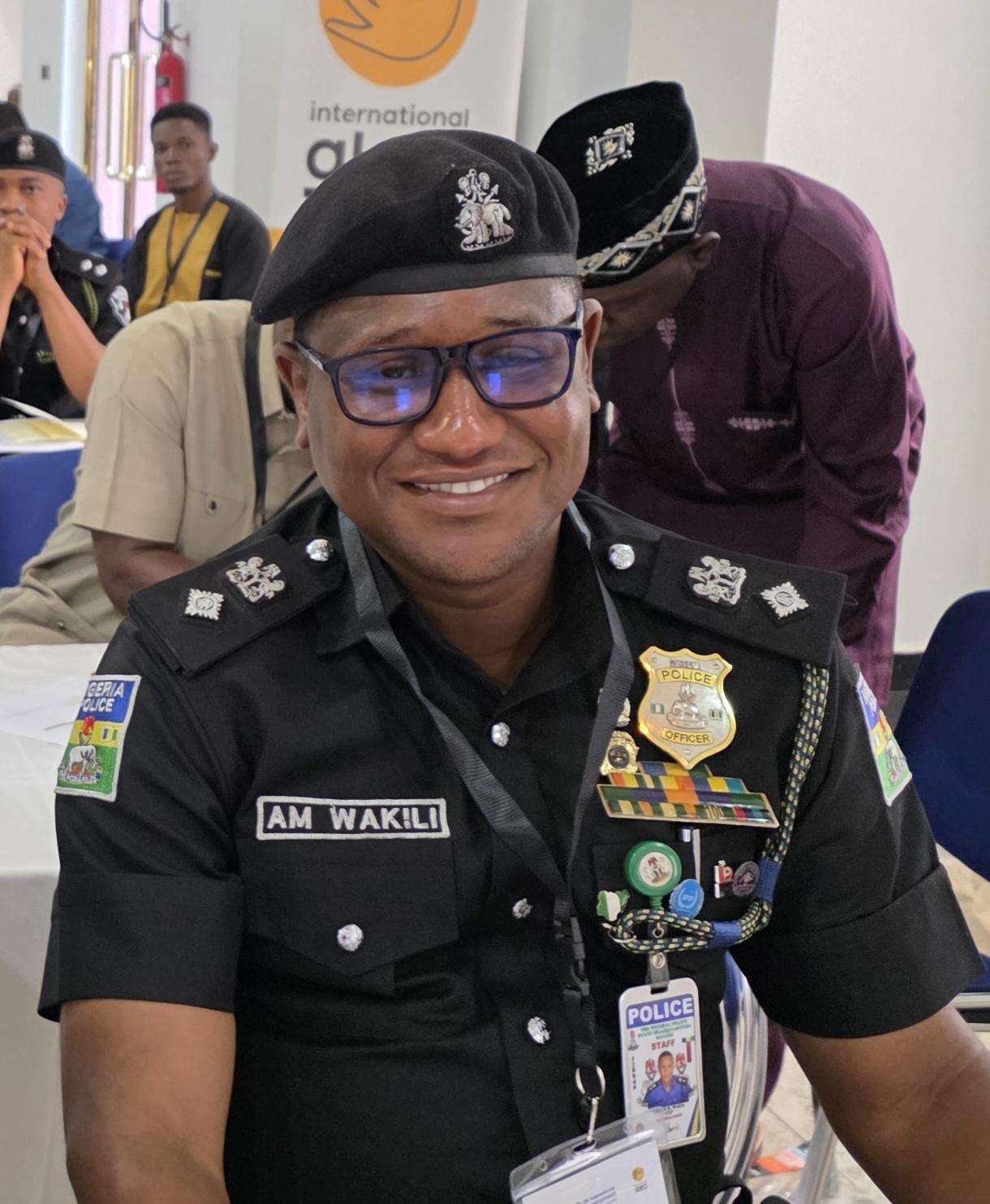
In a panel discussion on “Strengthening Police-Community Collaboration through the MACS Framework,” the Police Public Relations Officer, Bauchi State Command, CSP Ahmed Mohammed Wakili, highlighted the transformative impact of the initiative in addressing sexual and gender-based violence (SGBV).

“With the coming of this initiative, women are now able to come out and voice their problems. So far, Bauchi State has recorded the highest prosecution and conviction of sexual and gender-based violence cases — that is an applause for Bauchi,” he said.

Wakili also commended the media’s role in sustaining community awareness and transparency.

“The media are with us 24 hours a day. No PR role works without the media — they are our partners in ensuring the public knows what we are achieving together,” he affirmed.

Commitment to Trust-Building

The Deputy Force Public Relations Officer, CSP Victor Isuku, commended Police PROs across implementing states for their “commitment and clarity” in strengthening police-community relations under the MACS framework.

“When we talk about building trust, people must know they can come to us. If there’s no trust, citizens will not engage. And where they prefer to go to civil society groups, we must recognise that CSOs are vital partners in this work,” he said.

He cautioned against human rights abuses by security support vigilante groups and tactical units.

“If we do not correct wrong practices, public confidence will suffer. We need to show that the Nigerian Police is a people-serving institution. We must engage them and educate them,” he added.

In an interview with Voice of Nigeria, Isuku reaffirmed the IGP’s reform vision.

“A lot of ground has been covered — and this collaboration is proof of that progress. Under the leadership of the IGP, we are building a police force that is professional, service-driven, people-friendly, and rule-of-law compliant,” he said.

Information Management for Peace

In his closing submissions, the Country Director of International Alert Nigeria, Mr Kingsley Udo, stressed that sustainable peace depends on how information is managed and shared across communities.

“Conflict is part of human nature, but it can be managed in ways that promote healing and friendship,” Udo said. “We want the police not just as friends, but as family — the brother or sister next door.”

He identified responsible information management as the missing link in peacebuilding.

“We are not fully harnessing our potential to share accurate, unifying narratives,” Udo noted. “That’s why we plan to expand our programmes — building inclusive community dialogues where men, women, and young people can use information as a tool for peace.”

Stakeholders’ Consensus

Stakeholders comprising police public relations officers from across the country, traditional rulers, civil society groups, and youth leaders agreed that rebuilding trust begins with recognising the humanity behind the uniform.

They echoed that “the police are first and foremost human before they wear the uniform,” appealing, “Let’s create the enabling environment and support them to do their jobs effectively.”

They maintained that the nation’s security men and women are doing commendable work protecting lives and property, adding that collective support from all strata of society is needed to make Nigeria a safer place for all.

This collective call aligns with President Bola Ahmed Tinubu’s Renewed Hope Agenda, which seeks to strengthen citizen security through welfare, accountability, and collaborative peacebuilding across Nigeria.

Partnership Appreciation

As part of the event’s highlights, the Paramount Ruler of Ibesikpo Asutan, Edidem III Clement Ekpenyong, conferred the traditional chieftaincy title of “Eti Ufan”, meaning “Good Friend”, on the Board Chairman of International Alert, Mr David Nussbaum, in recognition of the organisation’s enduring partnership and contributions to peacebuilding and community trust initiatives across Nigeria.

The workshop, themed “Strengthening Police-Community Relations for Effective and Accountable Policing in Nigeria,” was convened by International Alert Nigeria in collaboration with the Nigeria Police Force and the UK Foreign, Commonwealth and Development Office (FCDO).