

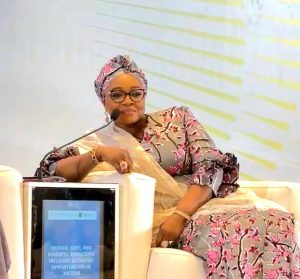
Nigeria’s Minister of Women Affairs and Social Development, Hajiya Imaan Sulaiman-Ibrahim, has declared that women’s economic empowerment must be treated as a national priority, not “Any Other Business (AOB)”, stressing that it is “the engine room of peace, development, and human progress”.
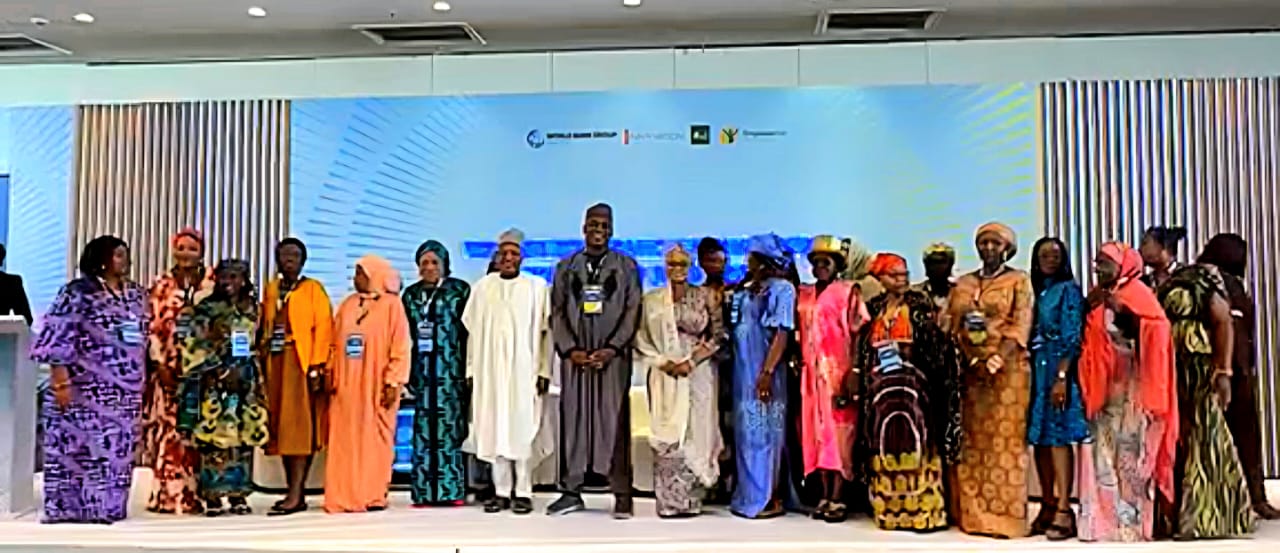
Speaking at the Evidence Forum on Women, Jobs, and Markets, organised by the World Bank in Abuja, the Minister emphasised that the focus must shift from questioning women’s capabilities to reforming systems that enable them to thrive at scale.
“The question before us is not whether women are capable, but whether systems are prepared to allow women to unlock their economic opportunities at scale.”
Citing data from the World Bank Group showing that closing Nigeria’s gender gap in labour force participation could add $229 billion to GDP by 2030, she noted persistent disparities in access to finance, education, and productivity.
“These are not simply gender disparities; they are macroeconomic and national security risks that demand urgent action.”
The Minister aligned ongoing interventions with the Renewed Hope Agenda of President Bola Ahmed Tinubu, highlighting priorities such as poverty eradication, job creation, and inclusive growth.
Central to implementation is the Renewed Hope Social Impact Interventions–774 programme, targeting over 50 million Nigerians across all local government areas.
She described the initiative as “a transformative, gender-responsive programme that will directly impact over 50 million women, children, families, and vulnerable persons.”
The scale-up of the Nigeria for Women Project to 32 states was also identified as a key delivery platform integrating financial inclusion, livelihood support, and social protection.
“This approach replaces fragmented interventions with a systemic model capable of reshaping local economies, reducing household vulnerability, and positioning women as the drivers of Nigeria’s inclusive growth.”
Providing performance metrics, the Minister disclosed that over 460,000 women had been mobilised into affinity groups, saving ₦4.9 billion collectively, with more than 330,000 accessing livelihood grants.
On policy priorities, she outlined three focal areas: agriculture, economic inclusion, and access to capital, saying, “Women constitute 70% of the agricultural workforce but earn 30% less and own only 10% of farmland.”
She added that targeted programmes such as Women Agro Value Expansion aim to address these gaps, while digital and creative economy initiatives seek to broaden opportunities.
On financing constraints and the need for additional resources to complete nationwide coverage and scale key programmes, including digital platforms supporting women entrepreneurs, she stressed, “We are eager to expand, but we need more.”
She urged stakeholders to adopt systemic reforms: “We must move from project to platform and systems thinking… We must treat women’s economic empowerment as national infrastructure; no less critical than roads or power plants.” The Minister urged.
Reaffirming women’s agency in economic transformation, she stated: “The women of Nigeria are not waiting for permission. They are saving, farming, trading, creating, and building.”
She expressed sincere appreciation to President Bola Ahmed Tinubu “for his steadfast commitment to ensuring projects like the Nigeria for Women Project – Scale up receive the required support at the highest level of government.”
The Minister lauded the World Bank Group for sustained support “as a steadfast partner, a trusted ally, and a catalytic force in Nigeria’s journey toward inclusive prosperity”.
“The World Bank has stood with us through the first phase of the Nigeria for Women Project, and today, on the Nigeria for Women Program Scale-Up (NFWP-SU), you have demonstrated that your commitment to Nigerian women is not a one-time event but enduring.” she said
Minister Sulaiman-Ibrahim concluded with a call for actionable outcomes from the forum:
“The question before us is no longer why we should invest in women, but how our systems must be redesigned to unleash their full potential at scale.”