
, in collaboration with the Nigerians in Diaspora Commission (NiDCOM), convened a validation workshop in Abuja for a landmark diaspora study.)
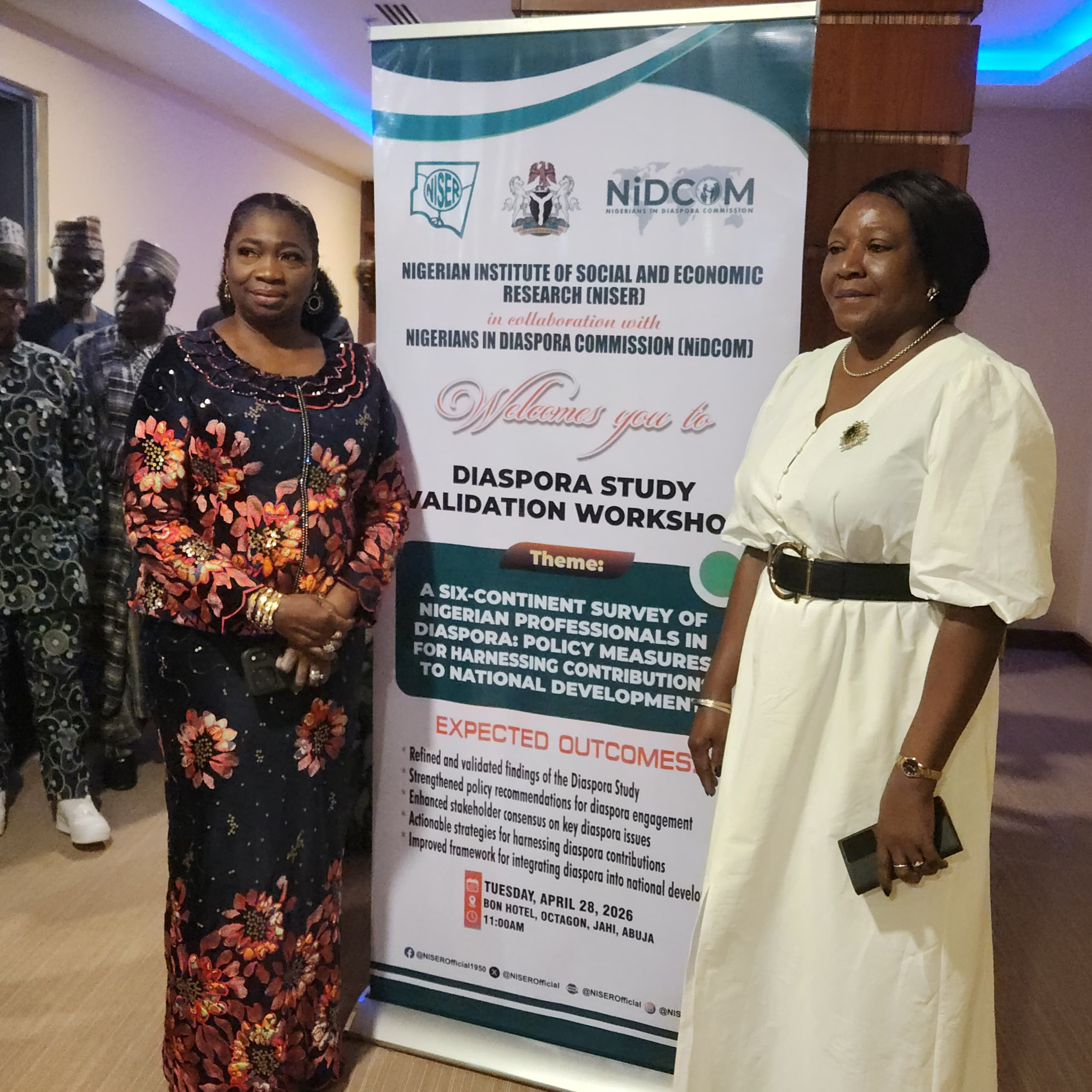
The Nigerian Institute of Social and Economic Research (NISER), in collaboration with the Nigerians in Diaspora Commission (NiDCOM), have convened a validation workshop in Abuja in major effort to strengthen Nigeria’s engagement with its global diaspora.
The landmark diaspora study titled “A Six-Continent Survey of Nigerian Professionals in Diaspora: Policy Measures for Harnessing Contributions to National Development,” is aimed at developing practical strategies to better integrate diaspora contributions into Nigeria’s development agenda.
The workshop brought together policymakers, members of the National Assembly, development partners, professional bodies, diaspora experts, and representatives from Ministries, Departments, and Agencies (MDAs).
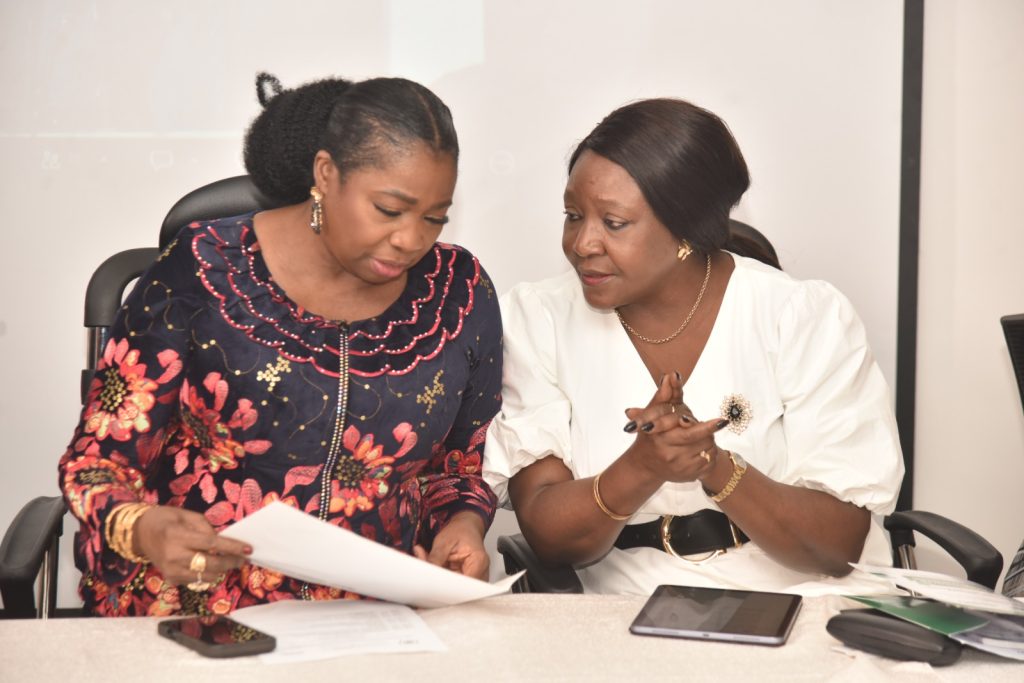
NISER Director-General, Antonia Taiye Simbine, described the study as a critical tool for advancing evidence-based policymaking.
She noted that the initiative reflects a shared commitment among stakeholders to deepen diaspora engagement and ensure that policies are grounded in data and real-world insights.
Simbine emphasised that Nigeria’s diaspora remains one of the country’s most valuable assets, contributing over 20 billion US dollars annually in remittances.
Beyond financial contributions, she highlighted the diaspora’s role in knowledge transfer, innovation, technology development, mentorship, and global networking.
However, she acknowledged that challenges such as policy inconsistencies, weak institutional coordination, and trust deficits continue to limit the full potential of diaspora engagement.
She explained that the study was designed to address these gaps by providing empirical insights and actionable recommendations.
According to her, the validation workshop will refine the study’s findings, strengthen stakeholder consensus, and produce a more robust framework for integrating diaspora professionals into national planning.
Designing Effective Engagement Strategies
NiDCOM Chairman/CEO, Dr. Abike Dabiri-Erewa, described Nigerians in the diaspora as highly skilled and globally competitive, making significant impacts across sectors such as medicine, technology, entrepreneurship, and public service.
She stressed the need to shift focus from remittances used primarily for consumption to investments that drive sustainable development and economic transformation.
Dr. Dabiri-Erewa noted that the workshop provides an opportunity to critically assess diaspora contributions, identify gaps, and design more effective engagement strategies.
She outlined key priority areas, including structured diaspora engagement, policy coordination, investment-friendly environments, and the promotion of innovation and technology transfer.
She further called on stakeholders to work towards reducing brain drain while promoting brain gain and the circulation of skills.
Sustained Knowledge Exchange
The Head of the Abuja Office of the Institute of Chartered Accountants of Nigeria (ICAN), Adamu Yusuf, commended the initiative, describing it as a significant step toward harnessing diaspora expertise for national development.
He emphasised the importance of inclusive and credible outcomes from the validation process and urged participants to contribute meaningfully to the discussions.
From the health sector, representatives of the Nigerian Medical Association (NMA) highlighted the critical role of diaspora professionals in improving healthcare delivery.
Speaking on behalf of the NMA President, Prof. Bala Mohammed Audu, Dr. Liman Idris Mohammed underscored the value of continued collaboration between local and diaspora medical practitioners.
He cited examples of Nigerian professionals trained abroad who have returned to establish advanced medical services, including In-Vitro Fertilization (IVF), now widely available in the country.
He called for sustained knowledge exchange and stronger mechanisms to facilitate the “circulation of skills” between Nigeria and its diaspora.
The validation workshop is expected to produce a refined and actionable policy framework that will guide Nigeria’s diaspora engagement strategy, positioning the country to better harness the expertise, resources, and global networks of its citizens abroad for sustainable national development.