

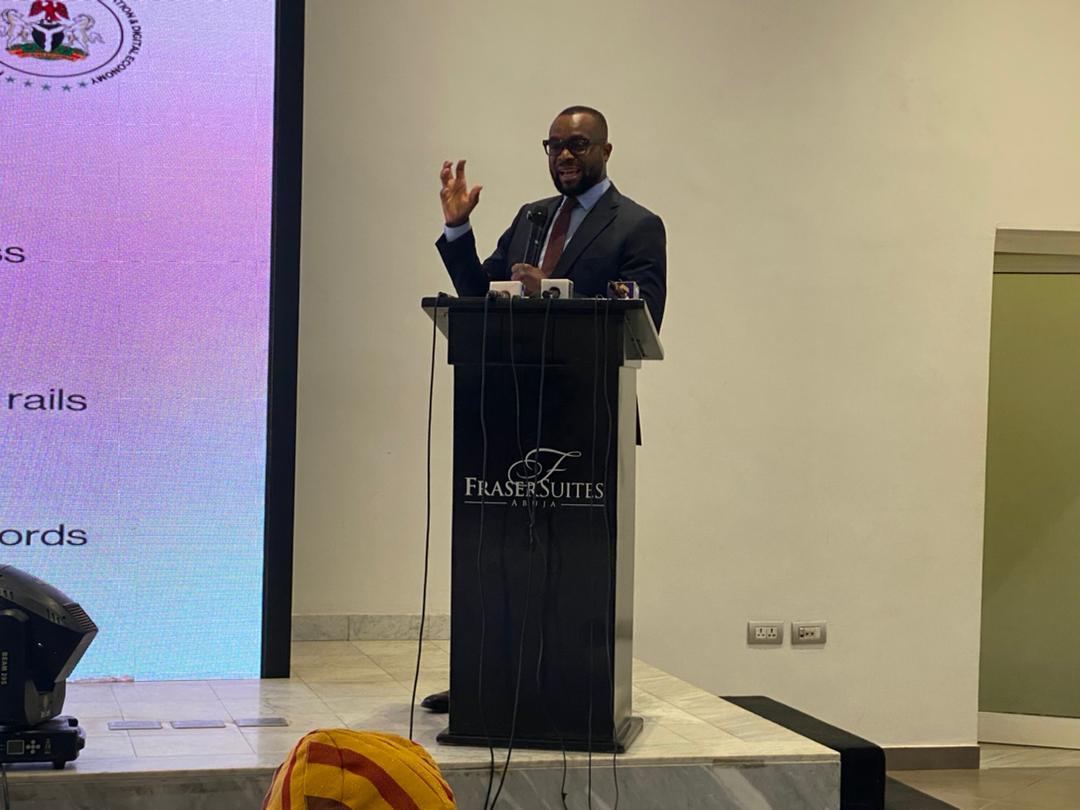
The Minister of Communications, Innovation and Digital Economy, Dr. Bosun Tijani, has initiated a landmark move to bolster Nigeria’s digital defences by announcing the establishment of a Ministerial Advisory Council for Cybersecurity Coordination.
Speaking at the inaugural stakeholder engagement session, the minister emphasised that the rapid growth of Nigeria’s digital economy, which now contributes nearly 20% to the national GDP, has inevitably made the country a larger target for cyber threats.
Reporting a staggering 4200 cyberattacks weekly, Tijani argued that increased connectivity must be matched by “organised, coordinated national resilience”.
The minister linked the need for heightened security to the administration’s ambitious goal of building a $1 trillion economy. He highlighted massive ongoing infrastructure projects designed to provide the necessary “ubiquitous connectivity”, including fibre-optic expansion, rural connectivity and satellite upgrades.
A key theme of the Minister’s address was the rejection of a purely ‘militarised’ approach to cybersecurity. Instead, the new council aims to bridge the gap between government and the private sector, where much of the technical expertise and risk reside.
“By coming together, we believe that we can better identify emerging risks. And if we together identify emerging risks, we’re in a better position to respond to them. We can improve our national policy alignment as well.”
“Our policy is not just government pushing back, but policy is government also understanding how we can better serve you to protect you as well. That we can strengthen public-private collaboration in cybersecurity is extremely important. It’s really about us coming together to figure out how to make this happen.”
The proposed Advisory Council will focus on four strategic areas, namely continuous accountability, trusted intelligence sharing, national coordination and strategic risk foresight.
Minister Tijani concluded by urging stakeholders to view the session as more than just a formal event, calling it a “fantastic opportunity” to influence the design of the council.
He noted that the body would likely be a “large, active council” rather than an elite group, ensuring diverse representation from the tech ecosystem.
According to him, the ministry plans to hold at least two more stakeholder engagements before the council is formally inaugurated, signalling a commitment to an open-source approach to national policy similar to the development of the National AI Strategy.
In his remarks, the DG of NITDA, Kashifu Inuwa Abdullahi, called for urgent and coordinated action to address the growing complexity of cybersecurity threats driven by artificial intelligence.

He emphasised that the current digital landscape presents unprecedented risks, making the creation of the council both timely and necessary.
The DG also noted that the rise of AI has fundamentally transformed cybersecurity, introducing new dimensions of threats. According to him, attacks can now occur both on AI systems and through AI technologies, significantly expanding the threat landscape.
“The AI is changing the game and elevating the threat landscape. The more we integrate Al into our lives, the more we need to change the way we look at cybersecurity. There are two fundamental issues we need to think about.”
“We are also witnessing increasingly sophisticated AI-driven social engineering. The emergence of deepfakes makes it difficult to distinguish between AI-generated audio or video and authentic content. There have even been instances where such technology is used during virtual calls.
This is the reality of the world we live in today, and it is not a challenge any single entity can address in isolation. The only way forward is to strengthen collaboration and deepen synergy between governments and the private sector.”
“We are only as strong as our weakest link. If one entity is compromised, it creates risks for others within the network,” he said, referencing recent incidents where financial institutions were exploited to target broader payment systems and government agencies.
Inuwa commended the minister for initiating the advisory council, describing it as a critical platform for fostering cooperation, information sharing, and collective resilience.
He reaffirmed NITDA’s commitment to supporting the council and working with stakeholders to strengthen Nigeria’s cybersecurity framework.