

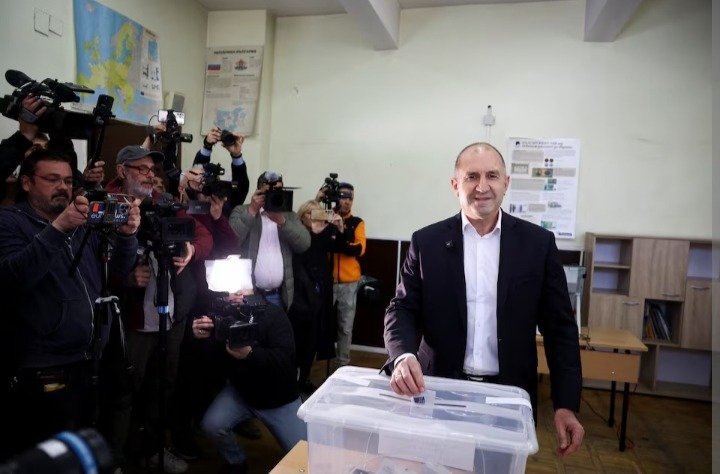
Bulgaria is heading towards another coalition government after preliminary results showed the party of Rumen Radev taking a commanding lead in the country’s parliamentary election.
Exit polls indicate that Radev’s Progressive Bulgaria secured around 38 percent of the vote, well ahead of the GERB party led by former prime minister Boyko Borissov.
Despite the strong performance, the party is not expected to achieve an outright majority, making coalition negotiations unavoidable.
The election follows a prolonged period of political instability in Bulgaria, which has seen eight elections in just five years. The previous government collapsed in December after widespread public protests fueled by concerns over corruption, rising living costs, and governance challenges.
Radev, who stepped down as president earlier this year to contest the election, has indicated he is open to working with reform-oriented groups or forming a minority government.
He emphasised the need to avoid further political deadlock and another round of elections.
Analysts say his perceived pro-Russia stance may influence coalition dynamics, though potential partners could push for a more balanced policy direction.
Voters, meanwhile, continue to express frustration over economic pressures and political uncertainty, even as Bulgaria maintains steady progress within the European Union.