

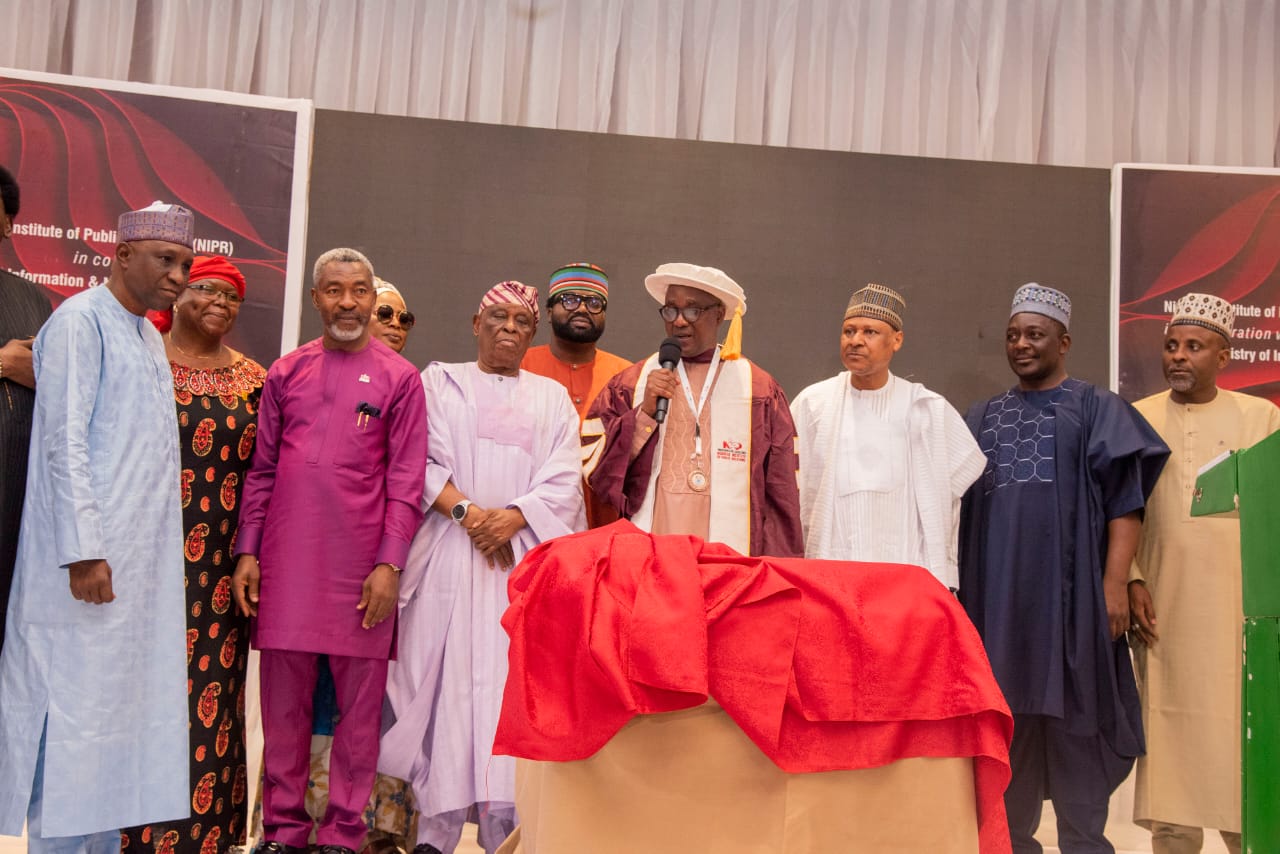
The Speaker of the House of Representatives, Tajudeen Abbas, has called on public relations professionals to take a leading role in shaping and projecting Nigeria’s global image, emphasising that the nation’s reputation is now one of its most valuable assets.
The Speaker made the call at the 3rd Nigeria Public Relations Week and the 63rd Annual General Meeting of the Nigerian Institute of Public Relations (NIPR) in Kaduna State.
He was represented by the Chairman of the House Committee on House Services, Amos Daniel, described the gathering as “a vital national convergence at a time when perception defines global standing.”
READ ALSO: NIPR Calls for Credibility in Governance Communication
“In today’s interconnected global village, a nation’s image is its most powerful currency. We are no longer judged solely by the strength of our democracy or resources, but by the stories told about us across the world,” he said.
The Speaker, who expressed pride as a native of Kaduna State, welcomed participants to the Centre of Learning and the historic heartbeat of Northern Nigeria, highlighting the city’s long-standing reputation for unity and cultural diversity.
He commended the leadership of the NIPR for what he described as a “renaissance” within the Institute, noting its evolution into a strategic force in managing information in a complex and diverse society.
While speaking on the theme of this year’s event, “Nigeria’s Food Security: From Policy Paper to Public Plate,” Abbas linked the discussion to the legislative priorities of the 10th National Assembly.
“Our commitment is to transform agriculture from a subsistence struggle into a national treasure that provides both food security and prosperity for our people,” he said.
The Speaker also commended the inclusion of cultural elements such as the “Taste of Kaduna” experience, stressing the importance of culture in national branding.
“Culture is the most underutilised tool in national image-building. These are not just meals; they are instruments of diplomacy and bridges of national unity,” he noted.
Drawing parallels with countries that have successfully leveraged cultural assets, he urged Nigerian communicators to promote indigenous festivals and heritage.
“Whether it is the Argungu Fishing Festival, the Osun-Osogbo Grove, or the Eyo Festival, we must tell our stories before others define them for us and we must do so consistently and convincingly,” Abbas charged.
He further encouraged practitioners to move beyond crisis communication and embrace their role as custodians of the Nigerian narrative. Reaffirming the commitment of the House of Representatives, Abbas assured the Institute of continued legislative support.
The event brought together communication experts, policymakers, and industry stakeholders from across the country to deliberate on strategic approaches to national development through effective public relations.