

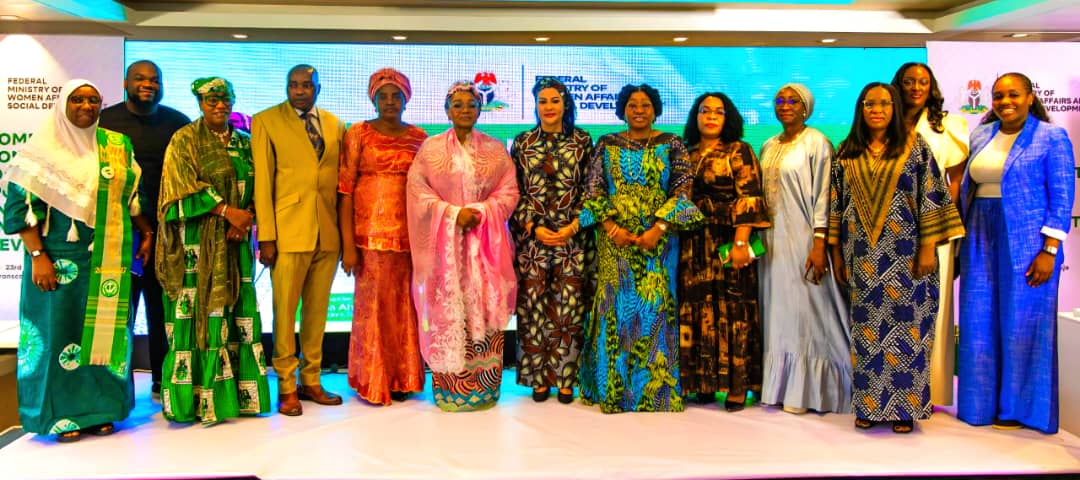
The Minister of State, Budget and Economic Planning Doris Nkiruka Uzoka-Anite has positioned the National Women’s Economic Empowerment (WEE) policy as central to Nigeria’s economic strategy, stressing that women’s inclusion is critical to growth, productivity, and competitiveness.
Addressing a WEE Convening and Midpoint Review in Abuja, the Minister said the gathering was “a very important agenda” on women but, more importantly, about “the future of Nigeria’s economy”.
She noted that Nigerian women constitute nearly half of the population and are active across agriculture, informal sectors, and enterprise but face persistent barriers. “This is not just a social concern. It is an economic one,” she stated.
She noted: “Our ambition to build a resilient, inclusive, and globally competitive economy cannot be achieved if a significant portion of our population remains economically marginalised.”
The Minister highlighted progress since the policy’s rollout, noting subnational adoption:
“States such as Kaduna, Kano, and Lagos are already demonstrating what domestication can look like in practice, and over 20 additional states are currently advancing through the domestication process.”
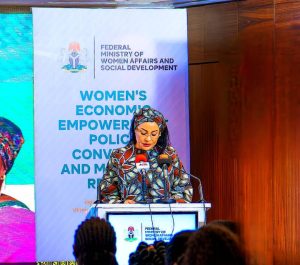
Reflecting on earlier engagements, she said, “It is encouraging to see how far we have come since then, moving from dialogue to tangible action, from policy articulation to implementation across multiple states.”
The minister emphasised the need for deliberate financing and accountability:
“Policy intent does not deliver outcomes. Implementation requires deliberate financing, institutional alignment, and sustained execution.”
On budgeting reforms, Uzoka-Anite stated: “We are refining our Budget Call Circulars to ensure that Ministries, Departments, and Agencies clearly demonstrate how their allocations impact women. This is about shifting from general allocation to targeted, outcome-driven budgeting.”
The Minister underscored the role of partnerships, collaborations, and blended finance, noting ongoing collaborations aimed at expanding access to finance for women-led enterprises. “Bridging the financing gap will require a deliberate effort to mobilise capital across sectors.”
Describing the review as a critical checkpoint, she posed key questions: “Are we targeting the most impactful interventions? Are resources reaching the right beneficiaries? Are we effectively coordinating across federal and subnational levels?” “And are we seeing measurable improvements in economic outcomes for women?”
On implementation tools, the Minister urged stronger execution and alignment urging collaboration across government, private sector, and development partners to accelerate impact:
“The WEE Costed Framework gives us a practical tool” to prioritise interventions, identify financing gaps, and support collaboration. Our focus must shift decisively toward execution.”
Reaffirming the economic implications, the Minister expressed optimism that outcomes from the convening would inform future planning, including the 2027 budget cycle:
“When we invest in women, we strengthen households, expand markets, and build more resilient communities. Investing in women’s economic empowerment is not a cost. It is one of the highest-return investments we can make as a nation.”